rifanmuazin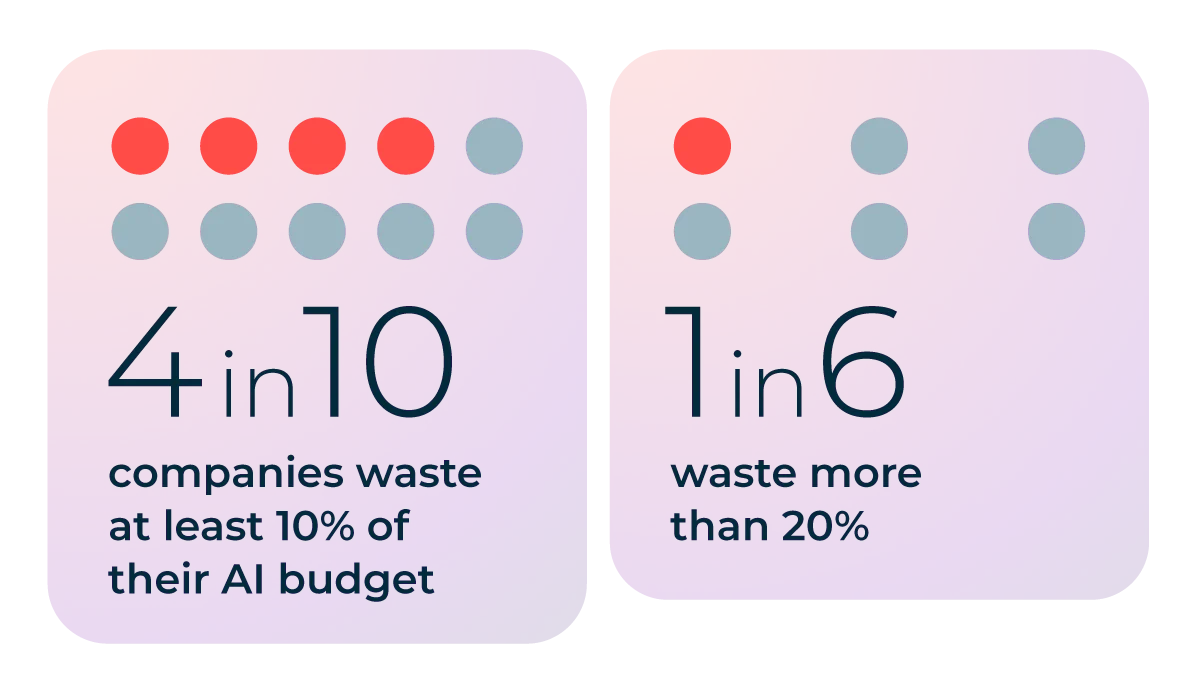
Artificial intelligence, once a futuristic concept, has rapidly permeated the marketing landscape, becoming a central component of executive strategies, team goals, and a burgeoning array of digital tools. Despite aggressive investment and widespread adoption, a significant chasm has emerged between the transformative potential heralded by headlines and the tangible impact experienced by social media marketers on the ground. Recent research commissioned by Hootsuite and conducted by Censuswide reveals a critical disconnect: while 86% of senior marketing leaders and 79% of social media managers now engage with AI tools daily, confidence in their efficacy remains strikingly low.
This pervasive lack of confidence stems not from inherent flaws in AI algorithms or a skepticism towards its potential, but rather from a fundamental misalignment between the design of most AI tools and the dynamic, real-time demands of modern social media. The tools, often positioned as agents of automation, frequently necessitate extensive micromanagement. They may surface information, but often without the crucial context needed for effective social engagement, and their training data often lags significantly behind the rapidly evolving trends and conversations that define online culture.
The Growing Discrepancy: Leadership Perception vs. Front-Line Reality

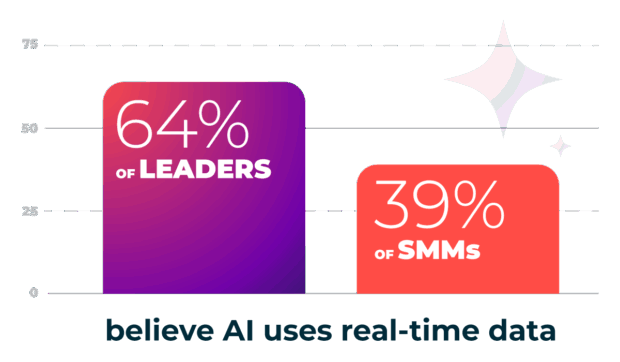
A deeper dive into the research highlights a stark difference in perception regarding AI’s performance. A considerable 64% of senior marketers hold the belief that their AI tools leverage real-time data, yet only 39% of social media managers, who are directly interacting with these platforms and their audiences, concur. This disparity underscores a critical blind spot in how AI investments are perceived versus how they are experienced. As AI budgets continue to swell and expectations reach new heights, the operational cracks are becoming increasingly visible. Those closest to the pulse of social media – the managers grappling with platforms, conversations, and fleeting trends – understand that many AI-powered solutions simply cannot keep pace with the velocity of online discourse. The consequence is clear: when tools falter, so too do the teams relying on them.
AI’s Unintended Consequence: Creating More Work, Not Less
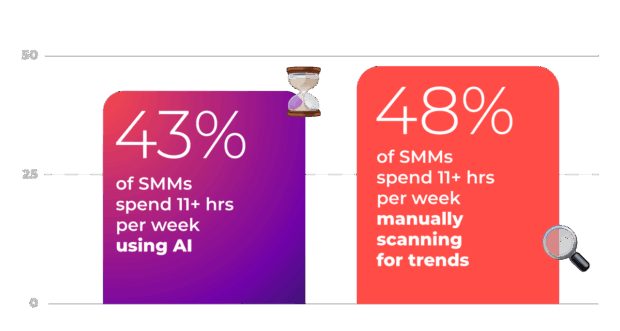
Contrary to the promise of streamlined workflows and enhanced efficiency, many AI-driven tools are inadvertently burdening already stretched social media teams with additional tasks. The initial pitch for AI was a liberating time-saver, yet in practice, it has evolved into a substantial time sink. The Hootsuite study indicates that a remarkable 43% of social media managers now dedicate over 11 hours per week to AI tools. This represents a full third of their working hours spent fine-tuning, prompting, and coaxing usable content from systems that were ostensibly designed to eliminate busywork.
Furthermore, the onus of trend discovery largely remains with human marketers. Nearly half (48%) of social media managers still spend more than 11 hours weekly manually scanning social platforms for emerging trends, with a quarter (25%) exceeding 16 hours. This extensive manual effort would be justifiable if the AI outputs were consistently reliable. However, a third of social media managers report struggling to discern which trends warrant investment, and another 27% frequently identify them too late to capitalize effectively. This leaves social teams perpetually chasing relevance, often arriving after the moment has passed.
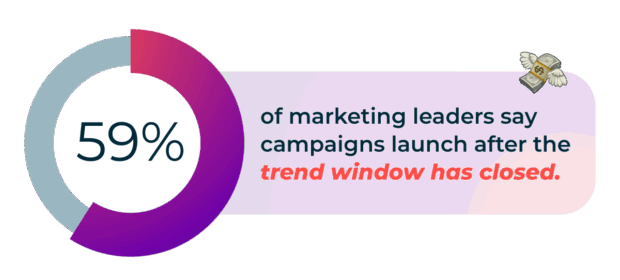
Instead of being freed to concentrate on high-level strategic planning, innovative content strategy, or creative brainstorming, marketers are entangled in validating AI-generated content or reverse-engineering performance metrics from tools that offer little transparency or self-explanation. This downstream impact resonates up the organizational hierarchy, with 59% of senior marketers acknowledging that their campaigns are launching post-trend window, indicating a systemic failure to receive timely, actionable signals. The promise of AI scale is undermined by the creation of additional layers of management and review, transforming automation into another cumbersome workflow cycle, yielding less confidence and slower results. This predicament effectively turns a workflow into a workaround, where significant time investment in AI yields suboptimal, delayed outcomes.
The Fundamental Misunderstanding: Generic AI vs. Social Nuance
A significant failing of most marketing AI tools, including widely adopted general-purpose models like ChatGPT, lies in their foundational design. They were not built with the specific, dynamic characteristics of social media in mind. Their training data often comprises outdated or generic web content, which fundamentally fails to capture the authentic, rapidly evolving language, tone, and cultural references prevalent in social interactions. This leads to a critical observation from the research: 43% of social media managers report that AI-generated content appears to be based on general web data rather than social-specific sources. The resulting language often feels inauthentic, the insights superficial, and the overall output reads as if generated by an entity unfamiliar with the nuances of platforms like TikTok or Instagram.
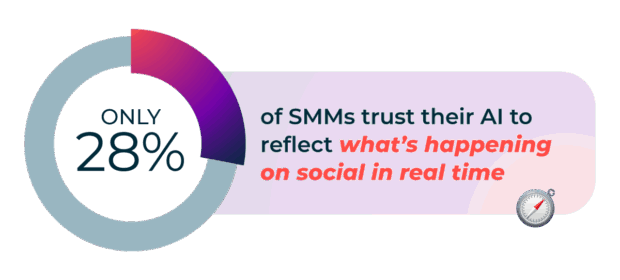
This knowledge gap forces human teams to bridge the disconnect. A substantial 40% of social media managers regularly undertake the task of double-checking and editing AI-generated content, not because the core ideas are entirely erroneous, but because the tone, timing, or cultural references are misaligned with current social discourse. This constant need for human intervention erodes trust. A stark figure reveals that only 28% of social media managers trust their current AI tools to accurately reflect real-time happenings on social media. This staggeringly low confidence level is particularly alarming given the daily reliance on these tools by teams acutely aware of their limitations.
As Billy Jones, former CMO at Hootsuite, succinctly puts it, "Most generative AI tools are already out of date the moment marketers use them. Traditional AI falls short for marketers who operate where their customers do: on social. If the insights aren’t grounded in what’s happening on social right now, they can’t drive real impact." This inherent disconnect between static training data and dynamic social environments transforms frustration into outright operational failure for marketing teams under immense pressure to move with speed, produce content at scale, and achieve stringent performance benchmarks. The solution, therefore, is not to retreat from AI, but to demand a more intelligent, purpose-built form of it.
Rising AI Spend, Unmet Expectations, and Eroding Credibility
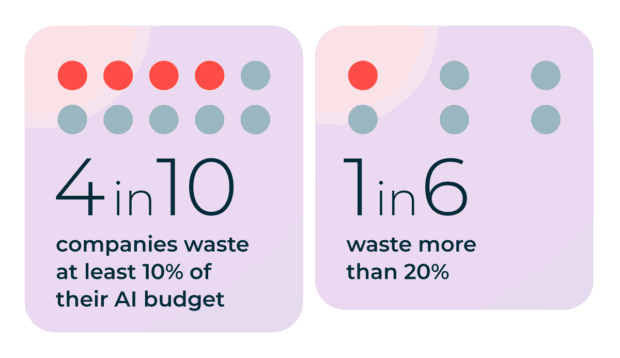
The financial implications of this AI performance gap are considerable. The study indicates that 40% of senior marketers admit to wasting over 10% of their AI marketing budget on tools that failed to deliver, with more than a quarter reporting this figure exceeding 20%. This represents not merely a disappointing return on investment, but a potentially career-jeopardizing misallocation of resources in a business environment where CFOs meticulously scrutinize every expenditure.
The risk extends beyond missed Key Performance Indicators (KPIs); it encompasses the erosion of internal credibility. When executives struggle to demonstrate clear, attributable wins from their significant AI investments, the narrative risks shifting from a failure of the tools to a perceived underperformance by the marketing team itself. Teams were promised unparalleled automation, scalability, and speed. What they are largely receiving, however, is a convoluted array of partially effective tools that frequently fall short of their primary objective: simplifying social media execution and measurement.
Consequently, merely increasing AI expenditure will not resolve the underlying issues. If AI tools fail to grasp the intrinsic elements that drive content resonance on social media, or if they cannot facilitate sufficiently rapid action to capitalize on fleeting trends, then every additional dollar invested merely amplifies the pressure to demonstrate ROI without providing the requisite tools to achieve it. This represents a critical inflection point for the industry. Marketing leaders have committed substantial resources; 83% of senior marketers report increased AI budgets, nearly half now allocate over 10% of their total marketing budget to AI, and one in five dedicate more than 20%. The urgent need now is for tools that can genuinely deliver on these hefty investments.
The Emergence of Social-First AI: A New Paradigm
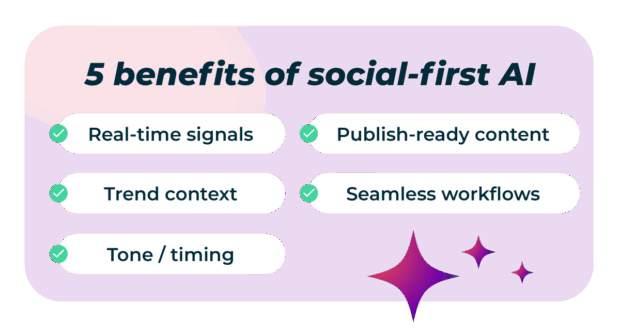
The current challenges highlight the necessity for a new generation of AI: "social-first AI." This category of tools is specifically engineered to address the unique demands of social media marketing, moving beyond generic web data to integrate real-time social platform insights. A truly social-first AI should:
- Incorporate real-time social platform data.
- Surface trends with speed and context.
- Generate content with platform-native tone and brand voice.
- Integrate seamlessly into existing social media workflows.
- Provide actionable insights with cultural relevance.
- Build trust through accuracy and timeliness.
Such tools would differentiate themselves significantly from generic AI by sourcing data directly from live social feeds, enabling rapid and proactive trend detection rather than slow, retrospective analysis. Their content output would be near publish-ready, requiring minimal human intervention, and delivered with audience and cultural context. Crucially, they would be integrated directly into social media management platforms, making them an organic part of daily operations rather than an external, disconnected layer.
For example, a social-first AI system would pull from current conversations, trending topics, and platform-specific engagement patterns, rather than archived articles and forums. It would detect emerging trends not just as keywords, but with an understanding of their lifecycle and potential brand relevance. The tone of generated content would automatically align with the platform (e.g., informal for TikTok, professional for LinkedIn) and the brand’s established voice. This is not merely a wishlist; it is a fundamental requirement for AI to deliver on its promise in the social media domain. The pressure on social teams is unrelenting, and the window to demonstrate AI’s true value is narrowing. If current tools cannot meet these criteria, it is imperative for marketers to raise their expectations and demand more sophisticated solutions.
OwlyGPT: An Example of Social-First AI

As an illustration of this evolving paradigm, platforms like Hootsuite are developing solutions such as OwlyGPT, specifically engineered for the social front lines. OwlyGPT is purpose-built for social media marketing, leveraging live social data to match the inherent pace, tone, and pressure of contemporary social conversations. Unlike generic tools that merely speculate on trends, OwlyGPT is designed to analyze real-time conversations across diverse platforms, identifying and prioritizing what is truly relevant now, rather than relying on outdated information.
Crucially, it aims to provide not just a list of hashtags or keywords, but also the context, relevance, and strategic direction necessary to make informed decisions about which trends to pursue. By building on live social signals, OwlyGPT endeavors to reflect the authentic tone, rapid pace, and subtle nuances of online communication, thereby eliminating the need for extensive rewriting of robotic, generic copy. This type of social-first AI integrates directly into existing workflows, allowing marketers to generate post copy, trend summaries, or campaign ideas without leaving their central social media management environment. By pulling platform-native insights in real time—such as audience engagement patterns on Instagram or LinkedIn—it aims to empower teams to act swiftly and maintain relevance. This approach allows for the creation of content and the generation of insights based directly on current activities within a brand’s specific niche, fostering confidence in the timeliness and appropriateness of the data and tone.
As industry experts note, social media represents one of the richest sources of real-time data available, yet traditional AI tools have historically struggled to harness it effectively. Social-first AI endeavors to bridge this gap, transforming insights from live social data into measurable business impact. It is designed not to replace human creativity or strategic judgment, but to eliminate the friction between identifying an insight and executing on it. The goal is to simplify the process of spotting opportunities, responding with the correct brand voice, and disseminating content while it is still pertinent. This represents the true potential of social-first AI.
Broader Implications and the Future of AI in Social Marketing
The implications of this shift are profound for businesses navigating the complex digital landscape. Companies that successfully implement social-first AI stand to gain a significant competitive advantage through enhanced agility, more relevant content, and superior audience engagement. The ability to detect and act on trends rapidly means campaigns can be launched when consumer interest is at its peak, maximizing impact and ROI.
However, the adoption of social-first AI also necessitates careful consideration of brand voice and compliance. Companies must pair advanced AI tools with robust internal guidelines and human oversight, defining clear brand voice parameters, establishing approval workflows, and ensuring all AI-generated content undergoes thorough human review before publication. This hybrid approach safeguards consistency, accuracy, and brand integrity.

The future of AI in social media marketing hinges on this evolution. While generic AI will continue to play a role in broader marketing tasks, the specific demands of social platforms require specialized, context-aware intelligence. Tools that support social-first AI workflows, by integrating planning, publishing, analytics, and social listening into a single platform, will be instrumental for enterprise teams. They will enable marketers to move beyond the current state of frustration and inefficiency, empowering them to truly leverage AI to scale content, deepen audience insights, and drive meaningful, data-driven results in the fast-paced world of social media. This is not just an incremental improvement; it’s a necessary paradigm shift for AI to fulfill its promise in the realm of social marketing.

 Lina Irawan
 Asep Darmawan