
 rifanmuazin
The landscape of digital marketing is undergoing a fundamental shift as brands move away from traditional, one-off A/B testing in favor of iterative testing, a methodology rooted in agile product development. While conventional testing often involves a single experiment followed by a static implementation, iterative testing emphasizes a continuous cycle of small, evidence-based refinements. This evolution reflects a broader trend toward data-driven agility, where marketing assets are treated as living documents rather than finished products. By building on the insights of each preceding test, organizations are finding they can adapt more rapidly to shifting consumer behaviors while significantly reducing the financial risk associated with large-scale campaign overhauls.
The Evolution of Marketing Experimentation
Historically, marketing teams operated on a "launch and leave" model. Campaigns were designed based on creative intuition, launched with significant budget backing, and only evaluated at the conclusion of their lifecycle. When A/B testing was introduced, it provided a scientific layer to this process, yet many teams still treated it as a binary event—one version won, the other lost, and the project was considered complete.
Iterative testing disrupts this linear approach. It is a process of repeated testing, measurement, and refinement. Instead of seeking a "silver bullet" change that doubles conversions overnight, marketers are now focusing on "consistent base hits"—incremental improvements that compound over time. This methodology, which has been a staple of software engineering and UX design for decades, is now being utilized to optimize landing pages, email sequences, and paid advertisement creatives. The goal is to plug "slow leaks" in the marketing funnel—those marginal inefficiencies that drain budgets over weeks and months—rather than simply swinging for high-risk home runs.
Quantifying the Impact: Data-Backed Insights
The move toward iterative testing is supported by emerging data from the 2024 Conversion Benchmark Report, which highlights how specific, granular changes can lead to outsized results. One of the most significant findings in the report is the correlation between reading levels and conversion success. Data shows that landing pages written at a 5th-to-7th-grade level convert at an average rate of 11.1%, which is more than double the rate of content written at a professional or academic level.
Furthermore, the report identifies a stark contrast between user behavior and conversion efficiency across devices. While 83% of landing page visits now occur on mobile devices, desktop sessions still convert 8% better on average. These statistics provide a clear roadmap for iterative testing: a marketer might first test simplified copy, then iterate on mobile-specific navigation, and subsequently refine the call-to-action (CTA) placement for mobile users.

Another critical data point involves linguistic complexity. The research found a -24.3% negative correlation between high word complexity and conversion rates. For marketing teams, this insight serves as a starting point for an iterative cycle:
- Initial Test: Simplify the headline.
- Analysis: Measure the lift in engagement.
- Iteration: Simplify the body copy based on the headline’s success.
- Expansion: Apply the simplified tone to the follow-up email sequence.
A Chronological Framework for Iterative Success
Implementing a successful iterative testing program requires a structured, six-step process that prioritizes speed and clarity over complexity.
Step 1: Hypothesis Formulation
The process begins with a laser-focused hypothesis. Experts suggest that the most common failure in testing is attempting to change too many variables at once. A focused hypothesis follows a "If [change], then [result], because [reason]" format. For instance: "If we change the CTA from ‘Submit’ to ‘Get My Free Guide,’ then click-through rates will increase because the value proposition is more explicit."
Step 2: Strategic Prioritization
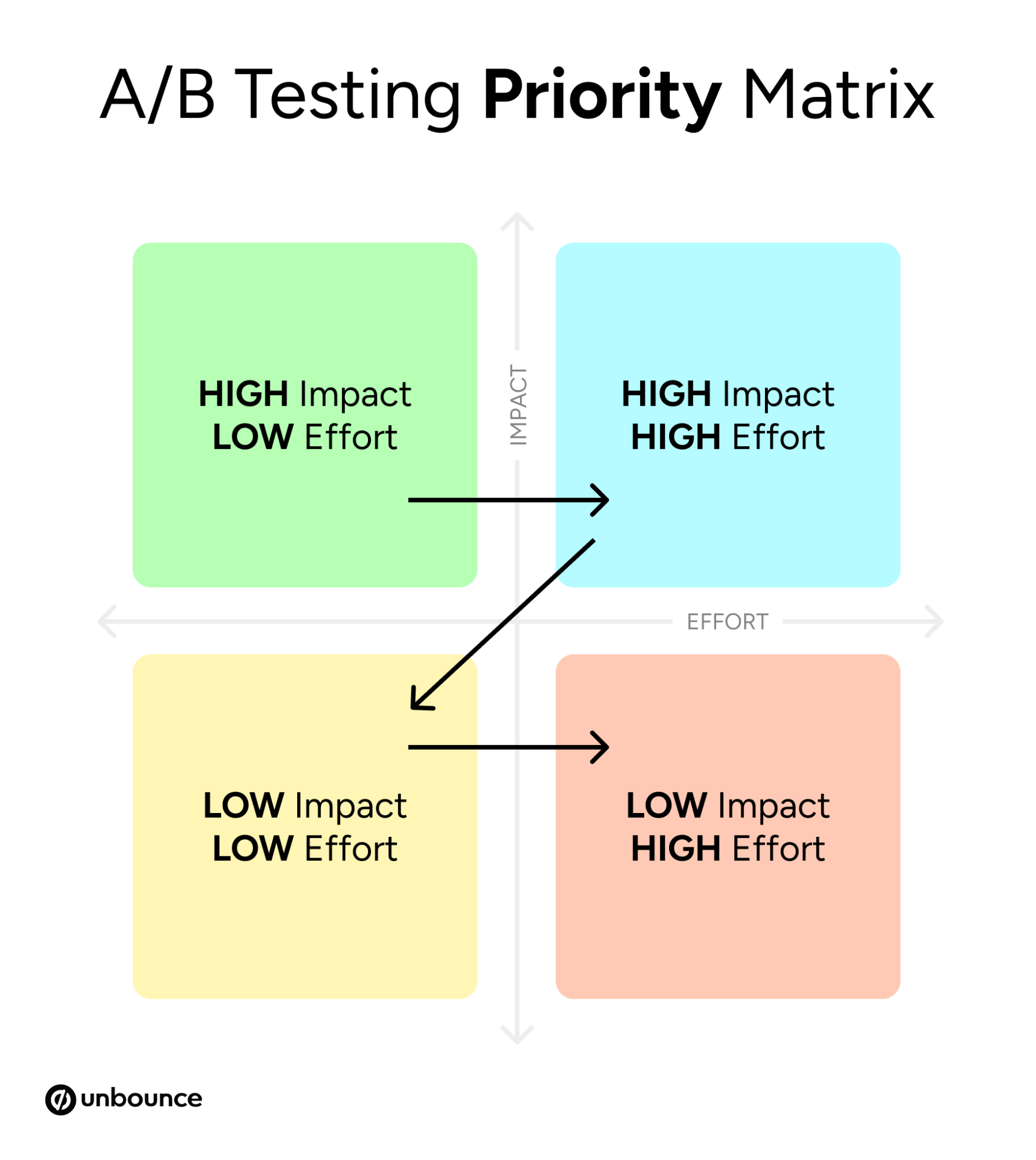
Not every test is worth the resources required to execute it. Marketing teams often utilize a 2×2 matrix to categorize tests based on "Impact" and "Effort."
- Quick Wins: High impact, low effort (e.g., changing a headline).
- Major Projects: High impact, high effort (e.g., redesigning a checkout flow).
- Fill-ins: Low impact, low effort (e.g., changing button color).
- Time Sinks: Low impact, high effort (e.g., complex backend animations).
Step 3: Variation Development
In iterative testing, the "minimal testable variation" is the gold standard. This involves making the smallest possible change that can still yield a measurable result. This approach allows teams to isolate variables and ensures that when a lift in conversions occurs, the cause is undeniable.
Step 4: Data Collection and Statistical Validation
A critical component of the chronology is the duration of the test. To avoid "false positives," tests must reach statistical significance—the point at which results are reliable enough to base decisions on rather than being mere coincidences. Practical guidelines suggest that a test should generally run for at least two full business cycles (usually two weeks) and collect several hundred conversions per variant before a winner is declared.

Step 5: Deep-Dive Analysis
Once a test concludes, the analysis must go beyond identifying the winner. Marketers must ask why a specific variant performed better. If a shorter form increased conversions, does that mean the audience is in a hurry, or that they are concerned about privacy? The answer to this question forms the basis for the next test in the cycle.
Step 6: Scaling and Future Iteration
Successful insights are then scaled across other channels. A winning headline on a landing page might become the subject line for the next month’s email newsletter or the primary text for a LinkedIn ad campaign.
Industry Perspectives and Organizational Impact
Marketing leaders emphasize that iterative testing is as much a cultural shift as it is a technical one. Josh Gallant, founder of Backstage SEO, notes that the most effective marketing teams are those that embrace a "culture of experimentation." This involves breaking down silos between departments. When customer support teams share frequent user complaints, those insights become the hypotheses for the next marketing test.
"Marketing doesn’t happen in a vacuum," industry analysts suggest. By involving sales, product, and support teams in the testing backlog, organizations ensure they are testing solutions to real-world friction points. This collaborative approach leads to richer insights and a more cohesive user experience.
The broader implications of this shift are significant for budget management. In an era where marketing budgets are under increased scrutiny, iterative testing provides a "fail-safe" mechanism. Instead of committing a six-figure budget to an unproven concept, teams spend small amounts to validate ideas in real-time. This evidence-based scaling ensures that by the time a campaign receives full funding, its core components have already been proven effective through multiple iterations.
The Role of Technology in Accelerated Testing
The rise of AI and machine learning has further accelerated the iterative testing cycle. Modern conversion toolkits now include features like "Smart Traffic," which uses AI to automatically route visitors to the page variant where they are most likely to convert. Unlike traditional A/B testing, which requires a manual "winner" to be picked after a long period, these automated systems begin optimizing after as few as 50 visits.
This technological advancement allows even low-traffic campaigns to benefit from iterative principles. It reduces the "waiting period" that often plagues traditional testing, allowing marketers to maintain momentum and respond to market changes in days rather than months.
Conclusion: The Future of Continuous Improvement
The transition to iterative testing represents the professionalization of marketing optimization. By moving away from sporadic, disconnected experiments and toward a disciplined cycle of continuous improvement, brands are building more resilient marketing engines.
The long-term impact of this methodology is a more personalized and frictionless experience for the end-user. As brands learn more about their specific audiences through each iteration—whether it is a preference for simplified language, a need for mobile-first design, or a desire for clearer pricing—the marketing naturally becomes more helpful and less intrusive. In a competitive digital economy, the ability to learn faster than the competition through iterative testing may be the most sustainable competitive advantage a brand can possess.








