In the competitive landscape of digital marketing, where every click and conversion is meticulously tracked, the success of an email campaign often hinges on a factor frequently overlooked: its underlying infrastructure. Marketers invest heavily in compelling copy, sophisticated design, and precise audience segmentation, eager to deploy campaigns that promise engagement and returns. Yet, the stark reality is that none of this effort matters if the emails never reach their intended destination—the recipient’s inbox. This silent crisis of deliverability is increasingly challenging the efficacy of email as a primary communication channel, making robust email infrastructure not merely a best practice but an absolute imperative for any organization serious about its digital outreach.
Email infrastructure acts as the invisible plumbing system that dictates the journey of every message sent, from the sender’s server to the recipient’s mailbox. It encompasses a complex interplay of sending domains, server configurations, critical security protocols, and continuous monitoring tools. Historically, the technical aspects of email sending were often relegated to IT departments, viewed as a backend function separate from marketing strategy. However, with the exponential rise of spam, sophisticated phishing attacks, and the continuous tightening of mailbox provider (MBP) security algorithms, the stakes have never been higher. Neglecting this foundational element can lead to emails disappearing into spam folders, being outright blocked, or severely impacting sender reputation, effectively rendering even the most brilliant marketing strategy obsolete. The distinction between a campaign that drives tangible results and one that languishes unseen often lies squarely in the strength of its email infrastructure.
Understanding the Digital Backbone: What Exactly is Email Infrastructure?
At its core, email infrastructure refers to the entire technical ecosystem responsible for the transmission, routing, and ultimate delivery of emails. This ecosystem is far more intricate than simply pressing ‘send’ on an Email Service Provider (ESP). Key components include:
- Sending Domain: The specific domain or subdomain from which emails originate, directly influencing sender reputation.
- Mail Servers: The dedicated hardware or virtual machines responsible for processing and sending emails.
- Security Protocols: Standards like SPF, DKIM, and DMARC that authenticate the sender and verify message integrity.
- IP Addresses: The unique numerical labels assigned to servers, which also carry their own reputation history.
- Monitoring Tools: Systems that track deliverability rates, bounce rates, spam complaints, and blocklisting status.
- Email Service Provider (ESP): The platform chosen to manage email campaigns, which leverages its own infrastructure and reputation.
Without a meticulously configured and maintained infrastructure, an organization faces significant hurdles. A recent report by Validity in 2023 highlighted a concerning trend, revealing that globally, approximately 1 in 7 legitimate, permission-based marketing emails still fails to reach the inbox, often landing in spam folders or being outright rejected. This equates to billions of dollars in lost marketing potential and damaged customer relationships annually. This underscores the profound impact of infrastructure: it’s the difference between merely sending an email and successfully delivering it.
The Evolving Landscape of Email Deliverability: A Contextual Overview
The current emphasis on robust email infrastructure is a direct response to the dynamic evolution of the internet and email as a communication medium. In the early days, email was a relatively open system, with fewer barriers to entry. However, the proliferation of unsolicited commercial email, or “spam,” rapidly overwhelmed inboxes and led to a desperate need for effective countermeasures.
Mailbox providers like Google, Yahoo, and Microsoft became the de facto gatekeepers, developing sophisticated algorithms and proprietary filtering systems to protect their users. These systems analyze hundreds of factors to determine whether an incoming email is legitimate or spam. Key among these factors is “sender reputation,” a score assigned to an IP address and sending domain based on historical sending behavior, complaint rates, bounce rates, and engagement metrics. A poor sender reputation can lead to emails being throttled, redirected to spam, or blocked entirely, irrespective of content quality.
The turning point for many organizations came with the increased enforcement of authentication standards. What were once considered “best practices” began transitioning into mandatory requirements. In early 2024, major providers like Google and Yahoo announced stricter authentication policies for bulk senders, specifically requiring DMARC enforcement for domains sending more than 5,000 emails per day. This move signaled a significant industry shift, emphasizing that basic authentication is no longer optional but fundamental to reaching the inbox. This regulatory tightening is an ongoing trend, driven by the persistent threat of phishing, spoofing, and other cybercrimes that leverage email. Businesses that fail to adapt risk being left behind, their communication channels effectively silenced.
Pillars of a Resilient Email Infrastructure: A Step-by-Step Guide

Building and maintaining a robust email infrastructure requires a strategic, multi-faceted approach. It’s a continuous process of setup, monitoring, and optimization, designed to foster trust with mailbox providers and ensure consistent deliverability.
1. Strategic Email Service Provider (ESP) Selection
The ESP serves as the operational engine for an organization’s entire email program. Choosing the right partner is paramount, as it directly impacts scalability, deliverability, and the overall efficiency of email marketing efforts. This decision should extend beyond mere pricing or basic feature sets. Organizations must thoroughly evaluate an ESP’s capabilities in areas such as:
- Deliverability Tools and Expertise: Does the ESP offer advanced analytics for deliverability, dedicated IP address options, or shared IP pools with strong reputations? Do they have a dedicated deliverability team that can offer guidance and support?
- Authentication Support: Does the platform fully support and guide the setup of SPF, DKIM, and DMARC? Are they proactive in adopting new industry standards like BIMI?
- Scalability: Can the ESP handle projected email volumes as the business grows, without compromising performance or deliverability?
- Integration Capabilities: How well does the ESP integrate with existing CRM, e-commerce platforms, or marketing automation tools?
- Compliance and Security: What are their data privacy policies (e.g., GDPR, CCPA)? How do they protect sender data and ensure secure sending?
- Customer Support: Is there responsive and knowledgeable support available, especially for technical deliverability issues?
A “cheap” ESP might save costs upfront but can prove incredibly expensive in the long run through poor deliverability, lost sales, and damaged brand reputation. Industry analysts consistently advise that investing in a reputable ESP with a strong focus on deliverability is a non-negotiable step for any serious email marketer.
2. The Imperative of Dedicated Sending Domains
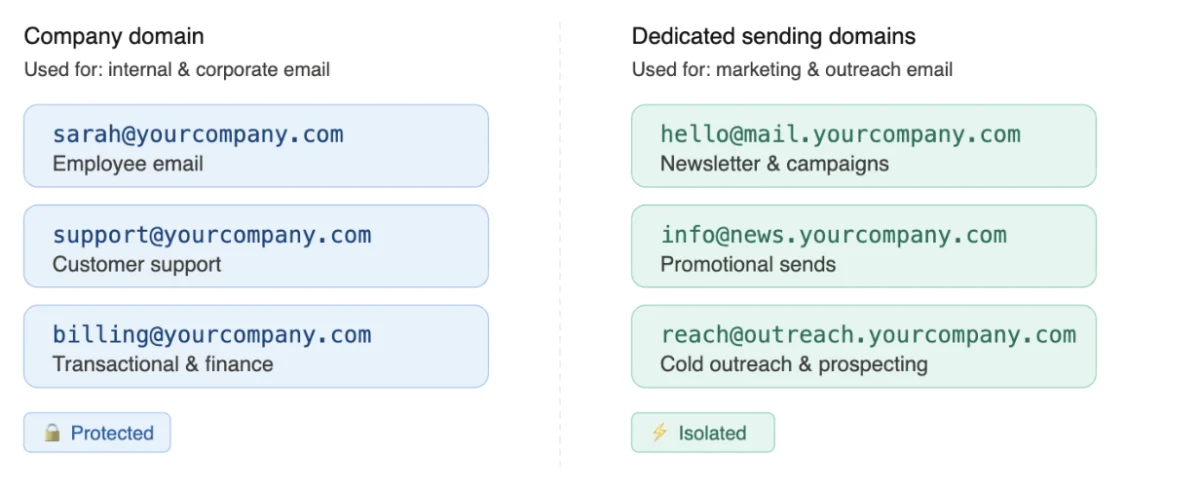
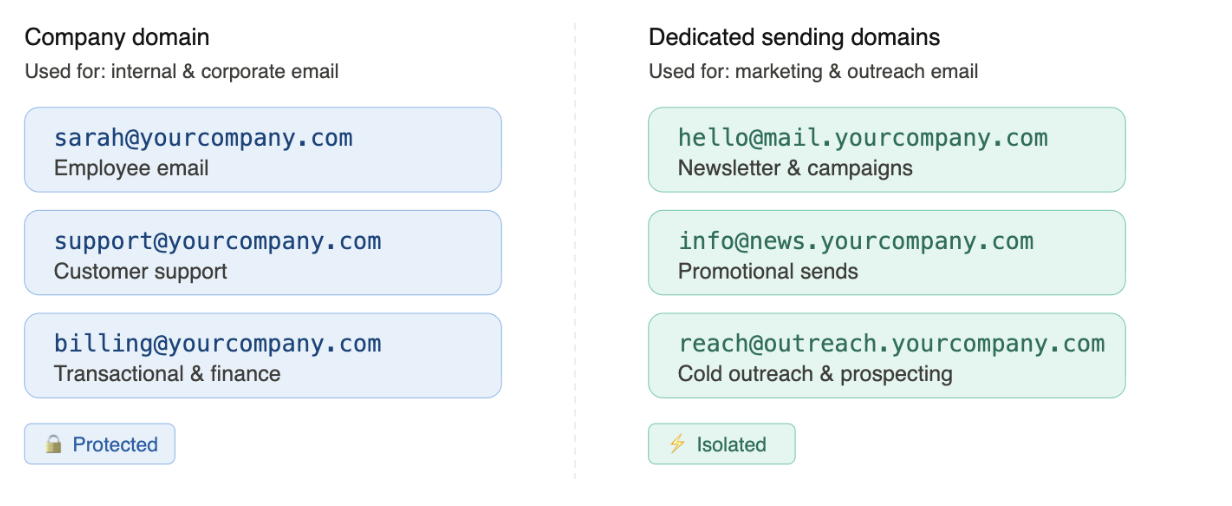
One of the most critical foundational steps is establishing a dedicated sending domain or subdomain specifically for marketing and transactional emails, separate from the main corporate domain. This strategic separation is a crucial risk mitigation tactic. If, for any reason, the marketing domain encounters deliverability issues—such as a spike in spam complaints, a temporary blocklist event, or a security compromise—it will not adversely affect the reputation of the primary domain used for critical business communications (e.g., yourcompany.com).
For instance, if a company’s main domain is examplecompany.com, it’s advisable to set up a dedicated subdomain like marketing.examplecompany.com, news.examplecompany.com, or updates.examplecompany.com for all mass email sends. Alternatively, a completely separate, but branded, domain such as examplecompany-news.com could be used. This isolation allows organizations to meticulously build and manage a sender reputation specifically for their outreach efforts, keeping the corporate email infrastructure “squeaky clean” and ensuring business-critical communications remain unhindered by marketing-related incidents. This approach aligns with the best practices advocated by leading deliverability experts and mailbox providers.
3. Non-Negotiable Authentication Protocols
Email authentication has transitioned from a recommended practice to a mandatory component of email deliverability. Mailbox providers are increasingly stringent in enforcing these protocols, and emails that lack proper authentication are highly likely to be rejected or routed directly to spam folders, regardless of content quality or sender reputation. These protocols act as digital signatures and verification mechanisms, assuring MBPs that the email truly originates from the claimed sender. The three primary protocols are:
-
Sender Policy Framework (SPF): SPF is a DNS (Domain Name System) record that specifies which mail servers are authorized to send email on behalf of a particular domain. When an email arrives, the recipient’s mail server checks the SPF record for the sending domain to verify if the sending IP address is listed as an authorized sender. If not, the email may be flagged as suspicious. A typical SPF record might look like
v=spf1 include:_spf.example.com ~all, indicating authorized senders and a softfail policy for others. -
DomainKeys Identified Mail (DKIM): DKIM adds a cryptographic signature to the email header, which is then verified by the recipient’s server using a public key published in the sender’s DNS records. This signature verifies two things: first, that the email indeed originated from the claimed domain, and second, that the email content has not been tampered with during transit. This protects against email spoofing and ensures message integrity.
-
Domain-based Message Authentication, Reporting & Conformance (DMARC): DMARC builds upon SPF and DKIM, providing a policy framework for email authentication. It instructs recipient mail servers on how to handle emails that fail SPF or DKIM checks (e.g., quarantine, reject, or allow). Crucially, DMARC also provides reporting back to the sender, offering invaluable insights into how their emails are being handled across various mailbox providers, including instances of unauthorized sending using their domain. For bulk senders, a DMARC policy of
p=quarantineorp=rejectis now often a requirement.
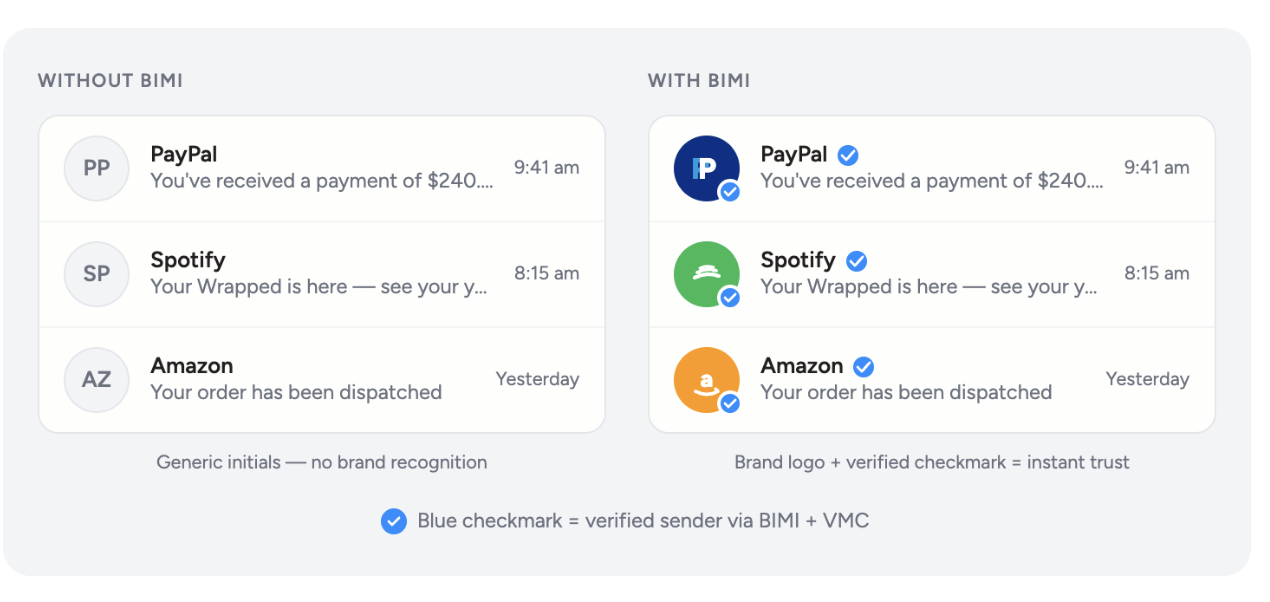
Beyond these three, Brand Indicators for Message Identification (BIMI) is gaining traction. While not directly a deliverability protocol, BIMI allows organizations to display their verified brand logo next to their authenticated emails in supporting inboxes (like Gmail, Yahoo). This visual verification enhances brand recognition and trust, further incentivizing DMARC adoption at an enforcement policy. Implementing these protocols typically requires collaboration between marketing teams, IT, and domain administrators, and expert consultation is often recommended to ensure correct configuration.
4. The Art and Science of Domain Warm-up: Patiently Building Trust
A newly configured sending domain, even with perfect authentication, starts with a “cold” reputation—meaning mailbox providers have no historical data to assess its trustworthiness. Sending a large volume of emails from a cold domain is a critical mistake, almost guaranteed to trigger spam filters and damage reputation from the outset. Instead, a methodical domain warm-up process is essential.
This process involves gradually increasing email volume over several weeks, allowing mailbox providers to observe consistent, positive sending behavior. A typical warm-up strategy involves:
- Starting Small: Begin with a very low volume, perhaps 500-1,000 emails per day, for the first few days.
- Targeting Engaged Subscribers: Initially send only to the most active and engaged contacts (those who have recently opened or clicked emails), as this generates positive engagement signals.
- Gradual Increase: Incrementally double or increase the volume every few days (e.g., 1,000, then 2,000, then 4,000), contingent on maintaining low bounce rates and spam complaints.
- Monitoring Metrics Closely: Watch for any spikes in bounces, spam complaints, or unsubscribes. If these metrics rise, pull back on volume before attempting further increases.
- Consistency: Maintain a consistent sending schedule during the warm-up period.
This phase is critical and cannot be rushed. It can take several weeks, or even a few months, to fully warm up a domain and establish a strong, trustworthy sender reputation. Patience during this period is an investment that pays dividends in long-term deliverability.
5. Proactive Monitoring and Continuous Optimization
Achieving successful email deliverability is not a one-time setup; it requires continuous vigilance and proactive monitoring. As the Validity 2023 Email Deliverability Benchmark report clearly demonstrates, an email might be technically “delivered” according to an ESP’s logs, meaning it was accepted by the recipient’s mail server, yet still never reach the primary inbox—often ending up in spam, promotions tabs, or being silently discarded. This “gray area” of inbox placement necessitates deep monitoring beyond basic open and click rates.
Key metrics and tools for continuous monitoring include:
- Spam Complaint Rate: This is arguably the most critical metric. Mailbox providers closely track how many recipients mark an email as spam. A rate above 0.3% is generally considered problematic, with an ideal target being 0.1% or lower. High complaint rates are a strong indicator of poor sender reputation and can lead to severe deliverability penalties.
- Bounce Rates: Monitor both hard bounces (permanent delivery failures due to invalid addresses) and soft bounces (temporary issues). High hard bounce rates signal a need for list hygiene, while persistent soft bounces can indicate server-side issues or reputation problems.
- Blocklisting Status: Regularly check if the sending IP address or domain has been listed on any major public or private blocklists. Tools exist to automate this checking process.
- Engagement Metrics: While not direct deliverability metrics, low open and click rates, coupled with high unsubscribe rates, can signal to MBPs that emails are not valued by recipients, potentially impacting future inbox placement.
- Feedback Loops (FBLs): Sign up for FBLs offered by major mailbox providers. These services (e.g., Google Postmaster Tools, Microsoft SNDS, Yahoo Sender Hub) provide aggregate data on spam complaints and other deliverability issues, offering invaluable insights directly from the MBPs themselves. They provide visibility into how these critical gatekeepers perceive a sender’s reputation, which is often more telling than an ESP’s internal reports.
- Seed List Testing: Utilize third-party deliverability tools that send emails to a “seed list” of addresses across various mailbox providers to determine actual inbox placement (inbox, spam, missing).
Consistent analysis of these metrics allows marketers to identify potential issues early, adjust sending strategies, refine content, and maintain a healthy sender reputation. It’s an ongoing feedback loop that ensures sustained deliverability.
The Broader Implications: ROI, Brand Trust, and Competitive Advantage
The investment in robust email infrastructure extends far beyond mere technical compliance; it directly impacts an organization’s bottom line, brand equity, and competitive standing.
- Financial Impact: Poor deliverability translates directly into wasted marketing spend. Every email that fails to reach the inbox represents a lost opportunity for engagement, conversion, and revenue. Given that email marketing consistently delivers one of the highest returns on investment (ROI) among digital channels (often cited at $36-$42 for every $1 spent), any erosion of deliverability significantly diminishes this powerful ROI. Lost leads, abandoned carts, and missed customer service opportunities accumulate rapidly.
- Brand Reputation: Consistent deliverability failures can severely damage brand perception. If emails frequently land in spam, recipients may perceive the brand as unprofessional, untrustworthy, or even malicious. This erosion of trust can be incredibly difficult to rebuild and can permeate other areas of customer interaction. Conversely, a brand known for reliable, permission-based email communication builds credibility and strengthens customer loyalty.
- Competitive Advantage: In an increasingly crowded digital space, organizations that prioritize and excel in email deliverability gain a distinct competitive edge. They are more likely to reach their target audience effectively, fostering stronger relationships and driving superior campaign performance compared to competitors whose messages are consistently caught in spam filters. As mailbox provider requirements become stricter, the gap between those who invest in infrastructure and those who don’t will only widen, creating clear winners and losers in the inbox.
The future of email marketing is intrinsically linked to the sophistication of its underlying infrastructure. As artificial intelligence and machine learning continue to enhance spam filtering capabilities, only senders demonstrating consistent best practices and robust technical foundations will consistently achieve optimal inbox placement.
Navigating the Technical Maze: Expert Assistance and Tools
For many organizations, especially those without dedicated in-house deliverability experts, navigating the complexities of email infrastructure can be daunting. Setting up authentication protocols, understanding DMARC reports, and meticulously warming up domains requires specialized knowledge. This is where professional services and dedicated tools become invaluable.
Companies like Validity offer comprehensive auditing services to assess existing infrastructure, identify vulnerabilities, and provide tailored recommendations. Their professional services teams can assist with configuring authentication protocols (SPF, DKIM, DMARC), troubleshooting deliverability issues, managing IP reputation, and providing ongoing monitoring and optimization. The value of such expertise lies in their deep understanding of constantly evolving MBP algorithms and industry best practices, helping organizations avoid costly mistakes and maintain peak performance. Integrating specialized deliverability platforms with existing marketing stacks provides a holistic view, enabling data-driven decisions that enhance email performance across the board.
Conclusion
In an era where digital communication is paramount, email remains an indispensable tool for marketing, customer service, and transactional messaging. However, its effectiveness is entirely contingent on its ability to reliably reach the intended recipient. Setting up a robust email infrastructure is not the most glamorous aspect of digital marketing, but it is undeniably the most foundational. The escalating authentication requirements, the increasing sophistication of inbox algorithms, and the ever-present threat of spam necessitate a proactive and continuous investment in this critical area.
By strategically selecting an ESP, implementing dedicated sending domains, meticulously configuring authentication protocols, patiently warming up new sending assets, and diligently monitoring performance metrics, organizations can build an unshakeable foundation for their email programs. This commitment ensures not only that emails are delivered, but that they contribute effectively to business objectives, foster brand trust, and secure a lasting competitive advantage in the digital marketplace. For any enterprise seeking sustained success in email marketing, the message is clear: prioritize your infrastructure, for it is the silent guarantor of your outreach’s ultimate impact.