

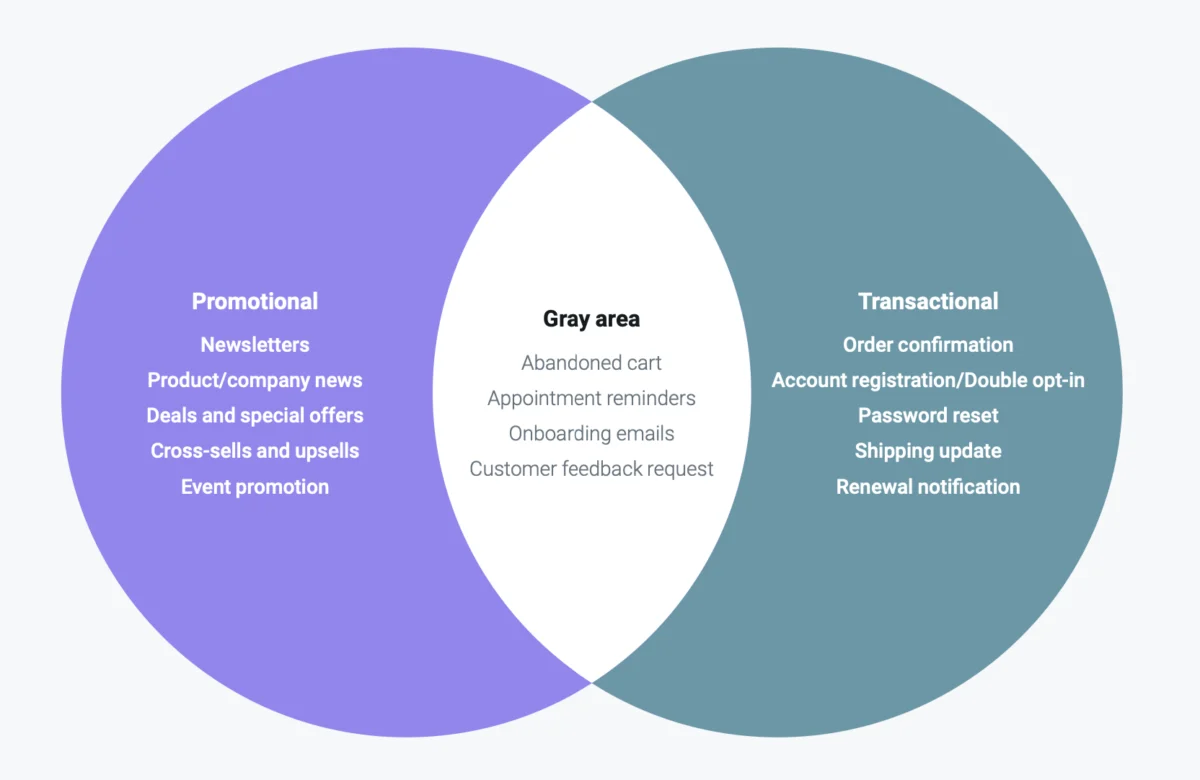
The persistent debate surrounding the separation of transactional and marketing email systems has long permeated the Slack channels and meeting rooms of today’s fastest-growing technology companies, creating an unnecessary dichotomy that hinders holistic customer engagement and operational efficiency. This divide, often viewed as a mere operational challenge, has evolved into a strategic liability for enterprises striving for product-led growth (PLG) and a seamless customer journey.
The Genesis of the Divide: A Historical Overview
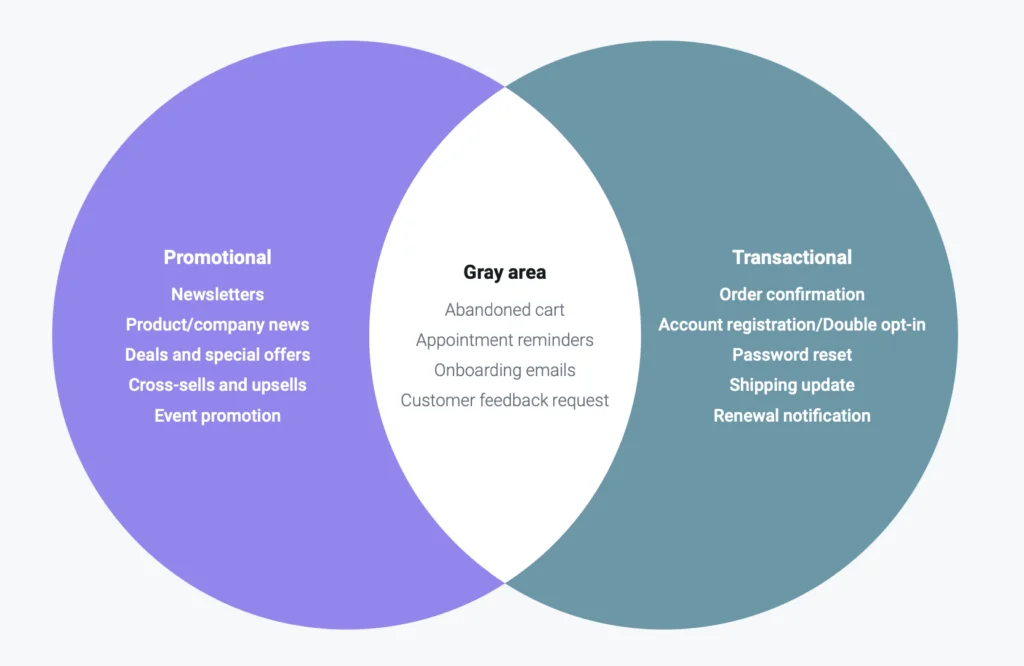
Historically, the distinction between transactional and marketing emails arose from fundamentally different needs and technical implementations. Marketing teams, focused on customer acquisition, engagement, and retention, embraced platforms designed for crafting visually rich newsletters, sophisticated automation sequences, and extensive audience segmentation. Their tools prioritized creative control, A/B testing capabilities, and comprehensive analytics tailored for campaign performance.
Conversely, development teams were tasked with ensuring the reliability and speed of critical system notifications—password resets, order confirmations, shipping updates, and welcome messages. These emails, often triggered by user actions or system events, demanded robust, high-deliverability APIs and infrastructure, with minimal emphasis on elaborate design or marketing flair. The primary goal was guaranteed delivery and functional integrity, leading to the adoption of powerful but often separate email APIs and services.
Over time, this operational segregation solidified into a deeply ingrained organizational structure. Marketing departments utilized their dedicated platforms, while engineering departments maintained their own, often hard-coded, transactional email systems. This parallel universe approach, while seemingly logical in its nascent stages, created significant and costly problems as businesses scaled and customer expectations evolved. The rise of product-led growth, where the product itself drives user acquisition, activation, and retention, has further exacerbated these issues, demanding a unified and consistent communication strategy across all touchpoints.
The Hidden Costs of Disunity: Strategic Liabilities in a Competitive Landscape
Maintaining two disparate email systems, though appearing manageable on the surface, quietly accumulates hidden costs that sabotage growth, dilute brand equity, and undermine operational efficiency. These pains are most acutely felt by the very teams tasked with driving the business forward, fostering friction where strategic fluidity is paramount.

Inconsistent Customer Experience: Erosion of Brand Trust
In the eyes of the customer, there are no departments—only one brand. They neither care nor distinguish between an email categorized as "marketing" versus "transactional." To them, every message constitutes a single, continuous conversation with the company. When an email strategy is fragmented, this conversation becomes disjointed, and the overall customer experience deteriorates rapidly.
Consider a potential user, initially captivated by a beautifully designed marketing email showcasing a product’s elegant user interface. Intrigued, they sign up for a trial. However, after mistyping their password during a subsequent login attempt, they click the "Forgot Password" link only to receive a plain-text, unbranded email that evokes the aesthetics of a bygone era. The trust and excitement meticulously cultivated by the marketing team evaporate instantly, replaced by confusion and a subtle sense of disappointment. According to a 2024 study by BrandPulse Analytics, 68% of consumers report that inconsistent brand messaging across different communication channels negatively impacts their perception of a company’s professionalism and reliability.
This is precisely where brand trust succumbs to a death by a thousand cuts. Every inconsistent touchpoint—be it a stark payment receipt, a generic shipping notification, or an unhelpful error message—widens the crack in the meticulously mapped customer journey. Achieving a truly consistent brand experience becomes an impossible feat. In the user’s mind, if a company struggles to maintain visual and tonal consistency across its own email communications, how can they truly trust the product itself to be seamless and reliable? The simple, foundational act of unifying transactional and marketing emails under a single brand identity is precisely what siloed systems render impossible to execute. Data from Mailjet’s 2024 email engagement report underscores this, revealing that when a brand maintains a distinct look and voice across all customer interactions, recognition and trust surge, leading to higher open and engagement rates.
Developer Bottlenecks: Stifling Innovation and Agility
In today’s hyper-competitive, PLG-driven world, speed and the ability to iterate rapidly are paramount. A product’s communication strategy is a critical lever for growth, guiding users towards activation and sustained engagement. For Product or Growth Leads, however, a divided email strategy represents a perpetual source of friction, epitomized by the dreaded developer bottleneck.
Imagine a Growth Manager who, after meticulously analyzing user behavior data, devises a sophisticated five-part automated sequence for user onboarding. The objective is to proactively guide new users through critical activation steps within their first week. The copy is compelling, and the email designs are engaging, but the project inevitably hits a wall. The initial welcome emails are often hard-coded into the application and dispatched via a basic transactional service, completely inaccessible to the marketing team.
The request then enters the development backlog, where it languishes for weeks, awaiting prioritization against an ever-growing list of critical bug fixes and new feature builds. When it finally receives attention, the implementation is often a diluted version of the original vision, compromised by technical limitations or time constraints. The invaluable opportunity to swiftly A/B test email subject lines or dynamically adapt content based on real-time user actions is irrevocably lost. Industry reports indicate that companies operating with siloed email systems experience a 25% longer time-to-market for new email campaigns, directly impacting their ability to capitalize on fleeting engagement opportunities. The email platform, which should function as a growth accelerator, instead becomes a significant impediment, preventing the very experiments that could dramatically enhance activation rates and reduce churn.
Governance Nightmares and Compliance Risks: A Ticking Time Bomb
For any leader overseeing operations, security, or finance, email governance and compliance represent non-negotiable, top-tier priorities. A fragmented email strategy, characterized by duplicate data stores, disparate access controls, and the absence of a central command center, is a ticking time bomb of operational and legal risk.
With stringent data privacy regulations like GDPR and CCPA carrying severe financial penalties, a lack of centralized email management is a risk no modern business can afford. When a user in Europe exercises their "right to be forgotten," can an organization confidently ensure their data has been comprehensively scrubbed from both the marketing platform and the transactional service’s logs? When a customer unsubscribes from a newsletter, is there absolute certainty they will not receive another promotional email inadvertently triggered from the "transactional" system, leading to a compliance violation and severely damaging the sender’s reputation? According to a 2023 report by DataGuard, non-compliance with data privacy regulations can result in fines amounting to up to 4% of a company’s global annual revenue or €20 million, whichever is higher.
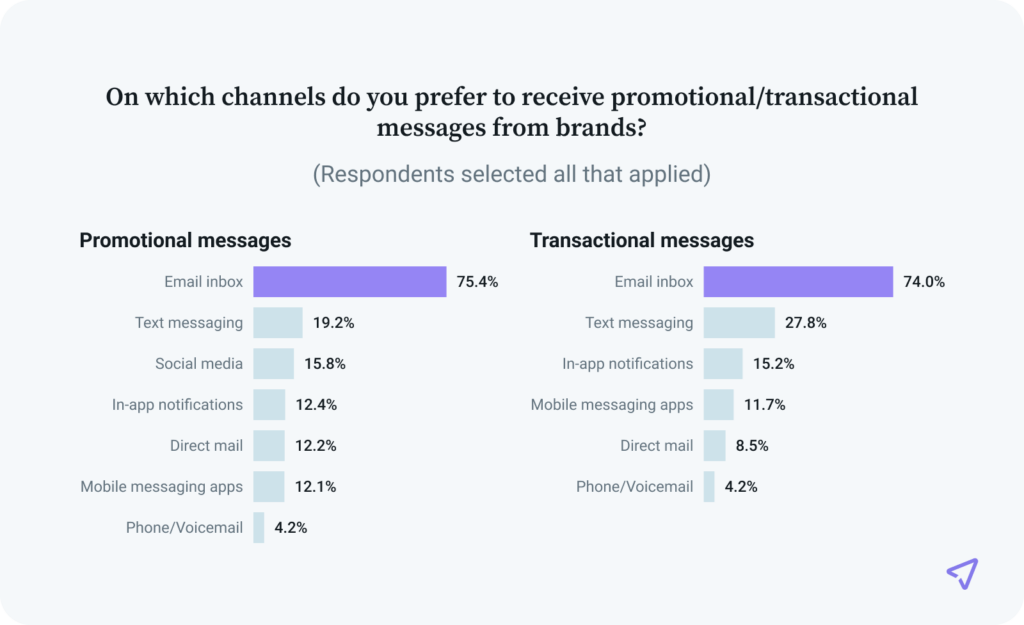
Furthermore, this division critically impacts core email deliverability. If a transactional system, for example, maintains poor list hygiene and persistently sends emails to invalid addresses, it can significantly harm the entire domain’s reputation. Because both systems often send from the same domain, the marketing team’s meticulously crafted campaigns may begin landing in spam folders through no fault of their own, leading to drastic drops in engagement and ROI. Mailjet’s research highlights a concerning trend: while 71% of respondents confirmed they would check their spam/junk folder for a transactional email, this indicates a failure in deliverability that should be actively avoided. It’s akin to expecting customers to rummage through a trash can to find their important mail – a completely unacceptable user experience.
The Solution: A Framework for Growth and Centralized Control
The resolution to this strategic chaos is not a mere compromise; it demands a new, fundamentally integrated model. A unified email platform is built upon the simple yet profoundly powerful principle that all emails are integral components of the same overarching customer conversation. By consolidating these functions, businesses can unlock profound, business-altering benefits that foster trust, accelerate innovation, and ensure robust governance.
A Single, Consistent Customer Journey: Building Trust and Delight
When all of a company’s email communications originate from a single, centralized platform, organizations can finally deliver the cohesive and professional brand experience that cultivates unwavering trust and customer delight. Every touchpoint, from the initial marketing welcome to the final invoice, speaks with one unified voice, adheres to a consistent visual identity, and powerfully reinforces the brand.
This seamless experience is made possible through effective email template management specifically designed for modern, collaborative teams. Platforms featuring robust collaborative tools allow teams to build and maintain a shared template gallery. Marketers can design beautiful, on-brand, and mobile-responsive templates for every conceivable scenario—password resets, feature announcements, usage alerts, and payment receipts. Developers can then effortlessly pull from this meticulously curated gallery via a simple API call, confident that every email they trigger is polished, perfectly aligned with brand guidelines, and optimized for delivery. The perennial debate over transactional versus marketing email branding is thus definitively settled, fostering a harmonious and efficient communication ecosystem.
Empowering Teams and Accelerating Product Innovation
A unified platform serves as a catalyst, effectively dismantling the historical wall between product and marketing teams, thereby permanently eliminating the developer bottleneck. In this progressive model, the workflow is meticulously reoptimized for agility and efficiency.
Growth Managers gain the autonomy to independently design and launch comprehensive email automation sequences for SaaS onboarding using intuitive visual workflow builders. They can A/B test email subject lines for a welcome series to optimize open rates, or strategically test different calls-to-action on a trial expiration nudge to maximize conversions. This empowers them to iterate quickly and respond to market feedback in real-time, driving tangible improvements in key performance indicators.
The developer’s role, consequently, evolves into a more strategic function. Instead of being burdened with requests to hard-code HTML emails or manage disparate systems, they can concentrate their expertise on building and refining an exceptional core product. Their responsibility shifts to enabling this new, agile workflow by making simple, clean API calls from the application to trigger the appropriate, pre-approved template at the opportune moment. This API-first approach drastically shrinks innovation cycles from months and weeks to mere hours and days, providing a critical competitive edge.
Centralized Control and Robust Governance
For Platform Owners and Operations leaders, a unified platform delivers the holy grail of enterprise management: a single pane of glass for the entire email infrastructure. From one central dashboard, administrators can comprehensively monitor deliverability metrics across all email streams, manage user permissions with granular role-based access control, and maintain a single, global suppression list that guarantees compliance with data privacy regulations.
This integrated model provides both crucial autonomy for individual teams and overarching control for central management. Leading platforms are specifically architected to meet this exact need. For instance, features like Mailjet’s Sub-accounts allow a central administrator to create distinct, sandboxed accounts for different teams, brands, or environments (e.g., development, staging, production). Each team can operate independently with its own templates and sender lists, fostering agility. Crucially, the master account owner retains ultimate visibility and control over billing, security protocols, and global compliance rules. This represents centralized email management without stifling vital team agility, offering an optimal balance of freedom and governance.
The Future of Email Communication: Stop Choosing, Start Unifying
The long-standing debate over transactional versus marketing email platforms is, hopefully, after a comprehensive examination, understood to be a relic of a bygone era. Unified email platforms fundamentally flip the script, transforming a perceived operational burden into a significant strategic advantage. The benefits they provide in fostering deeper customer relationships, accelerating product innovation, and delivering the robust, centralized governance required to scale with unwavering confidence cannot be overstated.
The era of choosing between marketer-friendly tools and developer-centric APIs is over. Modern businesses must embrace an integrated approach that recognizes email communication as a singular, continuous dialogue with the customer. This paradigm shift ensures brand consistency, maximizes operational efficiency, mitigates compliance risks, and ultimately drives sustainable growth in an increasingly competitive digital landscape.
Are you ready to dismantle your email silos and effectively combine transactional and marketing emails? Leading SaaS companies are already leveraging all-in-one email platforms to deliver a seamless and impactful email experience, from the very first marketing touchpoint to the last critical notification. The strategic imperative is clear: unify your email strategy to unlock your full growth potential.








