 Pevita Pearce
The global technology sector is currently navigating a pivotal transition in the lifecycle of artificial intelligence, moving away from a period of heavy investor-backed subsidies toward a more aggressive, metered monetization phase. This shift mirrors the trajectory of the ride-sharing industry, specifically the evolution of Uber from a highly subsidized, low-cost disruptor to a profitable enterprise characterized by significantly higher consumer costs. Industry analysts and economic data suggest that the "honeymoon period" of virtually unlimited, flat-rate AI usage is nearing its conclusion, replaced by a complex landscape of tiered subscriptions, credit-based pools, and pay-per-use API models.
The Uber Precedent: From Blitzscaling to Price Hikes
The current trajectory of major AI firms such as OpenAI and Anthropic bears a striking resemblance to the market entry strategy employed by Uber Technologies Inc. during the previous decade. Founded in 2009, Uber utilized massive infusions of venture capital—most notably from SoftBank’s Vision Fund, Alphabet, and Saudi Arabia’s sovereign wealth fund—to offer rides at prices well below the cost of operation. This strategy, known as blitzscaling, allowed the company to dismantle traditional "mom and pop" taxi firms that were required to cover operational costs through immediate fare revenue.
Uber did not post its first full-year operating profit until 2023. Once the competition had been thinned and consumer habits were firmly established, pricing structures shifted. A study conducted by Columbia Business School, analyzing approximately 37,500 trips, revealed that Uber’s price per mile surged by 53% between early 2023 and early 2026. Simultaneously, service quality indicators declined, with average wait times increasing by 19%.

Current trends in the AI sector suggest a parallel "lock-in" strategy. Large Language Models (LLMs) have been offered through generous free tiers and flat-rate $20 monthly subscriptions to encourage rapid adoption. However, as the infrastructure costs of these models become unsustainable for venture capital to carry indefinitely, the industry is pivoting toward higher-priced tiers and metered usage.
The Financial Realities of Hyperscale AI
The economic pressure driving this transition is immense. According to data from Reuters, combined spending on AI infrastructure by the primary "hyperscalers"—Microsoft, Google, and Amazon—topped $700 billion in 2026. While Microsoft has reported a healthy AI revenue run rate of approximately $37 billion, this represents only a fraction of the total capital expenditure invested in the technology.
The specialized model labs face even more precarious financial standing. Anthropic, for instance, has projected that it may not reach a cash-flow-positive state until 2027. Leaked financial filings indicate a net loss of $42 billion for the 2025 fiscal year against revenues of $4.6 billion, with a staggering $518 billion committed to future compute resources. Critics have scrutinized recent claims of "profitable" quarters, suggesting that these figures often rely on creative accounting measures rather than sustainable operational margins.
To bridge this gap, these companies are systematically dismantling the flat-rate model. In late 2026, OpenAI introduced a $500 monthly tier while simultaneously reducing the service levels for its existing $200 Pro plans. This tiered approach is designed to extract maximum value from power users while transitioning the broader market toward API-based billing, where every "token"—the basic unit of text processed by a model—is individually priced.

The Mechanics of Token Consumption and Credit Abstraction
As businesses move toward API usage, the cost of AI becomes a function of volume and complexity. Currently, a significant disparity exists between model tiers. For example, within the Anthropic ecosystem, the flagship Claude Opus 5.5 model costs approximately $20 per million output tokens. In contrast, the more efficient Haiku 5.5 model costs only $0.50 per million output tokens—a 40-fold difference in price for tasks that may not always require the flagship’s level of reasoning.
Furthermore, many vendors have introduced "credit" systems to abstract the underlying cost of tokens. Platforms like Cursor, an AI-integrated development environment, transitioned from offering a fixed number of "fast requests" to a "credit pool" system in mid-2025. This move was met with some controversy, as high-context tasks began consuming credits at rates that exceeded user expectations.
The acquisition of Cursor by SpaceX in August 2026 further illustrated the influence of corporate interests on model selection. Following the acquisition, SpaceX integrated its proprietary Grok model into the platform, making it the default fallback and offering it within a larger credit pool than competitors like Claude or GPT. This type of vendor lock-in and "nudging" forces users into specific ecosystems, often at the expense of cost-efficiency or model performance.
Tokenmaxxing: The Rise of a Perverse Incentive
A controversial phenomenon known as "tokenmaxxing" emerged in early 2026, where tech giants began encouraging the consumption of AI tokens as a primary metric for success. This trend has been criticized as a perverse incentive that prioritizes spending over outcomes.
NVIDIA CEO Jensen Huang famously stated that he would be "deeply alarmed" if highly-paid engineers were not spending at least half of their salary value on AI tokens annually. Similarly, partners at prominent venture capital firms like Sequoia have publicly advocated for tokenmaxxing as a sign of digital maturity. Internally, companies like Meta implemented leaderboards to rank employees by token consumption, awarding titles such as "Token Legend" to those who utilized the most compute resources.
However, the sustainability of this practice has already been challenged. Amazon reportedly shuttered its internal token-tracking leaderboard in May 2026 after discovering that staff were padding their counts with redundant or pointless tasks to improve their rankings. Microsoft similarly discontinued certain internal licenses for third-party models like Claude Code, citing escalating costs. This illustrates Goodhart’s Law: when a measure becomes a target, it ceases to be a good measure. For businesses, celebrating high token spend is increasingly viewed as a vanity metric that benefits the vendor rather than the consumer.
Strategic Alternatives: Small Models and Local Hosting
In response to rising costs and the threat of vendor lock-in, a growing segment of the industry is advocating for "small and open" AI strategies. This involves the use of Small Language Models (SLMs) and open-weight models that can be hosted locally or on private servers.
Open-weight models, such as Alibaba’s Qwen series, Google’s Gemma, and Microsoft’s Phi-mini, offer a powerful alternative to proprietary APIs. Because these models can be downloaded and run on standard hardware, they eliminate the "per-token" meter and keep data within the organization’s firewall. A March 2026 study involving 16 different models across various administrative tasks found that models with 0.5 to 3 billion parameters often provided the best balance of accuracy, speed, and cost-efficiency for routine jobs like data tagging and sentiment analysis.
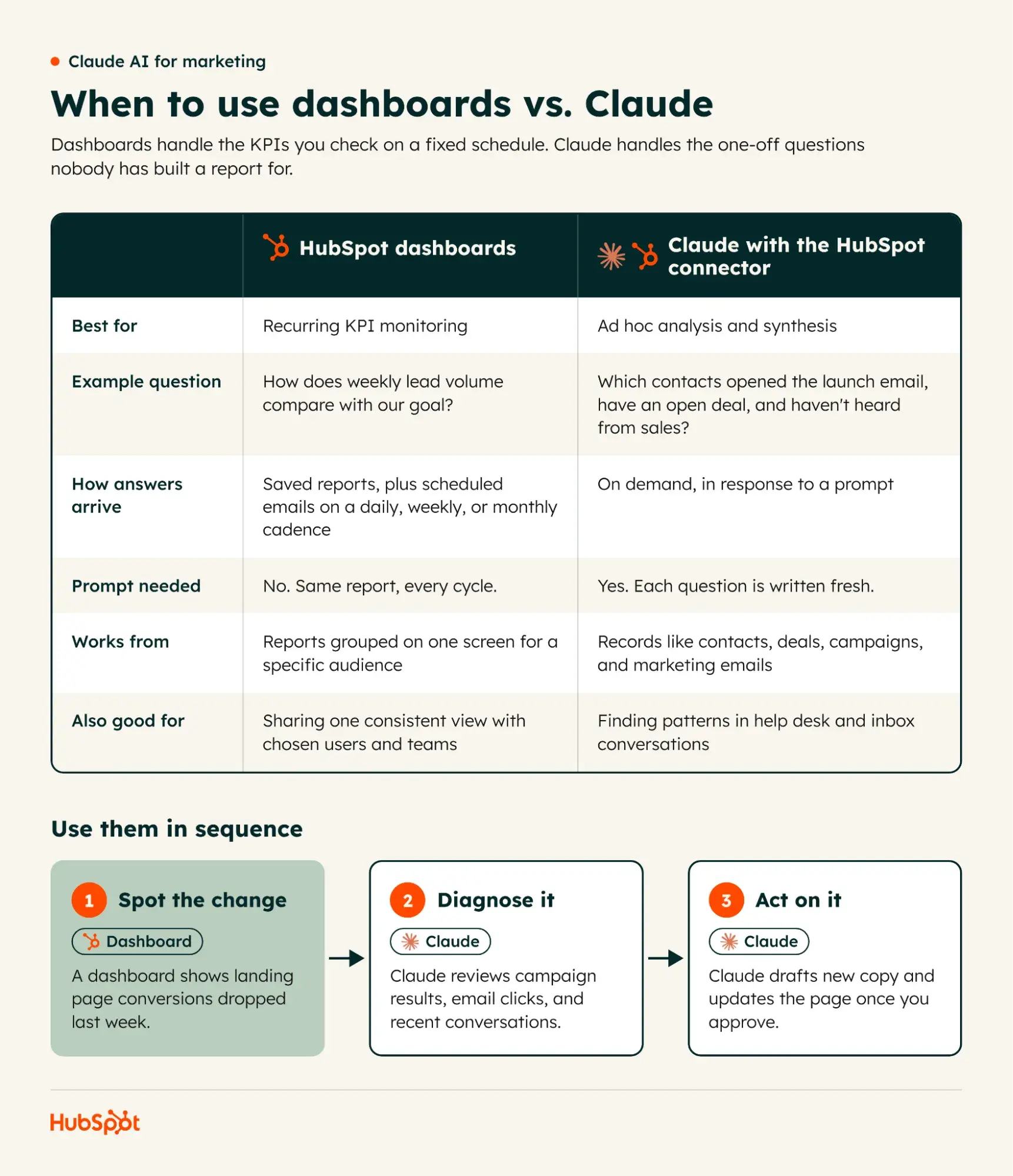
Industry experts, including experimentation consultants and digital strategy directors, recommend a "triage" approach to AI spending:
- Local Processing: Use small, local models for high-volume, low-complexity tasks such as summarization and classification.
- Open Routing: Utilize tools like OpenRouter to maintain vendor independence, allowing for instant switching between models based on current pricing or performance.
- Outcome-Based Metrics: Shift focus from "tokens consumed" to "cost per finished job."
- Context Management: In development and marketing workflows, limit the "context window" provided to the AI to prevent unnecessary token burn.
Broader Impact and Future Implications
The transition to a usage-based AI economy will have profound implications for business operations. Gartner has projected that the cost of agentic workflows—where AI agents perform multi-step tasks autonomously—could rise fivefold by 2028. This is primarily because agents consume significantly more tokens than simple chatbots, often "looping" through reasoning steps that incur costs at every stage.
The "metered" future of AI suggests that businesses must become as disciplined with their "token budget" as they are with their cloud computing or marketing spend. The era of the venture-funded AI subsidy is drawing to a close, and the companies that thrive in the next phase will be those that prioritize architectural independence and operational efficiency over the "tokenmaxxing" hype.
Ultimately, the lesson of the ride-sharing industry applies to the AI sector: building a business model on a temporary subsidy is a high-risk strategy. As the industry matures, the focus must shift from the novelty of the technology to the measurable value of the outcomes it produces. Whether through the adoption of small models or the rigorous optimization of API calls, the goal for the modern enterprise is to maximize judgment while minimizing the waste of expensive, metered tokens.


 Suro Senen
 Raul Delapena Setiawan