Nila Kartika Wati
The landscape of business-to-business (B2B) marketing is undergoing a profound transformation, with influencer and creator marketing emerging not as a fleeting trend, but as a foundational element for brand success. A landmark study, the 2027 B2B Influencer and Creator Marketing Report, has illuminated the significant impact of these strategies, revealing that a staggering 93% of B2B marketers now rate their influencer programs as effective. This overwhelming endorsement is further underscored by the fact that 83% of these professionals are either currently running an influencer program or have concrete plans to launch one within the next year.
Despite this compelling statistical evidence, a persistent question lingers among many brand leaders: "Where does influencer marketing truly fit within our already robust and diversified marketing mix?" This question speaks to a broader challenge of strategic integration, ensuring that influencer collaborations are not siloed efforts but rather synergistic components that amplify overall marketing objectives.
TopRank Marketing, a prominent agency specializing in B2B influencer marketing, has spent over fifteen years addressing this very inquiry for a wide spectrum of mid-sized to enterprise brands. Their expertise spans diverse industries, including technology, healthcare, supply chain management, and Software as a Service (SaaS). The agency emphasizes that the inherent flexibility of influencer marketing allows for a tailored approach, accommodating various needs through pilot programs, integrated content campaigns, and sophisticated, always-on strategies. This adaptability is crucial for B2B organizations navigating a complex and evolving digital ecosystem.
Understanding B2B Influencer Marketing: Program Types and Strategic Objectives
The efficacy of B2B influencer marketing programs, irrespective of their scale or scope, hinges on a clear alignment with predefined strategic goals. While the benefits may manifest in different ways depending on the program’s design, understanding the desired outcomes is paramount. This nuanced approach to leveraging influencer marketing significantly influences the tangible results a brand can achieve. TopRank Marketing identifies two primary, recommended program structures:
Integrated Influencer Content Marketing Campaigns
These campaigns are typically designed to run over several months, utilizing a multi-channel approach to content creation. Their primary objectives are to generate high-quality, valuable content and to systematically identify the most impactful influencers for a brand’s specific niche.
A compelling real-world example of this strategy is Smartsheet’s #FruitfulWork campaign. This initiative spanned several months and involved five key influencers. The campaign focused on producing evergreen content, including articles, videos, and social media posts, that resonated with Smartsheet’s target audience. The success of this program, which aimed to build brand awareness through creative content and influencer partnerships, was later detailed in a TopRank Marketing case study, highlighting how Smartsheet successfully drove measurable results.

Always-On Influencer Programs
In contrast to campaign-specific initiatives, always-on influencer programs are designed for sustained engagement and long-term relationship building. This strategy cultivates a rich and continuously expanding content library while nurturing ongoing partnerships with influencers. These established relationships serve to accelerate both the quality and reach of content, fostering a sense of organic advocacy for the brand.
The data from the 2027 report indicates a growing preference for this continuous engagement model. Currently, 48% of B2B marketers describe their approach as "always-on," a notable increase compared to the 33% who opt for campaign-based programs.
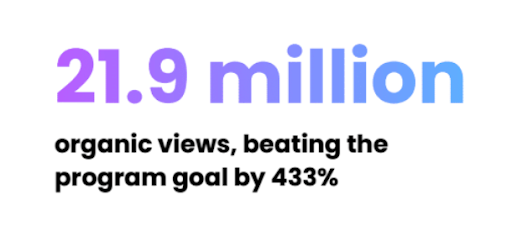
A prime illustration of the power of an always-on strategy comes from Asana. Rather than relying on a single, short-term campaign, Asana developed a long-term influencer program that strategically paired a mega-influencer with mid-tier and nano-influencers. Each creator leveraged their unique strengths and audience to contribute to the program’s overarching goals. This sustained effort resulted in an impressive 21.9 million organic views across 52 videos, significantly exceeding its initial objectives by a remarkable 433%.
With a foundational understanding of these program types, it becomes clear that B2B companies can unlock a multitude of critical outcomes by strategically engaging with influencers.
Five Key Outcomes Achieved Through B2B Influencer Collaborations
The integration of influencer marketing into a B2B strategy yields a diverse array of benefits, extending far beyond simple brand promotion. These advantages are crucial for building trust, authority, and a deeper connection with target audiences in an increasingly crowded marketplace.
1. Enhancing Credibility and Authenticity in Brand Content
Lee Odden, CEO of TopRank Marketing, articulates a core principle of effective influencer marketing: "Collaborating with experts that are respected authorities on the topics of influence produces content, communications and often advocacy that is believable, is empathetic to the concerns and goals of real customers and is trusted by the audience the brand is trying to reach." This sentiment underscores the fundamental value proposition of partnering with credible voices.
When brands align themselves with subject matter experts who hold significant sway within their target industries, they can generate content that genuinely resonates. This collaborative approach imbues the content with authenticity, addressing the real-world concerns and aspirations of customers. Consequently, this earned credibility fosters a deeper level of trust among the intended audience.

The 2027 report’s findings reinforce this emphasis on trust. When selecting influencers, 46% of B2B marketers prioritize trustworthiness and credibility with their audience. This figure significantly outweighs other common selection criteria, such as audience size (30%) or engagement rate (31%). This data suggests a strategic shift towards quality over sheer quantity, focusing on influencers who have cultivated genuine authority and rapport with their followers.
Further insights into this crucial aspect can be found in resources like "Trusted Voices, Trusted Brands: How B2B Influence Powers Buyer Confidence," which delves into the symbiotic relationship between influencer credibility and buyer assurance.
2. Building Brand Thought Leadership Through Executive Partnerships
A powerful strategy for elevating a brand’s standing within its industry involves fostering collaborations between external influencers and internal company executives. These partnerships can take various forms, including co-created content, joint video discussions, participation in virtual events, and other exchanges of expertise and insights. Such collaborations serve to validate and amplify key leadership messages, positioning the brand as a forward-thinking entity.
By aligning trusted industry voices with a company’s core messaging, brands can achieve a significant boost in credibility, differentiate themselves from competitors, and establish clear leadership within their respective fields. While specific examples are numerous and varied, the underlying principle is the amplification of brand authority through the endorsement and amplification by respected external voices.
The report also highlights a correlation between program effectiveness and executive engagement. Very effective influencer marketing programs are nearly twice as likely to involve partnerships with executive-level leaders as other programs (43% versus 24%). This suggests that involving senior leadership not only lends gravitas to influencer collaborations but also signals a strategic commitment to thought leadership.
3. Amplifying Content Integration and Reach
Michael Brenner, VP of Storytelling at Workday, emphasizes a critical distinction: "Trust is not something you can get, it’s something you earn, through experience, expertise and authority. When an independent voice with real credibility speaks on your behalf, you’re borrowing trust they spent years earning. That’s worth more to a B2B brand than audience size alone." This quote powerfully illustrates the inherent value of leveraging established trust.
While B2B creator relationships are often forged online, their influence extends far beyond the confines of social media platforms. When executed strategically, these relationships can significantly bolster a broader marketing strategy. The true power lies not just in the initial creation of influencer content, but in its subsequent integration across multiple marketing channels.
Instead of being a one-off publication, influencer-generated content can be strategically repurposed for paid advertising campaigns, email marketing sequences, and foundational web content. This multi-channel amplification allows brands to connect with their audience in diverse touchpoints, creating a cohesive and far-reaching impact.
The 2027 report reveals that integrating influencer content with existing content marketing efforts is now considered a baseline expectation for highly effective programs (57% of very effective programs versus 56% of all others). However, the real differentiation emerges in other areas: paid media (53% for very effective programs vs. 38%), events (49% vs. 34%), Account-Based Marketing (ABM) (43% vs. 25%), and sales enablement (42% vs. 25%). This indicates that while content marketing integration is standard, leveraging influencers across paid, event, ABM, and sales enablement strategies offers a significant competitive advantage.
An example of successful integration in practice can be seen in the collaboration between Sprinklr and TopRank Marketing, where an influencer-driven masterclass event effectively brought product marketing to life, demonstrating the power of a cohesive, multi-channel approach.
4. Accelerating Content Production, Promotion, and Impact
When thoughtfully designed and meticulously planned, influencer engagement initiatives cultivate a vibrant community of influence that brands can tap into for a wide array of content creation endeavors. Imagine having access to a network of 10, 25, or even over 50 industry experts readily available to contribute to content projects. This access significantly streamlines the content production pipeline.
Developing a thriving influencer community hinges on cultivating genuine relationships built upon mutual benefit and shared values, a hallmark of always-on influencer marketing strategies. An engaged base of influencers not only contributes to content creation but also becomes invested in the success of content distribution and impact. This investment stems from the fact that their own interests and the interests of their audience are directly served by the success of the content.
The data further supports the financial advantages of this approach. Always-on programs attribute nearly double the revenue to their influencer marketing efforts compared to campaign-based programs (42% versus 24%). This suggests that sustained engagement and relationship building yield a more significant return on investment.
5. Boosting Brand Visibility in the Era of AI Search
The increasing reliance on artificial intelligence (AI) for information retrieval presents a new frontier for B2B marketing, and influencer collaborations are proving to be a critical asset in this evolving landscape. Lee Odden, CEO of TopRank Marketing, highlights this pivotal shift: "The role of trusted voices has elevated to both inform LLMs and influence humans about which solutions are the best answer. Visibility is no longer possible without credibility."
B2B buyers are increasingly turning to AI-powered search engines for answers, and these engines tend to cite trusted third-party voices rather than directly referencing brands. Research indicates that approximately 89% of citations for unbranded search queries originate from third-party sources, not brand-owned content. Furthermore, brand web mentions correlate with AI citation rates approximately three times more strongly than backlinks do.
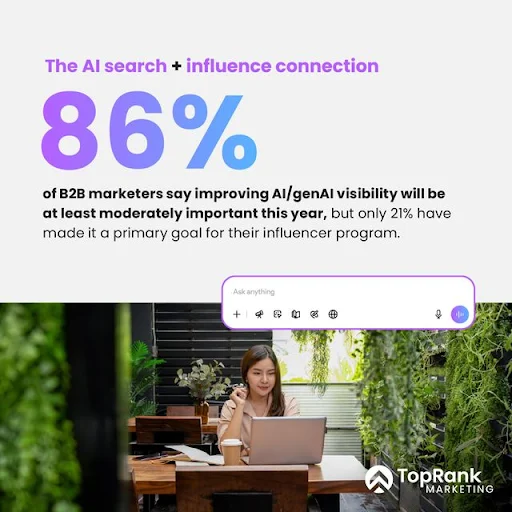
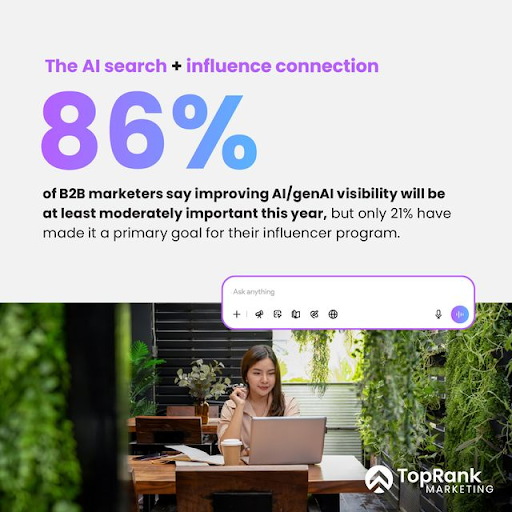
This direct impact on AI visibility represents one of the most critical, yet often overlooked, benefits of B2B influencer marketing. Despite its importance, many brands are failing to optimize for and measure this specific outcome. The 2027 report reveals that while a substantial 86% of B2B marketers believe improving AI visibility is at least moderately important, only 21% cite it as a primary program goal.
However, among those who actively track their program’s impact on AI visibility, nearly all report experiencing some form of benefit. This indicates a significant opportunity for brands to gain a competitive edge by strategically leveraging influencers to enhance their presence in AI-driven search results.
Broader Implications and the Future of B2B Influence
The benefits of B2B influencer marketing extend beyond these five key areas. Other significant advantages include fostering creative differentiation, enabling scalability for growing brands, and accelerating the buyer’s journey. While some B2B marketers may only scratch the surface of what’s possible with influencer collaborations, those who delve deeper can uncover immense value.
Beyond the immediate impact of short-term campaigns, influencer collaborations possess the power to significantly enhance long-term brand perception and solidify thought leadership within an industry. The quantitative and qualitative data presented in the 2027 B2B Influencer and Creator Marketing Report paints a definitive picture: B2B influencer marketing is no longer an experimental tactic but a proven, scalable, and essential strategy for organizations aiming to thrive in today’s competitive marketplace.
The report, which provides a comprehensive overview of B2B influence and actionable strategies for unlocking its benefits, serves as a critical resource for any organization looking to harness the full potential of this dynamic marketing discipline. As AI continues to reshape how information is accessed and consumed, the role of credible, human voices in guiding purchasing decisions will only become more pronounced, solidifying influencer marketing’s place as a cornerstone of modern B2B strategy.