Raul Delapena Setiawan
The digital landscape has undergone a seismic shift in how user behavior is monitored, analyzed, and optimized. For years, Microsoft Clarity has served as a cornerstone for entry-level and mid-market web analytics, primarily due to its "free forever" pricing model and its seamless integration with the Bing Webmaster Tools ecosystem. However, as organizations scale and their data requirements become more sophisticated, the limitations of a free tool—ranging from data retention caps to the absence of native experimentation frameworks—have prompted a surge in the search for robust alternatives. While Microsoft Clarity democratized session recording and heatmap technology upon its release in late 2020, the current market for Digital Experience Analytics (DXA) offers a diverse array of specialized tools designed to fill the functional gaps that a free utility inherently possesses.
The Evolution of User Behavior Analytics: A Brief Chronology
To understand why a business might outgrow Microsoft Clarity, it is essential to view the evolution of the web analytics industry. In the mid-2000s, analytics were primarily quantitative, focused on page views and bounce rates through platforms like Google Analytics. The launch of Crazy Egg in 2006 introduced the concept of the "Heatmap," allowing marketers to see where users clicked. By the mid-2010s, "Session Replay" technology became the gold standard for identifying user friction.

When Microsoft entered the fray in 2020 with Clarity, it disrupted the market by offering unlimited traffic processing for free. This forced premium competitors to innovate beyond simple recording. Today, the industry has moved into the "Actionable Insight" era, where tools do not just show what happened but use artificial intelligence to explain why it happened and provide the native infrastructure to test a solution immediately.
Identifying the Critical Gaps in Microsoft Clarity
While Microsoft Clarity is a high-performance tool for basic visualization, enterprise-grade operations often encounter several "data cliffs" that necessitate a transition to paid or specialized alternatives.
1. The Data Retention Constraint
Microsoft Clarity maintains session recordings for a standard period of 30 days. While it retains a minuscule sample (approximately 1% or 10 sessions per day) for up to 13 months, this is often insufficient for longitudinal studies. Businesses running seasonal campaigns or those with long sales cycles require historical data to compare year-over-year behavior. Without the ability to revisit a specific customer journey from 60 or 90 days ago, troubleshooting complex conversion drops becomes speculative.
2. The Absence of Native Experimentation
Clarity is a diagnostic tool, not a prescriptive one. It can reveal that a user is "rage-clicking" a non-functional element, but it does not provide the A/B testing infrastructure required to validate a fix. Modern growth teams prefer "all-in-one" loops where a problem is identified via session replay and a variation is deployed via an integrated A/B testing engine within the same interface.
3. Regulatory and Industry Restrictions
Perhaps the most significant limitation is Clarity’s Terms of Service regarding sensitive industries. Microsoft explicitly prohibits the use of Clarity on sites containing government, financial, or healthcare information. Furthermore, because Microsoft may use the data collected to improve its own advertising profiles, privacy-sensitive organizations—particularly those operating under strict GDPR, HIPAA, or CCPA frameworks—often find the data-sharing implications of a "free" tool to be a compliance risk.
Top 3 Strategic Alternatives to Microsoft Clarity
For organizations looking to move beyond the basics, three platforms have emerged as leaders in specific niches of the digital experience market.

Crazy Egg: The Integrated Optimization Suite
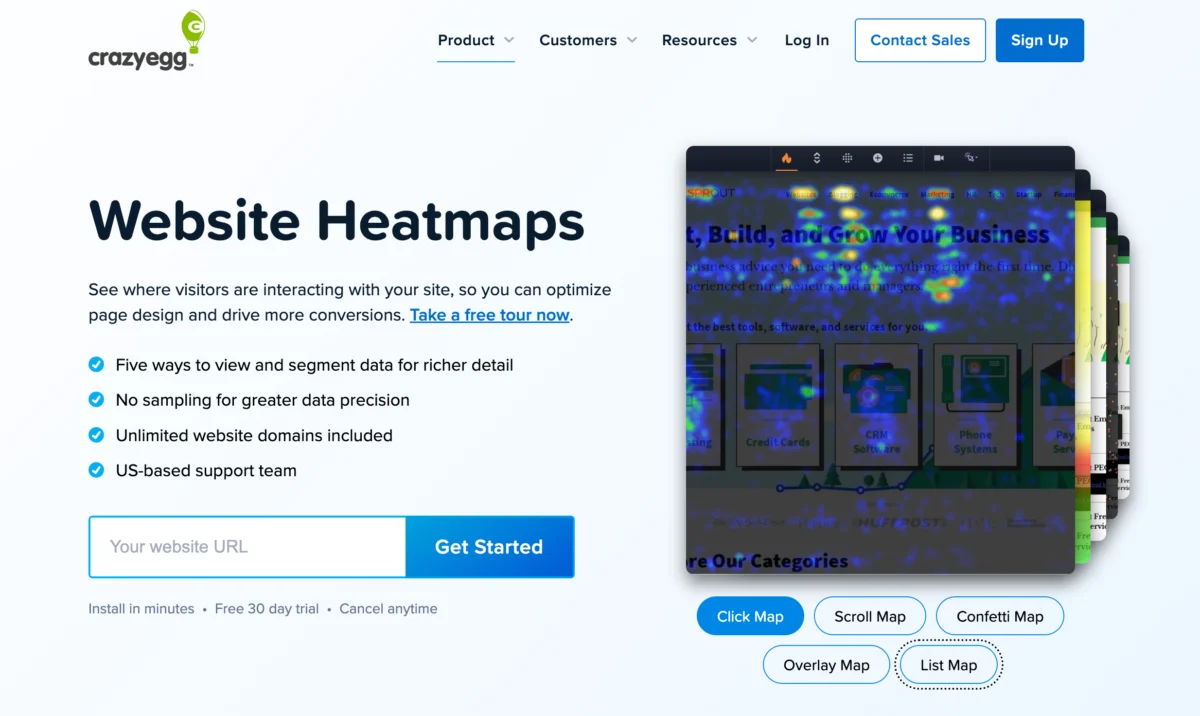
Crazy Egg remains a primary alternative for marketers who require a full feedback loop. Unlike Clarity, which focuses solely on observation, Crazy Egg integrates observation with action.
- Key Features: Heatmaps, session recordings, native A/B testing, and on-site surveys.
- The "Feedback Loop" Advantage: When a heatmap shows that users are ignoring a primary Call to Action (CTA), a marketer can immediately launch an A/B test within Crazy Egg to try a different color or placement. This eliminates the need for a separate, often expensive, testing platform like Optimizely.
- Data Retention: Crazy Egg offers significantly longer retention periods than Clarity, making it suitable for companies that need to track the long-term impact of site changes.
Mouseflow: Advanced Friction Triaging
Mouseflow is designed for technical SEOs and UX designers who need to prioritize fixes based on the severity of the user’s struggle.
- Friction Scoring: One of Mouseflow’s standout features is its automated "Friction Score," which uses machine learning to identify sessions where users encountered errors, slow load times, or confusing navigation.
- Form Analytics: While Clarity provides general click data, Mouseflow offers specialized form analytics that show exactly which field in a checkout or lead-gen form is causing users to abandon the process.
- Funnel Visualization: It allows for the creation of retroactive funnels, linking specific drops in the conversion path directly to the session recordings of the users who dropped off.
Glassbox: The Enterprise Standard for Regulated Industries
For the banking, insurance, and healthcare sectors, Glassbox provides a level of security and data sovereignty that free tools cannot match.

- Tagless Data Capture: Glassbox uses a "set it and forget it" approach to data capture across both web and native mobile applications.
- Privacy-First Architecture: It offers robust masking capabilities that ensure PII (Personally Identifiable Information) never leaves the user’s browser, making it compliant with the world’s strictest financial and health data regulations.
- Struggle Analysis: At the enterprise level, Glassbox uses AI to quantify the financial impact of a technical bug, allowing IT teams to prioritize fixes that have the highest impact on revenue.
Secondary Alternatives for Specialized Use Cases
Beyond the top three, several other platforms cater to specific organizational structures:
- Fullstory: Widely considered the most powerful "Digital Experience Intelligence" platform, Fullstory offers incredibly deep search capabilities, allowing teams to find a single session based on highly specific technical criteria. It is the preferred choice for large SaaS companies with complex web applications.
- Lucky Orange: This is an ideal "middle-ground" tool for small businesses and e-commerce stores. It provides real-time visitor maps and a "chat" feature that allows site owners to interact with users who appear to be struggling in real-time.
- PostHog: For product-led growth teams and developers, PostHog offers an open-source alternative. It can be self-hosted, ensuring that data never leaves a company’s own servers—a critical feature for organizations that prioritize absolute data ownership.
Supporting Data: The Cost of "Free" Analytics
Market analysis suggests that while the initial cost of Microsoft Clarity is zero, the "total cost of ownership" can increase when considering lost opportunities. According to industry benchmarks in Conversion Rate Optimization (CRO), teams using integrated testing and feedback tools (like Crazy Egg or Fullstory) see a 15-20% faster "time-to-insight" compared to teams that must manually export data from Clarity into a separate testing tool.
Furthermore, a 2023 survey of UX professionals indicated that 42% of teams in the financial services sector moved away from free tracking tools due to internal legal audits regarding third-party data usage. This highlights a growing trend toward "Privacy-as-a-Feature," where businesses are willing to pay for tools that offer clearer data boundaries.

Broader Impact and Industry Implications
The shift from Microsoft Clarity to premium alternatives signals a maturing of the digital economy. In the early days of the web, having any data was a competitive advantage. Today, the advantage lies in the speed and accuracy of that data.
The move toward integrated suites also reflects a change in team structures. Modern "Growth Teams" are cross-functional, consisting of designers, developers, and marketers. These teams require a "single source of truth" where a developer can see a JavaScript error in a recording, a designer can see a heatmap of the confused user, and a marketer can launch a survey to ask that user for feedback—all within one dashboard.
As privacy regulations like the EU’s Digital Markets Act (DMA) continue to evolve, the reliance on tools that aggregate data for advertising purposes (like those provided by major search engines) may become a liability. The rise of independent alternatives like Mouseflow and Glassbox suggests a future where analytics are decoupled from advertising ecosystems, providing a more objective and secure view of the customer journey.

Conclusion: Choosing the Right Path
Microsoft Clarity remains an exceptional starting point for any website owner. Its ease of use and zero-cost entry make it a vital tool for the "democratization of data." However, for the professional marketer, the enterprise compliance officer, or the high-growth product manager, the alternatives listed above offer the depth, retention, and actionability required to compete in a data-driven market.
When choosing an alternative, organizations must weigh their specific needs:
- Marketers should lean toward Crazy Egg for its integrated A/B testing and survey capabilities.
- UX Researchers should prioritize Mouseflow for its advanced friction and form analytics.
- Enterprise/Regulated Entities must look toward Glassbox or Fullstory for compliance and mobile app support.
In the final analysis, the "best" tool is not the one with the most features, but the one that fits seamlessly into a company’s workflow and regulatory environment, turning raw behavioral data into tangible business growth.

 Muslim