Nila Kartika Wati
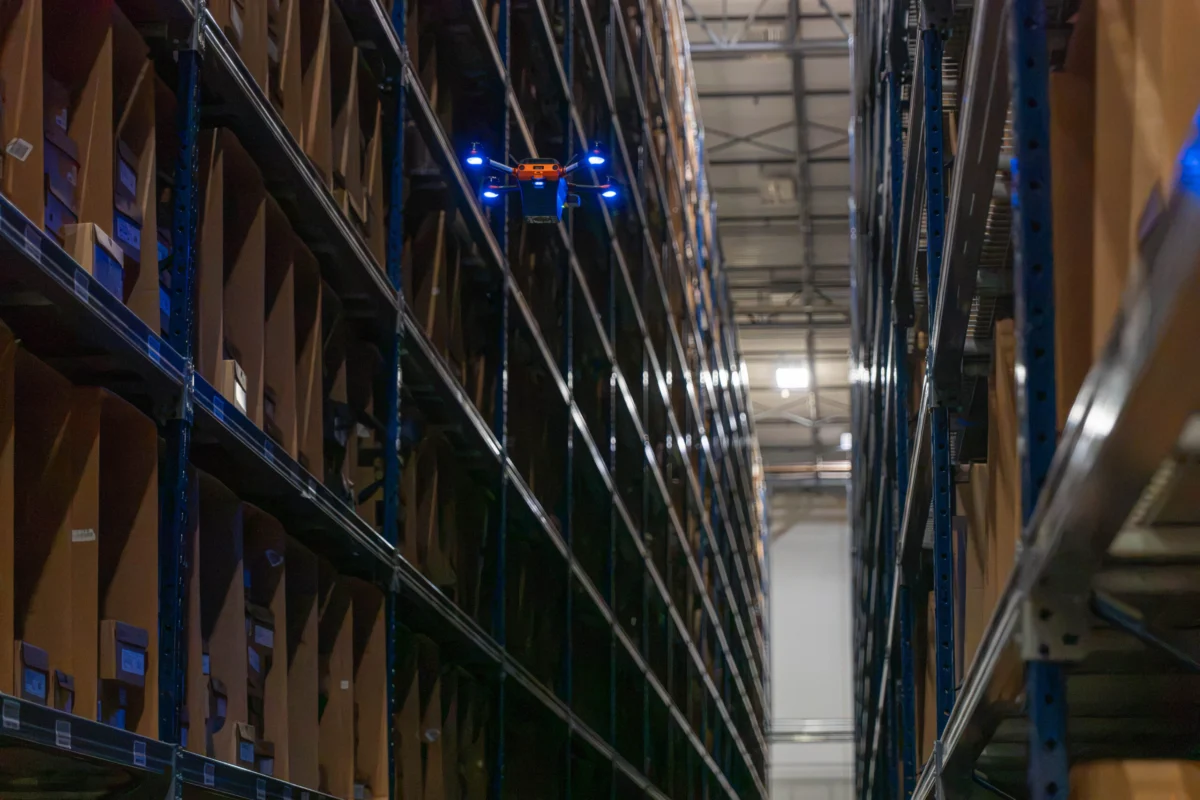
Asics America Corp. is strategically deploying autonomous drones within its primary North American distribution center, a groundbreaking initiative aimed at dramatically improving inventory accuracy and mitigating the persistent risk of unfulfilled orders. This technological adoption, developed in partnership with Corvus Robotics, has already yielded significant improvements, enabling the sportswear giant to recover misplaced merchandise approximately 60% faster, according to a recent announcement from the warehouse automation provider. The implementation signifies a pivotal shift in how Asics manages its vast product catalog, directly impacting customer satisfaction and operational efficiency.
The sportswear brand’s sprawling 855,000-square-foot distribution facility in Byhalia, Mississippi, serves as a critical hub for its North American operations. This center houses an immense inventory of nearly 3 million units, encompassing footwear, apparel, and accessories across approximately 44,000 distinct stock-keeping units (SKUs). The facility is not only responsible for fulfilling direct-to-consumer e-commerce orders but also for supplying Asics’ retail stores and wholesale partners. This intricate ecosystem relies on a unified inventory pool, with customer returns also being processed at this central location.
Historically, the sheer scale and complexity of this operation presented significant inventory management challenges. Misplaced items, ranging from individual shoe pairs to entire cases of merchandise, could remain undetected for extended periods, sometimes up to six months. Kyle Koestler, Senior Director of Distribution and Transportation at Asics America, highlighted the detrimental impact of these discrepancies. “That could be the last pair in the building for an order we’ve already taken, and then the customer gets a cancellation,” Koestler stated in the announcement. Such occurrences not only lead to customer dissatisfaction and potential loss of future business but also create operational inefficiencies as teams scramble to locate missing items.
The introduction of Corvus Robotics’ technology, specifically the Corvus One autonomous inventory drones, has fundamentally altered this landscape. These drones are now conducting inventory counts in two key storage zones within the Byhalia facility: a dedicated "singles area" for returned merchandise and individual shoe pairs, and a "case reserve area" for full cartons. The frequency of these counts has increased substantially, from twice annually to monthly in these critical zones. This heightened cadence allows Asics to identify and rectify inventory errors much sooner, ensuring that products are accurately represented and available for fulfillment.
A New Era of Inventory Visibility: How Drones Transform Warehouse Operations
The Corvus One drones operate autonomously, commencing their tasks around 7 p.m. each night. Equipped with sophisticated onboard computer vision and spatial reasoning capabilities, they navigate the warehouse aisles, even those as narrow as six feet wide, without requiring additional infrastructure such as markers or beacons. During their scheduled flights, which encompass seven sorties per night, the drones meticulously scan universal product codes (UPCs) and simultaneously count the number of boxes stored at each location.
The core of Corvus’s innovation lies in its ability to compare these scanned counts with existing inventory records, effectively identifying discrepancies in real-time. The following morning, warehouse personnel review the data, supported by high-resolution images and video footage captured by the drones during their flights. This visual evidence allows for a rapid and accurate assessment of any inventory anomalies. Angela Williford, Inventory Control Operations Manager at Asics America, elaborated on this process in a Corvus video case study: “Now we can just look at the footage and we can tell exactly what’s going on with it in the locations before we have to send someone out. If it’s something that we can correct from the desk, we’ll correct it then.” This ability to resolve issues remotely significantly reduces the need for manual investigations and saves valuable labor hours.
The impact of this enhanced inventory accuracy is substantial. During a specific three-month period following the drone deployment, the system identified 26 misplaced cases containing over 200 pairs of shoes. Without the increased frequency of drone-based counts, these items could have remained unaccounted for and unavailable for sale until the next scheduled inventory review, potentially leading to missed sales opportunities and customer disappointment. Koestler estimates that Asics is now recovering misplaced inventory approximately 60% faster, a testament to the system’s efficiency.
Furthermore, the automation has led to a significant reallocation of human resources. Instead of dedicating substantial time to routine cycle counting, warehouse employees can now focus on more value-added activities such as inventory reconciliation, in-depth discrepancy investigations, and supporting wholesale channel initiatives. This shift not only improves employee engagement by allowing them to focus on more analytical and problem-solving tasks but also drives greater operational effectiveness across the board. Corvus also notes that the drones reduce the reliance on heavy lift equipment for inventory checks, thereby minimizing traffic and enhancing safety within the facility’s narrow aisles.
Boosting Marketplace Availability and Revenue Potential
The tangible improvements in inventory visibility have had a direct and positive effect on how Asics America engages with online marketplaces. Prior to the adoption of the drone system, Asics maintained a cautious approach, withholding an estimated 12 to 15 units out of every 100 from the inventory feeds provided to its marketplace partners. This precautionary measure was implemented to prevent situations where a product listed as available might prove difficult or impossible to locate when an order was placed, thus avoiding cancellations and negative customer feedback.
With the monthly inventory counts providing a significantly more accurate and up-to-date picture of stock levels, Asics is now able to publish its full inventory availability feed to these partners. This newfound confidence in inventory data allows the company to offer a broader range of products for sale online, potentially capturing more sales at full price rather than resorting to markdowns or liquidations for items that were simply difficult to find. While the exact financial impact of this increased availability has not been disclosed, the implications for revenue generation and market responsiveness are considerable.
A Trend Towards Warehouse Automation: Asics Joins an Expanding Ranks
Asics America’s embrace of autonomous inventory drones positions it within a growing cohort of forward-thinking retailers who are actively investing in warehouse automation to gain a competitive edge. This trend is driven by the increasing demands of e-commerce, the need for greater operational efficiency, and the imperative to enhance customer satisfaction in a highly competitive market.
Corvus Robotics has seen its technology adopted by other prominent players in the retail and distribution sectors. GNC, a health and wellness retailer, significantly increased its inventory counts after implementing Corvus’s drones, moving from two to four counts per year to as many as ten to twelve annually at its distribution centers in Indianapolis and Phoenix. Similarly, Southern Glazer’s Wine & Spirits has expanded its drone deployment to nine distribution centers, reporting a notable 100-basis-point improvement in cases handled per hour.
Beyond inventory drones, the broader landscape of warehouse automation is experiencing a surge in investment. Walmart Inc., a titan in the retail industry, recently announced a substantial commitment of $6 billion to expand Symbotic’s AI and robotics solutions across 25 of its U.S. regional distribution centers. This ambitious rollout is designed to bolster inventory management, increase storage capacity, and optimize product flow throughout its extensive supply chain. These strategic investments underscore a clear industry-wide recognition of the transformative power of automation in modern logistics.
The adoption of advanced technologies like autonomous drones represents a significant evolution in supply chain management. For Asics America, this move is not merely about adopting new gadgets; it is a strategic imperative to ensure that its commitment to quality and customer satisfaction extends seamlessly from the production line to the customer’s doorstep. By leveraging the power of AI and robotics, Asics is not only addressing current operational challenges but also laying a robust foundation for future growth and continued dominance in the competitive sportswear market. The company’s proactive approach to inventory management, powered by cutting-edge drone technology, serves as a compelling case study for other organizations seeking to optimize their distribution networks and elevate their customer experience in the digital age.


 Laily UPN

 Sagoh