Pevita Pearce

In the dynamic and ever-expanding realm of digital marketing, cross-posting has emerged as a critical strategy for brands seeking to maintain a robust and consistent presence across multiple social media channels. This practice, which involves distributing similar content across various platforms, is primarily adopted by social media managers to optimize time and resources. The fundamental principle is to disseminate a core message, adapting it thoughtfully for each platform’s unique format, character limitations, and audience demographics, rather than simply duplicating identical posts.
The imperative for a sophisticated cross-posting strategy has grown exponentially with the global proliferation of social media. Current estimates indicate that social media platforms collectively reach an astounding 5.75 billion users worldwide, a figure projected to continue its upward trajectory. With individuals dedicating an average of two hours and twenty-one minutes daily to social media engagement, the potential for brands to connect with diverse audiences across their preferred channels is immense. This widespread usage underscores the strategic advantage of ensuring brand messaging resonates wherever consumers spend their digital time.

The Evolution of Multi-Platform Presence
The landscape of social media has evolved dramatically from its nascent stages, where brands might have focused on one or two dominant platforms. Today, a typical brand often maintains an active presence on five or more networks, ranging from established giants like Facebook and Instagram to professional hubs like LinkedIn, real-time news conduits like X (formerly Twitter), and visually driven platforms such as TikTok and Pinterest, alongside newer entrants like Threads. This fragmentation necessitates a cohesive yet adaptable content strategy. Cross-posting, when executed correctly, streamlines the posting process, facilitates content repurposing, and ensures social channels remain consistently updated. The advent of AI-assisted social media management tools has further simplified this task, enabling marketers to generate platform-specific variations of a single post in mere seconds, thereby enhancing efficiency without sacrificing relevance.
Distinguishing Cross-Posting from Content Repurposing

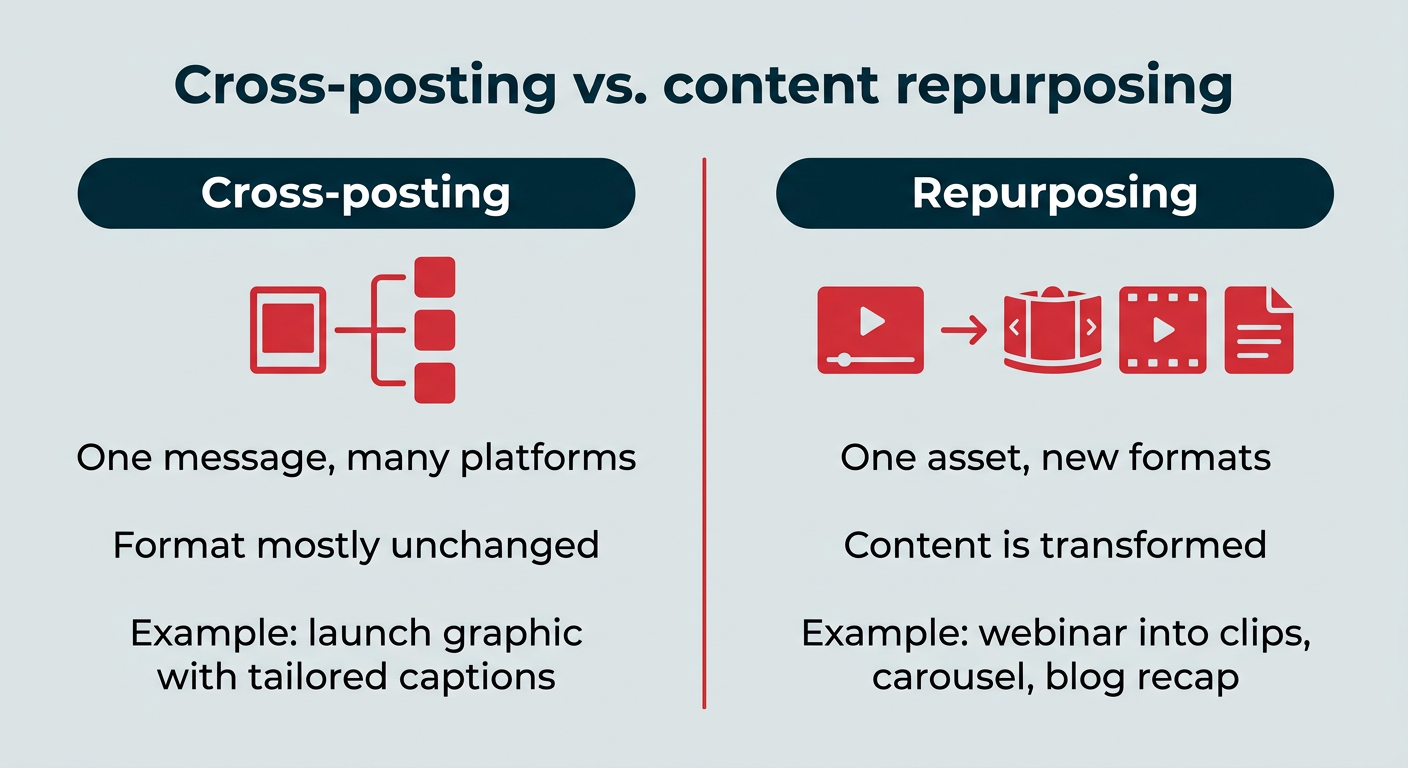
While often used interchangeably, cross-posting and content repurposing represent distinct, albeit complementary, approaches to content dissemination. Cross-posting involves taking a single, core message and tailoring its presentation (caption, visuals, hashtags) for multiple platforms, maintaining the essence and format of the original content largely intact. For instance, a new product launch graphic shared on Instagram, Facebook, and LinkedIn, each with a uniquely crafted caption, exemplifies cross-posting.
Content repurposing, conversely, entails transforming an existing piece of content into an entirely new format for a different purpose or audience. An example would be converting a lengthy webinar recording into a series of short vertical video clips for TikTok and Instagram Reels, extracting key insights for a carousel post, and summarizing the entire discussion into a blog post. Both strategies are integral to a robust content calendar, with cross-posting excelling when the message is self-contained and universally applicable, and repurposing being ideal for extracting maximum value from more extensive or complex assets.
Strategic Imperatives: Benefits and Risks
The primary advantage of a well-executed cross-posting strategy lies in its ability to significantly amplify a brand’s presence across numerous channels without proportionally increasing the content production workload. This efficiency translates into several key benefits:
- Expanded Reach and Visibility: By tailoring content for diverse platforms, brands can tap into new audience segments and reinforce their message with existing followers across multiple touchpoints.
- Enhanced Brand Consistency: A unified core message, even with platform-specific adaptations, reinforces brand identity and voice across the digital ecosystem.
- Optimized Resource Allocation: Marketing teams can maximize the utility of their content assets, saving valuable time and budget that would otherwise be spent creating entirely new content for each channel.
- Increased Engagement Opportunities: Tailored content is more likely to resonate with platform-specific audiences, leading to higher engagement rates such as likes, shares, comments, and clicks.
- Data-Driven Insights: Analyzing performance across different platforms for the same core message provides valuable insights into audience preferences and content effectiveness.
However, the efficacy of cross-posting hinges entirely on the quality of adaptation. Neglecting this crucial step introduces significant risks:
- Spam Perception: Identical posts across multiple channels can appear lazy, automated, or even spammy, eroding audience trust and interest.
- Reduced Engagement: Content not optimized for a specific platform’s conventions or audience expectations is likely to underperform, leading to decreased interaction.
- Platform Penalties: Some platforms, notably X, have explicit policies against cross-posting identical or similar content across multiple accounts or trending topics, which can lead to reduced distribution or account suspension.
- Brand Dilution: A robotic, one-size-fits-all approach can make a brand’s social media presence seem impersonal and dull, diminishing its unique appeal on each platform.
- Alienating Followers: Audiences who follow a brand on multiple platforms will quickly notice and be disengaged by redundant content, perceiving a lack of effort or respect for their individual platform preferences.
Crafting an Effective Cross-Posting Strategy
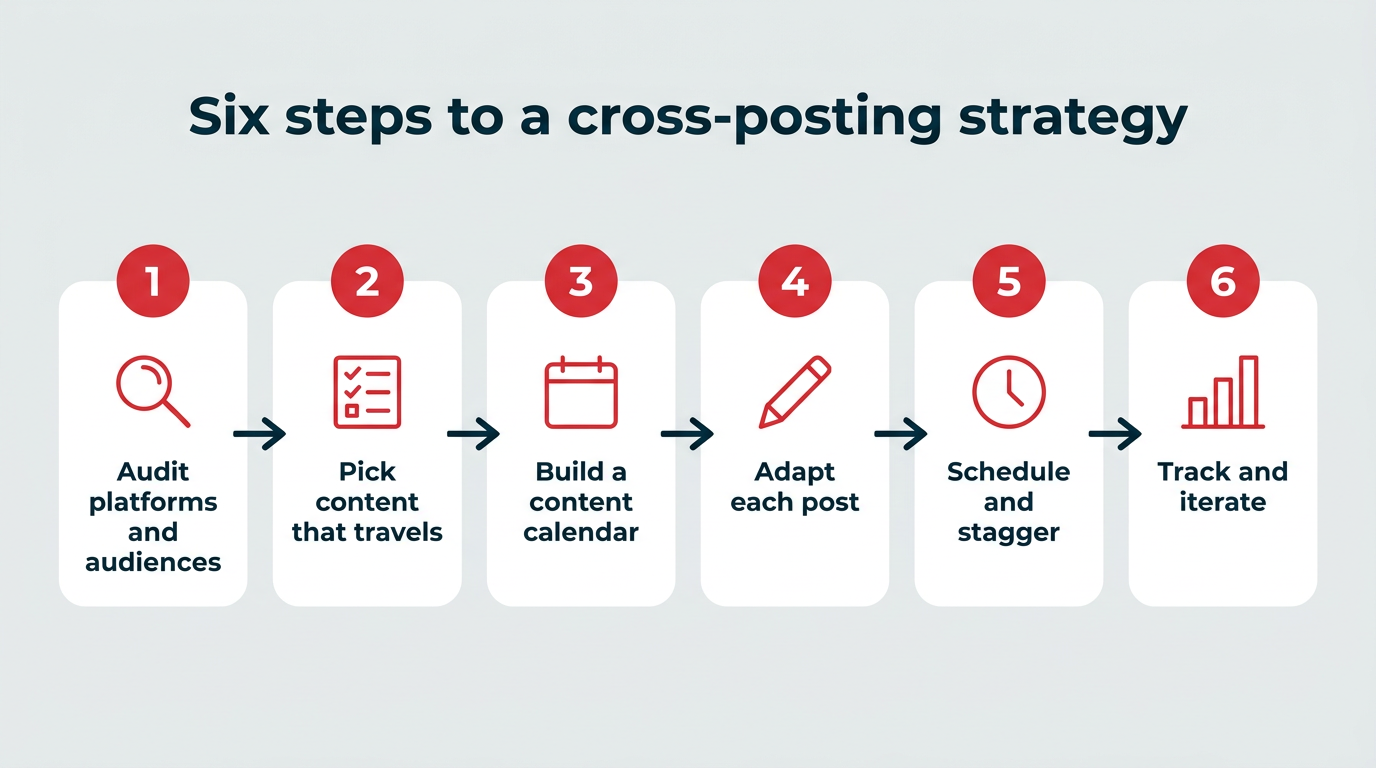
Developing a successful cross-posting strategy involves a systematic and repeatable decision-making process that dictates what content is cross-posted, where it is distributed, and how it is adapted. A six-step framework typically guides this process:
- Conduct a Comprehensive Social Media Audit: Begin by listing every active social media profile, identifying the primary audience for each, and assessing the degree of audience overlap between channels. Higher overlap necessitates greater variation in content to avoid redundancy.
- Identify Cross-Post-Friendly Content Types: Not all content translates effectively across platforms. Evergreen educational materials, brand and product announcements, visually compelling standalone assets, recruitment drives, and overarching campaign messages generally cross-post well because their core value is independent of a specific format. Conversely, platform-native trends (e.g., TikTok audio challenges), long-form LinkedIn articles, direct community replies, and highly time-sensitive content are best kept to their original platforms.
- Develop a Cross-Posting Content Calendar: Map each core content asset to its intended platforms and assign distinct publication times for each version. A simple grid structure can help visualize and prevent duplication issues. Timing should align with each channel’s peak engagement windows, leveraging analytical insights rather than a universal posting slot. Tools like Hootsuite’s Perch, which flags recommended publish times per account, are invaluable for this.
- Adapt Copy and Captions: This is perhaps the most critical step. Starting with a core message, rewrite captions to conform to each platform’s character limits, tone, and conventions. For instance, an announcement for a new coffee shop would require a concise, hashtag-rich caption for X, a visually focused and engaging caption for Instagram with a "link in bio" call to action, and a more descriptive, community-oriented post for Facebook. Careful attention to handle tags and relevant hashtags is paramount to avoid awkward or irrelevant inclusions.
- Optimize Visuals for Each Platform: Images and videos are powerful engagement drivers, but their effectiveness is highly dependent on platform-specific optimization. Familiarize yourself with recommended image and video dimensions (e.g., Instagram’s 4:5, TikTok’s 9:16, X’s 16:9). Using a vertical video cropped into a square feed post, for example, can lead to lost visual information. Crucially, avoid watermarked content from other platforms (e.g., a TikTok video with its watermark uploaded to Reels), as native platforms often deprioritize such content. Always export clean files and size them appropriately.
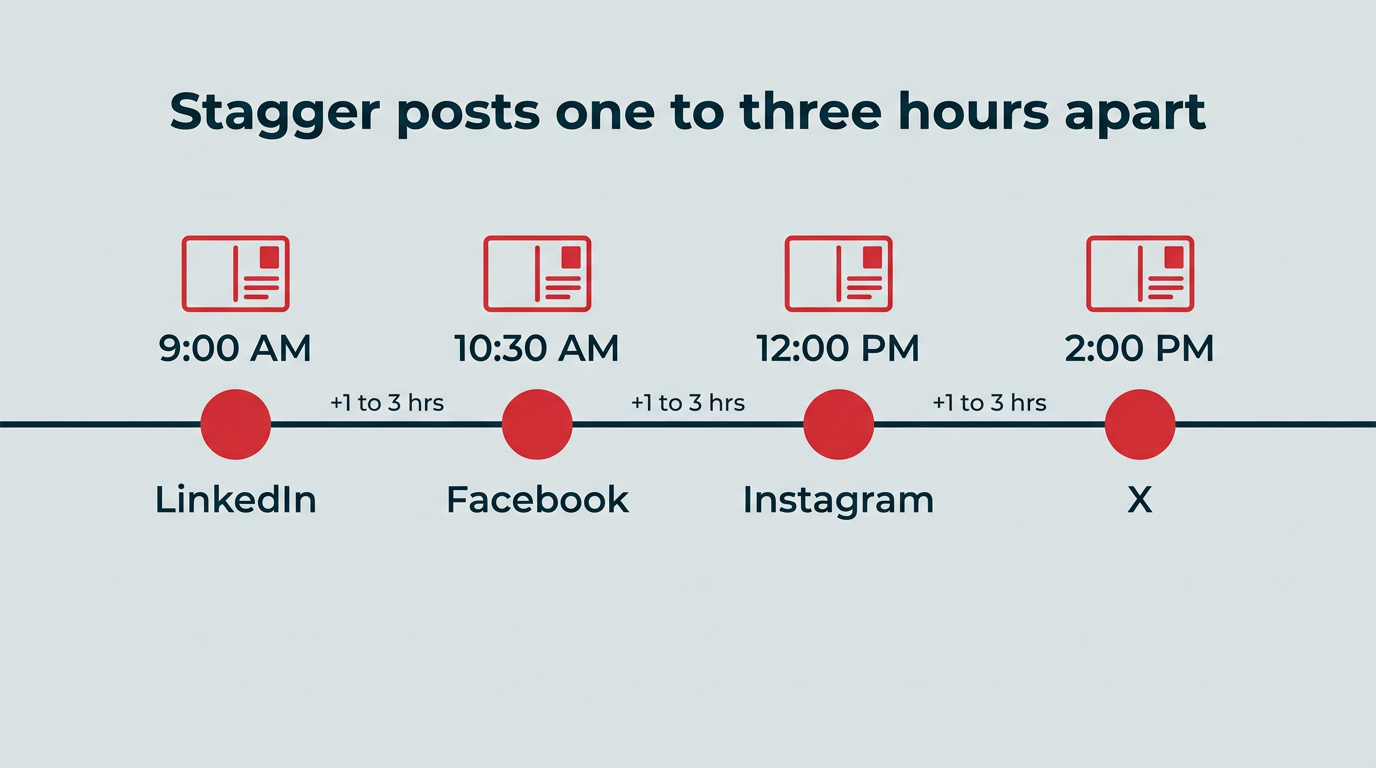
- Stagger Posting Times: Publishing the exact same message simultaneously across all channels is a clear indicator of automation and can disengage followers who see redundant content. Staggering posts by one to three hours between platforms ensures a more natural flow and allows each version to be published during its respective platform’s optimal engagement window.
Platform-Specific Nuances: A Deep Dive
Understanding the specific requirements and audience characteristics of each major social media platform is fundamental to effective cross-posting:
- Instagram: Character Limit: 2,200. Image Size: 1080 x 1350 (4:5). Hashtags: 3-5 relevant. Links: Not clickable in captions (rely on "link in bio"). Audience: Skews under 30, visual-first. Implication: Focus on high-quality visuals, concise storytelling, and drive traffic via bio link.
- Facebook: Character Limit: 63,206. Image Size: 1200 x 630. Hashtags: Minimal, 1-2. Links: Clickable, with previews. Audience: Broad age range, strong for local and community posts. Implication: Allows for more descriptive captions, direct linking, and community engagement.
- LinkedIn: Character Limit: 3,000. Image Size: 1200 x 627. Hashtags: 3-5 professional topics. Links: Clickable, with previews. Audience: Mostly over 30, career-focused. Implication: Professional tone, value-driven content, thought leadership, and strong calls to action for B2B or career-related content.
- X (formerly Twitter): Character Limit: 280 (for basic accounts). Image Size: 1600 x 900. Hashtags: 1-2 maximum. Links: Clickable. Audience: News, commentary, real-time reactions. Implication: Extreme conciseness, timely information, strong visuals, and direct engagement. Adherence to anti-spam policies is crucial.
- TikTok: Character Limit: 2,000 per video caption. Video Size: 1080 x 1920 (9:16). Hashtags: 3-5, trend and niche tags. Links: Clickable for business accounts. Audience: Native vertical video only, avoid watermarks. Implication: Requires highly engaging, short-form vertical video content, often leveraging trending audio and challenges. Authenticity is key.
- Pinterest: Caption Limit: Up to 800 characters. Image Size: 1000 x 1500 (2:3). Hashtags: Keywords matter more than tags. Links: Clickable destination URL. Audience: Search and planning behavior, long content shelf life. Implication: Focus on visually appealing, inspirational, or instructional content with clear calls to action to external sites. Treat it as a visual search engine.
- Threads: Character Limit: 500. Image Size: 1080 x 1350. Hashtags: One topic tag. Links: Clickable. Audience: Conversational, overlaps heavily with Instagram. Implication: Similar to X but often more relaxed and community-focused, leveraging its connection to Instagram.
Leveraging Technology: Tools for Seamless Cross-Posting
The complexity of managing multiple social media profiles and tailoring content for each necessitates the use of advanced social media management tools. Platforms like Hootsuite Social OS are specifically designed to facilitate intelligent cross-posting. Features such as Hootsuite’s Perch enable users to customize a single post for multiple social networks within the same interface, eliminating the need to start from scratch for each channel. This functionality allows marketers to draft a core message, then adapt captions, visuals, and scheduling for different platforms before publishing. The integrated AI writing assistant, Wisdom, can further expedite this process by generating platform-specific caption variations.
Measuring Success and Refining Strategy

A robust cross-posting strategy is incomplete without continuous measurement and analysis. Social media analytics serve as a critical feedback loop, allowing marketers to ascertain the effectiveness of their campaigns and make data-driven decisions. Key metrics to track per platform include:
- Reach: The number of unique users who saw the content.
- Impressions: The total number of times the content was displayed.
- Engagement Rate: Likes, comments, shares, saves, and clicks relative to reach or impressions.
- Click-Through Rate (CTR): The percentage of users who clicked on a link.
- Follower Growth/Loss: Changes in audience size following cross-posted content.
- Sentiment: Qualitative assessment of audience reactions, often gathered through social listening tools.
Hootsuite’s built-in analytics provide a detailed, side-by-side overview of these performance metrics, allowing for direct comparison across networks to identify which platforms respond best to specific content types and adaptations. Additionally, social listening apps like Lumen within Hootsuite Social OS can gauge audience sentiment, helping determine if content frequency or messaging is causing fatigue. The ultimate goal is to find the "sweet spot" – enough content to achieve marketing objectives without overwhelming or alienating the audience.
Expert Consensus and Future Outlook

Industry experts consistently advocate for a nuanced approach to cross-posting, emphasizing that adaptation, not mere duplication, is the cornerstone of success. The future of social media marketing will likely see further integration of AI and automation to refine content adaptation, making the process even more efficient while maintaining authenticity. The role of the social media manager will evolve to become more strategic, focusing on audience insights, platform-specific engagement tactics, and the overarching narrative that ties a brand’s multi-platform presence together.
In conclusion, cross-posting is an indispensable tactic for modern social media marketing, offering unparalleled opportunities for reach, efficiency, and brand consistency. However, its effectiveness hinges on a deliberate, adaptive workflow. By leveraging comprehensive tools, understanding platform nuances, and meticulously analyzing performance, brands can transform cross-posting from a potential pitfall into a powerful engine for engagement and growth across the diverse social media landscape.


 Layla Zulfa

 Nana Muazin