Layla Zulfa

In an increasingly interconnected digital world, establishing clear parameters for online conduct has become paramount for organizations. Social media guidelines serve as essential instructions and recommendations, dictating how employees, partners, and collaborators ought to represent a brand across various social media platforms. These comprehensive documents extend beyond internal staff, proving equally valuable for external agencies, contractors, and influencers who speak on a brand’s behalf, effectively acting as a manual for navigating social media best practices in a positive and safe manner.
The rapid proliferation of social media over the past two decades has fundamentally altered how businesses communicate, market, and engage with their audiences. What began as informal platforms for personal connection has evolved into powerful channels capable of shaping public perception, driving sales, and even influencing political discourse. This evolution, however, has brought with it a complex array of challenges, from reputational risks and legal liabilities to maintaining brand consistency across myriad digital touchpoints. It is against this backdrop that social media guidelines have transitioned from a corporate luxury to an indispensable component of modern organizational governance.
The Triad of Digital Governance: Guidelines, Policies, and Style Guides
While often conflated, social media guidelines are distinct from a social media policy or a brand style guide, though all three are vital for robust digital governance. The key difference lies in their purpose and enforcement: guidelines recommend, policies require, and style guides standardize. Most organizations find themselves needing all three to effectively manage their digital footprint.
A social media policy, typically owned by legal, human resources, or compliance departments, sets enforceable rules and outlines consequences for non-compliance. Its tone is formal and precise, with updates usually triggered by changes in legislation or internal employment agreements. Failure to adhere to a social media policy can lead to disciplinary action, underscoring its binding nature.

Conversely, social media guidelines, often managed by marketing or communications teams, are practical and encouraging. They advise on appropriate behavior, brand voice, and engagement strategies, with updates driven by evolving platform features, regulatory shifts, or emerging social media trends. While advisory, guidelines often include escalation paths for serious breaches, highlighting their role in proactive risk management.
A style guide, the domain of brand or creative teams, focuses on standardizing an organization’s voice, visual identity, and formatting across all content, including social media. Its instructional and detailed tone ensures consistency in messaging, graphics, and overall brand presentation. Updates typically occur when brand assets or core messaging undergo revision.
For organizations with limited resources, prioritizing the development of social media guidelines is often the most pragmatic starting point. They offer broad utility, providing a foundational framework for responsible online engagement that can later be augmented with a more formal policy and detailed style guide. Hootsuite Academy’s free course, "Implementing social media governance within your organization," further illustrates the importance of this integrated approach.
Why They Matter: Safeguarding Reputation and Empowering Advocacy
The significance of well-defined social media guidelines cannot be overstated. They serve as a crucial protective layer for a brand, ensuring compliance with an ever-growing body of regulations, and simultaneously empowering employees to confidently participate in online discourse.
Protecting Brand Reputation: Clear social media guidelines are a frontline defense against reputational damage. When integrated with a robust social media policy, they delineate the intricate connections between everyday online activity and a brand’s public image, extending from routine interactions to high-stakes situations. A single misstep – sharing confidential information, making an unsubstantiated product claim, or neglecting a mandatory disclosure – can trigger costly legal reviews, regulatory complaints, or adverse media attention. Guidelines, while not infallible, significantly mitigate these risks by eliminating the common plea of ignorance.

Ensuring Regulatory Compliance: Social media regulations are not confined to official brand accounts; they extend to individual employees. This is particularly critical in heavily regulated sectors like healthcare (e.g., HIPAA) and finance (e.g., FINRA, SEC), but equally relevant for consumer brands. The Federal Trade Commission’s (FTC) social media disclosure guidelines, for instance, mandate clear disclosure when individuals, including employees, influencers, or partners, receive compensation or products for endorsements. Furthermore, the regulatory landscape is in constant flux, with platform policies, regional laws like the EU Digital Services Act (DSA), and state-level social media legislation evolving independently. This dynamic environment necessitates annual reviews of guidelines, informed by the latest social media trends, rather than reactive updates after an incident. Incorporating specific examples of compliance within the guidelines helps translate abstract rules into actionable behaviors, preventing confusion and costly errors.
Encouraging Brand Advocacy: Every employee is a potential brand ambassador, yet many hesitate to engage due to uncertainty about what is permissible to share on their personal social media accounts. Social media guidelines provide the necessary guardrails, enabling teams to discuss their work and the company in a positive, inclusive, and on-brand manner. This clarity fosters confidence, encouraging employees to champion the brand and their contributions. Platforms like Hootsuite Amplify facilitate this by offering employees a curated library of pre-approved content—posts, visuals, and links—that can be shared instantly to their personal feeds. Such tools remove the guesswork, allowing employees to confidently engage online without the stress of second-guessing.
Anatomy of Effective Guidelines: Key Components
At its core, a robust social media guidelines document must articulate who it applies to, the scope of social media activity it covers, and the expected online conduct of employees. Beyond these fundamentals, it should incorporate practical safeguards concerning privacy, copyright, cybersecurity, accessibility, the use of artificial intelligence, and disclosure requirements.
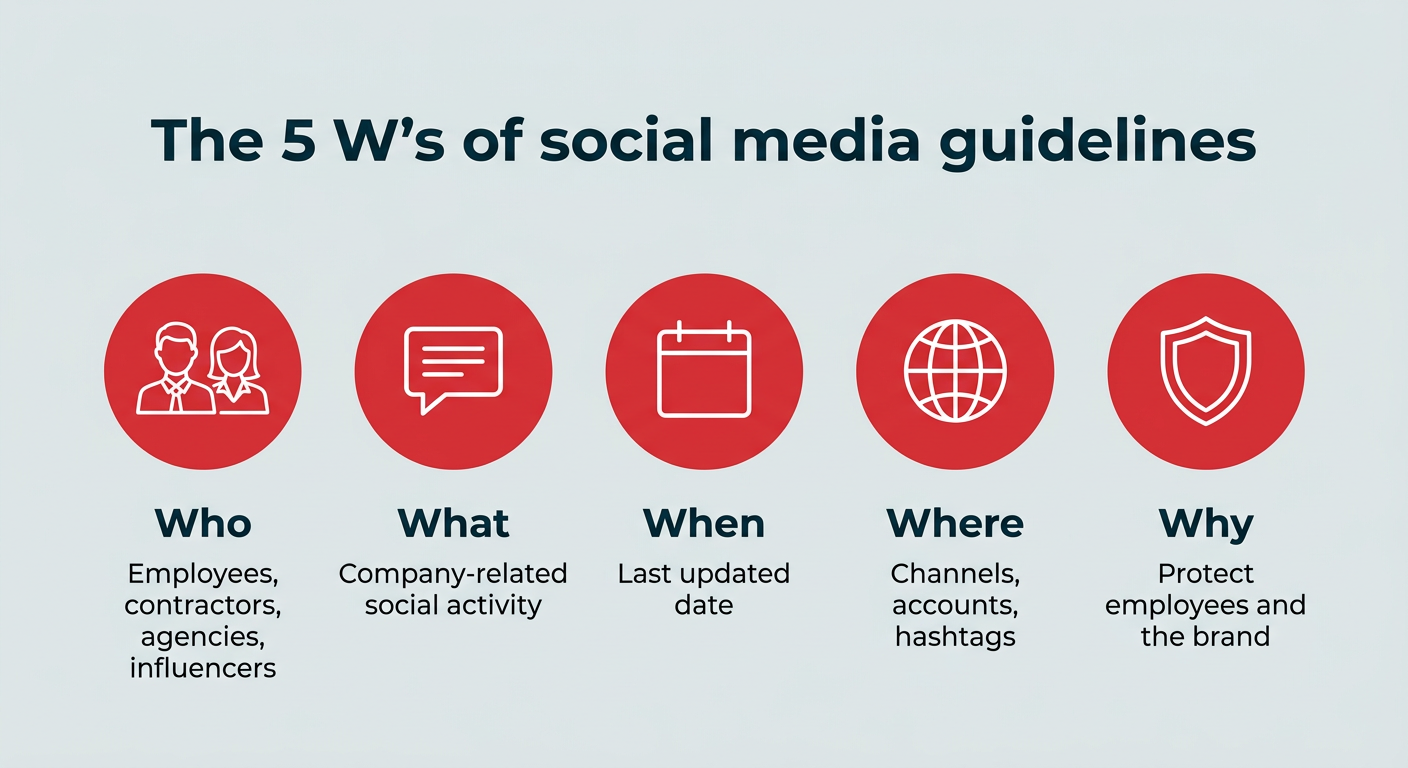
The 5 W’s: Strong social media guidelines begin by addressing the fundamental questions:
- Who: Which individuals are covered (employees, contractors, agencies, influencers)?
- What: What types of social media activity are covered (personal vs. professional posts, comments, shares)?
- When: When do these guidelines apply (during work hours, after hours, during crises)?
- Where: Which platforms are included (LinkedIn, X, Facebook, Instagram, TikTok, etc.)?
- Why: What is the overarching purpose (brand protection, advocacy, compliance)?
High-Level Dos and Don’ts: Recognizing that not every employee will meticulously read every line, leading with a concise, impactful list of basic expectations acts as an immediate code of conduct. This summary provides a quick reference for appropriate online behavior, with detailed explanations following in subsequent sections. Examples include:
- Do be respectful and professional.
- Don’t share confidential information.
- Do disclose your affiliation when discussing company-related topics.
- Don’t engage in arguments or harassment.
Disclosure and Transparency: Employees must clearly differentiate between personal opinions and official company statements. While a bio disclaimer like "All opinions expressed are my own" is a good start for personal accounts, it is insufficient when discussing company-related matters. The FTC’s Endorsement Guides mandate that employees identify themselves as such within the post itself. To ensure consistency, legal or compliance teams should approve standardized, copy-and-paste disclosures for employees to use, directly embedded within the guidelines.
Privacy and Confidentiality: Reinforcing that company confidential information remains confidential, even outside working hours, is paramount. Prohibited sharing includes internal communications, unreleased product information, client data, and sensitive financial details. This extends to photos taken at the workplace, particularly for organizations bound by strict regulations like HIPAA or FERPA. Employees should also be reminded to regularly review their personal social media privacy settings.
Copyright Guidelines: Guidelines must emphasize respect for intellectual property, encompassing images, text, videos, and music. The general rule is simple: if it’s not yours and you don’t have explicit permission, do not post it (native resharing functions being an exception). The emergence of AI-generated content introduces additional copyright complexities, necessitating legal counsel before posting such material.
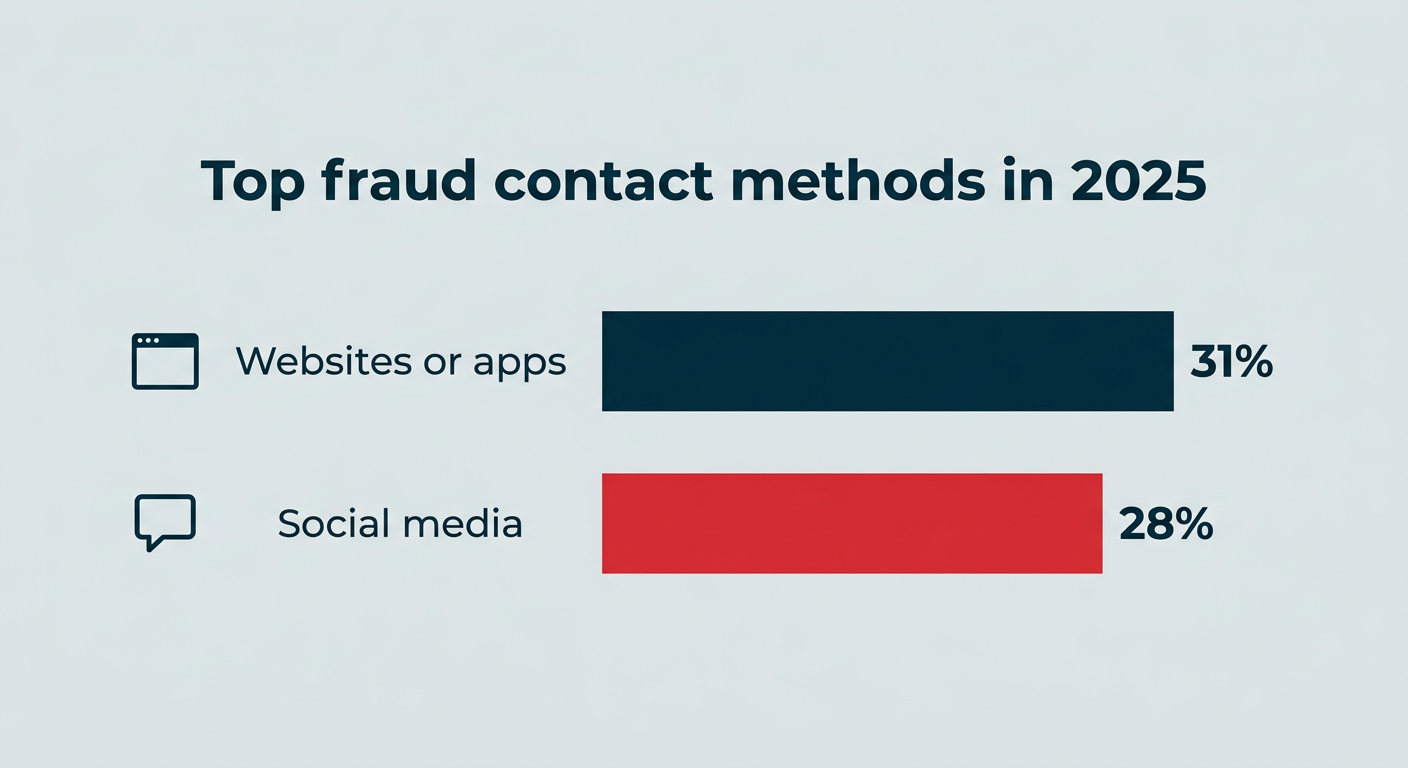
Cybersecurity: Even vigilant employees can fall victim to sophisticated online threats. Social media platforms are prime targets for fraudsters; according to the FTC, social media was the second most common contact method for fraud victims in 2025, accounting for 28% of reports involving a loss, and the costliest by total dollars lost. Guidelines should reiterate cybersecurity fundamentals:
- Use strong, unique passwords and multi-factor authentication.
- Be wary of suspicious links or unsolicited messages.
- Do not share sensitive company or customer information.
- Report any suspicious activity immediately.
Accessibility and Inclusivity: Promoting accessibility and inclusivity online is both an ethical imperative and a legal requirement for many brands. Guidelines should encourage practices such as:
- Using alternative text for images.
- Providing captions for videos.
- Employing clear, concise language.
- Avoiding jargon and slang.
- Being mindful of diverse audiences.
Responding to Negativity: A clear protocol for handling trolls, harassment, or negative comments is essential. This defines when to ignore, escalate, or respond directly. For instance, acknowledging a concern publicly before moving the conversation to direct messages for resolution is often effective. Organizations should link to a content moderation policy for managing comments on owned channels, detailing when to hide, delete, or respond, and who to involve in sensitive situations.
AI and Generative AI Use: With the widespread adoption of AI tools for content creation, guidelines must specify what is permitted, what requires review, and what is strictly prohibited. This includes:
- Approved AI tools for drafting captions or resizing creative.
- Mandatory human review for all AI-generated content.
- Prohibitions against inputting confidential company data into public AI tools.
- Disclosure requirements for synthetic media.
Channel-Specific Guidelines: Recognizing that norms and risks vary across platforms, guidelines should offer a concise overview of considerations for major networks (e.g., LinkedIn for professional networking, TikTok for short-form video, X for real-time news).
Links to Relevant Policy Documents: Social media guidelines should not exist in isolation. They must link to related resources such as the formal social media policy, brand style guide, community guidelines, broader brand identity documents, and the employee handbook. Any available social media training or employee advocacy programs should also be highlighted.
Crafting Your Digital Framework: A Step-by-Step Approach
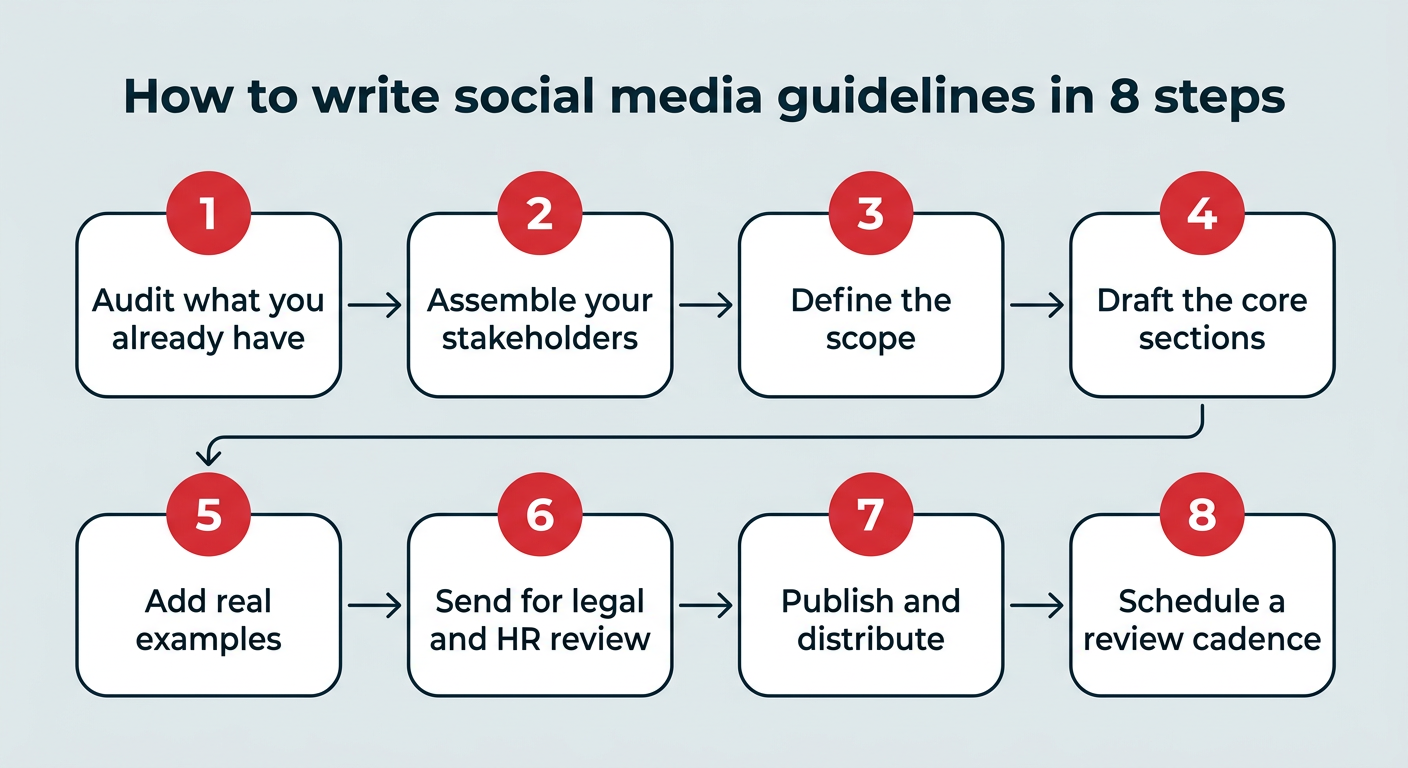
Writing effective social media guidelines can be more straightforward than anticipated, provided the right stakeholders are engaged early in the process.
- Audit Existing Documents: Begin by collecting all organizational documents that pertain to social media, including employee handbook sections, brand style guides, crisis communication plans, or outdated policies. Identify current, contradictory, or missing information to establish a baseline.
- Assemble Stakeholders: Involve key departments from the outset: legal, human resources, communications, IT security, and the social media team. Solicit their primary concerns regarding social media risks; these insights will shape the guideline sections.
- Define Scope: Clearly delineate who the guidelines apply to and what constitutes company-related activity, utilizing the 5 W’s framework. Be precise about the application to personal accounts, as vague language often leads to confusion or challenges.
- Draft Core Sections: Develop content for each identified section: dos and don’ts, disclosure, privacy, copyright, cybersecurity, accessibility, handling negativity, AI use, and channel-specific notes. Write in clear, accessible language, avoiding legalistic jargon to ensure readability and comprehension.
- Add Real Examples: Illustrate abstract rules with concrete examples, showing both compliant and non-compliant posts. Providing copy-and-paste disclosure language is particularly effective in removing ambiguity.
- Legal and HR Review: Allocate ample time (typically two weeks) for legal teams to verify regulatory accuracy and for HR to confirm alignment with employment agreements and labor laws. This step is critical, especially in regulated industries where errors carry significant consequences.
- Publish and Distribute: Make the final document easily accessible via the company intranet, onboarding packets, or HR portal. Announce its publication with a brief walkthrough, focusing on the top five key takeaways for employees, which is often more impactful than simply uploading a lengthy PDF.
- Schedule Review Cadence: Establish an annual review schedule, along with trigger-based reviews for significant events such as platform policy changes, new regulations, or internal social media incidents. Ensure the document includes a "last updated" date to prevent reliance on outdated versions.
From Blueprint to Practice: Implementation and Enforcement
A meticulously crafted document holds no power if it remains unread and unenforced. Effective rollout and continuous reinforcement are crucial for the success of social media guidelines.
- Integrate into Onboarding: Introduce the guidelines to new hires as part of their initial training, establishing expectations from day one.
- Regular Training Sessions: Conduct periodic refresher training sessions for all employees, especially when updates are made or new platforms gain prominence.
- Easy Accessibility: Ensure the guidelines are readily available on internal platforms, possibly through a dedicated intranet page or a shared knowledge base.
- Lead by Example: Senior leadership and management must visibly adhere to the guidelines, demonstrating their importance to the entire organization.
- Feedback Mechanism: Establish a clear channel for employees to ask questions, report concerns, or provide feedback on the guidelines.
- Empowerment Tools: Utilize platforms like Hootsuite Amplify to provide employees with pre-approved content, simplifying compliance and encouraging brand advocacy.
- Escalation Procedures: Clearly define the steps for reporting potential violations and the individuals or departments responsible for addressing them.
- Consistent Enforcement: Apply consequences for breaches consistently and fairly, reinforcing the seriousness of the guidelines.
Real-World Precedents: Industry Examples
Examining how diverse organizations implement social media guidelines provides valuable insights into best practices.
- Education (McGill University): McGill’s guidance, like many post-secondary institutions, extends to both employees and students, structured around general principles of accuracy, respect, inclusiveness, privacy, and accessibility, crucial for protecting the university’s brand.
- Government (Ontario Public Service): The Ontario Public Service emphasizes common-sense principles across four use categories, with a critical caveat that disclaimers like "opinions are my own" do not absolve individuals of professional responsibility for public statements.
- Healthcare (Horizon Health Network): Horizon Health Network demonstrates that concise guidelines can be highly effective, focusing on reputation, professionalism, and personal use. Their emphasis on aligning personal activities with professional standards, especially when identifying with the network, is particularly salient. Providence Health & Services further underscores the critical need for patient privacy and HIPAA compliance in personal online activities.
- Luxury Retail (Chanel): Chanel provides a masterclass in disclosure, offering granular detail on what constitutes insufficient disclosure for sponsored content (e.g., "#gifted" or "#freeproduct" are deemed inadequate by the FTC).
- Technology (Intel): Intel’s long-standing guidelines are praised for their plain language and actionable advice, notably the often-quoted "If it gives you pause, pause rather than publish." They also emphasize correcting mistakes openly.
- Nonprofit (American Red Cross): Given its extensive volunteer network and critical mission, the American Red Cross’s guidance is tailored for those posting during active emergencies, stressing accuracy, avoiding speculation, and escalating sensitive information to communications teams.
- Financial Services (Vanguard): Operating under stringent FINRA and SEC regulations, Vanguard’s public guidance reflects requirements for treating social media posts as business communications, including recordkeeping and pre-approval. They clearly state that comments on their channels may be reviewed and retained, and individual account details will not be discussed online.
Navigating the Future: AI, Regulations, and Continuous Adaptation
The digital landscape is in a state of perpetual evolution. The increasing sophistication of AI, the emergence of new platforms, and the dynamic nature of global regulations mean that social media guidelines are not static documents. They require continuous vigilance and adaptation. Organizations must remain attuned to emerging trends, potential risks, and shifts in user behavior to ensure their guidelines remain relevant and effective.
In conclusion, social media guidelines are no longer optional but an imperative for any organization operating in the modern era. They provide the framework for responsible online engagement, safeguard brand reputation, ensure regulatory compliance, and empower employees to become confident brand advocates. By meticulously crafting, implementing, and regularly reviewing these guidelines, organizations can navigate the complexities of the digital world with greater assurance and strategic advantage. Tools like Hootsuite, which enable streamlined publishing, scheduling, engagement, and measurement, further integrate these guidelines into daily social media management, transforming them from theoretical documents into practical, actionable frameworks.


 Nana Muazin

 Lina Irawan