Azzam Bilal Chamdy
The digital marketing landscape for software-as-a-service (SaaS) companies is undergoing a fundamental shift as traditional text-based communication faces diminishing returns on professional social networks. For product engineering teams, the "changelog dilemma"—where significant feature updates receive minimal engagement when presented as bullet points—has necessitated a move toward high-quality, short-form video content. While traditional motion graphics tools like Adobe After Effects have long been the industry standard, a new methodology combining the reasoning capabilities of Large Language Models (LLMs), specifically Claude Opus 5.5, with programmatic video frameworks like Remotion, is democratizing the production of professional-grade launch videos. This approach replaces manual keyframing with declarative React code, allowing developers to generate high-fidelity marketing assets directly from their technical specifications.
The Evolution of Programmatic Video in Product Marketing
Historically, the barrier to entry for high-quality product videos was defined by two factors: specialized design skills and significant time investment. A typical 15-second feature highlight could require a full weekend of manual labor in a traditional non-linear editor. However, the rise of "Video as Code" through frameworks like Remotion has changed the underlying architecture of motion design. Remotion allows developers to build videos using React, where each frame is a function of time and state. When paired with Claude Opus 5.5’s advanced code generation capabilities, this workflow allows for the rapid translation of a written changelog into a choreographed visual sequence.
Data from recent industry reports suggests that video content on platforms like LinkedIn generates up to 20 times more shares than static text posts. Despite this, many lean teams skip video production due to the friction of the creative process. The integration of AI into this workflow addresses this friction by handling the "middle-ware" of creativity—the translation of a product feature into a visual beat sheet and the subsequent coding of those animations.
Technical Foundation: The Precision of Frame-Based Animation
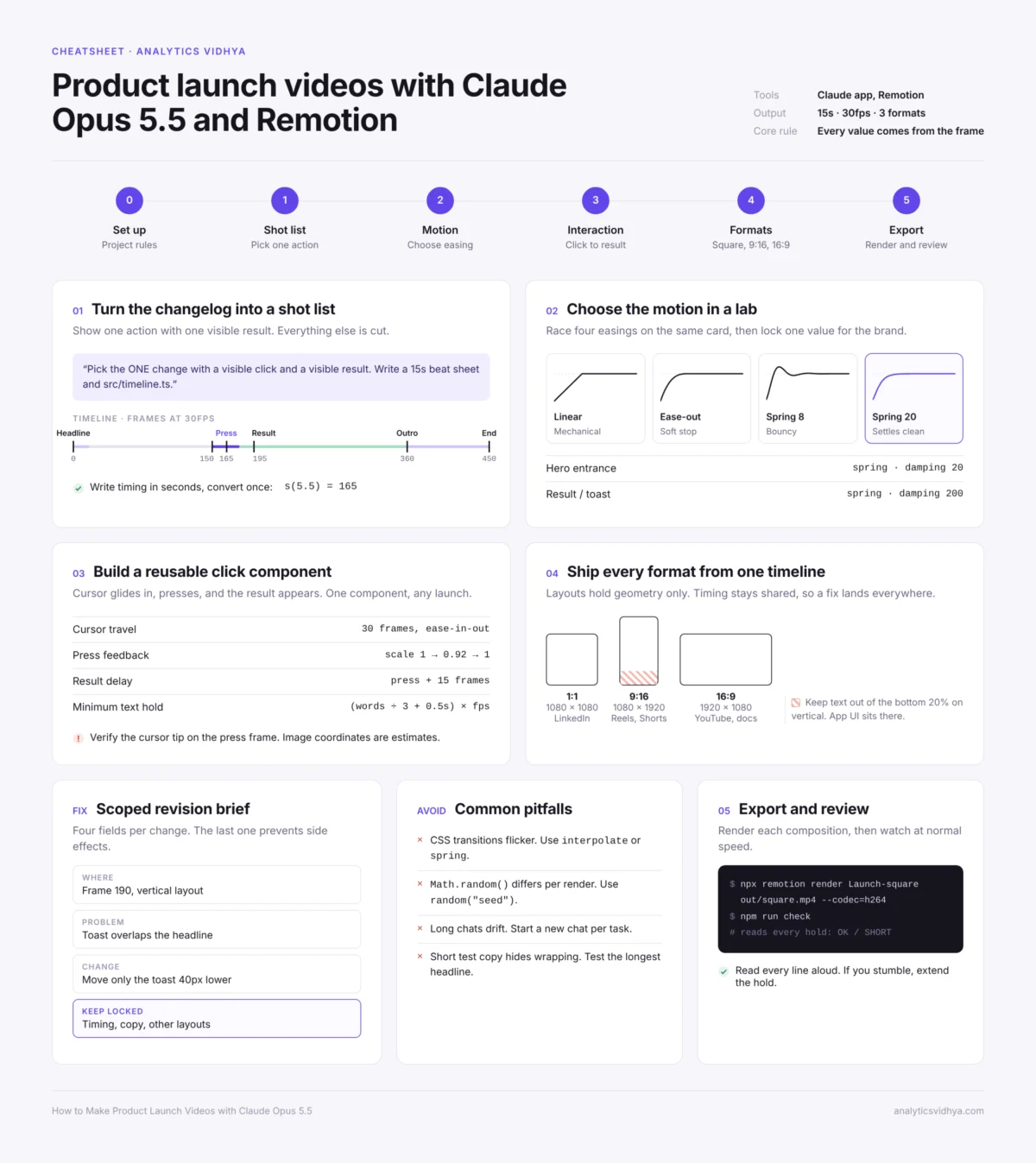
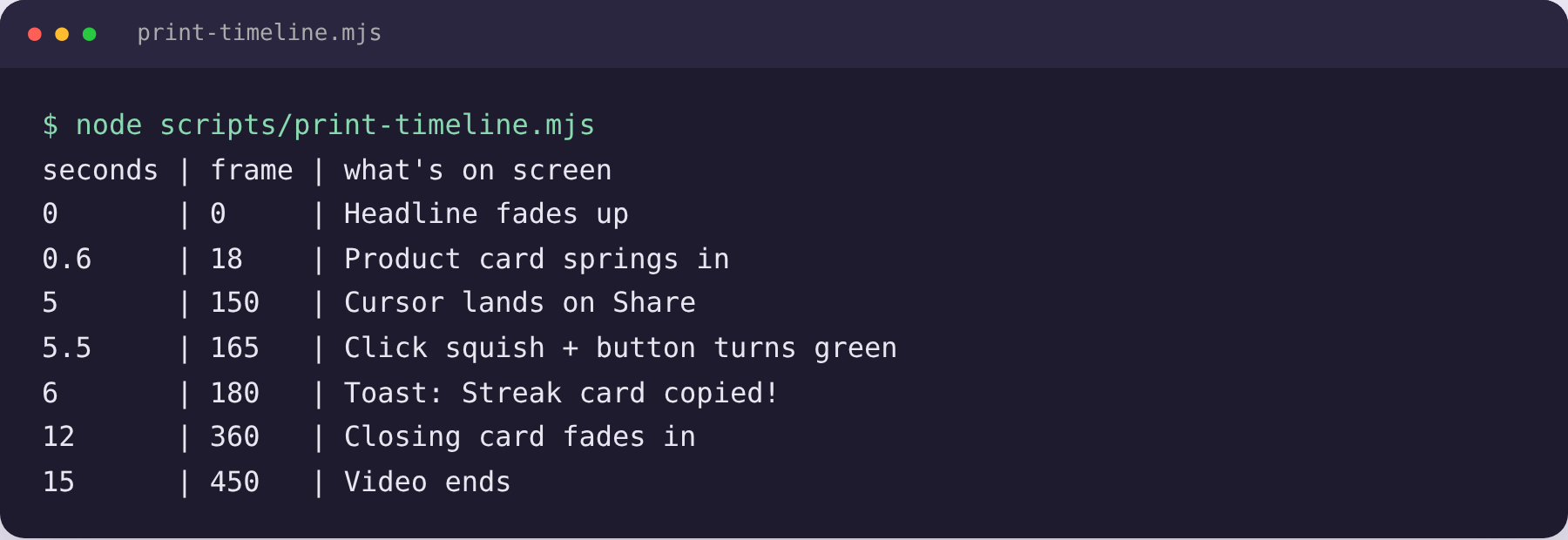
The efficacy of using Claude Opus 5.5 for video production lies in the deterministic nature of frame numbers. Unlike traditional CSS transitions, which can be inconsistent across different rendering environments, Remotion operates on a strict frame-by-frame basis. For a standard 30-frames-per-second (fps) video, a 5.5-second mark corresponds exactly to frame 165. This mathematical precision is ideal for an LLM, which can calculate timing and easing functions with higher accuracy than a human designer might manually input in a GUI.
In this programmatic environment, developers utilize "house values" for motion. By defining a centralized timeline.ts file, teams can ensure that every animated value—from the opacity of a headline to the trajectory of a cursor—is derived from a single source of truth. This allows for rapid iterations; for example, shifting a "click" action by half a second requires changing a single constant in the timeline, which then propagates through the entire composition.
Methodology: From Changelog to Shot List
The first phase of the AI-driven video workflow involves distilling a technical changelog into a "filmable" moment. Claude Opus 5.5 is utilized here not just as a coder, but as a creative strategist. When presented with a list of updates—ranging from bug fixes to UI overhauls—the AI identifies the single action that offers the highest visual impact.
A standard 15-second "beat sheet" generated through this process typically follows a five-act structure:
- The Reveal: Introduction of the feature headline and the initial state of the UI.
- The Intent: Movement of a virtual cursor toward a specific interactive element.
- The Action: A visually emphasized "click" or "press" event, often including a subtle "squish" animation to simulate tactile feedback.
- The Result: The immediate visual consequence of the action (e.g., a modal appearing, a card generating, or a data visualization updating).
- The Outro: A hold for readability followed by a brand-centric closing.
This structured approach ensures that the video remains focused. Marketing experts note that "feature bloat" in videos is a leading cause of viewer drop-off; by forcing the AI to select the "one change that is most filmable," teams produce content that is more likely to retain viewer attention.
Engineering Brand Consistency via "Motion Labs"
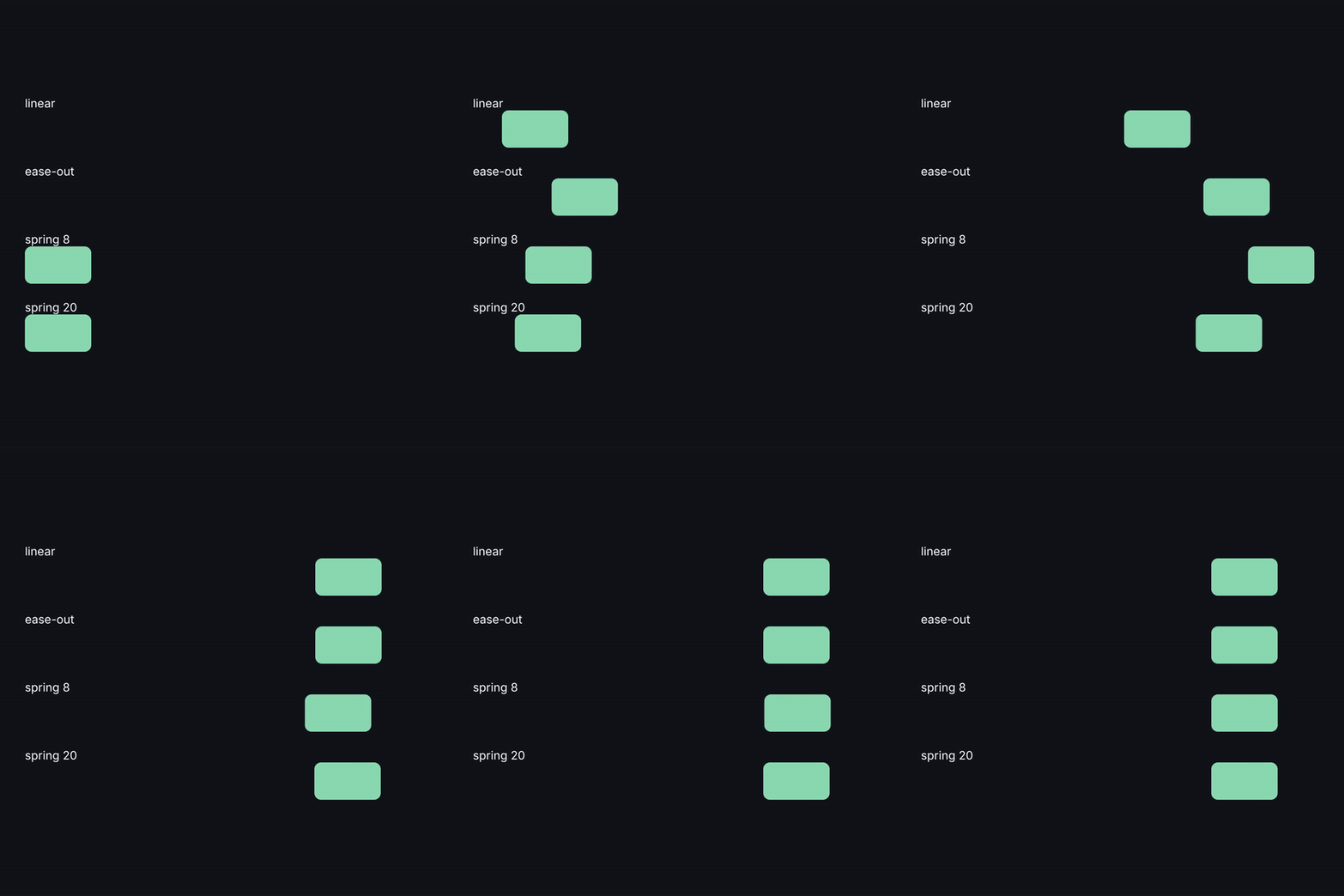
A common criticism of AI-generated content is the lack of brand-specific "feel." To counter this, the workflow includes the creation of a "Motion Lab"—a specialized component where different easing functions and spring physics are compared side-by-side. By asking the AI to render variants of an animation (e.g., linear vs. cubic ease-out vs. spring damping), developers can visually identify the motion curve that best aligns with their brand identity.
For instance, a "spring 8" damping value creates a playful, jelly-like bounce, which might suit a consumer-facing app. Conversely, a "spring 20" value provides a more rigid, professional snap suitable for enterprise fintech tools. Once these "house values" are established, they are saved as constants, ensuring that every subsequent video produced by the team maintains a consistent visual language.
Solving the Readability Crisis in Social Video
One of the most frequent failures in product launch videos is the "readability gap"—text appearing and disappearing too quickly for the human eye to process. To solve this, the programmatic approach allows for the implementation of a "Readability Police" component. By calculating the word count of a text element and comparing it against a standard reading speed (roughly three words per second plus a 0.5-second fixation buffer), the code can automatically trigger a "TOO FAST" warning during the preview phase if a card vanishes prematurely.
This data-driven approach to timing ensures that marketing messages are actually consumed. In a manual editing environment, such checks are often overlooked in the rush to export, leading to beautiful but ineffective content.
Multi-Format Distribution and Responsive Layouts
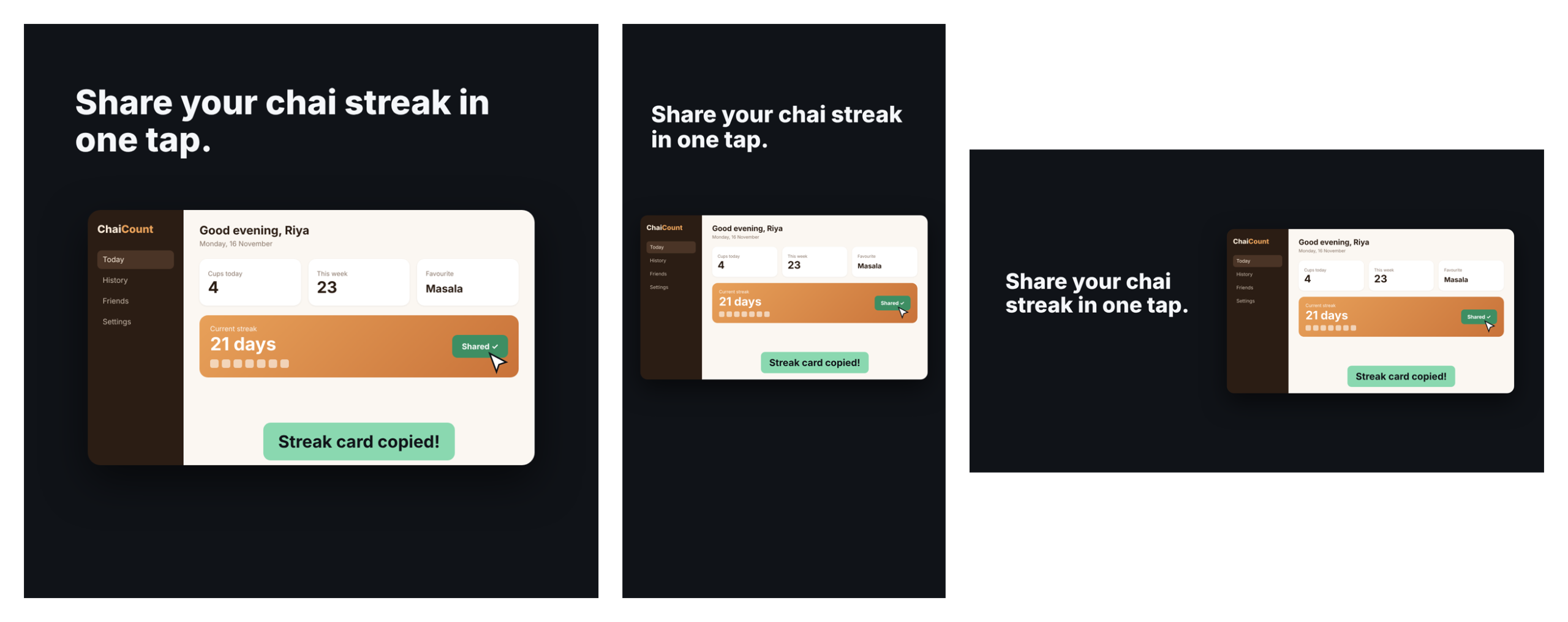
In the current social media ecosystem, a single horizontal video is no longer sufficient. Content must be optimized for square formats (LinkedIn), vertical formats (TikTok, Reels, Shorts), and landscape formats (YouTube). The programmatic nature of Remotion allows for the creation of "responsive video."
By defining a layouts.ts file, the AI can register multiple compositions that share the same timing logic but utilize different spatial coordinates. In a vertical layout, the AI is instructed to keep critical text out of the bottom 20% of the screen, where app interface buttons typically reside. This automated adaptation saves hours of manual resizing and repositioning, allowing a single developer to export a full suite of assets from a single codebase.

Implications for the Software Industry
The shift toward AI-assisted, programmatic video production represents a significant move toward the "Developer-Marketer" hybrid role. As LLMs like Claude Opus 5.5 become more adept at understanding spatial reasoning and motion physics, the friction between the engineering of a product and the promotion of that product will continue to dissolve.
Industry analysts suggest that this technology will have several long-term impacts:
- Increased Transparency: Engineering teams can share updates more frequently, leading to a "build in public" culture that fosters user trust.
- Cost Reduction: Small startups can produce high-end marketing collateral without the need for expensive external agencies.
- Version Control for Marketing: Because the videos are code, they can be stored in Git repositories, allowing teams to track changes, branch creative ideas, and collaborate using standard software development workflows.
Conclusion
The integration of Claude Opus 5.5 and Remotion provides a blueprint for the future of technical communication. By treating video as a functional output of code rather than a manual artistic endeavor, software teams can ensure their hard work is seen and understood by their target audience. The process prioritizes clarity, consistency, and efficiency, turning the chore of changelog promotion into a streamlined extension of the development lifecycle. As AI models continue to evolve, the boundary between "writing code" and "creating media" will become increasingly blurred, ushering in a new era of high-velocity product marketing.

 Raul Delapena Setiawan

 Ali Ikhwan