Sagoh
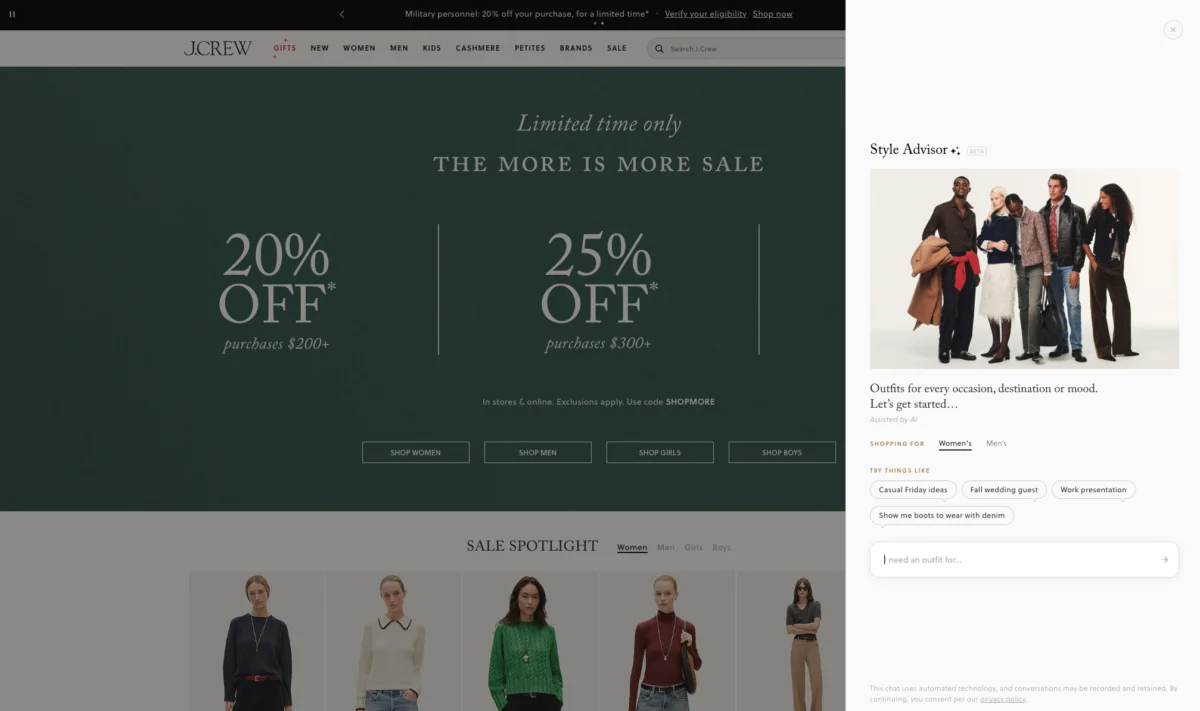
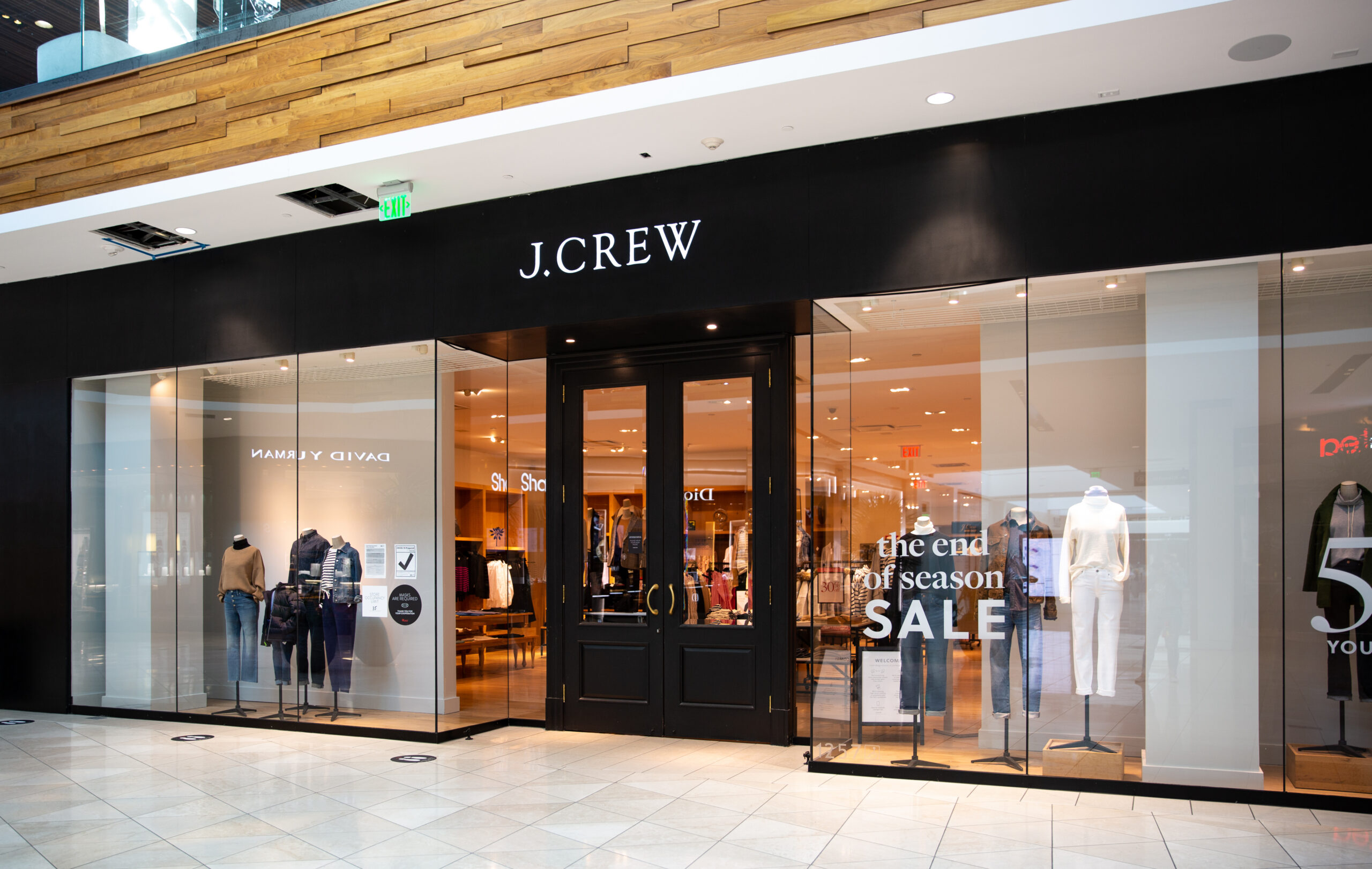
J. Crew has taken a significant leap into the future of e-commerce by launching its innovative Style Advisor, a new feature on its website powered by Anthropic’s advanced artificial intelligence, Claude. This strategic integration marks a departure from traditional online shopping, aiming to provide customers with a more personalized, inspiration-driven experience that mirrors the expertise of a human stylist. The rollout, announced on November 12th, positions J. Crew not only as a fashion retailer but also as a pioneer in adopting cutting-edge AI to enhance customer engagement and drive sales.
The Style Advisor tool is designed to move beyond simple product searches, offering curated recommendations tailored to individual shopper preferences and needs. This sophisticated approach aims to replicate the nuanced guidance a customer might receive from a personal stylist in a physical store. By analyzing user input and product catalogs, the AI can suggest complete outfits, complementary pieces, or items suitable for specific occasions, thereby simplifying the often overwhelming process of online apparel shopping.
J. Crew’s investment in this AI technology places it within a competitive landscape of retailers increasingly exploring artificial intelligence to refine their digital strategies. As a prominent player in the North American e-commerce market, J. Crew ranks No. 80 in the Digital Commerce 360 Top 1000 Database, a comprehensive index that tracks the largest online retailers by annual e-commerce sales. Furthermore, the company’s forward-thinking approach to AI is underscored by its No. 135 ranking in Digital Commerce 360 and ReFiBuy’s AI Commerce Rankings, a testament to its proactive adoption of emerging technologies.
The Strategic Rationale Behind J. Crew’s Style Advisor
Libby Wadle, CEO of J.Crew Group, articulated the vision behind the Style Advisor, stating, "As consumer expectations evolve and AI opens up new possibilities for retail, J.Crew is challenging the traditional model of online shopping, moving beyond individual product searches toward a more connected and inspiration-led experience." This statement highlights a strategic imperative to anticipate and shape future consumer behavior rather than merely react to market trends. Wadle further emphasized, "For a long time, we’ve been thinking about how customers will want to shop in the future, and how we can lead that evolution rather than react to it." This proactive stance suggests a long-term commitment to integrating AI as a core component of J. Crew’s customer relationship management and sales strategy.
The development of the Style Advisor is a collaborative effort that leverages Anthropic’s sophisticated AI models. According to Anthropic, J. Crew’s internal product team was instrumental in building the Style Advisor using Claude Fable 5.1, a model specifically marketed for its capabilities in handling "complex, open-ended work." This suggests that the AI is not merely a recommendation engine but is capable of understanding and responding to multifaceted styling queries. The process began with a prototype developed using Claude Code and Claude Opus 5.5, with engineers then refining this foundation to bring the assistant to full production. This iterative development process underscores J. Crew’s dedication to creating a robust and effective AI tool.
Wadle further elaborated on the transformative potential of this initiative: "We see an opportunity to fundamentally rethink the shopping experience. Through our work with Anthropic, we’re bringing decades of J.Crew styling, merchandising, and creative expertise together to help shape what’s next for customer behavior." This statement underscores the integration of J. Crew’s established brand identity and styling legacy into the AI’s operational framework. The goal is to imbue the AI with the brand’s distinctive aesthetic and understanding of fashion, ensuring that recommendations are not only personalized but also authentically J. Crew.
The Mechanics of J. Crew’s AI-Powered Styling
The Style Advisor is readily accessible on the JCrew.com website, integrated as a menu option that launches the assistant within the user’s web browser. Upon activation, shoppers are presented with a user-friendly interface featuring suggested prompts designed to guide their interaction with the AI. These prompts likely cover a range of styling needs, from seeking advice for specific occasions to requesting outfit combinations for existing wardrobe pieces.
The AI’s operational architecture involves a sophisticated interplay of different Claude models. The Claude Sonnet 5.5 model is responsible for processing user prompts and generating detailed, styling-focused feedback. Concurrently, the Claude Haiku 5.5 model is employed for shorter, more focused tasks, likely related to rapid data retrieval or concise response generation. This multi-model approach allows for both depth of analysis and efficiency in response times, crucial for a seamless user experience.
A key aspect of the Style Advisor’s design is its adherence to J. Crew’s established brand guidelines and styling philosophy. The company asserts that by basing recommendations on its extensive human-curated styling knowledge, the AI ensures consistency with the brand’s core aesthetic and priorities. This focus on brand integrity is vital for maintaining customer trust and reinforcing J. Crew’s unique market position.
Paul Smith, chief commercial officer at Anthropic, commented on the collaboration, noting, "J.Crew has one of the most recognizable points of view in fashion, and its team used Claude to bring that expertise to customers in a new way. They used a frontier model to build the experience and faster, more efficient models to run it, so customers get quick answers that stay true to the brand’s styling." This highlights the strategic use of different AI models for distinct purposes—a powerful model for sophisticated development and more efficient models for operational execution. The result is an AI that is both intelligent and responsive, delivering personalized styling advice that remains firmly rooted in the J. Crew brand identity.
The Broader Implications of AI in Fashion Retail
The introduction of J. Crew’s Style Advisor represents a significant trend in the fashion retail industry: the increasing reliance on artificial intelligence to enhance the customer journey. As e-commerce continues to grow, retailers are seeking innovative ways to differentiate themselves and provide value beyond mere product transactions. AI-powered styling assistants offer a compelling solution by personalizing the shopping experience, increasing customer satisfaction, and potentially boosting conversion rates.
The ability of AI to process vast amounts of data—customer preferences, product information, fashion trends—allows for a level of personalization that was previously unattainable. This can lead to more effective product discovery, reduced return rates due to better-informed purchasing decisions, and ultimately, a stronger sense of brand loyalty. For J. Crew, integrating its rich styling heritage with advanced AI ensures that this personalization is delivered through the lens of its established brand identity, a critical factor in maintaining its appeal to its target demographic.
Furthermore, the development of such tools by retailers themselves, as J. Crew has done with its internal product team, signifies a growing internal capability in AI integration. This not only allows for greater customization and control over the AI’s behavior but also fosters a deeper understanding of how AI can be strategically deployed to meet business objectives. This internal expertise can be a significant competitive advantage in a rapidly evolving digital marketplace.
The success of J. Crew’s Style Advisor could serve as a blueprint for other fashion retailers looking to embrace AI. The key elements—leveraging sophisticated AI models, ensuring brand alignment, and prioritizing a user-centric experience—are transferable across different brands and market segments. As AI technology continues to mature, its role in shaping the future of retail, particularly in highly personalized sectors like fashion, is only expected to grow. The integration of AI is no longer a futuristic concept but a present-day reality that is redefining how consumers interact with brands and make purchasing decisions. J. Crew’s initiative is a clear indicator that the era of AI-enhanced retail is not just dawning, but is actively being shaped by forward-thinking companies.

 Evan Lee Salim