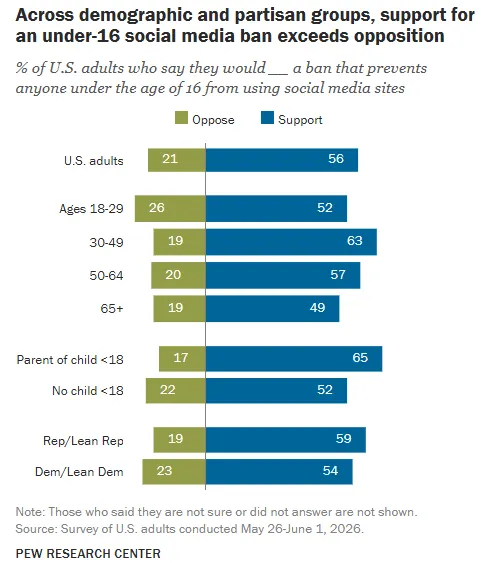
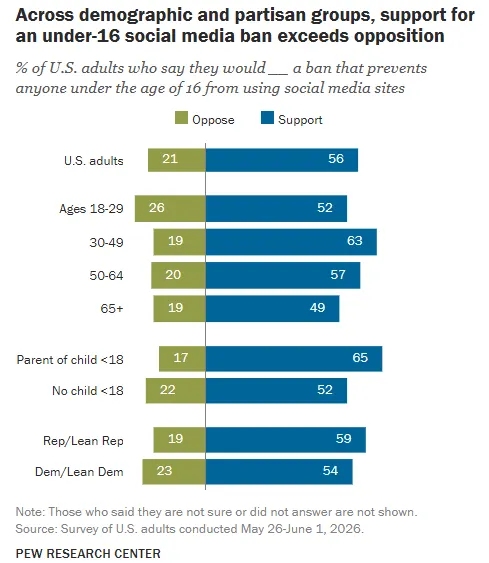
Amid intensifying global discussions surrounding the potential imposition of social media bans for teenagers and the implementation of more robust online safety measures, a recent survey conducted by the Pew Research Center reveals overwhelming public support for such restrictions in the United States. The comprehensive study, which gathered perspectives from over 9,000 U.S. adults, aimed to gauge public sentiment on proposed limitations for young users and the feasibility of their enforcement. The findings were remarkably decisive, highlighting a significant societal consensus on the need to regulate children’s access to digital platforms.
The Shifting Landscape of Digital Childhood: Public Opinion and Policy Push for Social Media Bans
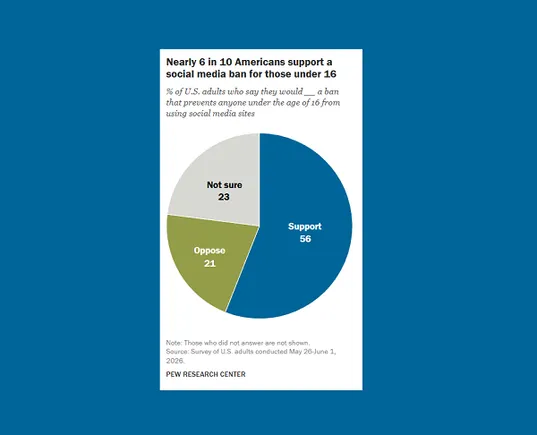
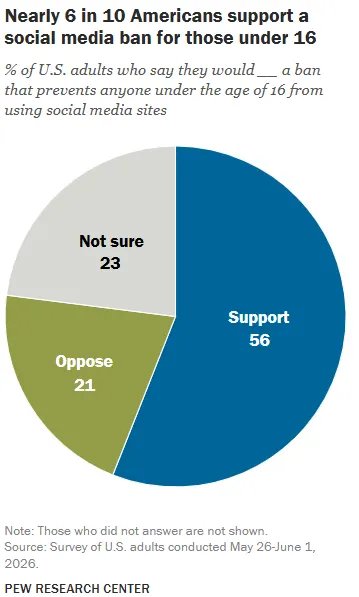
Sixty percent of American adults surveyed by Pew Research expressed their unequivocal support for restrictions on social media usage for teenagers, particularly for those under the age of 16. In stark contrast, only a fifth of respondents definitively opposed such bans, underscoring a broad societal shift towards prioritizing child protection in the digital realm. This strong public backing provides a powerful impetus for lawmakers across the United States and globally who are currently grappling with the complexities of digital age verification and content moderation for minors. The numbers illuminate why this issue has rapidly become a focal point of legislative debate, as more jurisdictions look to emulate and expand upon measures taken by countries like Australia.
The Pew Research Center’s findings also indicate a significant evolution in public sentiment regarding teen social media restrictions compared to a similar survey conducted in 2023. While the precise quantitative shift from the previous year was not detailed in the latest report, the emphasis on a “significant change” suggests a growing sense of urgency and concern among the American populace. This accelerated shift in opinion likely reflects heightened awareness of potential harms associated with excessive social media use, including impacts on mental health, exposure to inappropriate content, and cyberbullying, issues that have garnered increasing media attention and scientific scrutiny. Parental groups, educators, and child psychologists have consistently raised alarms about the unregulated digital environment, contributing to a groundswell of public demand for protective measures.
Global Momentum: A Wave of Restrictions Across Continents
The push for legislative action is not confined to the United States; it is a burgeoning global phenomenon. Several nations have already implemented or are actively planning stringent restrictions on social media access for young users, setting a precedent for international policy discussions.
Australia’s Pioneering Ban and Early Challenges:
Australia emerged as an early adopter in this legislative trend, implementing an under-16 social media ban in December of the previous year. The policy, driven by concerns over child welfare and digital well-being, was accompanied by public awareness campaigns aimed at educating parents and young people about the new regulations. However, initial assessments of the ban’s effectiveness have yielded mixed results. Reports suggest that the ban is encountering significant challenges in curbing young users’ access to social applications, with many teens finding ways to circumvent the restrictions through virtual private networks (VPNs), using older siblings’ or parents’ accounts, or simply providing inaccurate age information during platform registration. This highlights a critical challenge for policymakers: the inherent difficulty in enforcing age restrictions in a dynamic and decentralized digital landscape. The technological savvy of young users often outpaces the regulatory frameworks designed to control their online behavior, leading to a continuous cat-and-mouse game between policy and practice.
Europe and North America Join the Fray:
Following Australia’s lead, several other countries have announced their intentions to introduce more rigorous restrictions on teen social media use. In the United Kingdom, the government outlined plans last month to ban teenagers from accessing livestreaming social media applications. This move is part of a broader effort under the UK’s Online Safety Act, a landmark piece of legislation designed to make online platforms more accountable for user safety, particularly for children. The Act mandates platforms to remove illegal content, protect children from harmful material, and enforce age limits, with significant fines for non-compliance. The proposed livestreaming ban specifically addresses concerns about direct interactions with strangers, exposure to inappropriate content, and potential exploitation risks associated with live video feeds.
Beyond the UK, countries like Turkey have also passed legislative measures targeting teen social media access, reflecting a widespread international consensus on the need for greater digital protection for minors. Canada is another nation actively pushing ahead with its own approaches to similar restrictions, engaging in consultations and developing policy frameworks to address the challenges of youth engagement with social media. These diverse national responses, while varied in their specifics, collectively signal a global shift towards a more regulated online environment for children and adolescents.
In the United States, individual states have taken the initiative in the absence of comprehensive federal legislation. California and Florida, two of the nation’s largest states, have moved to implement their own teen social media restrictions. Florida’s law, for instance, initially sought a blanket ban for minors under 16 but faced significant legal challenges over First Amendment concerns regarding freedom of speech and access to information. It was subsequently revised to allow minors access with parental consent for certain platforms. California has also been at the forefront of introducing legislation aimed at protecting children’s privacy and limiting their exposure to potentially harmful content online, often through measures like the California Age-Appropriate Design Code Act (CAADCA), which mandates platforms to consider the best interests of children in their design and operation. The definitive support shown in the Pew Research data underscores that many Americans are eager for other states to follow suit, creating a patchwork of regulations across the country.
The Underlying Concerns: Why Public Support Remains High
The sustained high level of public support for social media bans, even in the face of demonstrated enforcement difficulties, stems from a confluence of deep-seated parental anxieties and broader societal concerns.
Parental Anxiety and Mental Health Impacts: A primary driver of public support is the widespread concern among parents about the detrimental effects of social media on teenage mental health. Numerous studies and reports, including warnings from the U.S. Surgeon General, have highlighted a correlation between excessive social media use and increased rates of anxiety, depression, body image issues, and cyberbullying among adolescents. Parents often witness firsthand the negative impacts, such as disrupted sleep patterns, diminished academic performance, and a perceived decrease in real-world social interaction, leading to a fervent desire for protective measures. The constant pressure to maintain an online persona, the fear of missing out (FOMO), and exposure to curated, often unrealistic, portrayals of life contribute to significant psychological stress for young users.
Societal Perception and Nostalgia: Beyond mental health, there is a societal yearning for what many perceive as a ‘traditional’ childhood – one spent engaging in outdoor play, face-to-face interactions, and offline hobbies. The pervasive presence of smartphones and social media is often viewed as detracting from these experiences, leading to a nostalgic desire to “get kids off their devices and back out into the real world.” This sentiment, while understandable, often overlooks the fundamental shift in how younger generations connect and interact.
Political Drivers: Lawmakers, keenly aware of these public concerns, are increasingly responding with legislative initiatives. The issue has become a significant talking point in political discourse, with politicians eager to demonstrate their commitment to child protection and address what is perceived as a growing public health crisis. The political calculus often involves balancing the concerns of parents and advocacy groups with potential challenges related to individual freedoms, technological feasibility, and the economic implications for tech companies.
Critiquing the Efficacy: Are Bans the Right Solution?
Despite the strong public mandate, the effectiveness and long-term implications of blanket social media bans for minors are subjects of intense debate among experts. Many argue that such prohibitions, while well-intentioned, may be ill-suited to the realities of the digital age and could even introduce new, unforeseen challenges.
The Digital Native Reality: The core argument against outright bans is that they fundamentally misunderstand the nature of contemporary youth interaction. The way people, especially younger generations, connect and communicate has irrevocably evolved. Social media apps, online gaming worlds, and messaging platforms are not merely supplemental tools but have become integral to the social fabric of Gen Z and Gen Alpha. The COVID-19 pandemic further solidified this reality, as online platforms became the primary, and often only, means for young people to maintain social connections, pursue educational activities, and seek entertainment during periods of lockdown and social distancing. This period reinforced the value and necessity of digital engagement, embedding social media and online interactions as key processes for making friends, building communities, and accessing support networks.
To attempt to “reverse course” now, by eliminating these options, is seen by many as an unrealistic and ultimately futile endeavor. Children and teenagers, often far more tech-savvy than the adults legislating their online lives, will inevitably find alternative ways to connect if popular platforms are restricted. This could include migrating to less regulated, less visible platforms or utilizing circumventing technologies like VPNs and proxy servers, as evidenced by Australia’s experience. Such circumvention not only undermines the intended purpose of the bans but could also push young users into digital spaces with fewer safeguards, weaker content moderation, and increased exposure to risks, potentially making them less safe rather than more. Furthermore, these bans often narrowly focus on specific social media apps, failing to account for social connection facilitated through gaming consoles, private messaging apps, or other digital communication tools.
Unintended Consequences: Beyond questions of efficacy, critics point to a range of potential unintended consequences that could arise from blanket bans.
- Loss of Positive Aspects: Social media, despite its drawbacks, offers numerous positive benefits for young people. These include fostering supportive communities, providing platforms for creative expression, facilitating access to diverse information and perspectives, and allowing youth to connect with peers who share niche interests or identities, particularly important for those in marginalized groups who may struggle to find offline communities. Bans could deprive these young users of vital social and developmental opportunities.
- Privacy Concerns and Enforcement Challenges: Implementing age verification at scale raises significant privacy concerns. The methods used to verify age (e.g., facial recognition, government IDs) could lead to increased data collection on minors, posing new risks. The practicality of consistently enforcing age limits across thousands of global platforms and millions of users also presents an enormous logistical and technological hurdle.
- Disparity and Digital Divide: Bans could disproportionately affect vulnerable youth who rely on online connections for support, information, or even their only social outlet, particularly those facing social isolation or living in remote areas. It could also exacerbate the digital divide, creating a two-tiered system where some children, often from more privileged backgrounds, retain access through parental workarounds, while others are completely cut off.
Towards Comprehensive Solutions: Beyond Blanket Bans
The prevailing sentiment among many experts is that while the concerns driving calls for social media bans are legitimate and urgent, the solution lies not in outright prohibition but in a more nuanced, multi-faceted approach focused on fostering a safer and more enriching digital environment.
Industry Accountability: A critical component of any effective strategy is to hold social media platforms themselves more accountable. This requires establishing uniform, globally recognized online safety standards that all platforms must adhere to when their services are used by minors. Such standards would encompass stricter age verification mechanisms, more robust content moderation, and greater transparency in algorithmic design. Addressing the incentives that lead to the algorithmic amplification of divisive, sometimes dangerous, or harmful content is paramount. Platforms should be legally mandated to prioritize user safety over engagement metrics, investing significantly in safety features, human moderation, and AI tools designed to detect and remove harmful content, identify predatory behavior, and offer proactive support to young users in distress. This also includes designing default settings that are privacy-preserving and age-appropriate for minors.
Education and Digital Literacy: Empowering both children and parents with the knowledge and skills to navigate the digital world safely and responsibly is another cornerstone. This involves comprehensive digital literacy programs in schools that teach critical thinking about online content, cyberbullying prevention, privacy management, and responsible digital citizenship. For parents, accessible resources and workshops can help them understand the platforms their children use, implement effective parental controls, and foster open communication about online experiences. The goal is to equip young people to make informed choices and build resilience, rather than simply shielding them from the internet.
Collaborative Approach: Ultimately, no single entity can solve the complex challenges of youth social media use. A truly effective solution will require a collaborative effort involving governments, which can establish clear regulatory frameworks and enforce accountability; tech companies, which must innovate for safety and prioritize user well-being; educators, who can equip youth with digital literacy skills; and parents, who play a crucial role in guiding and monitoring their children’s online lives while fostering open dialogue. This holistic approach acknowledges the integral role of technology in modern life while striving to mitigate its risks and maximize its benefits for the youngest generations.
In conclusion, the strong public support for social media bans for teenagers underscores a deep societal concern for youth well-being in the digital age. While legislative action is gaining momentum globally, the practical challenges of enforcement and the potential for unintended consequences necessitate a critical re-evaluation of blanket prohibitions. The path forward likely lies not in attempting to reverse the tide of digital integration but in a more sophisticated strategy that combines robust industry accountability, comprehensive digital literacy education, and a collaborative effort from all stakeholders to create an online world that is both engaging and genuinely safe for young people.