Laily UPN
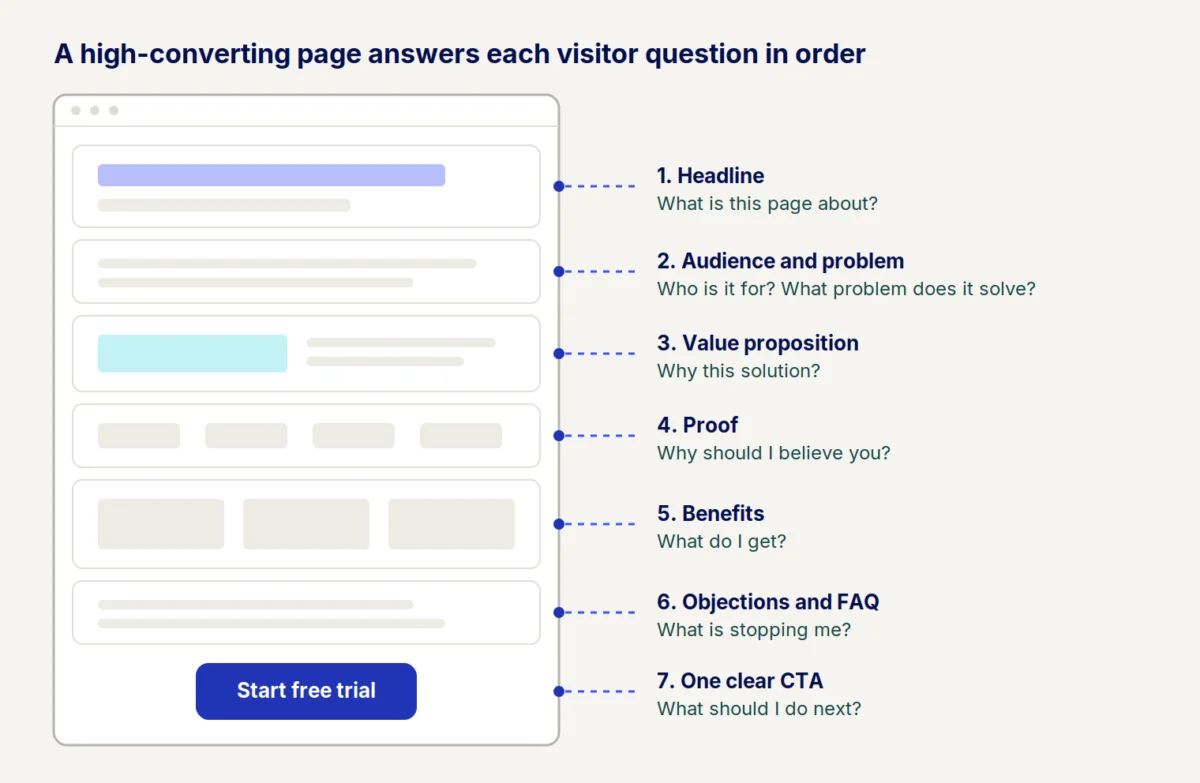
The landscape of digital marketing is undergoing its most significant transformation since the inception of the search engine. As artificial intelligence integrates deeply into how consumers find information, the traditional funnel of search-to-click is being replaced by a complex ecosystem of synthesized answers, conversational inquiries, and multi-layered discovery journeys. For brand marketers, the challenge is no longer merely appearing in a list of results; it is the critical task of converting traffic that arrives with higher expectations and more pre-processed information than ever before. This shift has elevated the landing page from a simple destination to the pivotal "last mile" of the customer journey, where brand trust is either solidified or lost in an instant.
The Disruption of the Traditional Search Paradigm
For over two decades, the mechanics of search remained relatively linear. A user entered a specific keyword query into a search engine like Google, scanned a list of "ten blue links," and selected the result that appeared most relevant. Marketers focused heavily on Search Engine Optimization (SEO) to secure high rankings for specific keywords, assuming that a high-ranking position would naturally lead to a click and a subsequent conversion opportunity on a landing page.
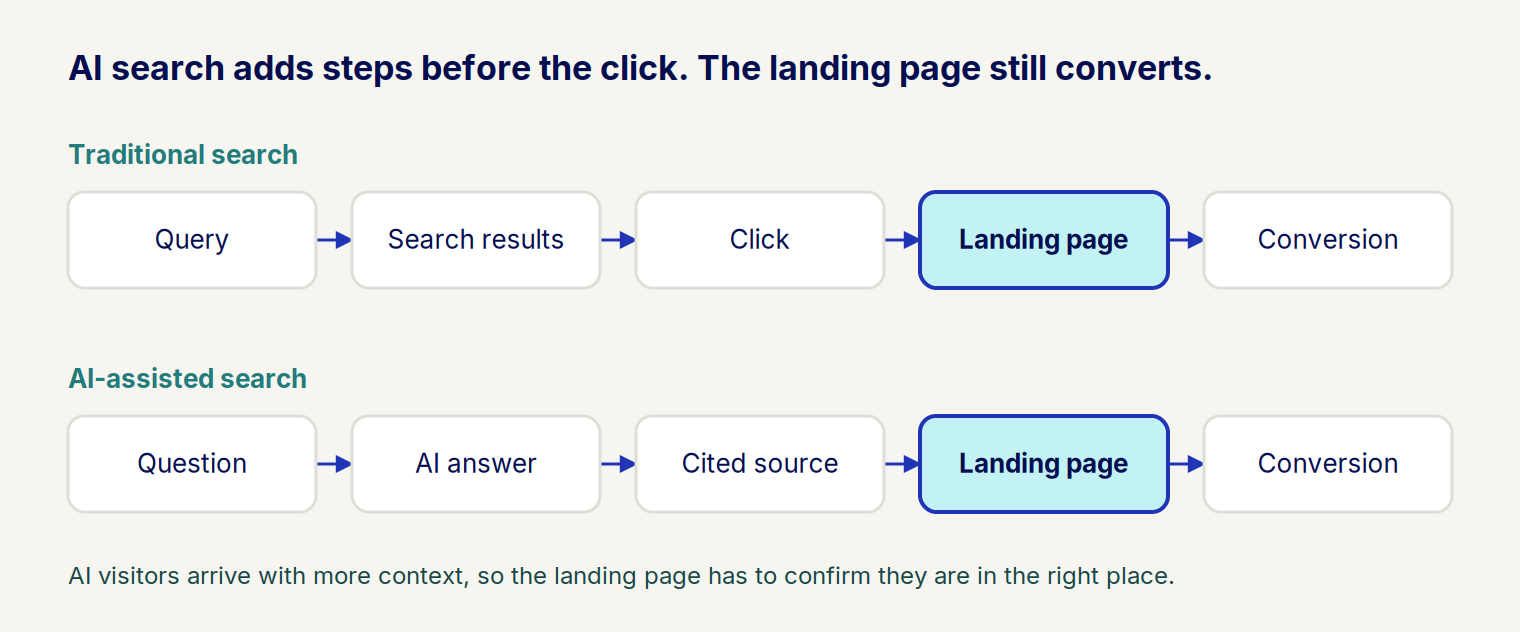
However, the advent of Generative AI has introduced a new layer of mediation between the user and the website. Tools such as Google’s AI Overviews (formerly Search Generative Experience), OpenAI’s ChatGPT, and Perplexity AI are redefining the discovery phase. Instead of providing a list of sources, these engines use a technique known as "query fan-out." This process involves the AI running multiple related searches across various subtopics simultaneously and then synthesizing the findings into a single, cohesive answer.
In this new environment, the user often receives a comprehensive response without ever leaving the search interface. When a user does decide to click a cited source, they are no longer a "cold" lead. They have been educated by the AI, have seen comparisons, and are seeking specific verification or a clear path to action. Consequently, the role of the landing page has shifted from basic information delivery to high-stakes evaluation and conversion.
A Chronology of Search Evolution: From Keywords to Conversations
The evolution of search can be categorized into four distinct eras, each requiring a different strategic approach from marketers.
- The Keyword Era (1998–2010): Search was primarily about matching exact strings of text. Marketers optimized for specific high-volume keywords, and search engines relied heavily on backlink counts and keyword density.
- The Semantic Era (2011–2021): With updates like Google’s Hummingbird and RankBrain, search engines began to understand intent and context. SEO shifted toward "entities" and topics rather than just keywords.
- The Generative Era (2022–Present): The launch of ChatGPT in late 2022 accelerated the move toward "Answer Engines." Search is now conversational. Users ask complex questions like, "How can I improve my landing page conversion rate for a B2B SaaS product with a long sales cycle?"
- The Agentic Future (Expected 2025 and Beyond): Industry analysts predict the rise of AI agents that will not only search for information but execute tasks—such as booking demos or purchasing products—directly through APIs, further complicating the traditional landing page’s role.
According to data from SparkToro, "zero-click" searches—where a user finds their answer on the search results page without clicking through to a website—have risen to nearly 60% in some demographics. This statistic underscores the necessity for brands to ensure that when a click does occur, the resulting experience is flawlessly aligned with the user’s highly specific intent.

Data-Driven Insights: Understanding the New Searcher
Recent industry reports indicate that AI search users behave differently than traditional searchers. A study by BrightEdge found that AI-generated overviews are more likely to appear for long-tail, complex queries than for simple navigational searches. Furthermore, users interacting with AI search tools spend an average of 18% more time in the "discovery" phase before committing to a click.
This increased time spent in discovery means that by the time a visitor reaches a landing page, they have already moved through the "Problem-Aware" stage and are often deep into the "Solution-Aware" or "Decision-Ready" stages.
Marketing analysts identify three distinct levels of intent that AI search traffic typically exhibits:
- Problem-Aware: These users are researching the root causes of their challenges. They require educational content and evidence that the brand understands their pain points.
- Solution-Aware: These users know the category of product they need and are evaluating capabilities. They require feature comparisons and specific use cases.
- Decision-Ready: These users are comparing specific vendors. They require social proof, integration details, pricing transparency, and clear calls to action (CTAs).
The Technical Foundation: Schema Markup and AI Readability
While the user experience is paramount, marketers must also ensure that AI systems can accurately parse and represent their brand’s information. This is where structured data, or Schema markup, becomes a critical technical asset. Schema is a standardized format for providing information about a page and classifying the page content.
Google and other LLM (Large Language Model) providers use Schema to identify the "entities" on a page—such as products, organizations, FAQs, and reviews. By implementing robust JSON-LD (JavaScript Object Notation for Linked Data), brands can "hand-feed" the AI the exact facts they want to be synthesized in search answers.
Industry experts suggest that pages with comprehensive Schema markup have a higher probability of being cited as a primary source in AI Overviews. This technical layer does not replace quality content, but it acts as a translator, ensuring that the machine-driven "discovery engine" correctly interprets the brand’s value proposition.
Strategic Realignment: From SEO Hacks to "Helpful, People-First Content"
The reaction from the SEO community to AI search has been a mix of apprehension and adaptation. Some have proposed "Generative Engine Optimization" (GEO) as a new discipline, involving specific word counts or formatting tricks. However, official guidance from major search providers continues to emphasize the importance of the "Helpful Content" update.
Google’s Search Liaison has repeatedly stated that there is no "secret sauce" for AI search visibility other than creating content that provides genuine value to human readers. This sentiment is echoed by digital marketing veterans who argue that the best way to be "discoverable" by an AI is to be "memorable" to a human.
Analysis of successful AI-driven discovery shows that brands winning the most citations are those that provide:
- Original Research: Data and insights that cannot be found elsewhere.
- First-hand Expertise: Content written by practitioners with "boots on the ground" experience.
- Clear Answers to Complex Questions: Content structured to solve a specific problem rather than to rank for a broad keyword.
The Landing Page as a Conversion Catalyst
Once the AI search journey leads to a click, the landing page must perform what experts call "Message Match." This is the practice of ensuring the content on the landing page perfectly mirrors the expectations set during the discovery phase. If a user asks an AI how to solve a specific campaign personalization problem and the landing page greets them with a generic corporate "About Us" message, the conversion is likely lost.
To combat this, modern marketing teams are moving away from "one-size-fits-all" pages toward dynamic personalization. Tools that allow for "AI Collections" or dynamic text replacement enable a single URL to serve multiple versions of a page based on the user’s previous interactions.
For instance, if a visitor arrives via a search about "reducing ad spend waste," the landing page headline might dynamically update to highlight "Cost-Optimization Features." If another visitor arrives via a search about "scaling creative production," the same page might lead with "High-Volume Design Templates."
Broader Impact and Industry Implications
The rise of AI search is forcing a reconciliation between organic and paid search teams. Historically, these departments operated in silos. However, as AI blurs the lines between "finding" and "buying," a unified strategy is becoming essential.
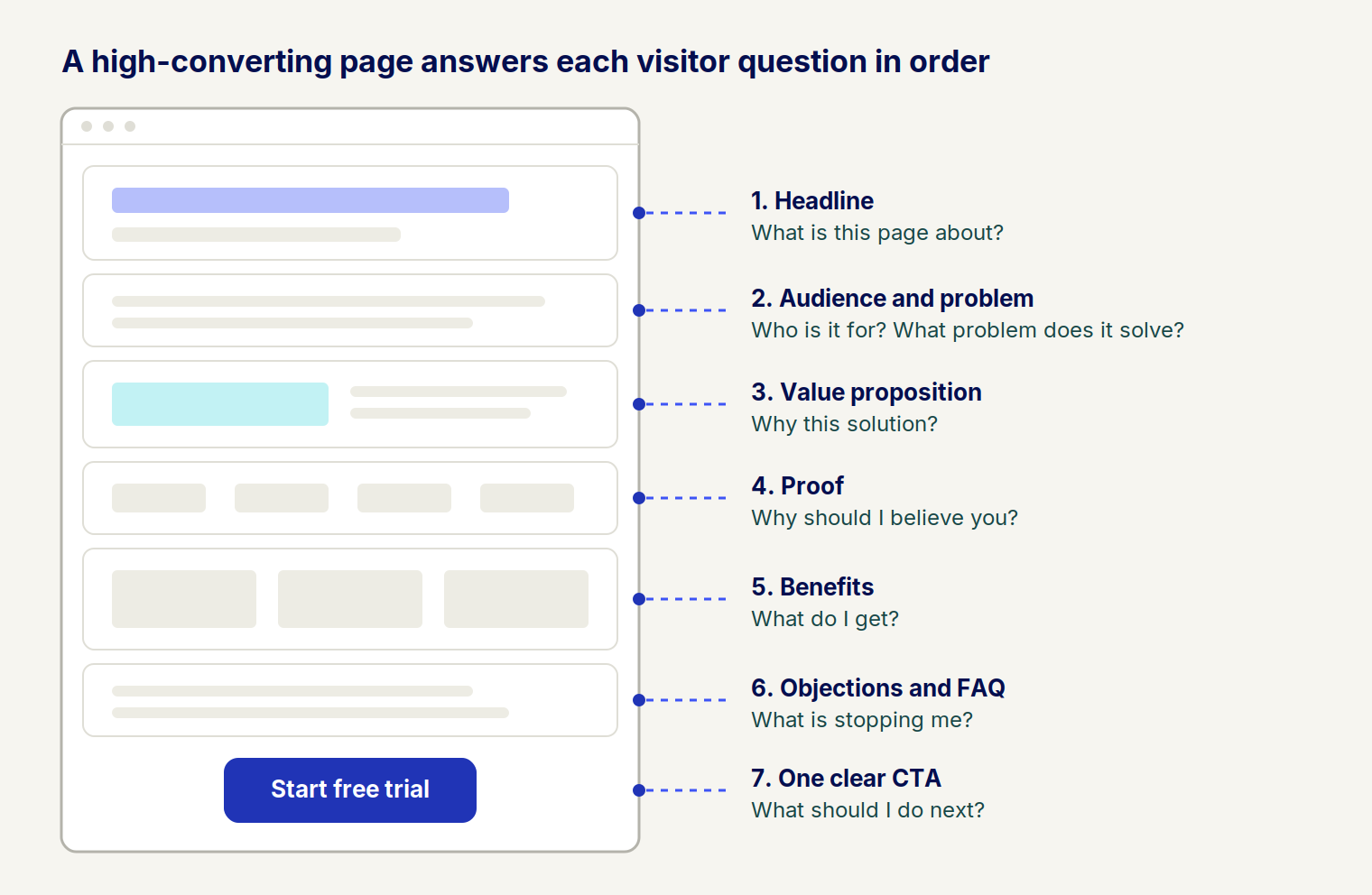
Paid search (PPC) remains the most effective way to capture existing demand, while AI-driven organic search is becoming the primary vehicle for brand introduction and education. The common denominator for both is the landing page. Without a high-converting post-click experience, the investment in both channels is squandered.
Furthermore, the metrics of success are evolving. While "rankings" were once the North Star of marketing, the industry is shifting toward "share of model" (how often a brand is mentioned by an AI) and "pipeline contribution" (how much revenue can be traced back to a discovery session).
Future Outlook: The Resilience of Quality
The transition to AI search represents a "flight to quality." As AI tools make it easier to produce mediocre, "commodity" content, the value of high-quality, authoritative, and expertly crafted content increases. The brands that will thrive in the AI era are those that view the search engine not as a machine to be gamed, but as a bridge to a human customer.
The landing page, far from becoming obsolete, is now the most critical asset in a marketer’s toolkit. It is the environment where the promises made by an AI-synthesized answer are fulfilled. By focusing on deep intent matching, technical clarity through Schema, and relentless testing of the post-click experience, marketers can turn the challenge of AI search into a significant competitive advantage.
In the final analysis, while the methods of discovery are changing, the fundamental psychology of the consumer remains the same: they are looking for a solution to a problem, evidence that a brand can deliver that solution, and a frictionless path to obtaining it. The landing page remains the definitive place where that transaction of trust occurs.


 Raul Delapena Setiawan
 Asro