Asro
The landscape of digital growth and conversion rate optimization is undergoing a fundamental shift as organizations move away from manual testing toward autonomous experimentation loops. These systems, which utilize scheduled AI agents to monitor, analyze, and act upon live experiments, represent the next phase in the evolution of software engineering and marketing technology. By reviewing every experiment within an account on each run, autonomous loops identify issues that are frequently overlooked during manual oversight, such as flags remaining at partial allocation or goals that cease firing due to backend changes. This transition is not merely a matter of convenience; it is a response to the increasing complexity of modern tech stacks and the need for 24/7 operational vigilance.

The Emergence of Loop Engineering
The concept of "loop engineering" gained significant industry traction following insights from Peter Steinberger, founder of OpenClaw, who proposed a shift from prompting AI coding agents to designing autonomous loops that prompt themselves. This paradigm was further codified by Google Cloud AI director Addy Osmani, who defined loop engineering as the process of replacing the human prompter with a persistent, self-correcting system. Osmani’s framework identifies five core components—automations, worktrees, skills, connectors, and subagents—which allow an agent to maintain progress across multiple runs.
In the context of experimentation, this means moving beyond simple monitoring. While traditional experiment monitoring requires a human to select a test and interpret its results, an autonomous loop queries the account independently. It makes decisions based on predefined criteria such as runtime, traffic allocation, and statistical significance. This shift allows teams to act on test results significantly faster, reducing the window of time that a sub-optimal user experience is live.

The Five Stages of the Autonomous Experimentation Model
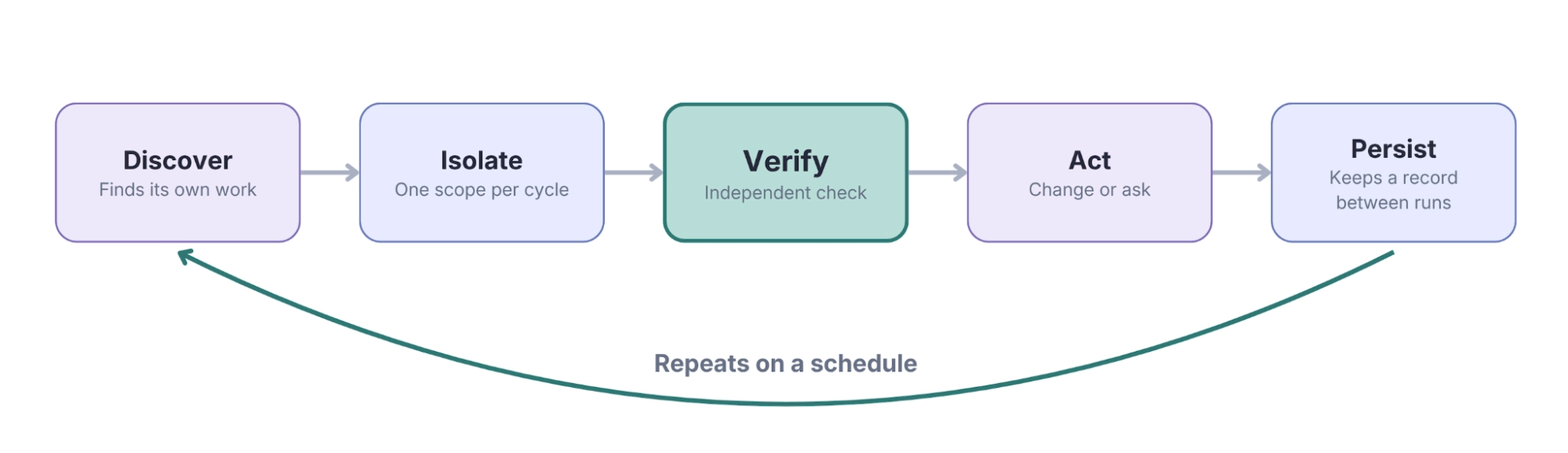
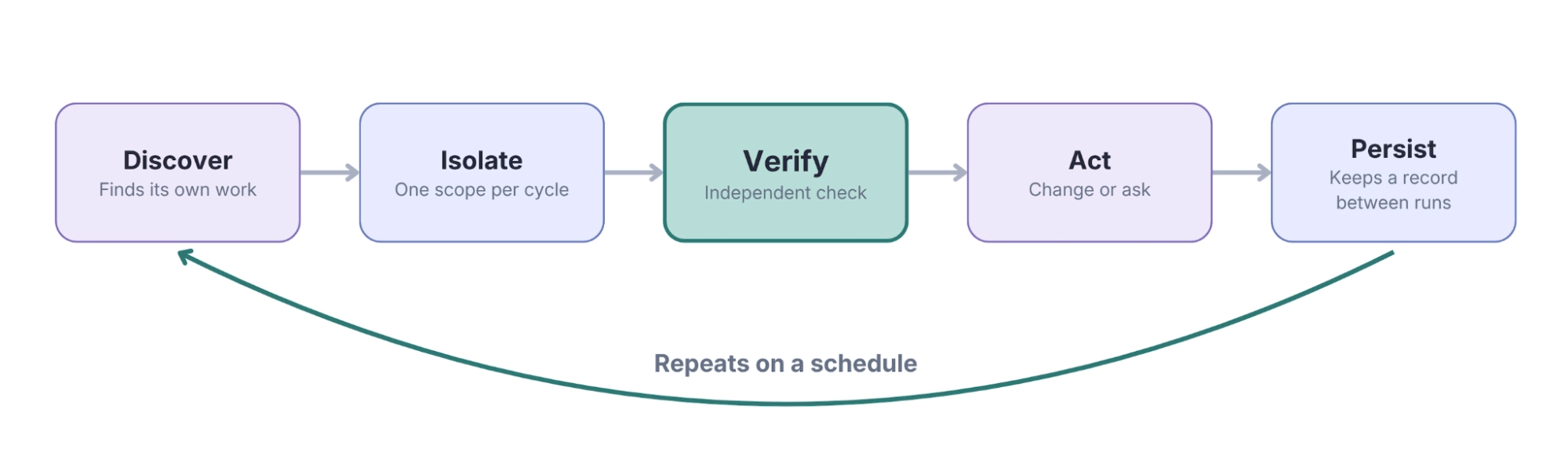
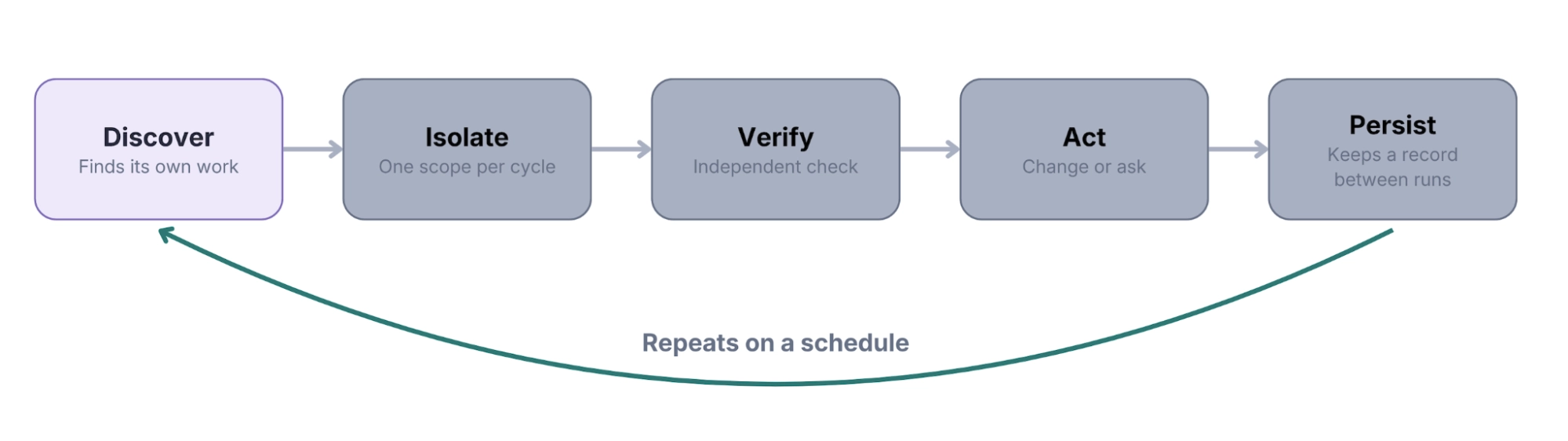
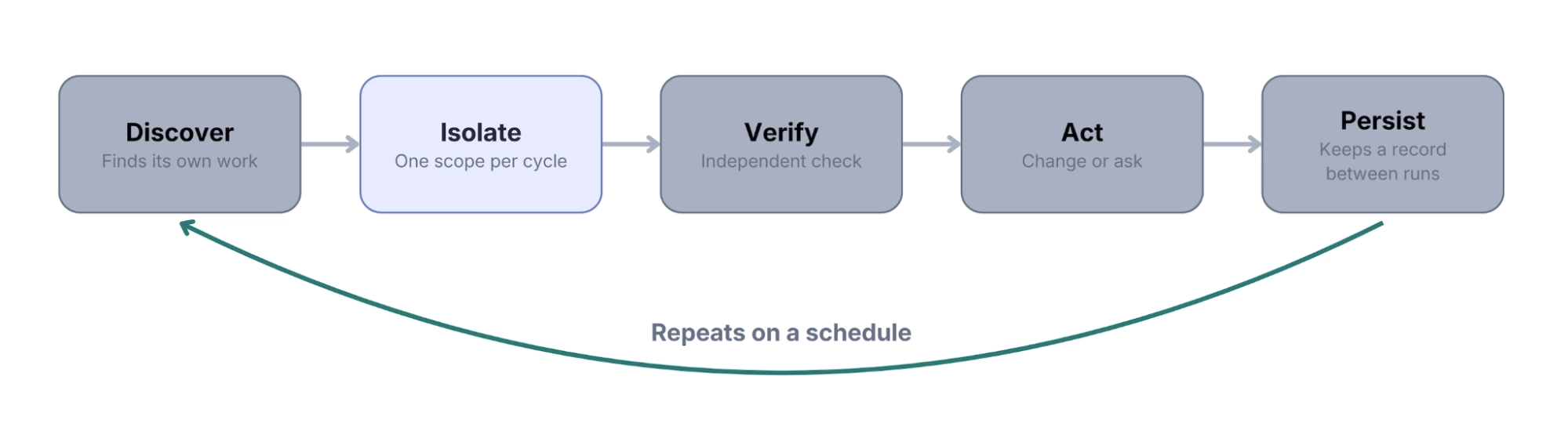
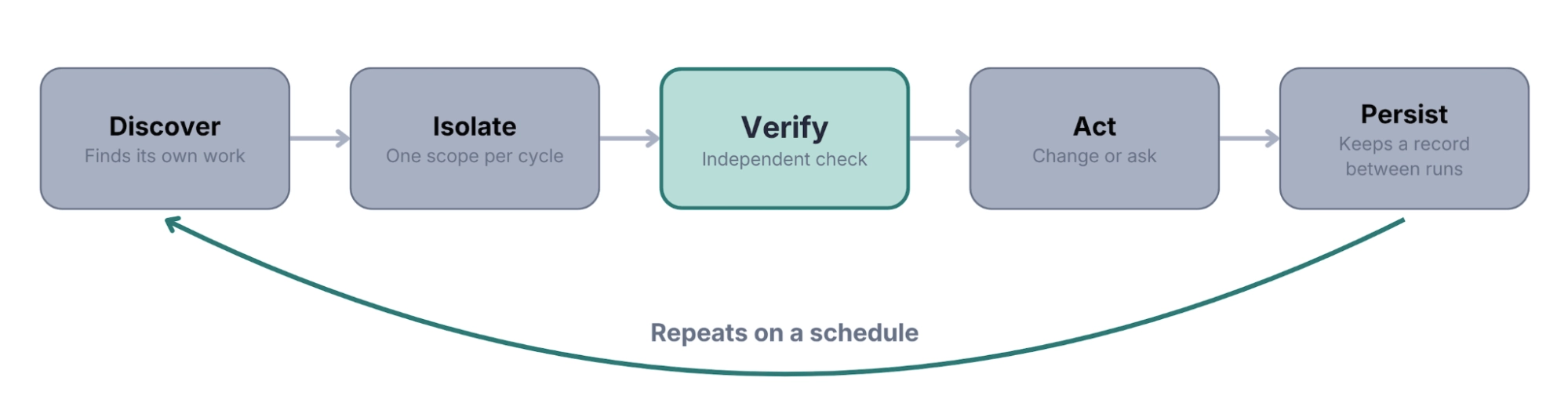
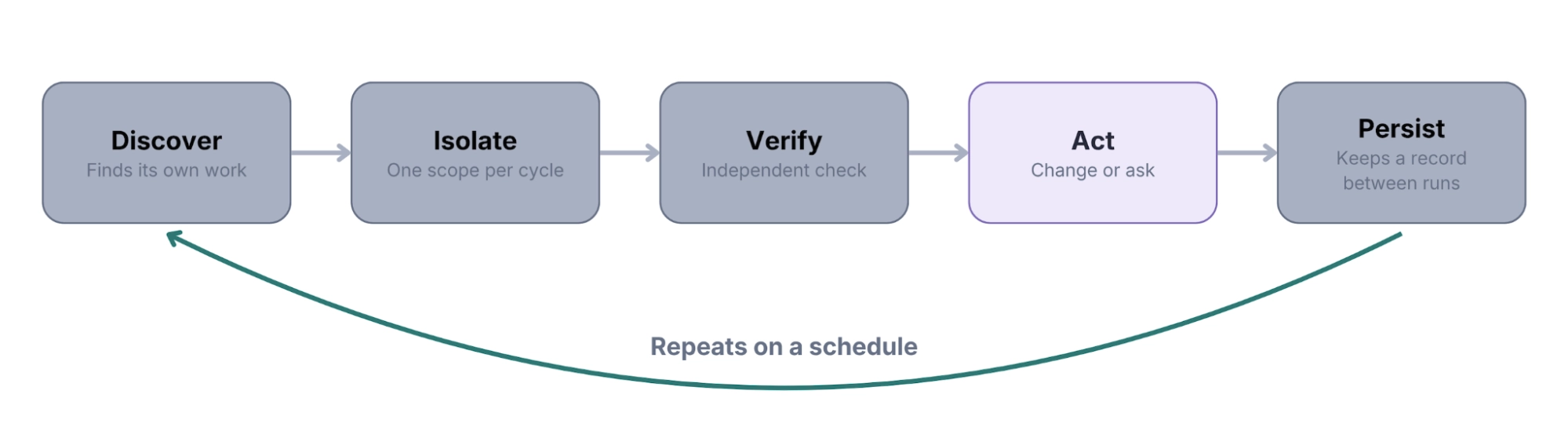
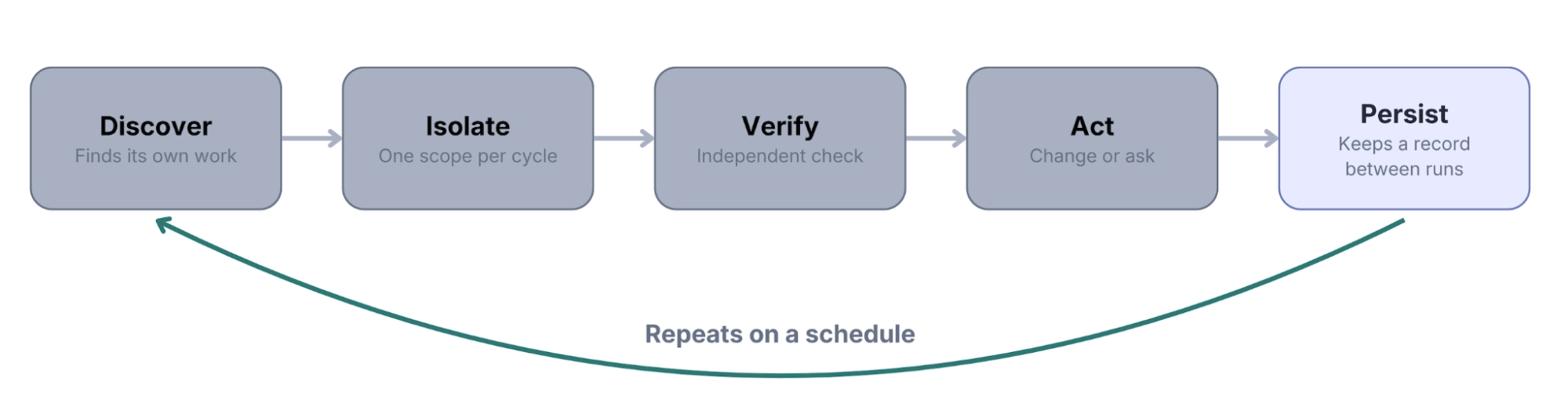
To function effectively and safely, an autonomous experimentation loop must follow a structured five-stage process. This cycle ensures that every action is grounded in data and that the system remains within the guardrails set by human operators.
- Discover: The agent begins by querying the experimentation platform to find work. It identifies live experiments, checks their current performance, and looks for anomalies. Key discovery tasks include identifying experiments with zero visitors or conversions, detecting sample ratio mismatches (SRM), and flagging experiments that have exceeded their expected duration.
- Isolate: To prevent contamination, the system ensures that changes made to one experiment do not interfere with another. In software engineering, this is akin to using separate worktrees for different tasks. In experimentation, it involves setting boundaries to prevent overlapping changes from skewing results.
- Verify: This is the most critical stage for maintaining statistical integrity. The system evaluates whether the data gathered is sufficient to make a decision. Because "peeking" at data can lead to false positives, this stage often requires advanced statistical methods, such as sequential testing, to allow for continuous monitoring without compromising the validity of the results.
- Act: Once a decision is verified, the agent executes a change. This could involve pausing an underperforming variation, ramping up traffic to a winner, or completing a feature rollout.
- Persist: Because AI agents typically start each session with no memory of the previous run, the loop must record its actions in an external state. This history allows the agent to understand the context of its previous decisions and prevents it from entering a cycle of conflicting changes.
Technical Integration and the Model Context Protocol (MCP)
Modern autonomous loops rely on a robust connection between the AI agent and the experimentation backend. The Model Context Protocol (MCP) has emerged as a standard for this interaction. For instance, the Convert MCP server provides a gateway for agents like Anthropic’s Claude to read experiment results and, when authorized, modify configurations.
Organizations typically choose between two connection methods based on their automation needs. A hosted connector is often preferred for interactive, human-led sessions, but it requires periodic manual re-authentication. For true background automation, teams utilize local MCP servers that authenticate via Application IDs and Secret Keys. This method ensures that the loop can run on a schedule—via GitHub Actions, Cron jobs, or AWS Lambda—without requiring human intervention to maintain the connection.
The level of access granted to these agents is controlled through permission settings. These range from "reporting" (read-only access to results) to "all" (the power to make live changes). However, security experts warn that credential management is the primary safety control. If an agent is provided with an API key from an account owner, it may bypass standard approval workflows, highlighting the need for limited-role credentials in automated environments.
Statistical Rigor and the Risks of Continuous Monitoring
One of the primary challenges in autonomous experimentation is the "peeking problem." In a standard fixed-horizon A/B test, evaluating results multiple times before the pre-calculated sample size is reached increases the probability of a Type I error (a false positive). If an automated loop checks a test daily and has the power to stop it, it provides multiple opportunities for random noise to be mistaken for a significant result.
To mitigate this, organizations are increasingly adopting sequential testing methodologies. Unlike traditional frequentist methods, sequential testing—often implemented via Asymptotic Confidence Sequences—is designed for continuous monitoring. It adjusts the significance thresholds to maintain a constant false-positive rate, regardless of how many times the data is checked.
Furthermore, "Dynamic Power" modes in experimentation platforms can introduce hidden risks. An early spike in data can lead an agent to believe a smaller sample size is needed than is actually required, causing the test to complete prematurely. Industry leaders recommend setting a Minimum Running Time that covers at least one full business cycle (typically seven to fourteen days) to ensure that the data reflects true user behavior rather than temporary fluctuations.
Security Protocols and the Request Approval System
As AI agents take on more operational responsibility, the "Human-on-the-loop" model has become a standard for safety. While an agent can identify a winning variation, many organizations require a human to approve the final implementation. Convert Experiences and similar platforms have introduced Request Approval Systems that gate significant changes.
When a loop identifies an action—such as pausing a live experiment—it submits a request rather than executing the change immediately. Human reviewers receive notifications and must verify the evidence before the change goes live. This system is designed to prevent "runaway loops" where an agent might inadvertently disable a critical feature due to a misinterpretation of data.
To maintain the effectiveness of these safeguards, it is essential that the AI agent is not granted reviewer permissions. If the agent’s credentials allow it to approve its own requests, the entire governance structure is neutralized.
Chronology of Automation in Experimentation
The path to autonomous loops has been defined by several key milestones:
- Pre-2020: Manual A/B testing dominated, with data analysis performed post-hoc by data scientists.
- 2021-2023: The rise of server-side SDKs allowed for more integrated testing, but decisions remained human-centric.
- 2024: The introduction of MCP servers provided a standardized way for LLMs to interact with external data sources.
- 2025-2026: The transition to "Loop Engineering" saw the first widespread deployment of scheduled agents that manage the full lifecycle of an experiment.
Broader Industry Implications and Future Outlook
The implications of autonomous experimentation extend beyond simple conversion gains. For software engineering teams, these loops provide a "safety net" for feature rollouts. If a new feature causes a regression in performance or a spike in errors, the autonomous loop can detect the anomaly and roll back the change in minutes, often before a human operator is even aware of the issue.
However, the rise of these systems also necessitates a new set of skills for optimization teams. The focus is shifting from "how to run a test" to "how to design the guardrails for a system that runs tests." This includes defining shutdown policies, managing API scopes, and auditing the statistical settings of the platform to ensure they are compatible with automated monitoring.
As of late 2026, the industry is seeing a consolidation of these tools. What were once separate functions—feature flagging, A/B testing, and AI monitoring—are merging into unified "experimentation engines." These engines are increasingly "AI-native," designed from the ground up to be navigated by agents rather than humans.

In conclusion, while autonomous experimentation loops offer unprecedented speed and efficiency, their success depends on the rigor of their configuration. By combining advanced statistical methods like sequential testing with strict security protocols and human oversight, organizations can harness the power of AI to optimize their digital experiences with minimal risk. The future of experimentation is not just automated; it is autonomous, persistent, and self-correcting.


 Lina Hope
 Ammar Sabilarrohman