A decade ago, the ability to construct a professional website was largely confined to those proficient in HTML, CSS, or JavaScript, or those with the financial means to hire expert developers. The process was often expensive, time-consuming, and technically demanding. Today, the landscape of web development has undergone a radical transformation, largely driven by the advent of artificial intelligence. AI website builders have emerged as a pivotal force, democratizing web presence by enabling individuals and businesses to generate sophisticated, functional websites in mere minutes, often with nothing more than a few descriptive prompts. This shift represents a significant evolution from the traditional manual coding paradigms and even the drag-and-drop editors that previously simplified the process, fundamentally altering how digital presences are conceived, created, and deployed.
The Evolution of Web Creation: A Historical Perspective
The journey of website development began in the early 1990s, characterized by rudimentary HTML pages meticulously crafted line by line. This era demanded deep technical expertise, making website creation inaccessible to the average individual or small business. The early 2000s saw the rise of Content Management Systems (CMS) like WordPress, which offered a more user-friendly interface, separating content from code and allowing for easier updates. This was followed by the proliferation of dedicated website builders in the 2010s, introducing drag-and-drop functionalities that empowered non-coders to visually arrange elements and customize templates. While these tools significantly lowered the technical barrier, they still often presented users with a blank canvas or pre-designed templates that required considerable manual configuration and content population. The core challenge remained: translating a business idea into a fully formed, aesthetically pleasing, and functional website still required significant design decisions, content creation, and layout planning.
The current wave of AI website builders represents the next logical leap in this chronology. Leveraging advancements in generative AI, natural language processing (NLP), and machine learning, these platforms move beyond mere automation to actual creation. They interpret human language prompts, understand design principles, and generate entire web pages—including layouts, placeholder text, and even images—from scratch. This marks a paradigm shift from building with tools to collaborating with AI, making the initial design phase vastly more efficient and intuitive.
Defining AI Website Builders and Their Core Mechanics
At its core, an AI website builder is a generative AI platform specifically engineered for the creation of websites. Unlike general-purpose AI tools that might generate text or images in isolation, these builders synthesize various AI capabilities to produce complete web pages. Users describe their desired website—detailing their business, target audience, preferred aesthetic, and strategic objectives—and the AI constructs a professional-looking initial draft in minutes, entirely without manual coding. This distinguishes them sharply from mere automation tools that might schedule blog posts or perform routine maintenance; AI builders are fundamentally creative, capable of originating design and content.
The operational mechanism of most AI website builders typically follows a three-step process:
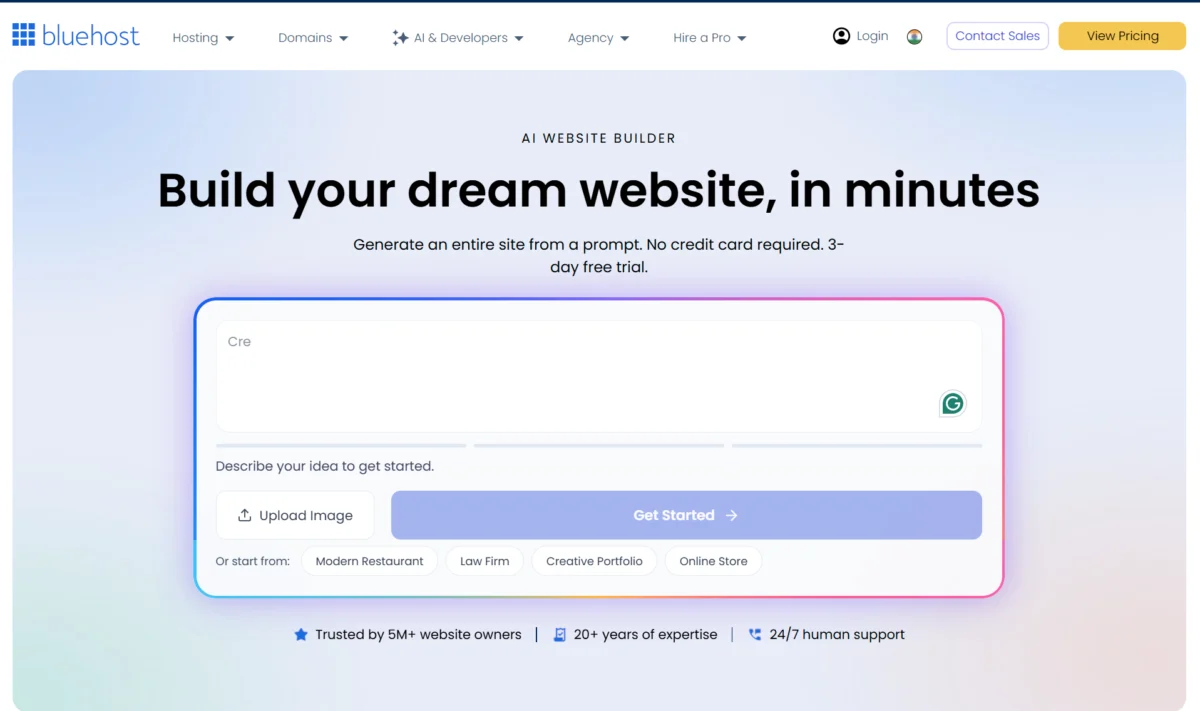
- Prompt and Response: The journey begins with user input. This involves answering a series of structured questions or providing a descriptive narrative about the intended website. Key details include industry sector, target demographic, brand style guidelines, and the specific pages required (e.g., "About Us," "Services," "Contact"). The more comprehensive and precise the context provided, the more accurately the AI can tailor the initial website draft.
- Automated Generation: Upon processing the user’s requirements, the AI autonomously generates the website. This involves creating distinct page layouts, drafting initial copy (often contextually relevant placeholder text), suggesting appropriate visual assets, and structuring the content into a coherent navigational flow. This rapid prototyping phase is where the AI’s generative capabilities truly shine, transforming abstract ideas into a tangible digital blueprint within moments.
- Visual Editing and Refinement: The AI-generated output serves as a robust first draft, not a final product. Users then engage with a visual editor to fine-tune and personalize the site. This post-generation customization allows for modifications to text, swapping or generating new images, rearranging sections, adjusting color palettes and fonts, and refining the overall design to align perfectly with the brand vision. This iterative editing process ensures that while AI handles the heavy lifting of initial creation, the human user retains ultimate creative control and injects their unique brand identity.
The Transformative Impact on Web Design and Market Dynamics
The emergence of AI in web design is not merely a technological novelty; it is rapidly becoming a mainstream approach to digital presence creation. Market research underscores this profound shift. According to Custom Market Insights, the global AI-powered website builder market is projected to expand significantly, from an estimated $3.41 billion in 2026 to a substantial $14.78 billion by 2035. Another report by Precedence Research offers an even more optimistic outlook, estimating the market could reach $17.4 billion by 2035. These figures reflect a surging demand for expedited, code-free website development solutions across various business sizes and sectors.
This accelerated growth is a direct response to several persistent challenges in traditional web development, including technical complexity, high costs, and protracted development timelines. By integrating generative AI with intuitive visual editing tools, these platforms effectively lower the barrier to entry, enabling a broader spectrum of users—from nascent entrepreneurs to established small businesses and independent creators—to establish a professional online footprint.
Industry analysts observe that this trend is fundamentally democratizing the internet. "AI website builders are not just tools; they are enablers of economic participation," states Dr. Anya Sharma, a digital economy expert. "They empower individuals who lack technical skills or significant capital to launch ventures online, fostering innovation and competition across diverse sectors." This sentiment is echoed by many small business owners, who laud the ability to go from concept to live website in a fraction of the time and cost previously required.
Key Advantages Driving Widespread Adoption:
The growing reliance on AI website builders is underpinned by several compelling advantages:
- No-Code "Vibe Coding" Empowerment: The most significant benefit is the elimination of coding requirements. Instead of writing intricate lines of HTML, CSS, or JavaScript, users simply articulate their vision in natural language. This approach, colloquially termed "vibe coding," allows creators to focus purely on their ideas and brand identity, delegating the technical translation to the AI. This paradigm shift makes sophisticated web design accessible to anyone with a clear concept.
- Accelerated Launch Timelines and Efficiency: Traditional website projects, even with drag-and-drop builders, can span days or weeks as users grapple with layout decisions, content generation, and image sourcing. AI builders dramatically condense this timeline, generating complete layouts, drafting content, and suggesting relevant imagery and page structures within minutes. This allows users to bypass the laborious initial setup phase and dedicate their efforts to refining an already functional draft, significantly reducing time-to-market without compromising quality.
- Smarter Contextual Awareness: Modern AI website builders transcend generic template application. They are designed to leverage the specific context provided by the user—such as industry, business goals, target audience demographics, and design preferences—to create a highly relevant and personalized starting point. For instance, an AI-generated website for a boutique restaurant will inherently differ in design, functionality, and content suggestions from one crafted for a freelance photographer’s portfolio or an e-commerce store. The more detailed the input, the more bespoke and effective the AI’s initial output becomes.
- Cost-Effectiveness: By automating significant portions of the design and content generation process, AI builders substantially reduce the need for expensive web designers or developers. This makes professional website creation financially viable for startups and small businesses operating on tight budgets.
- Enhanced Accessibility: These platforms also enhance accessibility in a broader sense, by empowering individuals with various levels of technical proficiency or physical disabilities to create and manage their online presence with greater ease, using natural language interfaces.
These benefits collectively position AI website builders as a powerful starting point for any digital endeavor. However, achieving optimal results still hinges on strategic platform selection and the quality of user input.
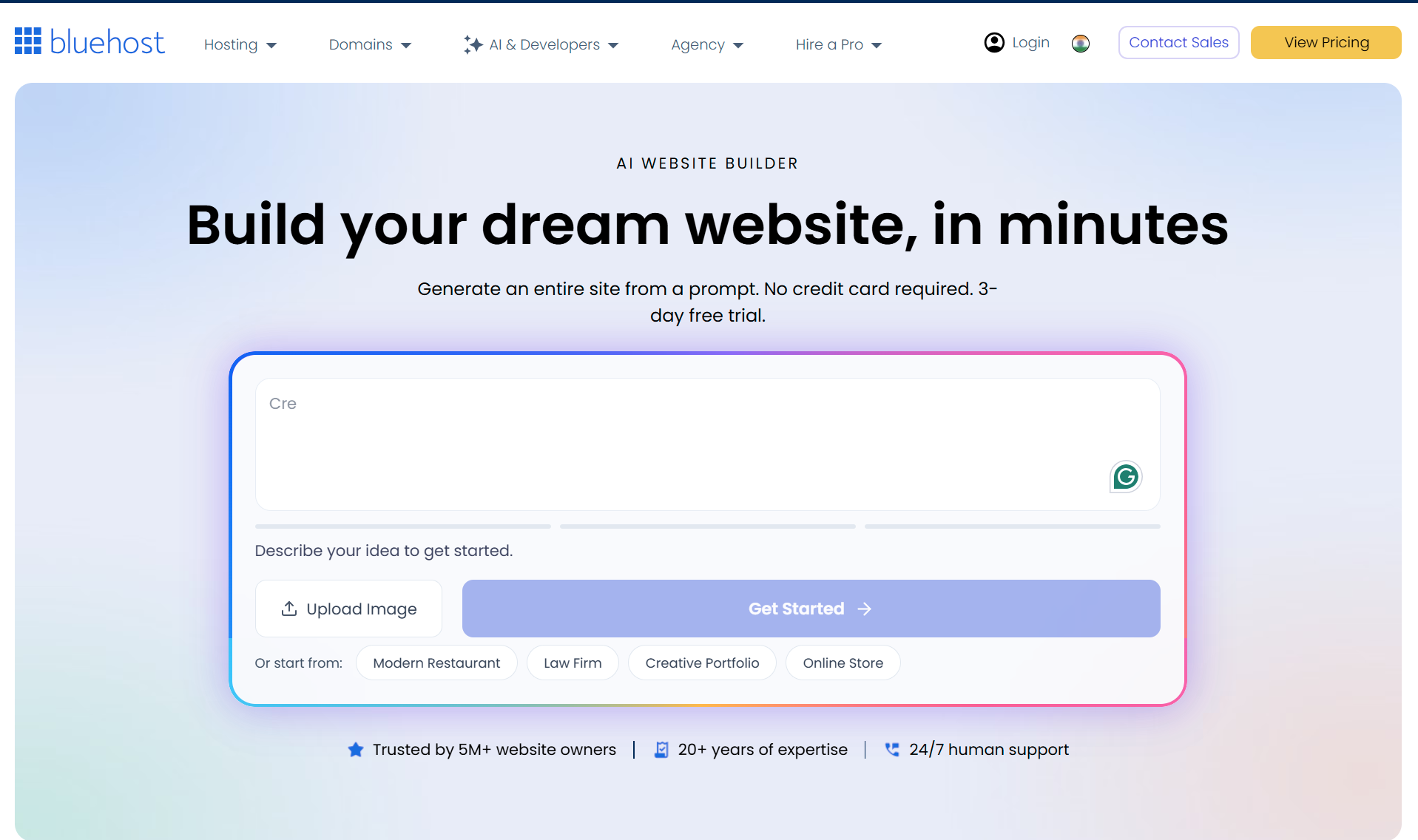
Navigating the AI Web Creation Journey: Prerequisites and Platform Choice
While AI simplifies the creation process, the fundamental components of a website remain essential. Before diving into AI-powered design, certain prerequisites must be established, forming the bedrock of the online presence.
Essential Prerequisites for Any Website:
- Domain Name: This is the unique address of a website on the internet (e.g., yourbusiness.com). A memorable, brand-aligned domain is crucial for recognition, searchability, and ease of sharing. Registering a suitable domain is the first step in establishing a digital identity.
- Web Hosting: Every website requires server space to store its files, databases, and content. A reliable hosting provider ensures the website remains online, loads quickly, and is accessible to visitors globally. Hosting choice directly impacts site speed, uptime, and security.
- SSL Certificate: An SSL (Secure Sockets Layer) certificate encrypts data exchanged between the website and its users, protecting sensitive information like login credentials and payment details. It enables HTTPS, a visible indicator of a secure connection in web browsers, which is now a standard expectation for professional websites and a factor in search engine rankings.
- Website Builder: This is the primary tool used for designing and customizing the website. While traditional builders rely on drag-and-drop interfaces, AI website builders elevate this by generating initial layouts and content based on prompts, significantly accelerating the initial design phase.
- Content Management System (CMS): A CMS facilitates the management of website content and functionality post-launch. Platforms like WordPress are industry standards, offering flexibility, user-friendliness, and vast extensibility through themes and plugins. A robust CMS provides users with complete ownership and control over their content, allowing for seamless updates, content publication, and site expansion without requiring coding expertise.
Choosing the Right AI Website Builder: A Case Study with Bluehost AI
The market offers a growing array of AI website builders, but the optimal choice often extends beyond mere generative capabilities. The best platforms integrate the entire ecosystem of web presence creation. The Bluehost AI Website Builder serves as a compelling example of an integrated solution, streamlining the journey from concept to live website.
Key differentiators for platforms like Bluehost AI include:
- All-in-One Integration: Bluehost AI stands out by consolidating essential services—website creation, managed WordPress hosting, and domain registration—into a single platform. This eliminates the complexity of managing multiple providers and configuring disparate systems, offering a highly simplified onboarding experience, particularly for first-time website creators.
- Intelligent Prompting for Superior Results: Moving beyond basic text descriptions, Bluehost AI employs a series of industry-specific questions prior to generation. This structured data collection enables the AI to gain a deeper understanding of the user’s business, strategic objectives, and target audience, leading to a more relevant and refined initial website draft that requires less post-generation editing.
- Integrated AI Image Generation and Editing: A significant value proposition is the ability to generate or modify images directly within the builder using AI. Instead of relying solely on stock photo libraries or external graphic design tools, users can describe their desired visuals, and the AI will create them, ensuring a cohesive and unique visual identity without leaving the platform.
- Built-in SEO Capabilities: Recognizing that a beautiful website must also be discoverable, Bluehost AI leverages the power of WordPress and includes Yoast SEO Premium with its paid plans. This integration provides access to leading SEO tools from day one, allowing users to optimize pages, refine content, and structure their site for search engines concurrently with its design, rather than treating SEO as a post-launch afterthought. This proactive approach is critical for long-term online visibility.
- It is crucial to note that while AI builders and SEO tools like Yoast SEO Premium provide powerful assistance, they do not replace a thoughtful and ongoing SEO strategy. Users must still commit to creating valuable, audience-centric content and continuously optimizing their site for both search engines and human visitors.
- Robust Security and Dedicated Support: The longevity and success of any website depend on continuous security and reliable support. Paid Bluehost plans typically include essential features such as free SSL certificates, malware scanning and removal, weekly backups, and a global Content Delivery Network (CDN) to ensure website security and optimal performance. Furthermore, access to 24/7 WordPress experts via chat or phone provides crucial assistance whenever technical challenges arise.
Step-by-Step Implementation with an AI Website Builder (Bluehost AI Example):
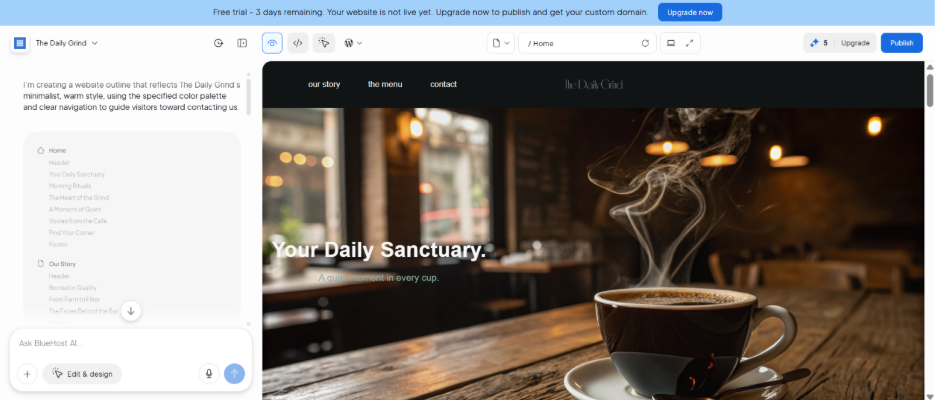
The process of building a website with an AI builder like Bluehost AI is designed for simplicity and efficiency:
- Initiate Website Creation: The user begins by accessing the builder, often through a trial or initial sign-up process.
- Define Brand Identity: A crucial stage where the user inputs their business name, selects a preferred color palette, specifies geographical location (if relevant), and chooses a design style that aligns with their brand vision. This information guides the AI’s aesthetic choices.
- Account Setup: Users either log into an existing Bluehost account or create a new one, linking their website project to their hosting and management platform.
- Review and Personalize: Within a few minutes, the AI presents the initial draft of the website. The user then employs a visual editor to customize every detail: editing text, replacing or generating new AI-powered images, adjusting layouts, adding or removing pages, modifying color schemes, and even prompting the AI to generate additional content sections. This stage emphasizes the collaborative aspect, where human oversight refines AI output.
- Domain Selection and Publication: Once satisfied with the website’s design and content, the user selects a domain name (either an AI-suggested option or an existing one). Upon completing the checkout process, the platform automatically configures hosting, SSL certificates, security features, and the WordPress installation, making the website ready for immediate publication.
Best Practices for Maximizing AI-Generated Website Success:
Publishing an AI-generated website is merely the first step. Sustained success—attracting visitors, delivering an exceptional user experience, and achieving high search engine visibility—requires ongoing refinement and strategic management.
- Context Over Keywords in Prompting: AI builders perform optimally when provided with rich context rather than sparse, keyword-focused prompts. Users should articulate their business model, target audience, overarching goals, product/service offerings, and desired brand tone. This comprehensive input enables the AI to generate a more relevant and impactful initial design. This principle extends to content creation; robust keyword research should precede content generation, informing high-quality, audience-centric articles that naturally integrate relevant terms.
- The Indispensable Human Touch: While AI excels at generating structures and content, it lacks the nuanced understanding of a brand’s unique ethos, customer stories, and authentic voice. Every AI-generated page must be reviewed and infused with human personalization: authentic testimonials, original imagery, unique customer narratives, and a distinct brand voice. These elements are vital for building trust and differentiating the site from generic AI outputs.
- Cultivate Uniqueness and Verify Accuracy: AI models learn from existing data, which can sometimes lead to generic designs or content that lacks originality. Users must diligently review all AI-generated material for accuracy, factual correctness, and uniqueness. Adding bespoke details, brand-specific narratives, and unique value propositions is crucial. Adhering to SEO-friendly content best practices further ensures that pages are both original and genuinely useful to the target audience.
- Consistent Testing and Optimization:
- Pre-Launch Validation: Before going live, conduct a thorough technical SEO audit. Verify crawlability of essential pages, ensure no accidental blocking of search engines, and confirm the XML sitemap is accessible. Tools like Yoast SEO offer features to optimize crawl activity. Manual checks of metadata, internal linking structures, and page hierarchy are also critical.
- Post-Launch Iteration: A website is a dynamic asset. Regular reviews, cross-device testing, identification and correction of broken links, updates to outdated information, and continuous performance improvements are essential. For content-rich sites, revisiting and optimizing older articles over time can significantly enhance search visibility and user engagement.
- Prioritize Accessibility: A truly great website is universally usable. Implement accessibility best practices: use descriptive alt text for images, maintain adequate color contrast, structure content with proper headings for screen readers, and ensure keyboard navigation is seamless. WordPress offers numerous accessibility plugins that can aid in meeting compliance standards and enhancing usability for all users.
- Focus on Creating Valuable Content: Design attracts, but valuable content retains. Whether publishing blog posts, service descriptions, or product pages, the primary goal should be to address audience questions and solve their problems. Adhering to proven content SEO and blog SEO strategies ensures content not only performs well in search engines but also provides genuine utility and a superior experience for readers.
Building Smarter, Launching Faster: The Future is Here
The era of complex, resource-intensive website development is rapidly giving way to a new paradigm defined by speed, intuition, and accessibility. AI website builders have fundamentally reshaped the creation process, making it faster, more streamlined, and broadly available to a diverse user base. The journey from a nascent idea to a fully operational website now hinges on selecting the right platform, articulating a clear vision, and leveraging thoughtful prompts.
As Sachin Puri, CEO of Bluehost, aptly articulated, "the real power of AI lies in removing complexity for users." This ethos perfectly encapsulates the mission of modern AI website builders. They abstract away the technical intricacies of web creation, liberating entrepreneurs, creative professionals, and small business owners to concentrate on their core competencies: building their brand, engaging their audience, and fostering their online growth.
For those who have previously deferred establishing an online presence due to perceived technical hurdles or financial constraints, the current landscape offers an unprecedented opportunity. The time to harness the power of AI for website creation is now. Begin with a prompt, infuse it with your unique vision, and watch your digital presence flourish alongside your business.