rifanmuazin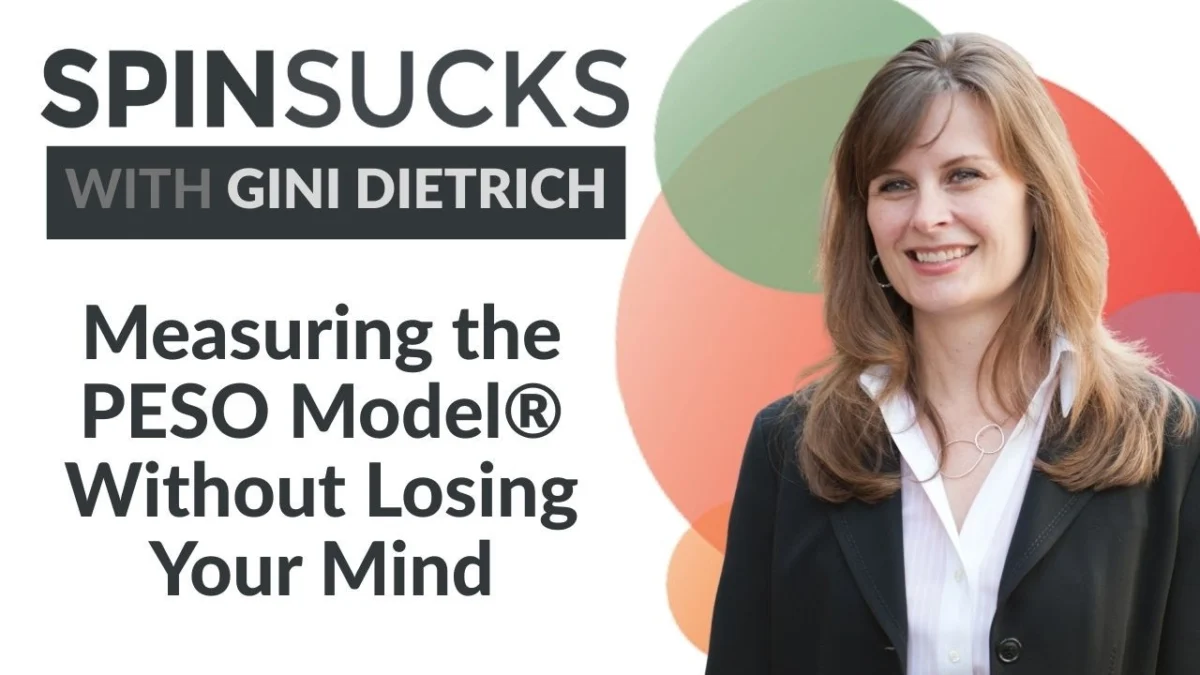
The PESO Model, a strategic framework that integrates Paid, Earned, Shared, and Owned media, is undergoing a fundamental shift in how its success is quantified and reported within the professional communications industry. As the digital landscape transitions toward AI-driven discovery and zero-click visibility, the traditional reliance on "vanity metrics"—such as impressions, likes, and raw output counts—is being replaced by a more rigorous focus on business outcomes. This evolution marks a transition from viewing measurement as a mathematical chore to treating it as a narrative-driven process that explains how integrated communications strategies drive specific behavioral and business shifts.
The modern communications professional is no longer tasked merely with reporting activity; they are now required to demonstrate how the PESO operating system creates, strengthens, and scales proof of value across a fragmented media environment. This paradigm shift requires a clear distinction between activities, outputs, and outcomes, alongside a structured 90-day implementation cycle designed to align marketing efforts with organizational goals.
The Contextual Shift: From Channels to Systems
Historically, public relations and marketing departments measured success in silos. Earned media teams tracked press clippings, shared media teams tracked social engagement, and paid media teams tracked click-through rates. However, the rise of generative artificial intelligence and large language models (LLMs) has disrupted this channel-specific approach. AI tools now synthesize information from across the web to provide direct answers to users, often bypassing the need for clicks to original sources.
In this environment, visibility is no longer a channel-specific problem but a systemic one. The PESO Model Certification has recently been updated to address this reality, emphasizing that trust and authority must be built across all four pillars simultaneously to ensure a brand is recognized by both human audiences and AI discovery engines. Measurement must, therefore, reflect the performance of the system as a whole rather than the performance of individual, disconnected channels.
Distinguishing Activities, Outputs, and Outcomes
A core challenge in modern measurement is the conflation of effort with results. To provide a professional-grade analysis of performance, organizations are increasingly adopting a three-tiered definition of work:
1. Activities
Activities represent the internal labor of the communications team. Examples include writing a press release, attending a strategy meeting, or configuring a social media scheduling tool. While essential for project management, activities hold no inherent value to the C-suite or the broader business objectives.
2. Outputs
Outputs are the tangible products of activities. This includes the number of articles published, the volume of LinkedIn posts shared, or the execution of a webinar. In the past, many PR reports consisted almost entirely of outputs. While outputs indicate that the team is productive, they do not explain whether that productivity resulted in a meaningful change for the business.
3. Outcomes
Outcomes are the specific business or behavioral shifts that occur as a result of the system’s outputs. This is the only tier that answers the fundamental question: "What changed?" An outcome is not that an article was published (output), but that the article led to an 18% increase in qualified demo requests because it addressed specific prospect pain points.
The 90-Day Framework: A Chronological Approach to Measurement
To avoid the "quarterly panic" often associated with reporting, industry experts recommend a 90-day measurement cycle. This timeframe is long enough to allow a PESO system to generate momentum and produce compounding effects, yet short enough to allow for agile adjustments.
Days 1–30: Establishing the Baseline and Primary Outcome
The first month is dedicated to selecting a single, primary outcome that aligns with the organization’s highest priority—such as reducing sales friction, increasing trial-to-active conversion rates, or improving the quality of leads. A baseline is established using historical data to ensure that any future growth is measurable and verifiable.
Days 31–60: Implementation and Signal Detection
During the second month, the PESO operating system is deployed. Owned content provides the foundation, earned media provides third-party validation, shared media acts as a distribution signal, and paid media serves as an accelerator. Measurement during this phase focuses on "signal detection"—identifying which pieces of content or which channels are beginning to move the needle on the primary outcome.
Days 61–90: Optimization and Narrative Reporting
In the final month of the cycle, teams use simple decision rules to double down on high-performing tactics and stop underperforming ones. At the end of the 90 days, the report is delivered not as a spreadsheet of numbers, but as a narrative: "We changed [business result] by [percentage/direction] because the integrated PESO system [specific action]."
Supporting Data and Industry Benchmarks
The shift toward outcome-based measurement is supported by broader trends in the marketing and communications industry. According to data from Gartner, nearly 75% of CMOs are under increased pressure to "do more with less," making the elimination of low-impact activities a financial necessity. Furthermore, studies on "zero-click" searches indicate that over 50% of Google searches now end without a click to a third-party website, reinforcing the need to measure "brand mentions" and "AI sentiment" as outcomes rather than just referral traffic.
Research into the "Barcelona Principles 3.0"—the industry standard for PR measurement—further validates this approach. The principles explicitly state that "measurement and evaluation should identify outputs, outcomes, and potential impact," and that "AVE (Advertising Value Equivalency) is not the value of communication."
Analysis of Implications for Leadership and Strategy
The adoption of the PESO Model as an operating system has significant implications for how budgets are allocated and how leadership perceives the value of communications. When measurement is tied to business outcomes, the communications team moves from being a "cost center" to a "revenue driver."
Reducing Sales Friction
One of the most valuable outcomes of a functioning PESO system is the reduction of sales friction. By ensuring that consistent, credible proof points appear across earned media (third-party validation) and owned media (expert deep dives), a brand can answer prospect objections before they are even voiced in a sales call. Measuring the decrease in the length of the sales cycle is a high-level outcome that directly impacts the bottom line.
Permission to Stop Low-Value Work
A secondary, often unspoken benefit of this measurement style is the "leadership permission" it provides. When a 90-day outcome is not met despite significant output, it provides a factual basis for stopping a specific tactic. In a traditional reporting environment, teams often feel compelled to continue "posting for the sake of posting." In an outcome-driven environment, stopping an ineffective tactic is seen as strategic optimization rather than failure.
The Outcome Quality Check: A Filter for Strategic Planning
Before finalizing a measurement plan, professionals are encouraged to run their proposed outcomes through a four-part quality filter:
- Alignment: Does this outcome directly support a core organizational goal?
- Verifiability: Is there a clean, accessible baseline to measure against?
- Attribution: Can we reasonably connect the PESO system’s activities to this shift?
- Actionability: Will the data from this outcome help us decide what to do next?
If a metric fails to pass these checks, it is likely an output or an activity masquerading as an outcome.
Conclusion: The Future of Integrated Measurement
The integration of Paid, Earned, Shared, and Owned media into a single operating system represents the most sophisticated approach to modern brand building. However, the system is only as effective as the narrative used to explain it. By focusing on "what changed" and using numbers as supporting evidence rather than the story itself, communications professionals can ensure their work holds up under the scrutiny of budget committees and in the competitive reality of an AI-first world.
As the industry moves toward 2026 and beyond, the ability to operationalize these measurement strategies—moving from "math homework" to "business storytelling"—will be the defining characteristic of successful communications leadership. The PESO Model Certification and similar professional standards are now essential for those looking to master this transition and prove that communications is a vital driver of organizational growth.