rifanmuazin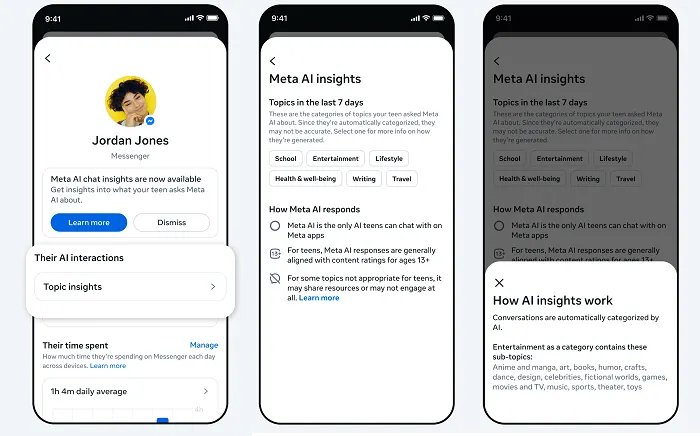
Meta Platforms Inc. has announced a significant update to its suite of teen supervision tools, empowering parents with unprecedented visibility into their children’s interactions with its artificial intelligence chatbot. This new functionality, integrated within Meta’s existing Family Center, allows parents to access a categorized overview of the topics their teens are discussing with Meta AI, marking a critical step in the ongoing effort to balance youth safety with digital autonomy. The update, detailed in an announcement dated April 2026, is initially rolling out to users in the U.S., U.K., Australia, Canada, and Brazil, with plans for broader international expansion in the near future.
The Growing Imperative for Teen Online Safety in the AI Era
The introduction of these enhanced supervision tools comes at a time of heightened global scrutiny regarding the impact of digital platforms and artificial intelligence on young people. For years, social media companies, including Meta, have faced persistent calls from parents, educators, child safety advocates, and policymakers to implement more robust safeguards for adolescent users. Concerns have ranged from exposure to inappropriate content and cyberbullying to the detrimental effects on mental health and body image. The rapid proliferation of sophisticated AI chatbots has added a new layer of complexity to this landscape, introducing novel challenges related to information accuracy, privacy, and the potential for AI to influence impressionable minds on sensitive topics.
Traditional social media supervision tools often focus on usage patterns, friend lists, and content consumption. However, AI chatbots, by their very nature, invite direct, conversational engagement, making the content of these interactions a new frontier for parental concern. Teens, naturally curious and increasingly tech-savvy, are likely to turn to AI for a wide array of queries, from homework help to exploring complex personal issues. While AI can be a valuable educational and exploratory tool, the absence of human discernment and the potential for misinformation or inappropriate advice necessitate a framework for oversight. Meta’s latest initiative directly addresses this emerging challenge by extending parental visibility into this conversational domain.
Functionality and Design: A Glimpse, Not a Transcript
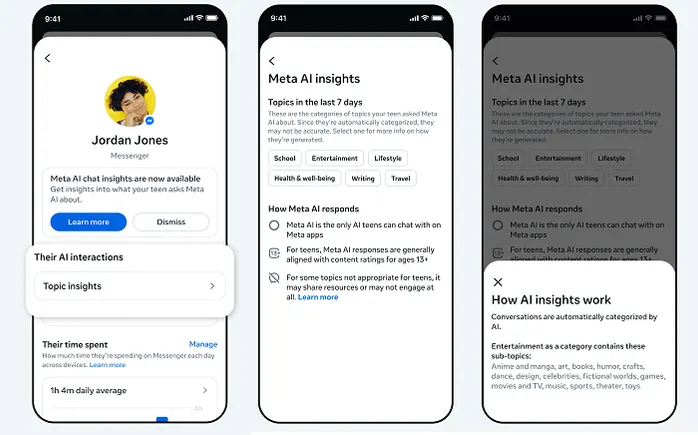
The core of Meta’s new feature lies in its ability to provide parents with a high-level overview of their teen’s Meta AI interactions, rather than verbatim transcripts. This design choice reflects a deliberate attempt to strike a balance between parental transparency and teen privacy. Through the Family Center, parents can now access a list of topics that their child has discussed with Meta AI. These topics are automatically categorized by artificial intelligence algorithms, aiming to provide a broad understanding of the general themes of inquiry.
Meta has clarified that the insights presented are not specific, detailed questions but rather categorized subject areas. For instance, parents might see topics such as "School," "Entertainment," "Lifestyle," "Travel," "Writing," and "Health and Wellbeing." The company further elaborated on the granularity within these broad categories: "Parents can tap on a topic to see the different categories that fall within each one. For example, categories within Lifestyle include fashion, food, and holidays, and categories within Health and Wellbeing include fitness, physical health, and mental health." This categorization system is designed to offer a "bigger picture" perspective, allowing parents to identify potential areas of concern without infringing on the specific details of their child’s private conversations. The underlying idea is to equip parents with enough information to initiate a dialogue with their teens if certain topics, such as mental health, appear frequently or raise red flags.
Addressing Sensitive Issues: A Commitment to Enhanced Alerts
Recognizing that certain topics demand more immediate and direct attention than broad categorization can provide, Meta has committed to developing additional safeguards for highly sensitive issues. The company stated, "While the insights are designed to give parents greater visibility into the general topics their teens are asking Meta AI about, for sensitive issues related to suicide and self-harm, we’re going further." This commitment translates into the development of new, proactive alerts designed to notify parents if their teen attempts to engage in conversations related to suicide or self-harm with Meta AI. This critical enhancement underscores Meta’s understanding that some conversations carry inherent risks that warrant immediate parental awareness and intervention, moving beyond mere topic categorization to specific content alerts for critical safety concerns. Details regarding the rollout of these specific alerts are expected to be shared soon.
Facilitating Dialogue: Bridging the Communication Gap
A key challenge in parental supervision of digital activities is not just knowing what children are doing, but knowing how to discuss it effectively and constructively. To address this, Meta has collaborated with the Cyberbullying Research Center to develop practical "conversation starters." These resources are designed to assist parents in initiating dialogues with their teens about their online activities, including their interactions with AI chatbots. Available on the Family Center website, these conversation starters can also be conveniently accessed directly through a link within the new AI Insights tab.
This initiative reflects a broader understanding that technology alone cannot solve the complexities of online safety. It emphasizes the importance of open communication between parents and teens, providing tools and guidance to transform potential anxieties into opportunities for connection and education. By offering these conversation prompts, Meta aims to empower parents not just with data, but with the means to foster trust and understanding, ensuring that digital oversight becomes a collaborative effort rather than a purely監察ive one.
Broader Implications and Analysis: A Balancing Act of Privacy and Protection
Meta’s latest update steps into the complex and often contentious arena of digital privacy versus parental protection. While the move is likely to be welcomed by many parents and child safety advocates, who have long pushed for greater transparency and control over their children’s online lives, it also raises important considerations regarding adolescent autonomy and data privacy.
The Privacy vs. Safety Conundrum: The decision to categorize topics rather than reveal specific queries is a deliberate attempt to navigate this tension. It aims to provide parents with actionable insights without entirely stripping teens of their conversational privacy with the AI. However, the very act of logging and categorizing these interactions, even broadly, represents a significant expansion of surveillance capabilities within a private digital space. Privacy advocates may raise questions about the long-term implications of such data collection and how it might shape adolescents’ willingness to engage openly with AI or other digital tools, potentially stifling genuine inquiry for fear of oversight.
Effectiveness and Potential for Misinterpretation: The utility of broad topic categories, while providing a general overview, also presents limitations. A "Health and Wellbeing" query, for instance, could range from a benign interest in fitness routines to a serious exploration of mental health challenges or even self-harm ideation (before the specific alerts are implemented). This ambiguity could, paradoxically, lead to unnecessary parental anxiety based on vague indicators, or, conversely, fail to highlight subtle but significant concerns. The efficacy of this system will largely depend on the sophistication of Meta’s AI categorization and the clarity with which these insights are presented to parents.
The Role of AI in Adolescent Development: As AI chatbots become more integrated into daily life, their role in adolescent development warrants careful consideration. Teens may increasingly turn to AI as a source of information, a sounding board, or even a form of companionship. While AI can offer access to vast amounts of knowledge, it lacks the emotional intelligence, critical thinking, and nuanced understanding of human interaction. Parental oversight, facilitated by tools like Meta’s, can help ensure that AI is used as a supplementary resource rather than a primary one for sensitive issues, encouraging teens to seek human guidance where appropriate.
Regulatory Landscape and Industry Trends: This update from Meta aligns with a broader industry trend towards enhanced parental controls and greater accountability for online platforms regarding youth safety. Governments worldwide are actively debating and implementing legislation aimed at protecting children online, such as the UK’s Online Safety Act and various state-level initiatives in the U.S. Meta’s proactive steps can be seen as an effort to pre-empt potential regulatory mandates and demonstrate a commitment to responsible platform management. Other tech companies are also continually refining their safety features, making this a competitive landscape driven by both public pressure and regulatory threats.
Chronology of Meta’s Safety Commitments and AI Integration
Meta’s journey towards enhancing teen safety has been a gradual but persistent effort, accelerating significantly in recent years:
- Late 2022/Early 2023: Meta launched its Family Center, a centralized hub designed to provide parents with supervision tools for Instagram and Facebook, alongside educational resources. Initial features included the ability for parents to set daily time limits, view followers and following lists, and receive notifications when their teen reported an account.
- Throughout 2023: Meta continued to iterate on its Family Center, adding features like expanded supervision to Messenger, more detailed insights into teen activity, and tools for teens to manage their online experiences. The company also announced a default setting for private accounts for new teen users on Instagram and Facebook.
- Late 2023/Early 2024: Meta AI, an advanced conversational AI chatbot, was progressively rolled out across Meta’s family of apps, including Instagram, Facebook, Messenger, and WhatsApp. Its integration into these widely used platforms immediately raised new questions about AI’s accessibility and potential impact on younger users.
- April 2026 (Current Announcement): The current update specifically introduces the ability for parents to view topic categories of their teen’s Meta AI queries, directly addressing the conversational aspect of AI interaction. This represents a significant extension of the existing Family Center capabilities.
- Forthcoming: Meta has announced the future development and release of specific alerts for highly sensitive topics such as suicide and self-harm, indicating a continuous refinement of its safety protocols.
Official Responses and Future Outlook
Meta has consistently stated its commitment to iterative improvement and responsiveness to user feedback and expert guidance. The company confirmed that it "will continue to improve and refine the system to make it a more valuable and useful resource over time, based on feedback from users and expert advisors." This indicates that the current implementation is not static but rather the foundation for an evolving suite of tools designed to adapt to new challenges and user needs.
The phased rollout, beginning in key English-speaking markets and Brazil, suggests a strategic approach to gather initial feedback and refine the system before a broader global launch. This methodology allows Meta to address specific regional nuances and ensure the tools are effective and culturally appropriate across diverse user bases.
Ultimately, Meta’s introduction of AI chatbot supervision tools underscores the tech industry’s ongoing struggle and commitment to creating safer online environments for younger users. While the balance between privacy and protection remains a delicate and constantly negotiated space, these new features represent a concrete effort to empower parents with more information, foster critical conversations, and mitigate the potential risks associated with the burgeoning world of artificial intelligence for adolescents. As AI continues to evolve, so too will the need for innovative and adaptable safety measures to ensure that young people can explore the digital world responsibly and securely.