Muslim
The landscape of custom team apparel and group orders is diverse, with platforms catering to distinct needs, from ongoing branded stores to urgent, coordinated purchases. For organizations and groups seeking to outfit their members with branded merchandise, understanding the nuances of each platform is crucial for a smooth and cost-effective experience. This analysis delves into the leading options, highlighting their strengths, weaknesses, and ideal use cases.
Fourthwall emerges as the premier recommendation for establishing a perpetual branded team merchandise store. This platform excels in facilitating a model where individual members can browse a catalog, select their preferred products and sizes, and complete purchases independently. Fourthwall then takes on the entire production, processing, and shipping lifecycle for these catalog orders, offering a hands-off solution for businesses and clubs aiming for continuous merchandise availability. This approach is particularly beneficial for entities that experience a steady, ongoing demand for branded items, such as new employee onboarding, club member recruitment throughout the year, or supporter purchases during a sports season.
In contrast, Custom Ink is positioned as the optimal choice for executing a single, coordinated group order where individual payments are a primary consideration. Its Group Order Form feature elegantly addresses the challenge of collecting diverse sizes and payment information from multiple participants. However, this convenience comes with a caveat: the quoted price is often contingent on an anticipated quantity. Should the actual participation fall short of expectations, the organizer may be financially responsible for the shortfall, a crucial factor to consider when planning such orders. This model is well-suited for specific events, company outings, or team gatherings where a definitive order with a closing date is required.
SquadLocker carves out its niche by focusing specifically on the needs of sports teams and educational institutions. It provides a year-round online store where buyers can independently select and pay for their apparel and shipping. This platform is designed to accommodate the fluctuating needs of these communities, where new members may join mid-season or replacement items are required. For more structured uniform orders, SquadLocker offers assisted bulk ordering and roster management tools for personalized player names and numbers, though careful verification of specific personalization terms and delivery timelines is advised.
Key Takeaways: Navigating Team Apparel Platforms
The selection of a team apparel platform hinges on the intended ordering workflow, payment collection strategy, and fulfillment expectations. A critical distinction lies between a continuous sales channel where customers purchase at their leisure and a singular bulk order event.
- Ongoing Branded Stores: Platforms like Fourthwall and SquadLocker provide a persistent online presence for merchandise, allowing for continuous sales without direct organizer intervention for each transaction.
- Coordinated Group Orders: Custom Ink’s Group Order Form is designed for situations where a single order needs to be placed, with individual participants contributing financially.
- Fundraising Initiatives: Bonfire specializes in apparel campaigns that serve as fundraisers, allowing organizers to set a selling price above the base production cost to generate revenue.
- Urgent Orders: RushOrderTees offers expedited production and delivery options, making it a viable choice when time is of the essence, provided the order qualifies for rush service.
Our Top Picks at a Glance
The following platforms represent leading solutions for various team apparel needs:
- Fourthwall: Ideal for establishing a long-term, branded merchandise store with integrated fulfillment.
- Custom Ink: Best suited for managing coordinated group orders with individual payment collection.
- SquadLocker: A strong contender for sports teams and schools requiring year-round apparel access.
- Printful (MerchShare): Offers flexibility in payment responsibility and allows for shared designs with direct recipient shipping.
- Bonfire: Tailored for fundraising campaigns where profit generation is the primary objective.
- RushOrderTees: Caters to urgent orders requiring fast turnaround times.
Comparing the Best Team Apparel Platforms
| Platform | Best Fit | Payment Workflow | Cost Model | Key Limitation |
|---|---|---|---|---|
| Fourthwall | Ongoing branded store | Members purchase individually | Catalog costs, processing, shipping; optional Pro | Separate purchases should not be treated as pooled bulk. |
| Custom Ink | Coordinated group order | Individual payments via GOF | Quote influenced by expected quantity | Organizer may owe a participation shortfall. |
| SquadLocker | Sports and school store | Individual checkout | Free store; paid apparel and shipping | Check exact uniform personalization terms. |
| Printful | Shared designs, flexible payer | Organizer or recipients pay | Product, shipping, possible digitization | One size/color combination per MerchShare order. |
| Bonfire | Fundraising campaign | Supporters buy campaign items | Selling price less production base cost | Group delivery still carries buyer shipping charges. |
| RushOrderTees | Urgent central purchase | Organizer-led order | Quoted apparel, decoration, possible rush charges | Fastest delivery depends on eligibility and destination. |
1. Fourthwall: Best for an Ongoing Branded Team Merch Store
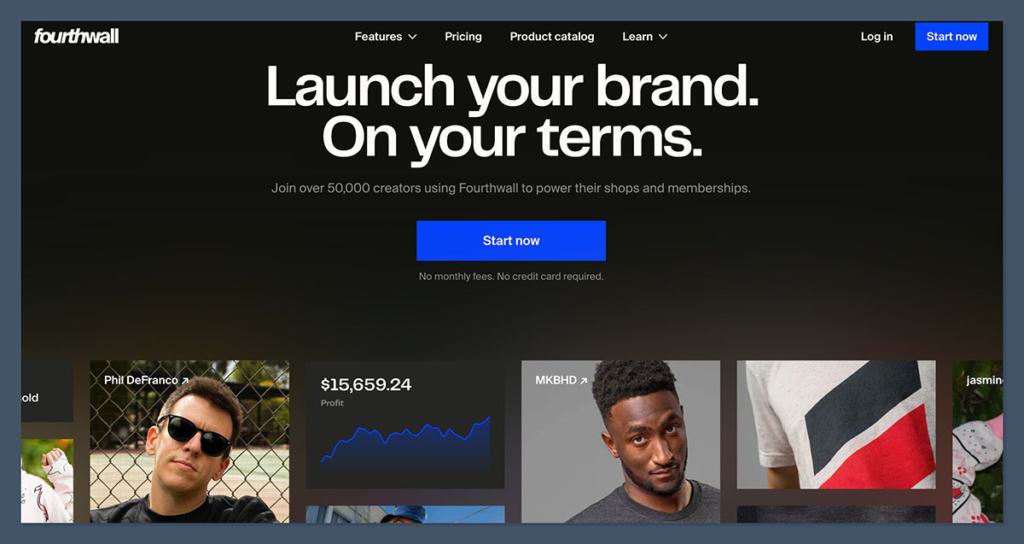
Fourthwall provides a robust solution for organizations aiming to create a lasting online presence for their merchandise. Its core strength lies in its ability to function as a fully managed storefront. Members can visit the site, select from a curated catalog of products, choose their size and color, and proceed to checkout. Fourthwall then assumes responsibility for production, quality control, and shipping directly to the customer. This end-to-end service model significantly reduces the administrative burden on the organization, allowing them to focus on design, branding, and promotion rather than logistics.
Pros:
- Continuous Availability: Merchandise is accessible year-round, accommodating new members or latecomers.
- Hassle-Free Fulfillment: Fourthwall handles production, shipping, and customer service for catalog orders.
- Merchant of Record: The platform manages sales tax registration, collection, and remittance, simplifying compliance.
- Scalable Pricing: A free plan is available, with an optional Pro upgrade for enhanced features.
Cons:
- No Automatic Bulk Discounts: Individual purchases from the store are not automatically aggregated for bulk pricing benefits.
- Requires Clear Communication: Organizations must ensure buyers understand that purchases are separate transactions.
Fourthwall’s Store and Fulfillment Features:
Members can independently navigate the Fourthwall store, select their desired items, and complete their purchases. For products offered through the catalog, Fourthwall manages the entire production and delivery process, eliminating the need for the organization to maintain inventory. As the merchant of record, Fourthwall also handles all sales tax-related obligations for transactions processed through its checkout system.
Why Use Fourthwall for Team Apparel?
The ongoing store model is invaluable when demand is not confined to a single event. A new team member might require a uniform mid-season, or a loyal supporter might wish to purchase merchandise long after an initial launch. This approach is ideal for organizations prioritizing continuous access to branded items without the complexities of managing individual order fulfillment.
Fourthwall Ordering Notes:
It is advisable to start with a focused and cohesive product selection. Before launching, thoroughly review size charts and confirm fulfillment regions to accurately estimate shipping costs. It is crucial to manage expectations regarding bulk pricing; separate store purchases do not automatically qualify for group discounts. If roster imports, individual player numbers, or a single synchronized delivery are essential, these workflows must be explicitly confirmed with Fourthwall prior to commitment.
How Much Does Fourthwall Cost?
The free plan eliminates storefront subscription fees, but not the cost of the merchandise itself. Retail pricing should be set to encompass both the base catalog cost and payment processing fees.
| Cost Component | What to Budget |
|---|---|
| Storefront | $0 on Free; optional paid Pro upgrade |
| Catalog Production | Listed base cost deducted from your selling price |
| US Card Processing | 2.9% + $0.30 per transaction |
| Shipping | Varies by package and destination |
Payment processing fees may differ for alternative payment methods. The free plan is typically sufficient unless specific Pro features are required.
2. Custom Ink: Best for Coordinating Sizes and Group Payments
Custom Ink is the preferred platform when the objective is to consolidate multiple participants into a single, organized order. Its Group Order Form (GOF) is a sophisticated tool that streamlines the collection of size specifications and payments from individuals. The inherent advantage of this system is the ease with which a leader can manage a unified order. However, the pricing structure often relies on an estimated number of participants. If the final order quantity is lower than projected, the organizer may be obligated to cover the outstanding balance, a critical financial consideration.

Pros:
- Simplified Group Ordering: The GOF efficiently manages size collection and individual payments.
- Centralized Order Management: One organizer can oversee the entire process.
- Direct Shipping Options: Orders can be sent to individual addresses or a central location for distribution.
Cons:
- Potential Organizer Liability: Shortfalls in participation can result in the organizer covering the deficit.
- Time-Sensitive: Best suited for orders with a clear deadline.
Custom Ink’s Group Order Form:
The Group Order Form empowers participants to submit their desired sizes and make individual payments. Orders can be routed either to individual homes or to a designated central point for distribution. The estimated quantity of items ordered directly influences the per-item price. Consequently, if fewer items are sold than anticipated, the organizer is responsible for settling the remaining balance upon order closure.
Why Use Custom Ink for Team Apparel?
Custom Ink is an excellent choice for scenarios like company events or club orders where the specific items and sizes are known in advance, but the process of collecting individual payments and size details is cumbersome. If the goal is to provide continuous access to merchandise throughout the year, Fourthwall would be a more appropriate selection. For event-specific orders, it is crucial to confirm production and delivery timelines well before setting the GOF’s closing date.
Custom Ink Ordering Notes:
It is essential to set realistic participation estimates rather than merely the total number of individuals invited. Before distributing the GOF, the organizer must decide who will absorb any financial shortfall if fewer members place orders than expected. Participants should be informed of a clear cutoff date, and one individual should be designated to manage the order closure. If group delivery is chosen, a suitable location for distribution should be arranged prior to the arrival of the shipments. Minimum order quantities can vary based on the product and decoration method, so it is vital to confirm these details for specific garments rather than relying on general minimum order claims.
How Much Does Custom Ink Cost?
The estimated quantity quote should be viewed as a planning figure dependent on participation. It is important to inquire about the financial implications if the group’s order volume falls below the projected number.
| Cost Component | What to Budget |
|---|---|
| Apparel and Decoration | Quoted for the selected products and design |
| Expected Quantity | Influences the quoted pricing |
| Participation Shortfall | Organizer may owe the outstanding balance |
| Delivery | Confirm the cost for home or group delivery |
3. SquadLocker: Best for Sports Teams and School Stores
SquadLocker is specifically engineered for the dynamic needs of sports teams and educational institutions, offering a dedicated platform for year-round apparel sales. This model allows families and members to independently select and purchase their items, with each order being decorated and shipped individually. This decentralized approach is particularly beneficial for organizations with a constant influx of new members or those requiring replacement gear. SquadLocker also provides options for assisted bulk ordering and features roster management tools for personalized uniforms, including player names and numbers. However, it is imperative to verify the specific personalization terms and delivery requirements for each product before directing individuals to checkout, especially when time-sensitive uniform orders are involved.
Pros:

- Year-Round Access: Continuous availability of team merchandise.
- Individual Payments & Shipping: Simplifies transactions for families.
- Specialized Features: Roster management and personalization tools for sports teams.
Cons:
- Individual Order Focus: Less ideal for a single, tightly coordinated bulk purchase.
- Personalization Verification: Detailed checks are needed for uniform requirements.
SquadLocker’s Team Store Features:
With SquadLocker, parents and members can browse the team store, select their preferred apparel and sizes, and complete their purchases directly. Each order is then produced and shipped to the customer’s specified address. For bulk orders, SquadLocker offers assistance and tools like roster imports for player names and numbers. Organizations should consult with SquadLocker to determine which products and setup configurations best meet their specific requirements for personalized uniforms.
Why Use SquadLocker for Team Apparel?
Sports teams often have multiple purchasing moments throughout the year. A family might join late, need to replace a damaged item, or wish to purchase additional supporter apparel after the season has begun. A year-round store accommodates these scenarios without requiring another central collection of sizes. SquadLocker is a strong candidate for school or sports merchandise, and its catalog should be assessed against the team’s specific needs. For broader branded business merchandise, Fourthwall might be a more suitable initial comparison.
SquadLocker Ordering Notes:
It is advisable to differentiate between supporter clothing and required uniforms during the planning phase, as logo hoodies and player-specific kits may have distinct approval processes. For SquadGEAR or other personalized selections, it is crucial to confirm the exact terms for names and numbers for those specific items, rather than assuming all products follow identical rules. Delivery expectations by product should also be verified, particularly as important deadlines, such as the season opener, approach.
How Much Does SquadLocker Cost?
While the team store setup is free, buyers are responsible for the cost of their apparel. It is recommended to evaluate the total checkout cost for representative member orders to understand the pricing structure.
| Cost Component | What to Budget |
|---|---|
| Store Setup | Free year-round store |
| Apparel | Selected product and decoration price |
| Shipping | Check the member’s delivery charge |
| Assisted Bulk Order | Request terms for the coordinated purchase |
Comparing individual checkout totals with a bulk quote can help determine the more cost-effective option.
4. Printful: Shared Designs with Flexible Payer Options
Printful’s MerchShare feature offers a unique approach for organizations that want to share an approved design and provide flexibility in who covers the costs. This system allows recipients to choose their preferred size and color and have the item shipped directly to them. A key limitation of MerchShare is that each order can accommodate only one size and color combination, meaning customers ordering multiple variations of an item must place separate orders. This model is ideal for distributed teams or organizations that prefer not to manage individual size and shipping details manually, while also offering the option for the organization to cover all costs.
Pros:

- Flexible Payment: Organizer or recipients can pay.
- Direct Shipping: Items are sent directly to the end-user.
- Design Sharing: Easy to distribute a consistent design across multiple orders.
Cons:
- Single Size/Color per Order: Inconvenient for customers ordering multiple variations.
- No Automatic Bulk Pricing: Independent orders do not accumulate for discounts.
Printful’s MerchShare Features:
Users create a product template and enable sharing, allowing orders to be placed via a unique link. The organization can choose to be charged for all orders or allow recipients to pay individually. Recipients select their size and color, and Printful handles direct shipping. Access can be restricted via an email list, which is useful for organizations paying for the merchandise.
Why Use Printful for Team Apparel?
MerchShare is suitable for distributed teams where the organization wishes to pay but avoid the manual process of collecting sizes and shipping information. It also works well when members are expected to pay for their own items using the same approved design. For a permanent branded shopping destination, Fourthwall is recommended; for a coordinated group order form, Custom Ink is a better fit. MerchShare shares a product template, but does not automatically pool orders for bulk pricing advantages.
Printful Ordering Notes:
Before sending invitations, check product availability for each recipient’s location, as items may not be universally available. Inform buyers about the one-combination restriction per order. For embroidered items, decide on the digitization process beforehand, as the first buyer might incur a setup fee that subsequent buyers would otherwise avoid.
How Much Does Printful Cost?
For centralized bulk purchasing, discounts on eligible apparel begin at 25 units of the same product. Sizes and colors can vary, but different product types do not contribute to this threshold.
| Cost Component | What to Budget |
|---|---|
| Product | Price for the selected item and decoration |
| Shipping | Delivery costs for the recipient destinations |
| Embroidery Digitization | First use of a new embroidery design |
| Eligible Bulk Discount | Starts at 25 of the same apparel product; verify eligibility |
Bulk discounts apply to product prices. They do not typically reduce shipping costs, nor do independent MerchShare purchases accumulate towards these discounts.
5. Bonfire: Best for Fundraising Apparel Campaigns
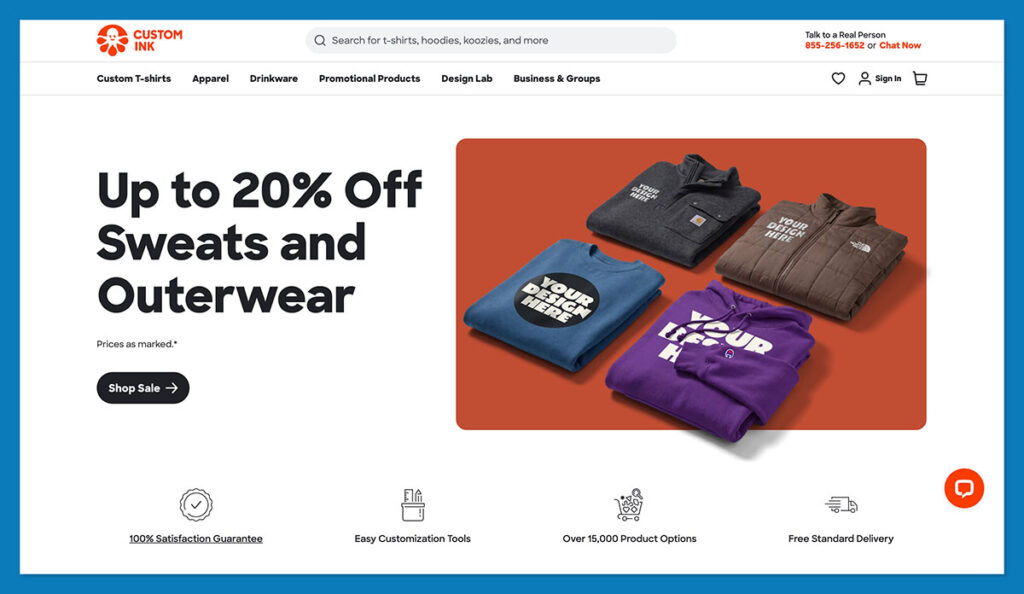
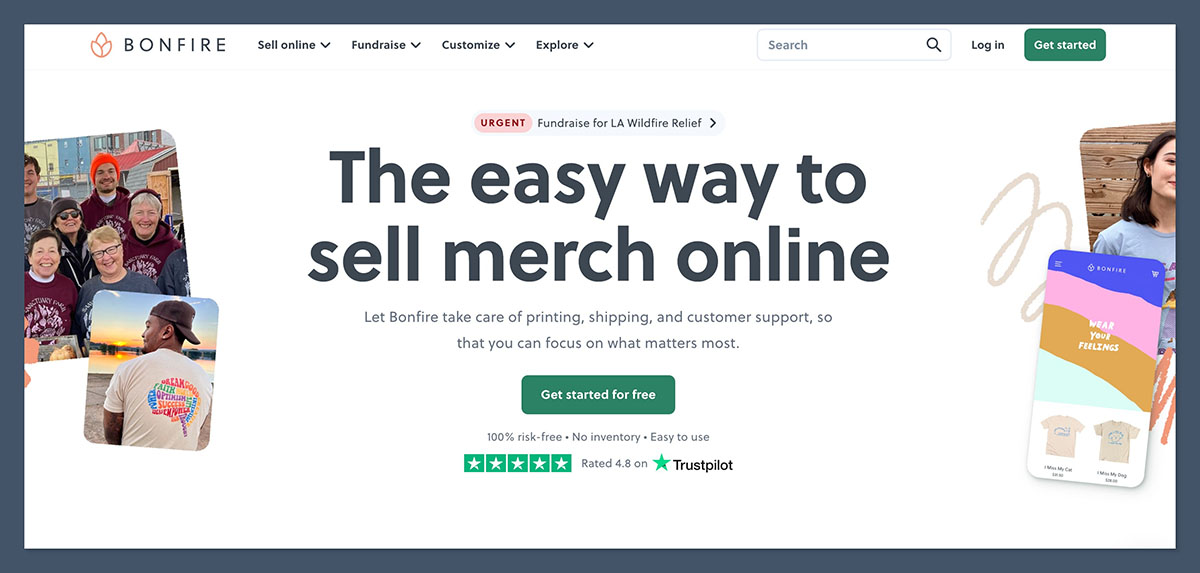
Bonfire is specifically designed for organizations that utilize apparel sales as a fundraising mechanism. Its cost structure allows organizers to easily ascertain the profit margin from each sale, as it operates on a base production cost model. Buyers can choose between group shipping (for organizer distribution) or individual home delivery. A key consideration is that even with group shipping, buyers are still charged shipping fees. This platform is ideal for clubs or organizations looking to raise funds through supporter merchandise, especially when a portion of the audience attends events in person and others require direct delivery.
Pros:
- Fundraising Focused: Clear profit margin calculation.
- Flexible Shipping: Group and hybrid shipping options available.
- Campaign-Based: Designed for specific promotional periods.
Cons:
- Shipping Charges for Group Delivery: Buyers still incur shipping costs.
- Limited for Continuous Sales: Primarily suited for defined campaigns.
Bonfire’s Campaign and Shipping Options:
Bonfire’s production base cost varies based on the garment, order quantity, ink colors, and the number of printed sides. The selling price set by the organizer determines the profit margin above this base cost. Group shipping directs purchases to the organizer for distribution, while hybrid shipping allows buyers to choose between collection or personal delivery.
Why Use Bonfire for Team Apparel?
Bonfire is well-suited for situations where apparel sales are primarily a fundraising effort. It is particularly effective when some supporters will attend events and can pick up items, while others require home delivery. If the primary objective is to establish an ongoing branded merchandise shop rather than a specific fundraising initiative, Fourthwall would be a more appropriate choice.
Bonfire Ordering Notes:
Before launching a campaign, clearly communicate pickup and shipping charges. Group shipping starts at $5.99 per buyer order, with an additional $1 for each subsequent item from the same campaign in that order, capped at $24.99 for 20 or more items. If group delivery is utilized, establish a clear pickup process and allocate sufficient time for distribution. Confirm any continental US restrictions before planning centralized shipments to other regions.
How Much Does Bonfire Cost?
The actual campaign configuration should be used to assess the profit margin. Adding printed sides or altering ink colors can impact the base cost.
| Cost Component | What to Budget |
|---|---|
| Production Base Cost | Depends on garment, design, and quantity |
| Selling Price | Set with the fundraising goal in mind |
| Fundraising Margin | Selling price minus base cost |
| Buyer Shipping | Charged at checkout, including group shipping |
Comparing the resulting margin after pricing simpler versus more elaborate designs is recommended to determine which best supports the fundraising goals.
6. RushOrderTees: Best for Urgent Team Apparel Orders
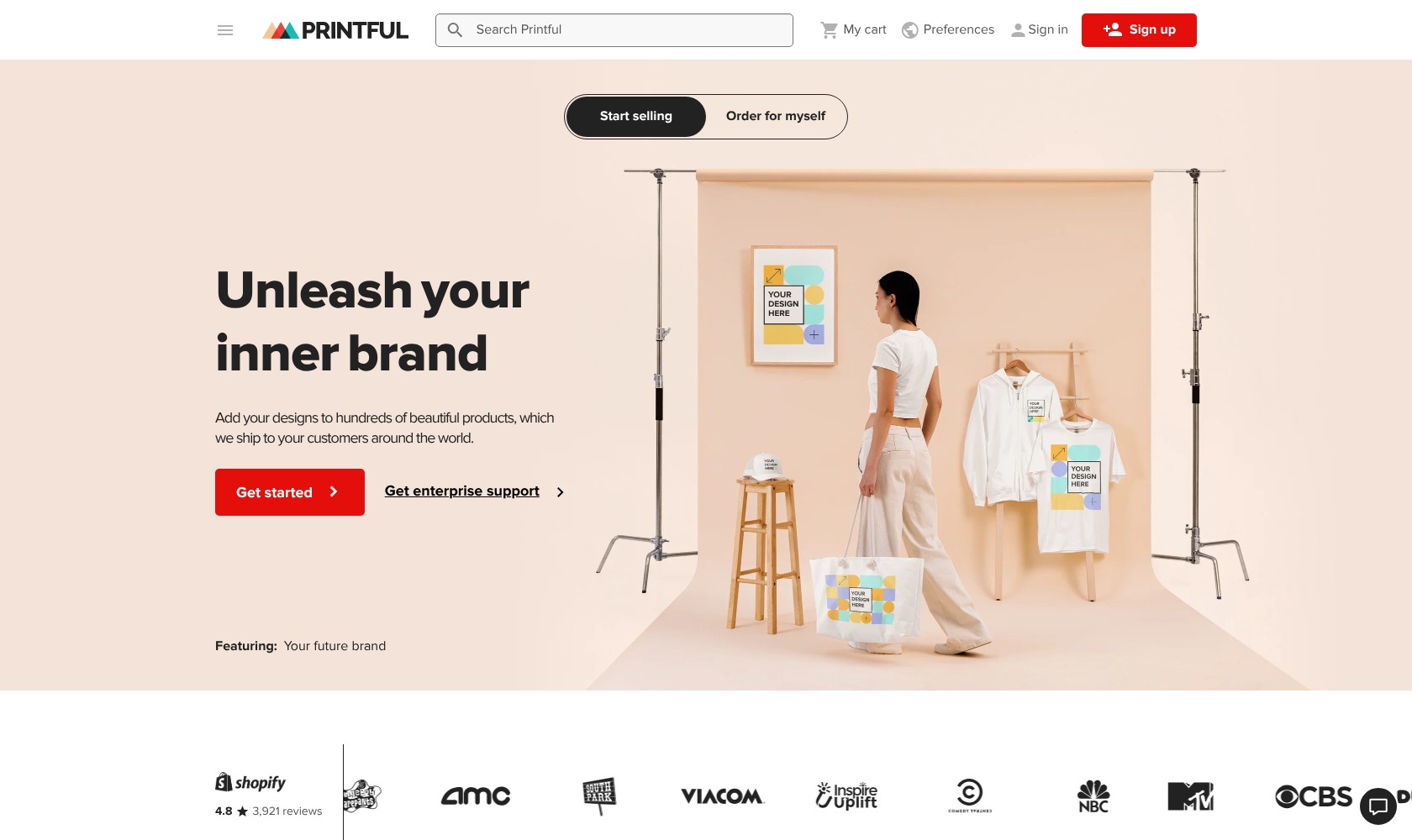
RushOrderTees is the platform to consider first for any urgent central apparel order. Its eligible rush service can be a significant advantage when an event is imminent. However, the fastest delivery times are not universally guaranteed and are dependent on several factors. It is crucial to confirm the specific garment, decoration method, destination, and the availability of paid expedited delivery options before committing to a firm arrival date. The platform supports printed apparel orders with mixed sizes and offers no-minimum printed options, though additional print locations may increase the overall cost.
Pros:
- Fast Turnaround: Expedited production and shipping options are available.
- No Minimums: Suitable for small or last-minute orders.
- Centralized Ordering: Organizer manages the entire process.
Cons:
- Rush Service Eligibility: Not all orders qualify for expedited service.
- Potential for Higher Costs: Rush fees and expedited shipping can increase the price.
RushOrderTees Printing and Delivery Options:
RushOrderTees accommodates printed apparel orders with mixed sizes, including options with no minimum quantity requirements. Additional print locations on the garment may lead to increased costs. Standard free shipping typically takes 9 to 12 business days and does not guarantee a specific arrival date. For firm deadlines, it is essential to confirm an eligible paid rush option.
Why Use RushOrderTees for Team Apparel?
This option is ideal when a single organizer can approve the design, collect all necessary sizes, and manage the payment for the entire purchase. If the primary challenge is collecting individual payments, Custom Ink’s Group Order Form would be a more suitable alternative.
RushOrderTees Ordering Notes:
Before requesting an urgent quote, ensure the complete size list and delivery address are prepared. Seek confirmation of the delivery date against the actual event deadline, rather than relying solely on a production estimate. Embroidery orders should be assessed separately from printing; some embroidered products may have a minimum order of six items, and printed rush eligibility does not automatically extend to embroidered garments.
How Much Does RushOrderTees Cost?
The total order cost, including the necessary delivery option, should be factored in. A standard shipping total is not a reliable metric if it fails to meet the event’s timeline.
| Cost Component | What to Budget |
|---|---|
| Apparel and Decoration | Quote for garment, quantity, and design |
| Additional Print Locations | May increase the price |
| Standard Shipping | Free to one address in the continental US |
| Rush or Non-Continental Delivery | Additional charges apply; multiple addresses may cost extra |
How to Choose a Team Apparel Platform
The selection process for a team apparel platform should commence with an evaluation of the desired ordering workflow, not merely the available garment catalog. A well-suited garment cannot compensate for a flawed payment or delivery process that creates unnecessary complications.
- Workflow Alignment: Does the platform support individual purchases, a single group order, or a fundraising campaign?
- Payment Collection: How are payments handled? Are individual payments collected, or does one organizer manage the entire transaction?
- Delivery Logistics: Are items shipped directly to individuals, or is a central pickup point required?
- Cost Structure: Understand the pricing model, including base costs, decoration fees, shipping, and any potential surcharges or discounts.
It is crucial to remember that 30 separate checkouts do not automatically equate to a 30-unit bulk order. Inquire about how quantity discounts are applied before opting for individual purchasing for a price-sensitive group. Ordering a sample, if time permits, is highly recommended. Additionally, verifying the garment’s size chart against actual measurements is essential, as familiar size labels can sometimes be misleading. Compare the total delivered cost, factoring in setup fees and processing charges where applicable. For ongoing stores, assess whether the retail price allows for the intended profit margin after all associated costs are accounted for.
How We Compared These Platforms
This comparison is based on published pricing, ordering instructions, and fulfillment policies to assess suitability for ongoing sales, coordinated purchases, payment collection, and delivery. Pricing reflects October 2026; final quotes or checkout totals should be confirmed before placing an order. This evaluation did not involve placing sample orders, assessing print durability, or measuring support response times. The recommendations are primarily based on ordering needs rather than a comparative assessment of garment quality.
Final Verdict: Which Platform Do I Recommend?
Fourthwall stands out as the top recommendation for establishing an ongoing branded team merchandise store, particularly for organizations seeking the convenience of catalog fulfillment and comprehensive customer support handled by the platform.
For a unified, coordinated purchase, Custom Ink is the preferred choice. SquadLocker merits consideration for sports teams and schools, Printful for its flexible payer options, Bonfire for fundraising initiatives, and RushOrderTees for qualifying urgent orders.
The ultimate decision should align the platform’s process with how the group actually intends to purchase. Subsequently, verifying the product details and the total delivered cost is paramount.
FAQs
Can each team member pay separately?
Yes. Fourthwall and SquadLocker support individual store purchases. Custom Ink facilitates separate payments through its Group Order Form, and Printful’s MerchShare can charge recipients directly. Bonfire’s supporters also purchase individually.
Is print on demand cheaper than bulk ordering?
Not necessarily. Bulk pricing can reduce product costs at qualifying quantities. Print on demand avoids the risk of purchasing unwanted inventory, but a thorough comparison of shipping and setup costs is advised before making a decision.
Can every platform add individual names and numbers?
This capability is not universal. Confirmation of personalization for the specific garment and decoration method is essential. A shared team logo does not guarantee support for distinct player details on every item.
Does a free team store mean free apparel?
No. A free storefront waives the subscription fee for the store itself, not the costs associated with garment production, shipping, or applicable payment fees. Budgeting for what each buyer will pay, and what the organizer might be responsible for, is crucial.

 Raul Delapena Setiawan

 Ammar Sabilarrohman