The strategic partnership between Amplitude, a leader in digital analytics, and Statsig, a rising force in feature management and product experimentation, represents far more than a standard market consolidation. While initial industry reactions framed the move as a response to a crowded SaaS landscape, the deeper narrative reveals a fundamental transformation in how modern software is built and optimized. This shift is driven by the rapid maturation of artificial intelligence, which has fundamentally altered the economics of software development. As the cost of generating code and deploying features plummets, the primary constraint for product teams has shifted from “how fast can we ship?” to “how do we know what actually works?” The integration of Statsig’s experimentation capabilities into Amplitude’s analytics ecosystem signals that experimentation is moving from a niche operational task to a foundational infrastructure for the AI-native era.
The Strategic Realignment of Product Development
For the past decade, the North Star for software engineering was “velocity.” Frameworks like Agile and DevOps were designed to minimize the time between a concept’s inception and its deployment. However, the emergence of AI-native development tools—ranging from GitHub Copilot to automated QA systems—has effectively solved the velocity problem. When code generation is near-instantaneous and prototypes can be spun up in minutes, the market becomes flooded with features. This abundance of “shipping” has created a new bottleneck: the ability to discern which features drive user value and which merely add noise.
The Amplitude-Statsig partnership addresses this bottleneck by embedding rigorous feedback loops directly into the product lifecycle. In this new paradigm, experimentation is not a post-launch evaluation but a core operational requirement. This is particularly evident in the involvement of OpenAI, which acquired a significant portion of Statsig’s core team and technology. For AI-heavy organizations, experimentation is the only way to refine non-deterministic systems. Because AI outputs are probabilistic rather than rule-based, teams must constantly test prompts, model parameters, and interface designs against real-world user behavior to ensure safety and efficacy.
Chronology of an Industry Shift
The road to the current state of the experimentation market has been marked by several years of consolidation and strategic pivots. To understand the Amplitude-Statsig deal, one must look at the broader timeline of the industry:
- The Era of Isolated Testing (2010–2018): Experimentation was largely the domain of marketing teams using “black-box” A/B testing tools. These tools were often disconnected from the core product codebase and the primary data warehouse.
- The Rise of Feature Management (2019–2022): Companies like LaunchDarkly and Statsig popularized the “feature flag,” allowing engineering teams to decouple deployment from release. This brought experimentation closer to the developer workflow.
- The Analytics-Experimentation Convergence (2023–Present): The market realized that testing without deep analytics is blind, and analytics without the ability to test is passive. This led to a wave of mergers, including Optimizely’s acquisition by Episerver and the eventual integration of Split into Harness.
- The OpenAI-Statsig-Amplitude Event (2024): In a unique structural deal, OpenAI absorbed Statsig’s top-tier engineering talent and internal expertise to bolster its own AI feedback loops. Simultaneously, Amplitude took over the Statsig platform, brand, and customer base, effectively merging a top-tier experimentation engine with a market-leading analytics suite.
This chronology illustrates a move away from standalone tools toward integrated “operating systems” for product growth.
Data-Driven Insights into the Experimentation Market
The demand for these integrated systems is reflected in market data. According to industry reports, the global A/B testing software market is projected to grow at a CAGR of over 12% through 2030. However, the “feature experimentation” sub-segment—which includes server-side testing and feature flags—is growing at nearly double that rate. This discrepancy highlights where enterprise interest lies: they are moving away from simple UI tweaks and toward deep, architectural experimentation.
Furthermore, a recent survey of product leaders indicated that “lack of data integration” was the number one barrier to scaling experimentation programs. By combining Amplitude’s ability to track long-term user retention and behavioral cohorts with Statsig’s high-velocity testing infrastructure, the partnership directly addresses this pain point. Enterprises are no longer satisfied with knowing that “Version B” had a higher click-through rate; they want to know if “Version B” led to a 10% increase in six-month customer lifetime value (LTV).
The Unique Complexity of the Statsig Transition
Unlike traditional acquisitions where a larger company simply absorbs a smaller one, the Statsig transition is characterized by a “split” model that has introduced new variables for the enterprise market. With OpenAI retaining the core intellectual architects of the Statsig platform, the industry is watching closely to see how Amplitude maintains the innovation velocity that made Statsig a disruptor.
For current Statsig customers, this transition presents both an opportunity and a risk. The opportunity lies in the seamless integration with Amplitude’s “Digital Analytics Platform,” which provides a unified view of the customer journey. The risk, however, stems from the potential loss of the “engineering-first” culture that defined Statsig. Industry analysts suggest that for Amplitude to succeed, it must prove that it can continue to push the boundaries of statistical rigor and developer-centric workflows, rather than treating experimentation as a secondary add-on to its analytics core.
Broader Implications for the Enterprise Ecosystem
The Amplitude-Statsig deal is a symptom of a larger trend: the “death of the standalone tool.” Large organizations are increasingly fatigued by “tool sprawl”—the management of dozens of disconnected SaaS subscriptions. They are now prioritizing platforms that offer:
- Operational Collaboration: Systems that allow product managers, engineers, and data scientists to work within the same interface, using the same data definitions.
- Enterprise Governance: Robust permissioning, compliance auditing, and “kill switches” that allow teams to experiment safely at scale.
- Data Sovereignty: The ability to run experiments on top of existing data warehouses (like Snowflake or Databricks) without having to move sensitive customer data to a third-party cloud.
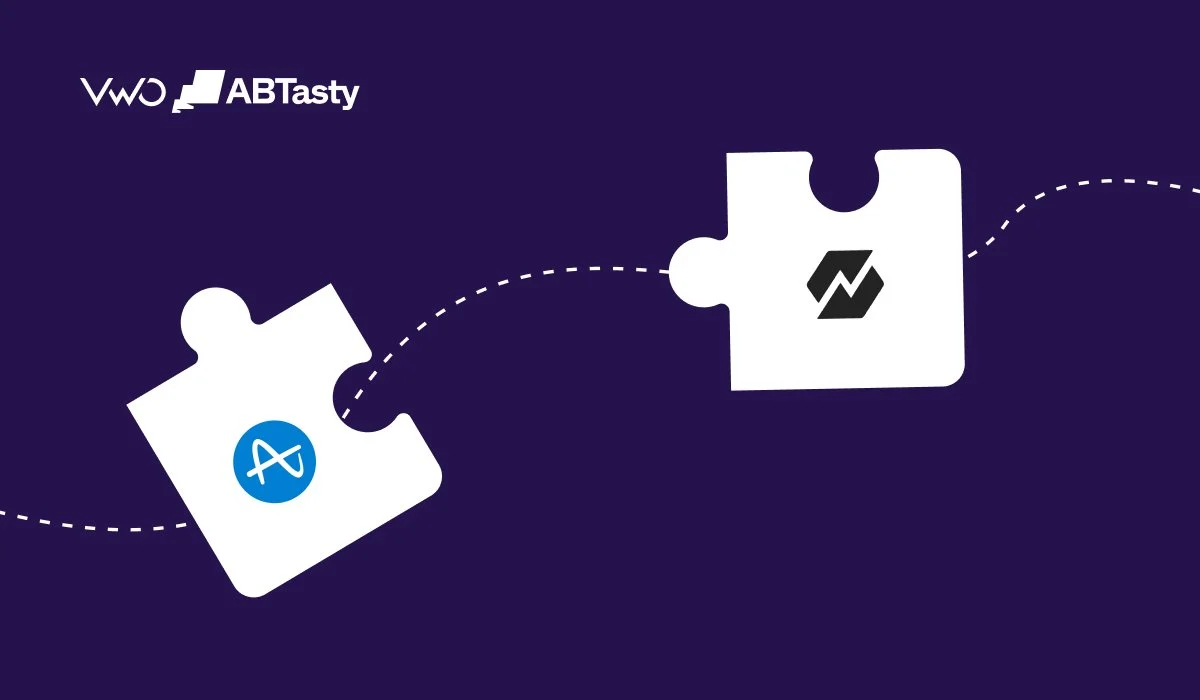
This shift is also visible in the recent merger of VWO and AB Tasty. While the Amplitude-Statsig deal focuses on the integration of analytics and feature management, the VWO-AB Tasty merger highlights the need for a comprehensive, multi-channel optimization ecosystem. These moves suggest that the market is bifurcating: on one side are integrated product suites (Amplitude/Statsig), and on the other are dedicated, best-of-breed optimization powerhouses (VWO/AB Tasty).
The AI Catalyst: Reducing the Cost of Curiosity
Perhaps the most significant implication of this partnership is how it lowers the “barrier to curiosity.” Historically, running a rigorous experiment required significant manual effort: defining hypotheses, creating variants, ensuring statistical significance, and manual analysis. AI is automating these steps.
In the near future, we can expect “autonomous experimentation” to become a standard feature. In this scenario, an AI agent within the Amplitude-Statsig ecosystem could identify a drop in conversion for a specific user segment, automatically generate three potential UI or algorithmic fixes, deploy them as a limited A/B test via feature flags, and report the winning variant to the product team—all with minimal human intervention.
This level of automation turns experimentation from a “project” into “infrastructure.” Just as developers don’t think twice about using a database to store data, they will soon view experimentation as the default way to deploy any change to a digital system.
Conclusion: Learning as a Competitive Advantage
The Amplitude-Statsig partnership is a landmark event that confirms the arrival of the “Experimentation-as-Infrastructure” era. As AI continues to commoditize the act of building software, the only sustainable competitive advantage for a digital business is the speed at which it can learn.
Organizations that treat experimentation as an optional optimization tactic will find themselves overwhelmed by the sheer volume of features their competitors are shipping. Conversely, those that embed experimentation into their core operational fabric—unifying analytics, feature management, and AI-driven decision-making—will be the ones to define the next generation of digital leadership. The industry is no longer just about shipping code; it is about building a “common learning system” that bridges the gap between technical delivery and business outcomes. In this context, the consolidation of the experimentation market is not a sign of a maturing industry, but the birth of a more sophisticated, data-driven approach to human-centric product development.


 Asro
Asro
 Dwi Wanna