
 rifanmuazin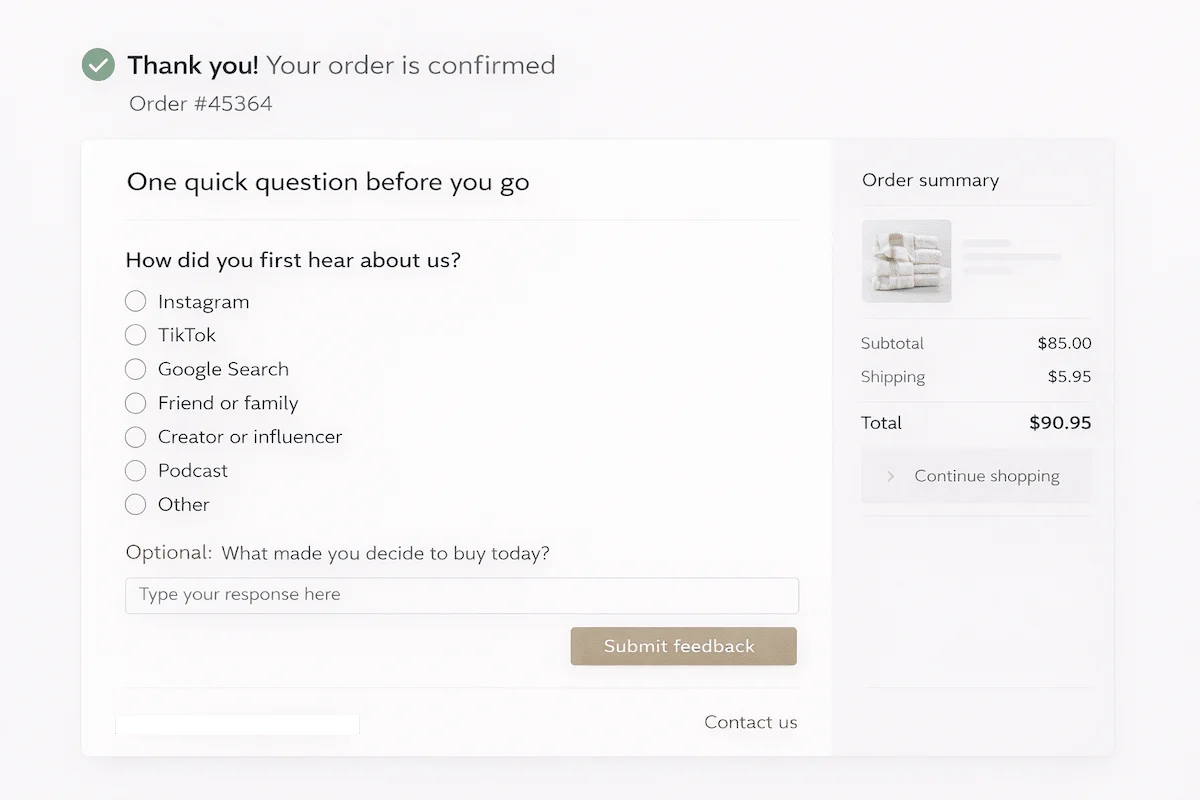
Digital commerce and Software-as-a-Service (SaaS) platforms are increasingly turning toward qualitative data to bridge the gap between quantitative analytics and consumer psychology. While traditional tracking tools provide a clear picture of user behavior—such as where a user clicks or when they exit a site—they frequently fail to explain the underlying motivations for these actions. Market research indicates that the "why" behind a bounce or an abandoned cart is the most critical component for conversion rate optimization (CRO). By implementing targeted customer feedback surveys at specific touchpoints, organizations can identify friction, resolve doubts, and refine the user experience to maximize revenue.
The Critical Gap in Modern Digital Analytics
In the current data-driven landscape, businesses have access to more information than ever before. Heatmaps, session recordings, and clickstream data offer a granular look at the customer journey. However, a significant disconnect remains: analytics can show that a shopper left a product page after three minutes, but it cannot confirm if the exit was due to high shipping costs, a lack of technical specifications, or simply a distracting notification on the user’s device.
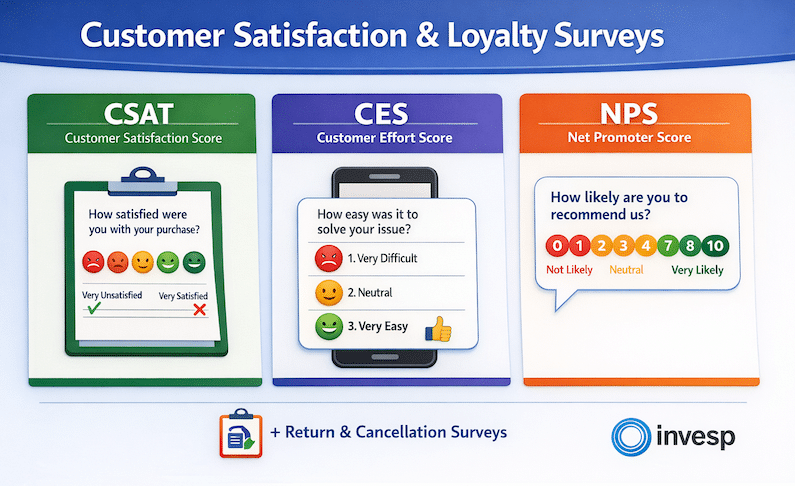
This information gap has led to the rise of "Zero-Party Data"—information that a customer intentionally and proactively shares with a brand. Surveys, when deployed correctly, act as a direct line of communication between the user and the developer. According to industry benchmarks, broad, open-ended surveys often suffer from low response rates and vague feedback. Conversely, micro-surveys triggered by specific behaviors allow brands to diagnose localized problems without disrupting the overall user flow.
Chronology of the Customer Journey and Potential Friction Points
The path from initial awareness to long-term loyalty is rarely linear, but it can be categorized into several distinct phases where conversions are most likely to stall. Each phase requires a unique survey strategy to extract actionable insights.
- The Consideration Phase (Product Pages): Users evaluate the value proposition.
- The Intent Phase (Checkout): Users commit to a purchase but face logistical barriers.
- The Validation Phase (Post-Purchase): Users confirm their decision and reveal attribution.
- The Onboarding Phase (SaaS Activation): New users attempt to find the "Aha!" moment.
- The Retention Phase (Returns and Cancellations): Users exit the ecosystem, revealing product-market fit issues.
Addressing Stagnation on Product Detail Pages
When a visitor reaches a product detail page (PDP) but fails to add an item to their cart, the issue is rarely a lack of interest. Research by the Baymard Institute suggests that product pages remain a significant weakness for many e-commerce brands, with 52% of desktop sites and 62% of mobile sites offering "mediocre" or poor user experiences.
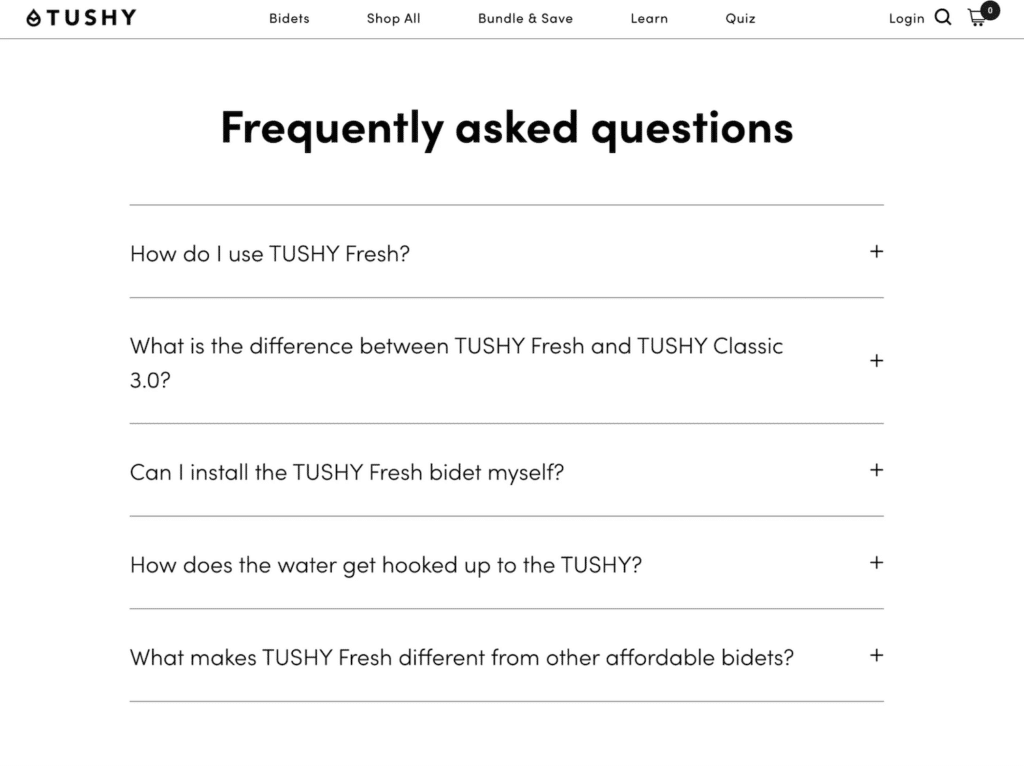
The primary reasons for this stagnation include unanswered technical questions, lack of social proof, or confusion regarding compatibility. For example, the bidet brand TUSHY improved its conversion rates by addressing pre-purchase concerns regarding installation and compatibility directly on the PDP.
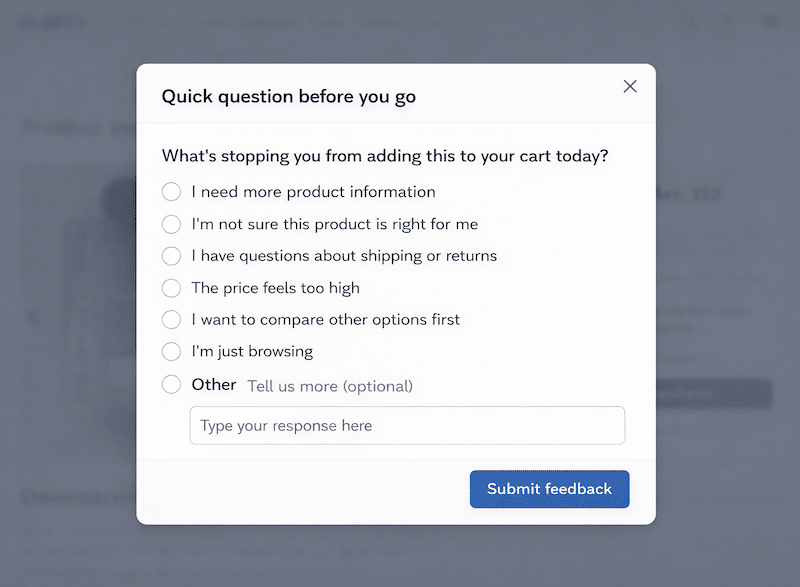
To diagnose these issues, digital marketers are increasingly using "exit-intent" surveys on product pages. The most effective question is: "What’s stopping you from adding this to your cart today?" By providing multi-choice options such as "I have a question about the product," "Shipping is too expensive," or "I’m just browsing," brands can quantify the exact barrier to entry. If a majority of users select "I have a question," it indicates that the product copy is insufficient and needs immediate enrichment.
The Abandoned Checkout Crisis
Cart abandonment remains one of the most significant drains on digital revenue. Current data from the Baymard Institute places the average cart abandonment rate at 70.19%. This suggests that even when a user has a high intent to buy, the checkout process itself often introduces enough friction to kill the sale.
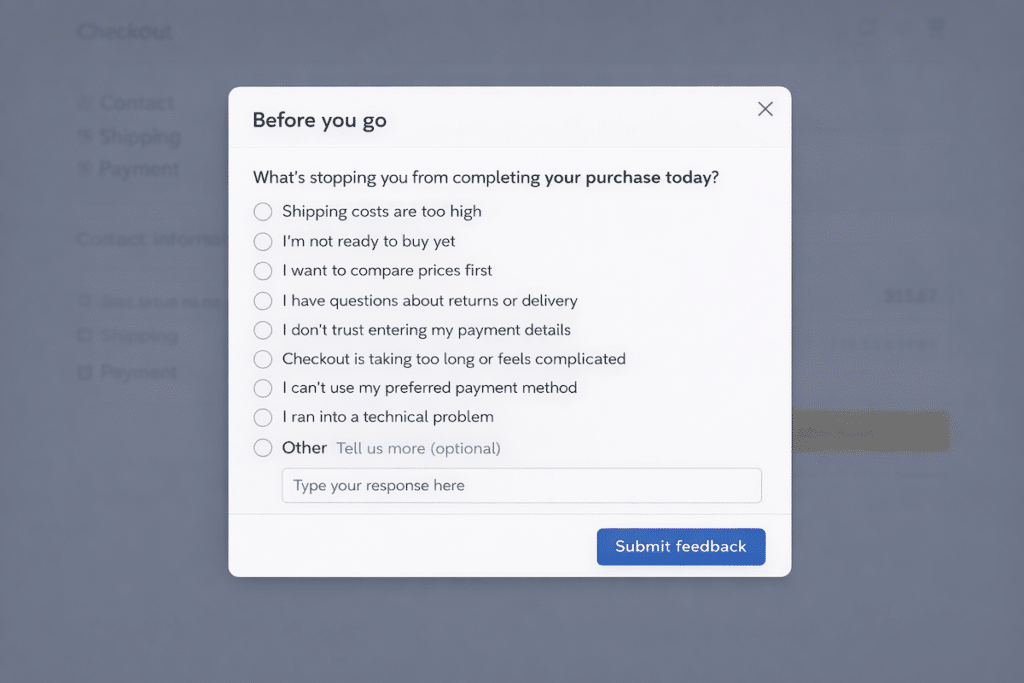
Industry analysis identifies the leading causes of checkout abandonment as unexpected costs (shipping, taxes, fees), the requirement to create an account, and excessively long checkout forms. To combat this, businesses must deploy surveys the moment a user attempts to close the checkout tab. The focus should be on friction, surprise, and anxiety. A direct question like "What’s stopping you from completing your purchase today?" allows the business to identify if the problem is a technical glitch or a pricing strategy error.
Post-Purchase Attribution and the "Word of Mouth" Factor
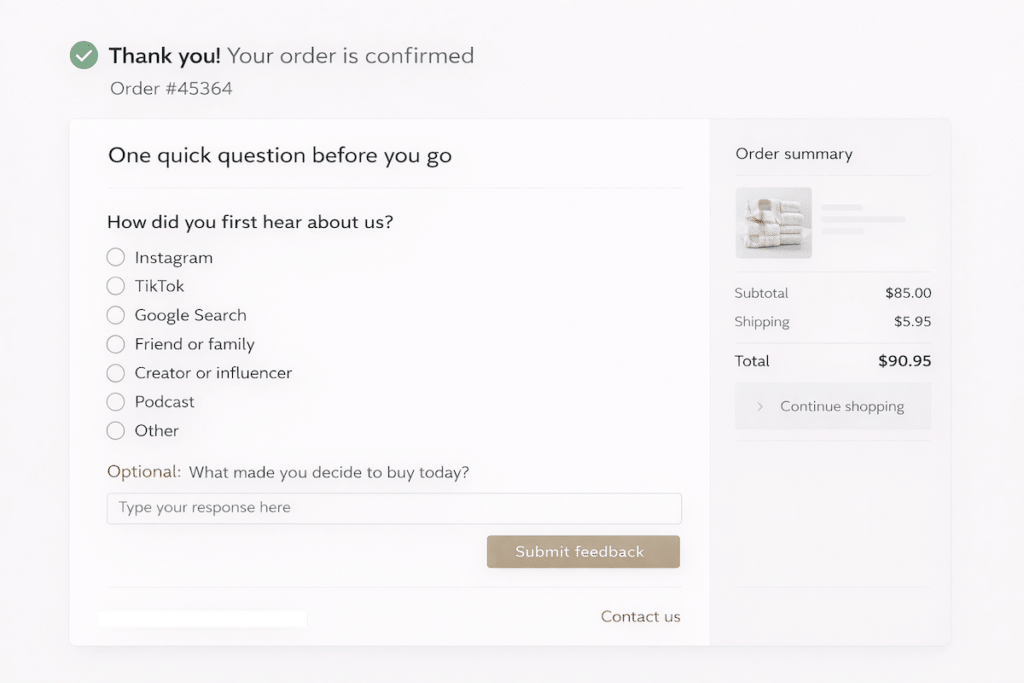
Once a transaction is finalized, the customer enters a brief window of high engagement. This is the optimal time to gather attribution data. Traditional analytics often struggle to track "Dark Social"—recommendations that happen in private messages, offline conversations, or podcasts.
A "How did you first hear about us?" (HDYHAU) survey provides clarity that digital tracking cannot. For instance, the luxury linen brand Weezie discovered through post-purchase surveys that 35% of its business was driven by word-of-mouth recommendations. This insight allowed the brand to reallocate marketing budgets toward community-building and referral programs rather than over-investing in paid social media ads that were being over-counted by digital attribution models.
Solving the SaaS Activation Paradox
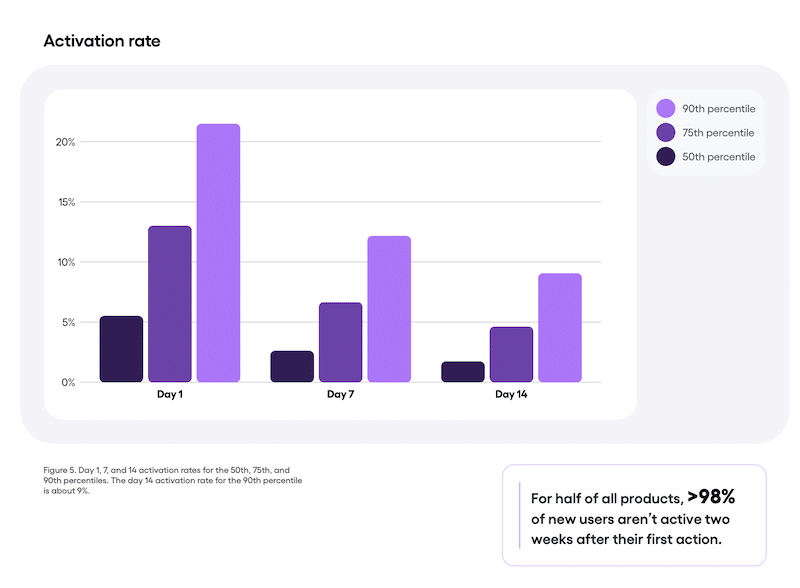
In the software industry, the challenge is not just getting a user to sign up, but getting them to use the product. Data from Amplitude’s Product Benchmark Report reveals a sobering reality: by day 14 of a trial, the median product retains only about 2% of new users. Even the highest-performing SaaS products rarely exceed a 9% activation rate.
This drop-off usually occurs because the user does not perceive value quickly enough—a concept known as "Time to Value" (TTV). When trial users sign up but fail to perform key actions (activation), a survey can pinpoint the hurdle. Common responses often include "The setup was too complicated," "I didn’t have time to learn it," or "I don’t see how this helps me." Identifying these sentiments early allows product teams to streamline onboarding flows and provide better educational resources.
The Economic Impact of Returns and Cancellations
The final frontier of conversion optimization is retention. A return or a subscription cancellation is essentially a "reverse conversion." According to the National Retail Federation (NRF), retailers expected nearly 17% of annual sales to be returned in 2024, with that number rising to over 19% for online-only sales in 2025.
Returns are not just a logistical burden; they represent a fundamental mismatch between customer expectation and product reality. Data from PowerReviews indicates that "poor fit" is the most common reason for returns in the apparel sector. By asking departing customers, "What is the main reason for your return or cancellation?", brands can distinguish between operational failures (damaged items, slow shipping) and product failures (poor quality, incorrect sizing).
Analysis of Industry Implications and Best Practices
The shift toward behavioral-based surveying reflects a broader trend in the digital economy: the move away from aggressive tracking and toward consensual data exchange. As privacy regulations like GDPR and CCPA limit the effectiveness of third-party cookies, direct feedback becomes the most reliable source of truth for CRO.
To ensure survey success, industry experts recommend the following framework:
- Specificity over Breadth: Avoid vague questions like "How was your experience?" instead, ask "What one thing would have made your purchase easier?"
- Timing is Paramount: A survey must appear at the exact moment of friction to capture the user’s genuine frustration or doubt.
- Actionable Options: Using multiple-choice questions with an "Other" field reduces the cognitive load on the user while providing structured data for the business.
Future Outlook
As artificial intelligence and machine learning become more integrated into e-commerce platforms, the next evolution of customer feedback will likely involve real-time sentiment analysis. Systems will soon be able to detect a "frustrated" user through mouse movements or rapid scrolling and trigger a survey—or even a live chat intervention—before the user exits the site.
In conclusion, customer feedback surveys are no longer just a tool for customer service; they are a fundamental pillar of conversion rate optimization. By systematically addressing the "Why" behind user behavior at the product page, checkout, post-purchase, and churn stages, businesses can create a more resilient and user-centric digital experience. The data proves that even minor improvements in understanding user friction can lead to significant increases in both immediate revenue and long-term customer lifetime value.








