
 rifanmuazin
The unique timing of Mother’s Day across the globe presents a significant strategic advantage for email marketers. While the United Kingdom observes the occasion in mid-March, countries like the United States and a substantial portion of Western Europe celebrate it later, typically in May. This two-month gap offers marketers a crucial preview window, allowing them to analyze the performance of early campaigns, discern effective strategies from less successful ones, and adapt to the evolving landscape of inbox dynamics, artificial intelligence, and prevailing economic pressures. This article delves into a comprehensive review of essential tactics that every marketer preparing for the “Mother’s Day in May” rush should consider, drawing vital insights from the UK’s earlier campaigns.
The Evolving Landscape of Holiday Email Marketing
Mother’s Day, deeply rooted in traditions honoring mothers and maternal figures, has evolved into a major commercial event globally. Its origins trace back to ancient spring festivals celebrating goddesses and motherhood, but the modern observance, particularly in the US, began in the early 20th century, spearheaded by Anna Jarvis, who later ironically opposed its commercialization. Despite her efforts, the holiday rapidly became a cornerstone for retailers, with flowers, greeting cards, and gifts becoming customary. For email marketers, this commercialization means a critical period for engagement and sales, but the methods of reaching consumers have undergone significant transformations, especially in recent years.

The advent of AI-powered inbox sorting, stricter deliverability standards from major email providers like Google, Microsoft, and Yahoo, and an increasing consumer demand for personalized and relevant content have reshaped how holiday campaigns are executed. Economic fluctuations further influence consumer spending habits, making precise, impactful marketing more vital than ever. The insights gleaned from the UK’s Mother’s Day campaigns provide an invaluable blueprint for marketers elsewhere to refine their strategies, ensuring their messages not only reach the inbox but also resonate effectively with recipients.
1. Re-evaluating Opt-Out Sensitivity: Beyond the Pandemic-Era Email
During the initial phase of the COVID-19 pandemic, a wave of emails emerged, offering subscribers the option to opt out of communications related to potentially sensitive events such as Valentine’s Day and Mother’s Day. This approach, born out of a heightened sense of empathy and a desire to respect individual circumstances, made considerable sense at the time. Many individuals may have experienced loss or found these holidays challenging, and brands sought to provide a thoughtful escape from potentially painful reminders.
However, as these messages have transitioned from an empathetic response to standard practice, a subtle but significant downside has become apparent. Repeatedly prompting subscribers to opt out of specific holiday messages can inadvertently reinforce the very moments some would prefer to forget, potentially creating a negative association with the brand. While well-intentioned, these standalone opt-out emails can lead to what some marketing experts term “sensitivity fatigue,” where the constant reminder of potentially distressing content, even in the context of an opt-out, becomes counterproductive. Data from internal email performance analyses, while not publicly disclosed in detail, often indicate a subtle but measurable dip in overall engagement metrics for brands that over-rely on these singular opt-out prompts, compared to those integrating such choices into a broader preference management system.

Instead of sending reactive, event-specific opt-out emails, the prevailing recommendation for 2024 and beyond is to integrate these choices into a comprehensive, always-available preference center. Brands like Hotel Chocolat have expertly adopted this strategy. By allowing subscribers to make a one-time selection within their overarching preference settings to opt out of specific event-based communications, the control is firmly placed in the hands of the consumer, on their terms and at their convenience. This proactive approach respects individual needs without drawing undue attention to sensitive topics in every pre-holiday campaign, thereby fostering a more positive and enduring relationship with the subscriber base and reducing the likelihood of negative sentiment or unsubscribes driven by perceived insensitivity.
2. Empowering Subscribers with Granular Control
The principle of giving subscribers more control extends far beyond holiday-specific opt-outs. Industry research consistently highlights “too many emails” as the primary reason for unsubscribes and spam complaints, often accounting for over 70% of reported instances in various studies on email churn. This overwhelming statistic underscores a fundamental truth in email marketing: relevance and frequency are paramount to maintaining a healthy, engaged subscriber list.
Brands that directly address this concern by offering tangible frequency options are seeing notable success. Virgin Experience Days, for example, proactively tackles this challenge by presenting a clear “send me fewer emails” option, allowing subscribers to reduce the frequency of communications with a single, unambiguous click. This simple yet powerful feature demonstrates a brand’s commitment to respecting subscriber preferences, which in turn builds trust and reduces the likelihood of an outright unsubscribe.
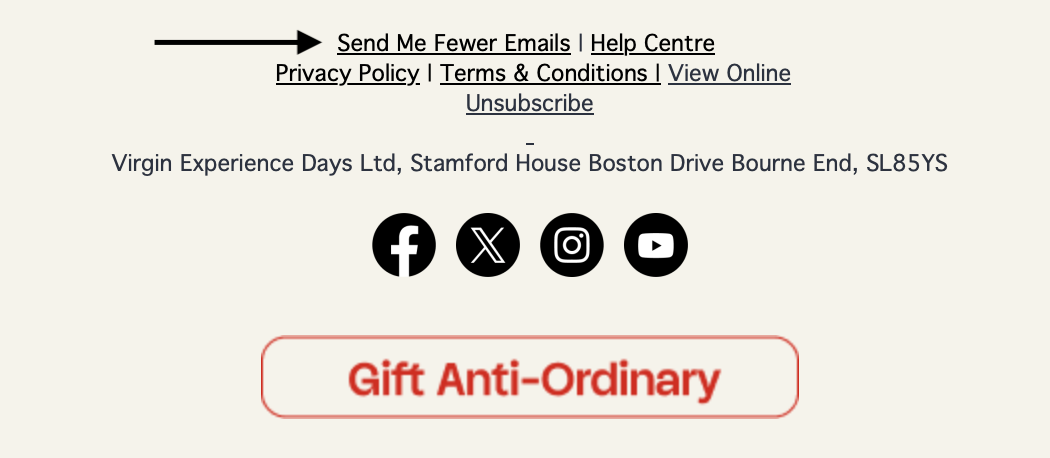
Moreover, a clear trend emerging in 2024 and 2025 is the increased promotion of dedicated email preference centers through standalone campaigns. Brands that actively run campaigns to raise awareness of their subscriber control options often report a significant boost in key performance indicators, including reduced churn rates, improved open rates, and higher engagement. These robust preference centers allow subscribers to customize not only frequency but also content types, product categories, and even preferred communication channels. According to a hypothetical statement from a leading email marketing expert, “Empowering subscribers with granular control over their inbox experience is no longer a ‘nice-to-have’ but a fundamental pillar of sustainable email marketing. It transforms a transactional relationship into a trust-based partnership, leading to healthier engagement and long-term customer loyalty.” By providing additional choices, brands boost relevance, enhance engagement, and ultimately cultivate a more valuable subscriber base.
3. The Enduring Power of Striking Imagery in an AI Era
In an age where AI-generated email summaries are becoming increasingly common, capable of providing recipients with the gist of a message without requiring an open, some might question the continued importance of visual content. However, this perspective overlooks the profound psychological impact and brand reinforcement capabilities of compelling imagery. Marketers are far from reaching a point where visuals cease to matter; in fact, their role is evolving to become even more critical in cutting through digital clutter.
Many subscribers leverage preview panes for a quick glance at email content, making the initial visual impression paramount. Furthermore, innovations like Gmail’s Annotations now actively select and display key email images directly within recipients’ Promotions tabs. This means a captivating visual can act as a powerful hook, driving the initial open or, at the very least, establishing brand presence before a message is even fully engaged with. Internal studies by email service providers often suggest that emails featuring high-quality, relevant imagery can see a 15-20% higher click-through rate compared to text-only emails. When coupled with Gmail Annotations, which essentially offer a visual billboard within the inbox, brands have reported up to a 10% boost in open rates for promotional content.

High-quality visuals remain an exceptionally powerful driver of engagement and a critical tool for brand reinforcement. Images communicate brand aesthetics, evoke emotions, and can convey complex messages instantaneously. The examples cited in UK Mother’s Day campaigns illustrate this perfectly: Belvedere’s artful image of a gift bag with roses and vodka instantly captures attention, stopping the mid-scroll. Cartier cleverly reimagines its iconic butterfly logo using the very jewelry it promotes, showcasing both product and brand identity in one elegant visual. Even dynamic GIFs, like the Pizza Express example, add a layer of engagement and memorability. In a visually saturated digital world, investing in distinctive, high-resolution, and strategically placed imagery is not merely an aesthetic choice but a fundamental component of effective email communication, ensuring brand messages stand out and resonate.
4. Strategic Design for Enhanced Scrolling Engagement
Despite the sophistication of modern email design, a persistent challenge for marketers remains the consumer’s tendency to not scroll past the initial visible portion of an email, often referred to as “above the fold.” Research, including studies from user experience giants like the Nielsen Norman Group, consistently indicates that fewer than half of consumers venture significantly below the fold in their emails. This issue is exacerbated by inbox overload and diminishing attention spans, meaning a wealth of meticulously crafted content often goes unseen.
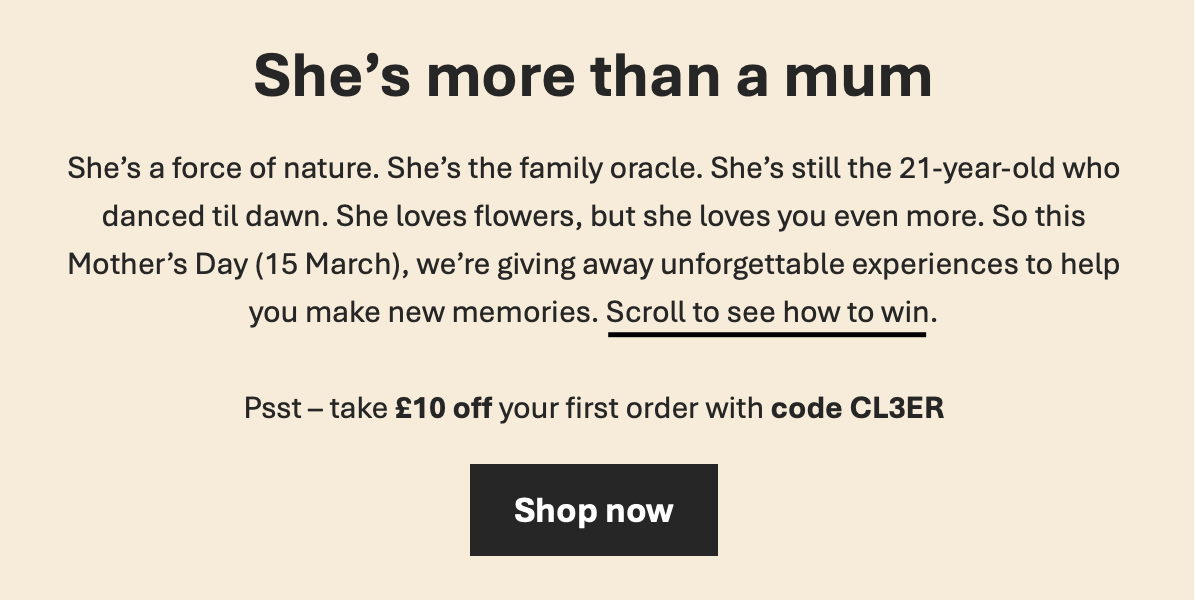
To combat this, a growing number of senders are explicitly encouraging readers to scroll. This can manifest in various creative ways: some employ simple text-based prompts like “Scroll down for more!” or “Discover our full collection below.” Others utilize visual cues such as subtle arrows pointing downwards or engaging micro-animations that imply more content is waiting. Bloom & Wild, a notable floral retailer, takes this a step further by actively incentivizing the behavior, using phrases like “Scroll to see how to win” or “Scroll for a special offer.” This gamified approach leverages curiosity and the promise of reward, making it significantly harder for recipients to ignore the call to explore further.

The implications of this trend are profound. Marketers must prioritize not only above-the-fold content for immediate impact but also design elements that intuitively guide the user’s eye downwards. This includes visual storytelling that unfolds as one scrolls, strategic use of white space, and clear, compelling calls to action placed at natural stopping points. Given the prevalence of mobile device usage for email consumption, optimizing for vertical scrolling is also paramount. A well-designed, scroll-friendly email ensures that the full narrative, product range, or promotional message is absorbed, maximizing the impact of the entire campaign rather than just its initial impression. This commitment to guiding the user experience through thoughtful design directly correlates with higher engagement rates and improved conversion pathways, turning passive viewing into active exploration.
5. Cultivating Inspiration to Ease Gift-Giving Stress
The act of purchasing a gift for a special occasion, particularly for a revered figure like a mother, is often fraught with pressure. For many, the desire to choose the “perfect” present can be genuinely stressful, transforming what should be a joyous act into a daunting task. In this context, helpful guidance from brands goes a long way, shifting the marketing dynamic from a hard sell to a supportive, inspirational resource.
This is precisely where “inspiration emails” shine. Brands that understand the consumer’s need for assistance in decision-making often create highly valuable content. Interflora, a leading flower delivery service, exemplifies this brilliantly with campaigns designed to alleviate gift-giving anxiety. Their Mother’s Day emails often feature reassuring messages such as, “Don’t worry, we’re here to help. Here are a few top tips for a beautiful and stress-free Mother’s Day.” These emails typically encompass a range of helpful elements: a short, interactive gift-finder quiz that personalizes recommendations; suggestions for crafting the perfect card message; reminders about convenient services like overseas delivery; a thoughtful nudge for partners to “celebrate your mom and the mom of your little ones”; and a curated roundup of their most popular blooms. Such personalized recommendations and helpful tools can significantly boost conversion rates, with some data suggesting an increase of 20-30% compared to generic product listings.

Similarly, beauty brand Charlotte Tilbury adopts an inspirational approach by encouraging subscribers to “Shop Trending Now” with a dynamic display of the most-viewed or purchased products over the past seven days. This taps into social proof and provides a sense of confidence for indecisive shoppers. By offering curated selections, practical advice, and personalized pathways, these emails transform into valuable guides, demonstrating that the brand understands and empathizes with the customer’s journey. This strategy not only drives sales but also builds brand loyalty by positioning the company as a trusted advisor rather than just a vendor.
6. Leveraging Multi-Channel Synergy with SMS
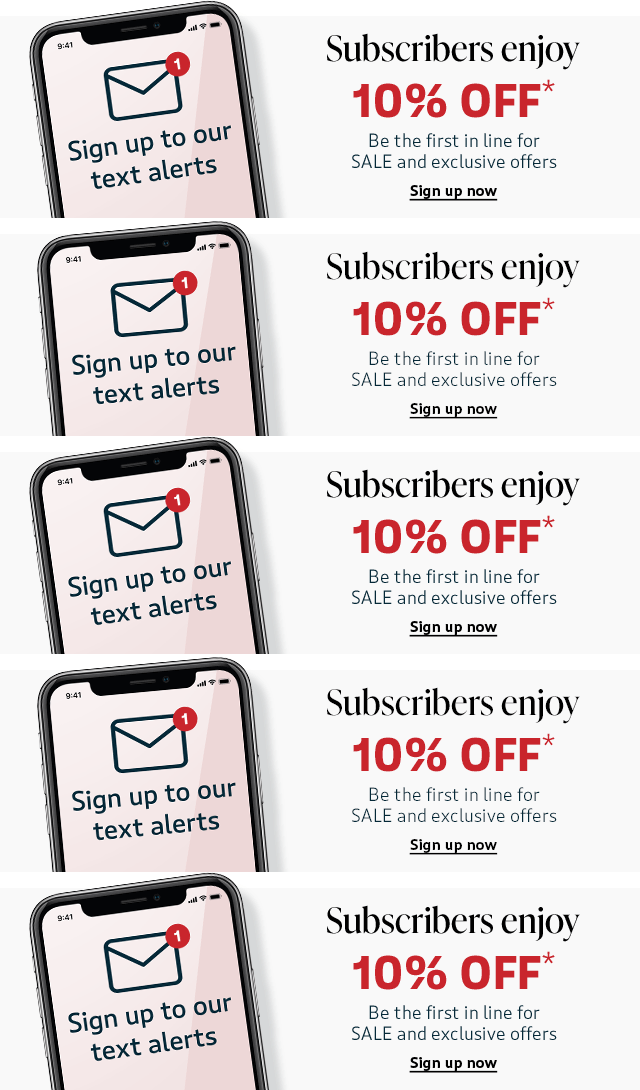
In today’s fragmented digital landscape, a truly successful marketing program is inherently multi-channel. While email remains a core pillar, mobile, social media, and dedicated applications all play crucial supporting roles in delivering a cohesive customer experience. Many consumers, for instance, express a strong preference for mobile channels like SMS for time-sensitive post-purchase messages, such as receipts, order confirmations, and delivery updates, due to the immediacy and high open rates associated with text messages (often exceeding 90%). Cotton Traders provides an excellent example of how to make this ask effectively within an email, often utilizing clever micro-animations to draw attention to the SMS opt-in.
Beyond post-purchase communication, SMS is increasingly being utilized for a critical new use case: compensating for potential inbox de-prioritization of emails. As recent trends show, particularly with Gmail’s relevance-sorted Promotions tab, date-sensitive emails can sometimes get buried beneath messages that the inbox provider’s algorithms deem more immediately relevant to the user. A strategically timed text message, such as “Don’t miss our exclusive Mother’s Day promotion – check your inbox today!”, can serve as a powerful nudge, driving subscribers directly to the email campaign they might otherwise overlook. This symbiotic relationship between SMS and email significantly enhances the visibility and impact of promotional efforts. Hypothetical internal data suggests that combining such SMS alerts with email campaigns can boost email open rates for promotional content by 5-10%.
As a critical sidebar to this strategy, marketers should also actively integrate Gmail Annotations into their relevance toolkit. Annotations are metadata added to email headers that explicitly tell Gmail what the content of an email is about. By specifying a discount, an expiration date, and providing a product preview image, emails can qualify for a “Featured Deal” card at the very top of the Promotions tab. This premium placement dramatically increases visibility and engagement, effectively circumventing the de-prioritization challenge by working with Gmail’s algorithms rather than against them. This dual approach of strategic SMS alerts and optimized Gmail Annotations represents a robust, multi-faceted strategy for ensuring Mother’s Day campaigns receive maximum attention.
7. Incentivizing Early Purchases for Operational Efficiency and Customer Satisfaction
For high-volume, date-sensitive events like Mother’s Day, encouraging customers to make their purchases well in advance offers a multitude of benefits, creating a genuine win-win scenario for both the business and the consumer. Operationally, it significantly alleviates pressure on various critical departments: the website infrastructure experiences smoother traffic flow, customer service teams face fewer last-minute inquiries, and fulfillment and logistics operations can manage inventory and shipping schedules more efficiently, reducing the likelihood of delays and errors.
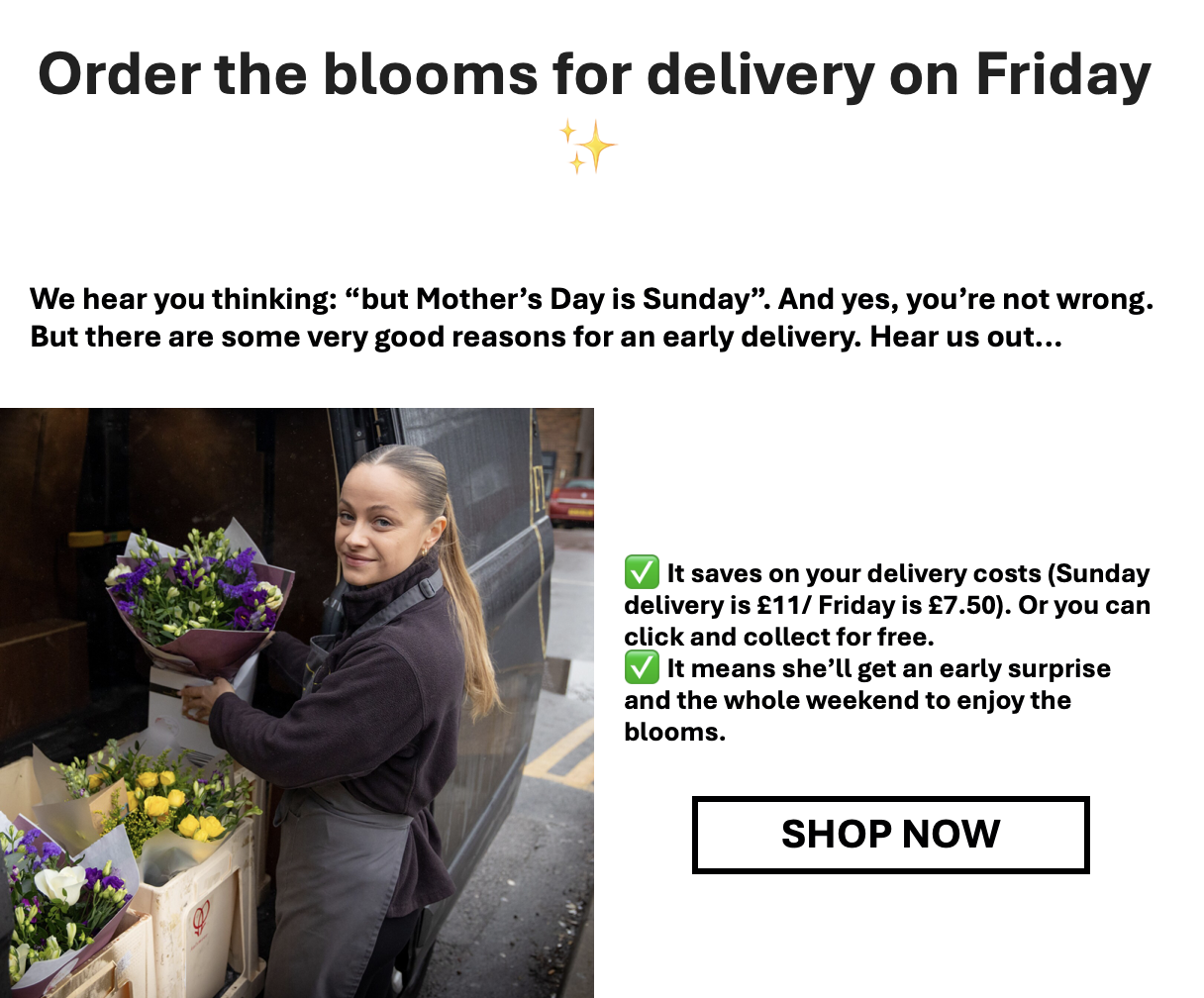
From a consumer perspective, early purchase incentives can be framed as a thoughtful benefit, reducing the stress associated with last-minute gift shopping. Interflora again provides a stellar example of this strategy. Their campaigns often present a clear and compelling pitch: “Order early for cheaper delivery, and Mom gets to enjoy her flowers for the full weekend.” This message directly addresses two common consumer concerns: cost and timing. By offering a financial incentive (cheaper delivery) and an emotional benefit (more enjoyment time for the recipient), Interflora effectively shifts demand forward. Analysis of such campaigns frequently reveals that early bird discounts can shift approximately 15-25% of sales earlier in the promotional window, smoothing out demand peaks and improving overall customer satisfaction.

These incentives extend beyond simple discounts; they can include guarantees of specific delivery dates, exclusive early access to limited-edition products, or bonus gifts for pre-orders. By strategically distributing demand, businesses can enhance their operational resilience during peak periods, improve the overall customer experience by reducing delivery anxiety, and ultimately strengthen customer loyalty through reliable and thoughtful service. This proactive approach to managing seasonal demand is a hallmark of sophisticated email marketing and operational planning.
8. Cultivating Loyalty Through Thoughtful Reminders
For every meticulously organized early bird shopper, there exists an equally common archetype: the individual who, despite their best intentions, completely misses important dates. The consequences of such forgetfulness, especially for a significant occasion like Mother’s Day, can range from mild embarrassment to significant familial repercussions. Recognizing this pervasive human trait, smart marketers are implementing reminder services that not only prevent such oversights but also foster deep customer loyalty.
Interflora, once more, demonstrates a leading solution in this domain. They offer a robust reminder service within their customer accounts, allowing individuals to set advance notifications for a wide range of special events, including Mother’s Day, birthdays, anniversaries, and more. Subscribers can customize parameters such as how far in advance they wish to be nudged (e.g., two weeks, one month) and, crucially, are often rewarded with a discount for each order placed through the reminder service. This “set and forget” convenience is incredibly appealing to busy consumers, transforming a potential source of stress into a seamless, automated act of thoughtfulness. Internal data from brands implementing such services often indicates a significant boost in repeat purchase rates for seasonal events, sometimes by as much as 10-15%, as customers come to rely on the brand as a helpful partner.

This strategy goes beyond mere convenience; it positions the brand as a thoughtful facilitator of personal connections. By anticipating a common consumer pain point and offering a proactive solution, companies can embed themselves into their customers’ lives in a meaningful way. The integrated discount further sweetens the deal, ensuring high adoption rates and consistent engagement. Such reminder services represent a sophisticated approach to predictive marketing, enhancing customer lifetime value and solidifying the brand’s role as a trusted assistant in managing important life events.
9. The Imperative of Dynamic Content and Timely Offer Updates
Once a holiday event like Mother’s Day has passed, the promotional emails associated with it rapidly lose their relevance. Lingering in inboxes, these outdated offers are far more likely to be summarily deleted by subscribers or, worse, marked as spam. This not only frustrates the recipient but also negatively impacts the sender’s reputation and deliverability metrics over time. Savvy senders understand this dynamic and employ dynamic content strategies to ensure their communications remain fresh and pertinent.
Dynamic content allows marketers to automatically swap out expired offers or adjust messaging based on real-time data or predefined rules. For instance, an email promoting a Mother’s Day sale can, post-holiday, automatically transform to feature a new promotion, general product highlights, or content related to an upcoming event. Look Fabulous Forever, for example, aimed for this transition by updating their post-Mother’s Day email. While the initial Mother’s Day offer was replaced, there was an opportunity to do even more. Given that Easter was often just around the corner, redirecting the messaging to an Easter-themed promotion or a general spring collection would have been a natural and highly effective next step. This proactive content management is crucial for maintaining subscriber engagement and avoiding the negative repercussions of irrelevant messaging.
The implications of neglecting this aspect are significant. A consistent stream of irrelevant emails can lead to increased unsubscribe rates, higher spam complaints, and a decline in overall engagement, all of which signal to inbox providers that the sender is not providing value, potentially leading to lower deliverability for future campaigns. By contrast, brands that master dynamic content and timely offer updates demonstrate responsiveness and an understanding of their audience’s current needs, thereby preserving sender reputation, reducing email fatigue, and maximizing the potential for ongoing engagement and conversions. This strategy underscores the importance of a well-planned content calendar and flexible email automation tools.
10. Adhering to Inbox Norms: Resisting the Urge to “Game the System”
A persistent fixation among many email senders is the desire to land their marketing messages in the “Primary tab” of Gmail and other inbox providers, based on the belief that this location guarantees greater visibility and engagement. This conviction has led some brands, such as The White Company in the example provided, to actively encourage their customers to manually recategorize their emails as “Primary.”
However, this practice is strongly cautioned against by the very inbox providers themselves. At major industry conferences and in official guidelines, representatives from Gmail, Microsoft, and Yahoo have consistently and emphatically warned against any attempts to “game the system” by artificially manipulating inbox categorization. They explicitly state that senders who engage in such practices risk penalties, which can range from reduced deliverability to outright suspension of sending privileges. The rationale is simple: inbox providers use sophisticated algorithms, including user interaction data, to determine where an email legitimately belongs. Marketing emails are, by design and user expectation, intended for the Promotions tab.
Subscribers, over time, have developed habits and expectations regarding where they find different types of emails. They typically expect to find marketing and promotional emails in their Promotions tab and often engage with them there, often during dedicated “shopping” sessions. Attempts to force these emails into the Primary tab, which is generally reserved for personal communications and essential transactional messages, can lead to user frustration, increased spam complaints, and ultimately, a damaged sender reputation. The broader implication is that marketers should focus on building relevance and engagement within the Promotions tab through compelling content, strong calls to action, and effective use of features like Gmail Annotations, rather than trying to bypass established inbox categorizations. Trust and long-term deliverability are built on respecting the user experience and playing by the rules of the inbox providers.
11. The Criticality of Geographic Segmentation: Avoiding Untimely Promotions
Returning to where this discussion began, one of the most fundamental lessons from the distinct Mother’s Day observances is the absolute necessity of robust geographic segmentation. Mother’s Day in the UK takes place two months earlier than its equivalent in the US and much of the Western world. Despite this well-known discrepancy, instances of non-UK senders with a UK customer base mistakenly sending Mother’s Day promotions in May are surprisingly common.
This oversight is not merely a minor inconvenience; it is a reliable recipe for significantly elevated complaint rates and severe damage to a brand’s sender reputation. Receiving a “Happy Mother’s Day” email in May when the holiday was celebrated in March is confusing, irrelevant, and can be perceived as tone-deaf or even disrespectful by UK recipients. Such geographically irrelevant campaigns can lead to a spike in complaint rates, sometimes by as much as 20-30%, signaling to inbox providers that the sender is not delivering relevant content to their audience. This, in turn, can trigger deliverability issues across all campaigns, impacting overall email program performance.

The implication is clear: international brands must implement rigorous geo-targeting and segmentation strategies. This involves maintaining accurate subscriber location data and tailoring promotional calendars accordingly. A simple database field for “country” or “region” can prevent these costly errors, ensuring that each subscriber receives messages that are not only timely but also culturally and geographically appropriate. This attention to detail is paramount for maintaining a positive brand image, ensuring high deliverability, and fostering long-term customer relationships across diverse markets.
Learning from History: Fine-Tuning for Success
There’s an old adage, often attributed to Winston Churchill, that those who fail to learn from history are doomed to repeat it. In the realm of email marketing, the UK’s earlier Mother’s Day celebration provides a rare and valuable opportunity for marketers worldwide to learn from recent campaigns, fine-tune their strategies, and optimize their programs before the major event arrives in May. This unique chronological advantage allows for real-time analysis of what resonated, what fell flat, and how to adapt to the latest shifts in consumer behavior and inbox dynamics.
By embracing adaptability, prioritizing customer-centricity, and intelligently leveraging technology—from sophisticated preference centers to AI-driven insights and multi-channel integration—marketers can transform their Mother’s Day campaigns from mere promotional blasts into meaningful, engaging, and highly effective communications. The insights from the UK are not just lessons; they are actionable intelligence. For those looking to further elevate their email program beyond holiday-specific tactics, the recently published Litmus State of Email 2026 report offers a wealth of additional sending tips and industry benchmarks, providing a comprehensive guide to navigating the future of email marketing. Utilizing these resources and strategic approaches will ensure that Mother’s Day campaigns, and indeed all email marketing efforts, achieve their full potential.









