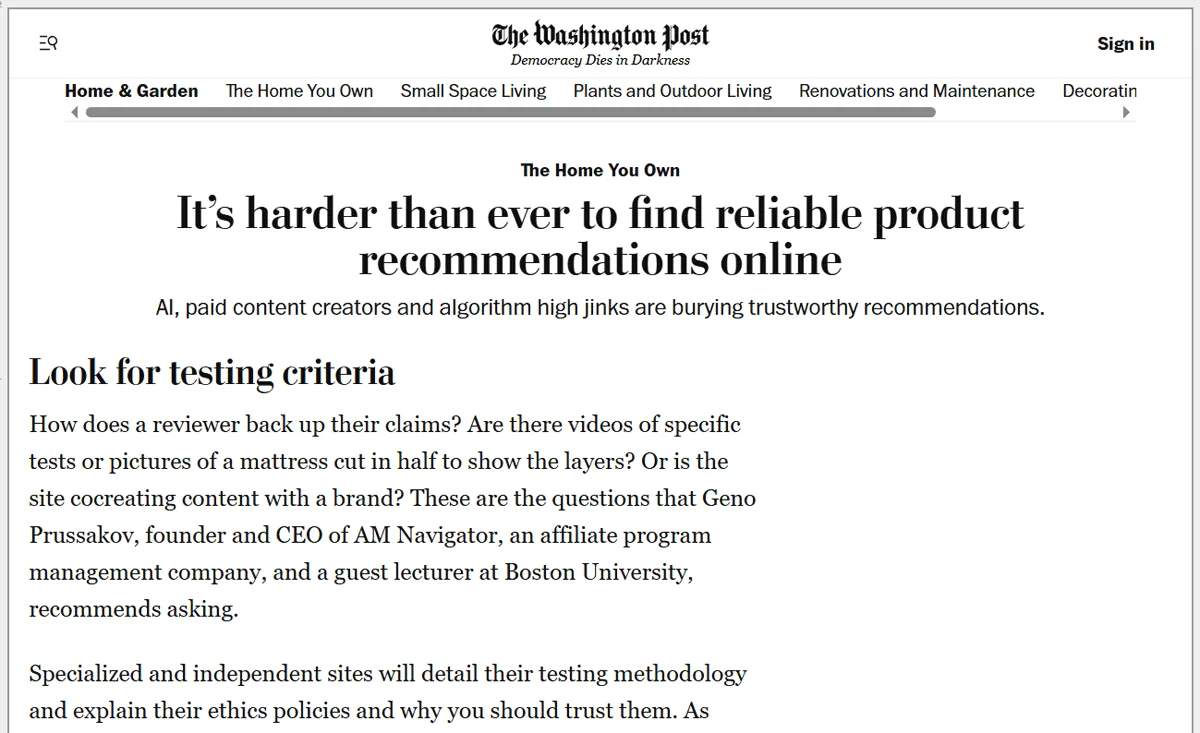
The digital landscape has undergone a seismic shift as traditional media outlets increasingly pivot toward affiliate marketing as a primary revenue stream, a transformation that has raised significant questions regarding the objectivity of product recommendation lists. In January 2025, a comprehensive investigation by The Washington Post highlighted the growing skepticism surrounding online shopping guides, noting that the line between editorial independence and commercial interest has become increasingly porous. As major media conglomerates leverage their established brand authority to influence consumer behavior, the mechanisms behind "Best of" roundups and product reviews have come under intense scrutiny from both industry experts and regulatory bodies.
The Evolution of Content Monetization
Historically, media organizations relied on a clear separation between "Church and State"—the editorial side of the house and the advertising side. However, the decline of print circulation and the volatility of digital display advertising have forced a reconciliation of these two departments. Today, "commerce content" is a multi-billion dollar industry. According to industry data, affiliate marketing spending in the United States alone has grown steadily, with projections suggesting it now exceeds $10 billion annually.
The timeline of this shift can be traced back to the early 2010s. The 2011 founding of Wirecutter, which was later acquired by The New York Times in 2016 for approximately $30 million, served as the blueprint for modern recommendation-based revenue. Following this success, other major players like CNN (Underscored), Forbes (Advisor), and Dotdash Meredith (various brands) established dedicated commerce verticals. These entities do not just report news; they act as intermediaries in the global supply chain, earning a commission on every sale generated through their links.
The Mechanics of Institutional Recommendations
When a major media outlet publishes a list of recommended products, it typically employs a multi-layered vetting process to maintain its perceived authority. Industry consultants and affiliate managers observe that high-tier publishers generally follow four primary protocols to ensure the quality of their endorsements:
- Rigorous Lab Testing: Many top-tier publishers invest in physical testing facilities where products are subjected to controlled environments. This may include stress-testing kitchen appliances, measuring the decibel levels of headphones, or assessing the durability of outdoor gear.
- Subject Matter Expertise: Rather than assigning general assignment reporters to review niche products, reputable outlets hire specialists. These are individuals with years of experience in specific fields—such as photography, automotive engineering, or skincare—who can identify nuances that a layperson might miss.
- Long-term Field Testing: To avoid the pitfalls of "out-of-the-box" reviews, some publishers implement "long-term" testing periods. This involves using a product for weeks or months to see how it performs under daily wear and tear, providing a more accurate assessment of value over time.
- Consensus and Aggregation: Beyond internal testing, editors often aggregate consumer feedback from multiple platforms to ensure their findings align with the broader market experience. This data-driven approach helps to mitigate the risk of recommending a "lemon" that performed well only in a controlled setting.
The Financial Conflict of Interest
Despite these rigorous internal standards, the financial reality of digital publishing creates an inherent conflict of interest. The ranking of a product on a list is not always a pure reflection of its quality. Several financial levers can influence a product’s visibility:
- Affiliate Commission Rates: A publisher may receive a 5% commission from one retailer and a 10% commission from another for the same product. There is an undeniable economic incentive to prioritize the retailer offering the higher rate.
- Placement Fees: Also known as "tenancy" or "flat fees," these are upfront payments made by brands to secure a spot in a specific roundup or holiday gift guide.
- Earnings Per Click (EPC) Guarantees: Some publishers prioritize products based on their conversion efficiency. If Product A earns $2.00 per click and Product B earns $0.50, Product A is likely to receive more prominent placement, regardless of whether it is qualitatively superior.
In a January 2025 statement regarding the industry’s health, marketing analysts noted that "the saturation of the ‘Best of’ space has led to a ‘race to the bottom’ where SEO optimization and commission potential often take precedence over genuine consumer utility."
Chronology of Consumer Trust and Regulatory Response
The tension between profit and prose has not gone unnoticed by regulators. The Federal Trade Commission (FTC) in the United States has updated its "Endorsement Guides" several times over the last decade to address the nuances of digital affiliate links.
- 2009: The FTC issues its first major guidelines requiring bloggers to disclose when they are being paid to endorse products.
- 2017: The agency begins cracking down on "influencer" marketing, sending warning letters to celebrities regarding unclear disclosures on social media.
- 2023-2024: The FTC releases updated guidance specifically targeting "deceptive" formatting in online reviews and the use of "dark patterns" to influence consumer choice.
- 2025: Current trends show a shift toward "transparency modules," where publishers include detailed descriptions of their testing methodology and a clear statement on how they earn money at the top of every article.
Strategies for the Informed Consumer
As the distinction between an advertisement and an article continues to thin, consumers must develop a more critical eye. Experts in affiliate management suggest four primary strategies for navigating modern product roundups:

First, consumers should look for specific, detailed justifications for why a product was chosen. Vague praise like "it’s great quality" is often a red flag. A high-quality review will cite specific metrics—battery life in hours, weight in grams, or performance against a specific competitor.
Second, the presence of a "Testing Methodology" section is a hallmark of credibility. If a publisher cannot explain how they reached their conclusion, the recommendation is more likely to be based on financial incentives or aggregated data rather than first-hand experience.
Third, cross-referencing is essential. A consumer should check if the same product is being recommended across multiple, independent outlets. If a product only appears on one site and that site has a prominent "sponsored" tag, its inclusion is likely a paid placement rather than an editorial choice.
Fourth, shoppers should be wary of lists that only feature products available at a single major retailer. If every "Best" product links exclusively to one marketplace, the publisher may be prioritizing their ease of tracking and commission collection over finding the best available product for the user.
The Broader Impact on Journalism and Commerce
The reliance on affiliate revenue has broader implications for the future of journalism. While this model has provided a lifeline for struggling newsrooms, it has also led to a homogenization of content. When every major outlet focuses on the same high-commission categories—mattresses, credit cards, and consumer electronics—niche or low-margin products often go ignored, regardless of their quality or innovation.
Furthermore, the "Google factor" cannot be overlooked. Search engine algorithms heavily favor high-authority domains. When a legacy media brand publishes a product roundup, it often ranks at the top of search results, pushing down smaller, independent review sites that may offer more objective or specialized insights. This "authority bias" creates a cycle where big media dominates the consumer journey from search to purchase.
Looking forward, the rise of Generative AI poses a new challenge to this ecosystem. As AI search engines provide direct answers to "What is the best laptop?", the traffic to traditional affiliate-supported articles may dwindle. This will likely force publishers to either increase the transparency and depth of their testing to provide value that AI cannot replicate or find yet another new way to monetize their remaining audience.
In conclusion, while big media recommendation lists can be a valuable tool for time-pressed shoppers, they are not infallible. The transformation of authority into a monetizable asset has created a complex environment where editorial integrity must constantly compete with the bottom line. For the consumer, the old adage remains more relevant than ever: caveat emptor—buyer beware. Understanding the financial mechanics behind the "Best of" list is the first step toward making truly informed purchasing decisions in a commercialized digital age.