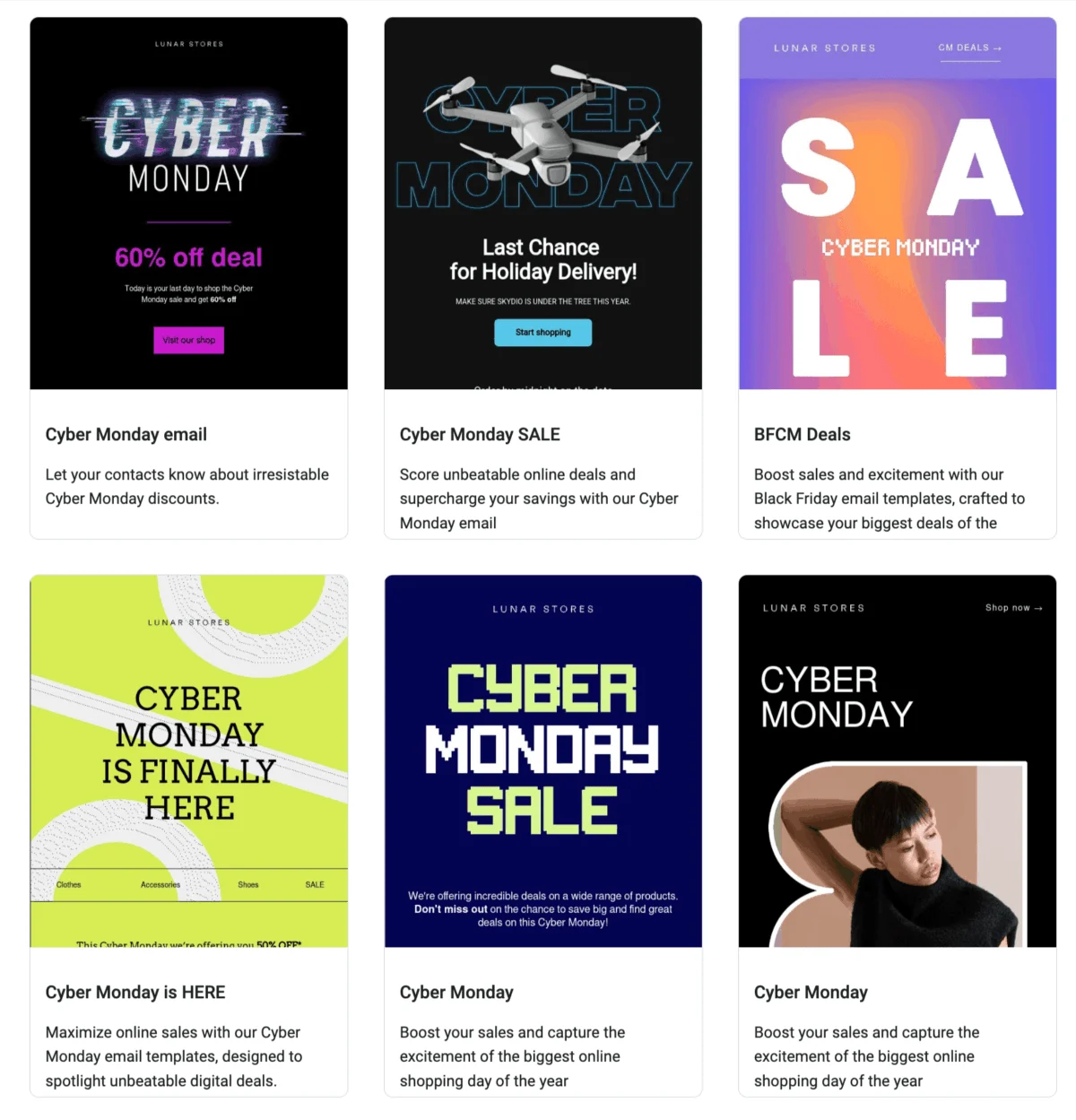
Cyber Monday, a cornerstone of the annual retail calendar, has evolved from a nascent online shopping phenomenon into a multi-billion dollar digital commerce juggernaut, demanding sophisticated and data-driven marketing strategies, with email remaining a pivotal channel for driving engagement and sales. The event, historically observed on the Monday following Thanksgiving in the United States, marks a critical period for retailers to capitalize on heightened consumer spending and the lingering holiday shopping fervor initiated by Black Friday. Understanding the nuanced dynamics of consumer behavior during this intense period is paramount for brands aiming to cut through the digital noise and convert browsing into revenue.
A Brief History and Evolution of Cyber Monday
The concept of "Cyber Monday" was first coined in 2005 by Ellen Davis of the National Retail Federation (NRF) to describe the significant surge in online sales observed on the Monday after Thanksgiving. At the time, broadband internet access was becoming more common in homes, but many consumers still relied on faster, more reliable internet connections at work to make their online purchases. The NRF recognized this trend and launched "Cyber Monday" as a strategic marketing initiative to encourage people to shop online, effectively extending the Black Friday sales weekend into a full five-day retail marathon.
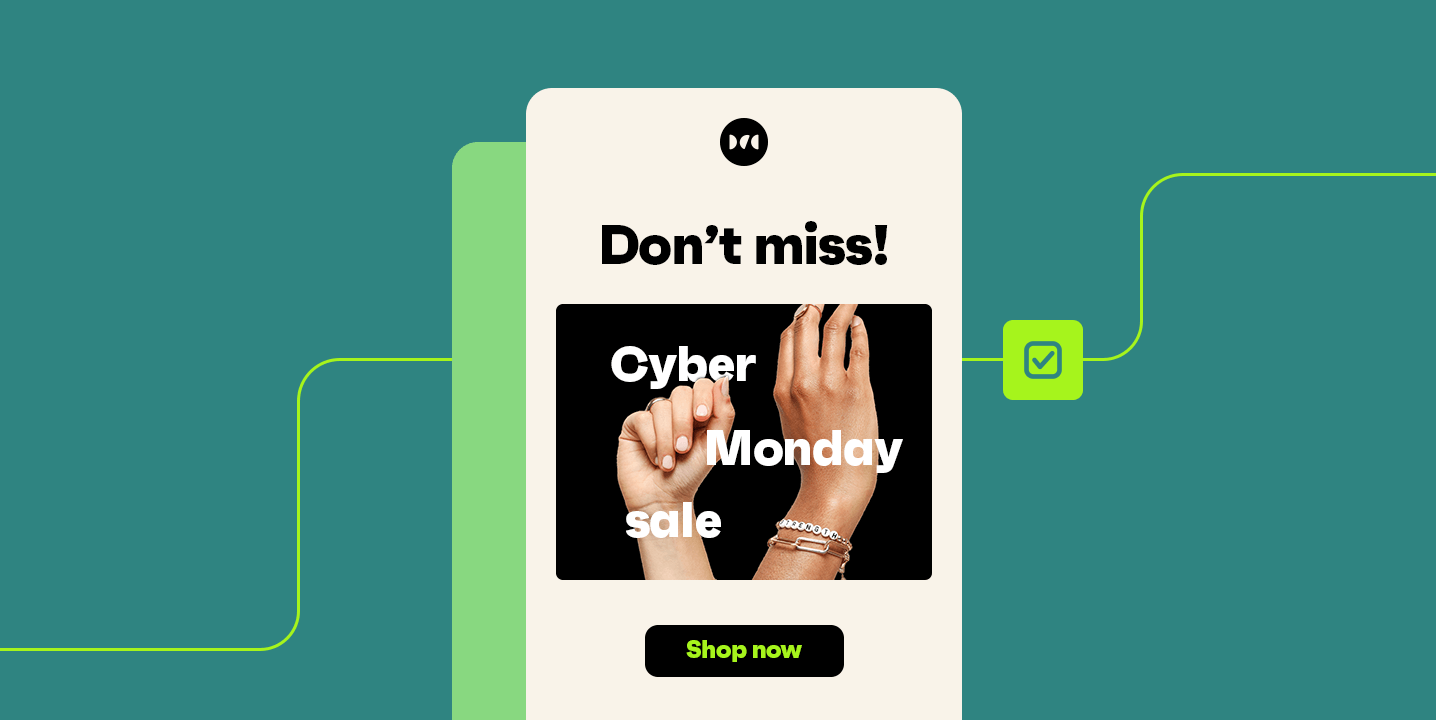
Initially, Cyber Monday was distinct from Black Friday, focusing exclusively on online deals while Black Friday traditionally emphasized in-store promotions. However, the lines between these two colossal shopping days have increasingly blurred. With the rapid acceleration of e-commerce and mobile shopping, especially pronounced in the wake of the COVID-19 pandemic, nearly all Black Friday deals are now available online, and Cyber Monday often sees an extension or refresh of these promotions. This fusion has given rise to the broader "Black Friday Cyber Monday" (BFCM) weekend, or even "Cyber Week," signifying a prolonged period of discount-driven online shopping. In 2023, Adobe Analytics reported that Cyber Monday alone generated a record $12.4 billion in online spending in the U.S., a 9.6% increase year-over-year, underscoring its continued economic significance and growth trajectory. This figure highlights not only the event’s scale but also the intense competition among retailers for consumer attention and wallets.
The Crucial Role of Email in Cyber Monday Success
Despite the proliferation of marketing channels, email remains an indispensable tool for retailers during Cyber Monday. Its direct, personal nature, combined with its high return on investment (ROI), makes it a powerful driver of sales. A well-executed email campaign can guide customers through their purchase journey, from initial awareness to final conversion. However, the sheer volume of emails flooding inboxes during BFCM means that merely sending out promotions is no longer sufficient; strategy, precision, and personalization are key to standing out.
Email marketing’s enduring efficacy stems from its ability to reach customers directly where they are most likely to engage with purchasing decisions – their inboxes. While social media, paid ads, and SMS play supporting roles, email allows for more detailed storytelling, richer visual content, and direct calls to action. For many consumers, checking their email is a habitual part of their online routine, making it a reliable touchpoint for delivering timely and relevant offers. Brands that successfully leverage email during Cyber Monday often see substantial revenue increases, as evidenced by success stories where email automations alone contribute significantly to overall sales.

Strategic Pillars of Effective Cyber Monday Email Campaigns
To navigate the competitive landscape of Cyber Monday, marketers must adopt a multifaceted approach, utilizing various email types, crafting compelling subject lines, and optimizing send times. The objective is not just to send emails, but to deploy a strategic sequence that resonates with diverse consumer behaviors and purchasing stages.
Beyond the Single Blast: Diverse Email Archetypes
Effective Cyber Monday campaigns move beyond a generic "sale" email, employing a range of email types tailored to specific psychological triggers and stages of the customer journey.
-
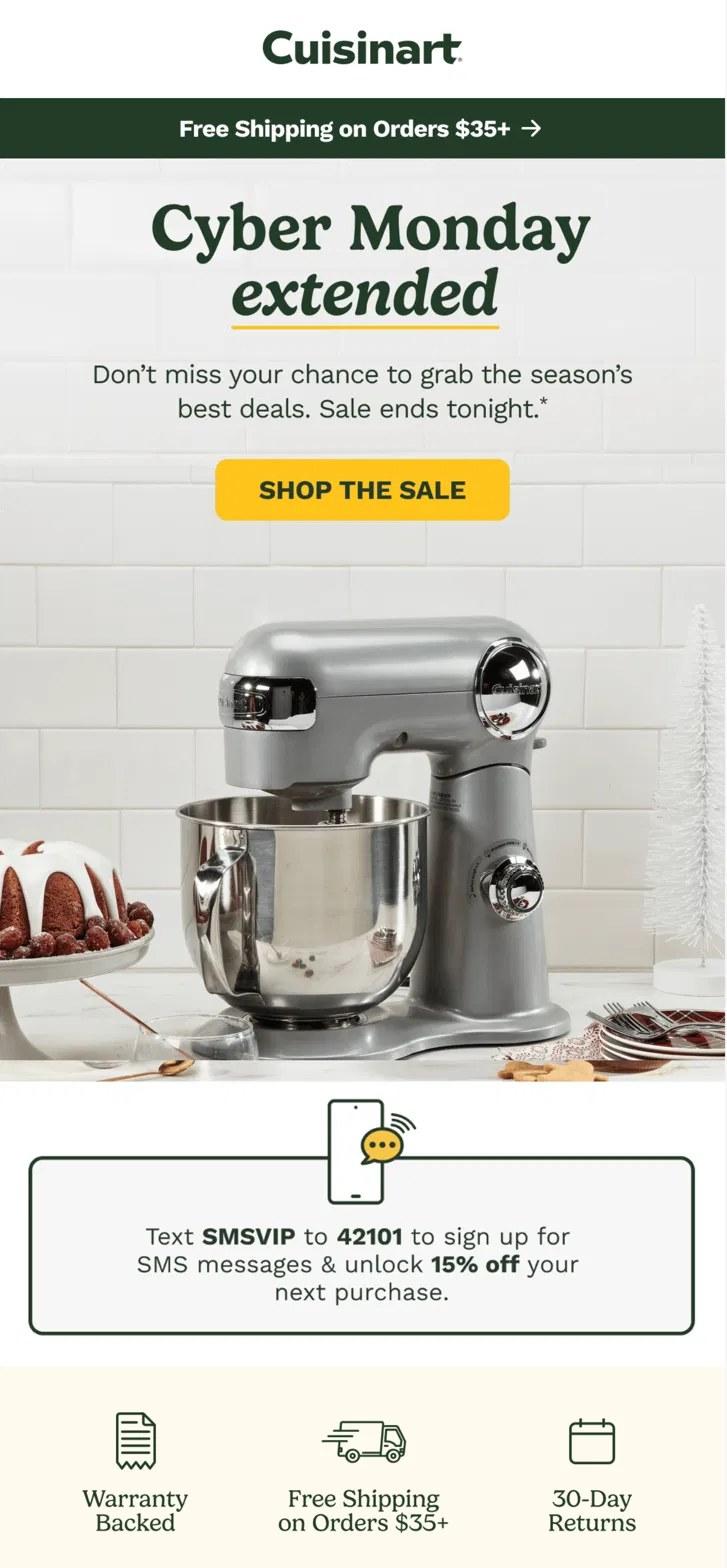
Urgency-Driven Emails: These capitalize on the fear of missing out (FOMO) by emphasizing limited-time offers. Examples include "one-day urgency" emails, like those from Kerrits, which clearly state the sale’s end, the discount percentage, and product categories, simplifying the decision-making process for shoppers. Similarly, "deadline extension" emails, such as Cuisinart’s "Don’t miss Cyber Monday savings," serve as crucial last-chance reminders for procrastinators, often doubling as an opportunity to collect SMS opt-ins. These emails typically perform best when the urgency is genuine and the offer is clear and compelling.
-
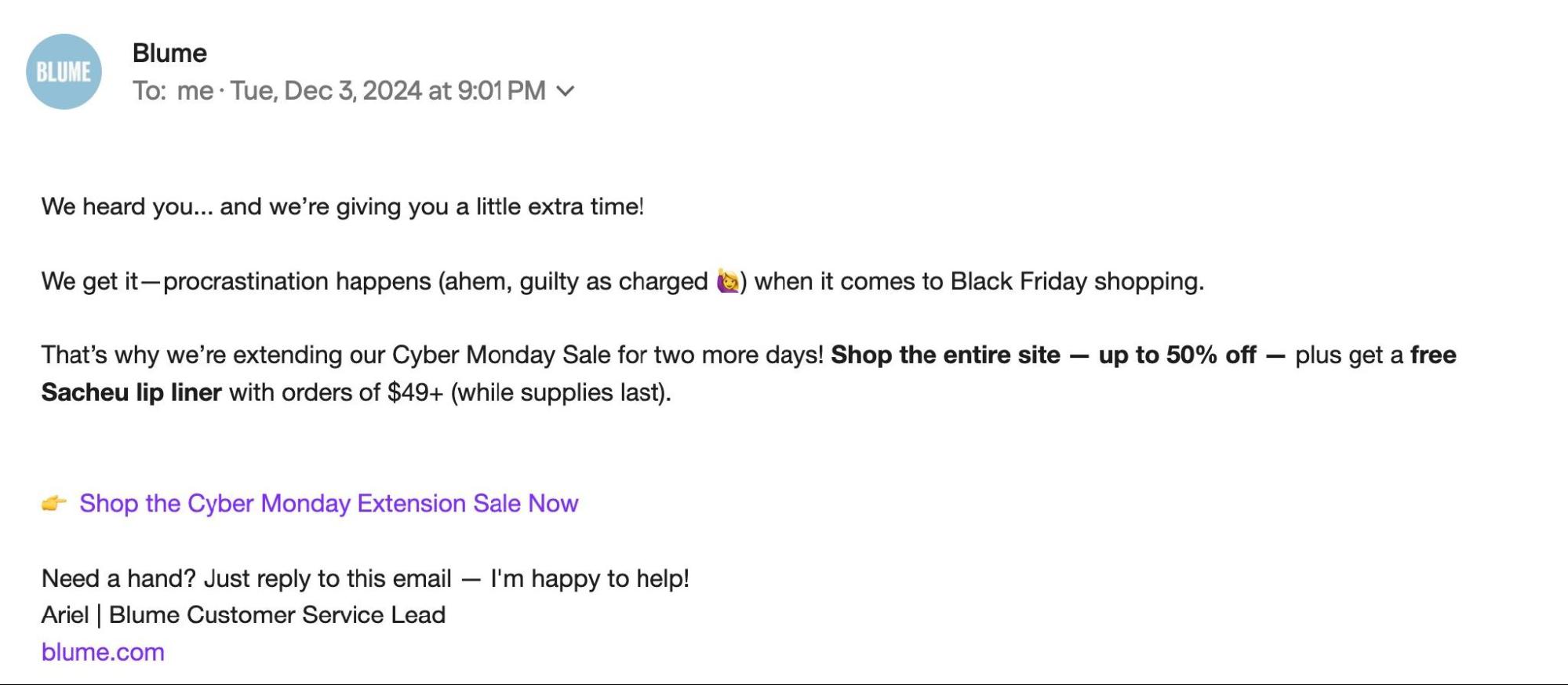
Exclusivity and Personalization: Making customers feel special can significantly boost engagement. "VIP/early access" emails target loyalty program members or highly engaged subscribers, offering them a sneak peek or exclusive discounts before the general public. "Personal notes," exemplified by Blume’s plain-text email signed by a named person, stand out by adopting a human, conversational tone, acknowledging consumer habits (like procrastination) and offering a gentle, extended incentive. This approach fosters a sense of connection and trust, differentiating the brand from the barrage of impersonal promotional messages.
-
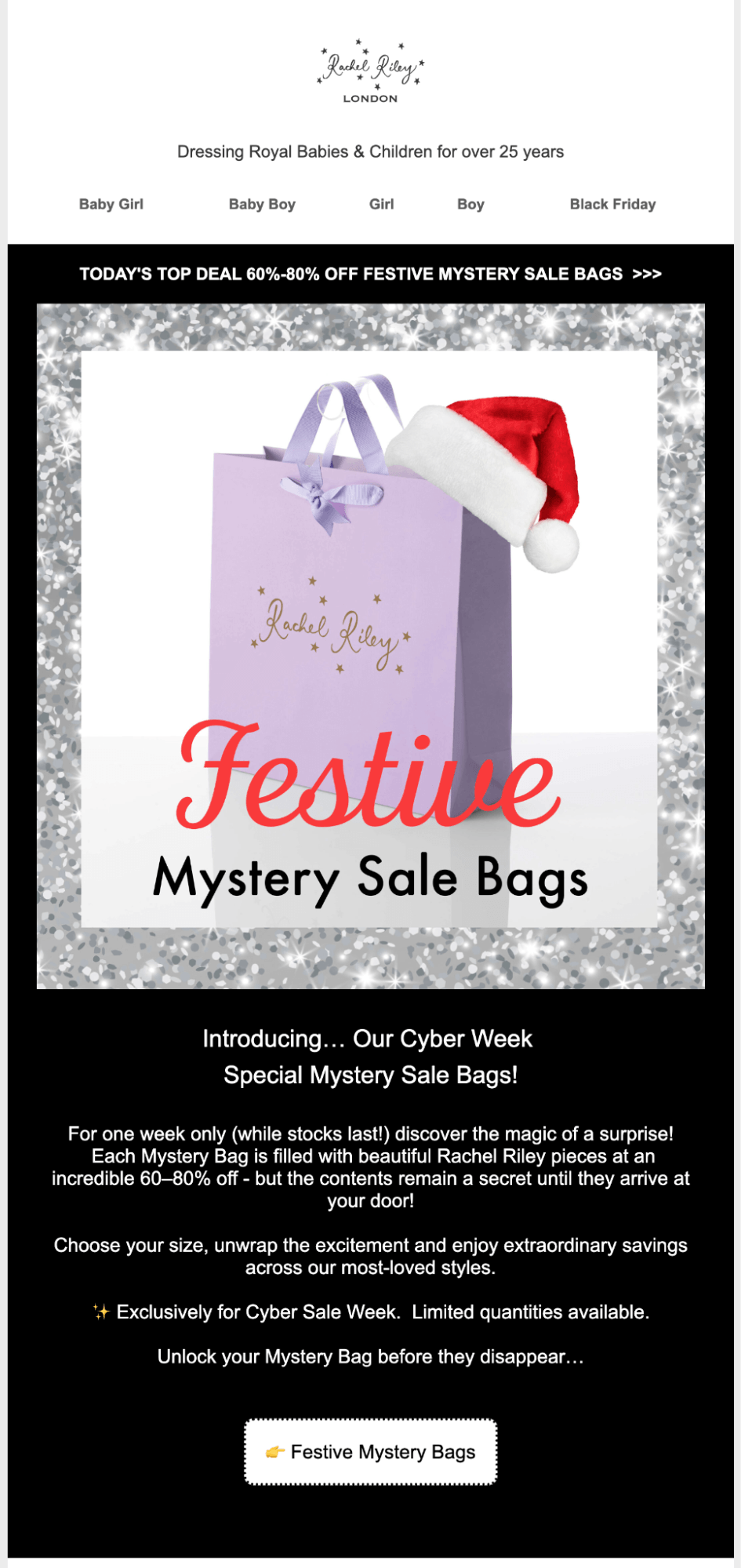
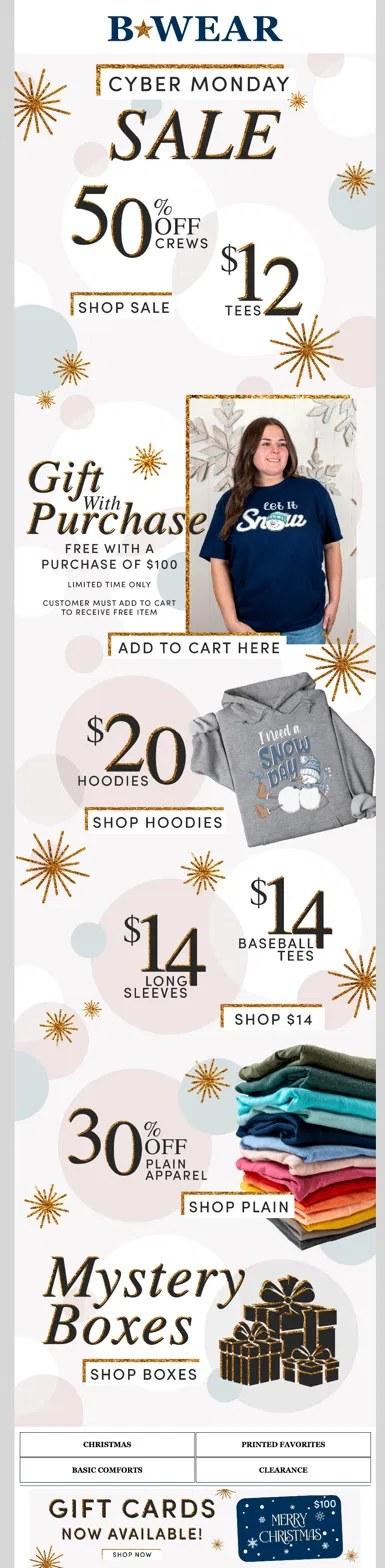
Value Maximization and Discovery: These emails focus on maximizing the perceived value of a purchase. "Tiered offers," as demonstrated by B-Wear, stack multiple discounts within a single email (e.g., "50% off crews, $12 tees, $20 hoodies"), allowing customers to quickly identify and click on their preferred deal. "Mystery offers," like Rachel Riley’s "Festive Mystery Sale Bags," introduce an element of surprise and excitement, turning a deep discount into an intriguing proposition where shoppers buy a "mystery bag" at 60-80% off. This taps into curiosity and the thrill of discovery, making the markdown feel like a unique experience rather than just a price reduction. "Bundle and threshold offers" encourage larger purchases by offering greater savings for higher spending (e.g., "Spend $100, Save 25%"). The psychology here is anchoring bias, where the perceived value of the bundle is higher than individual items.
-
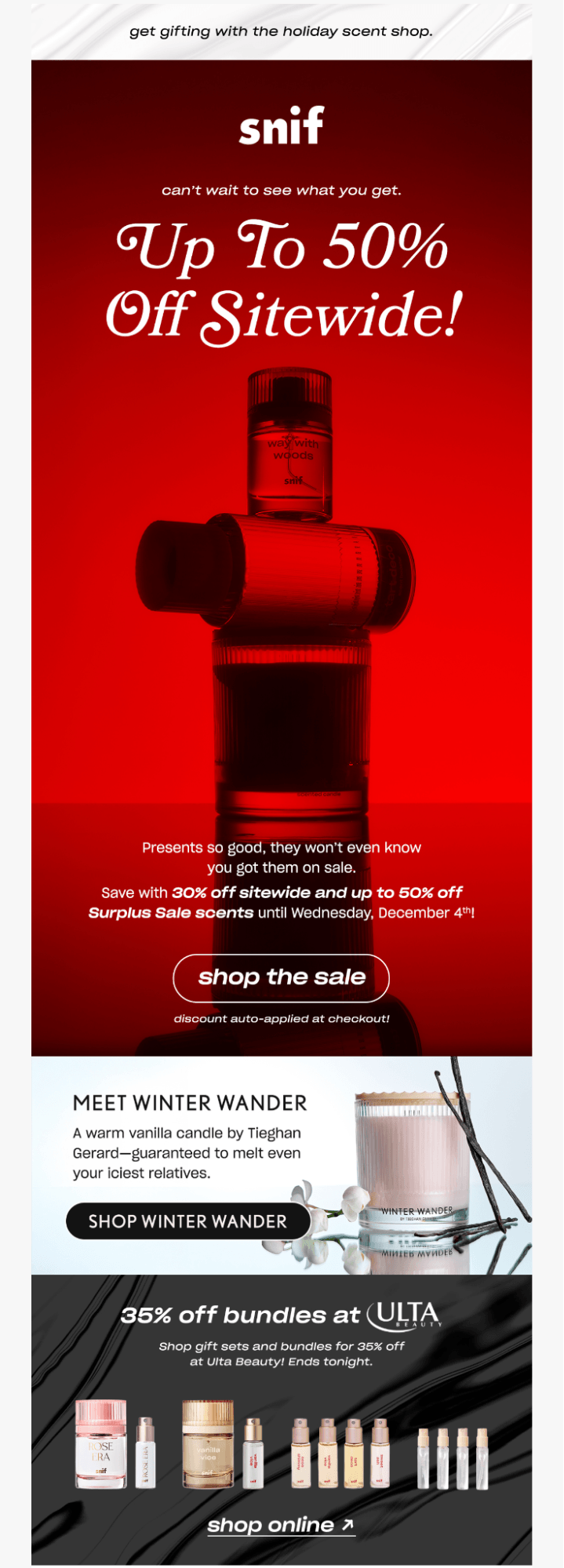
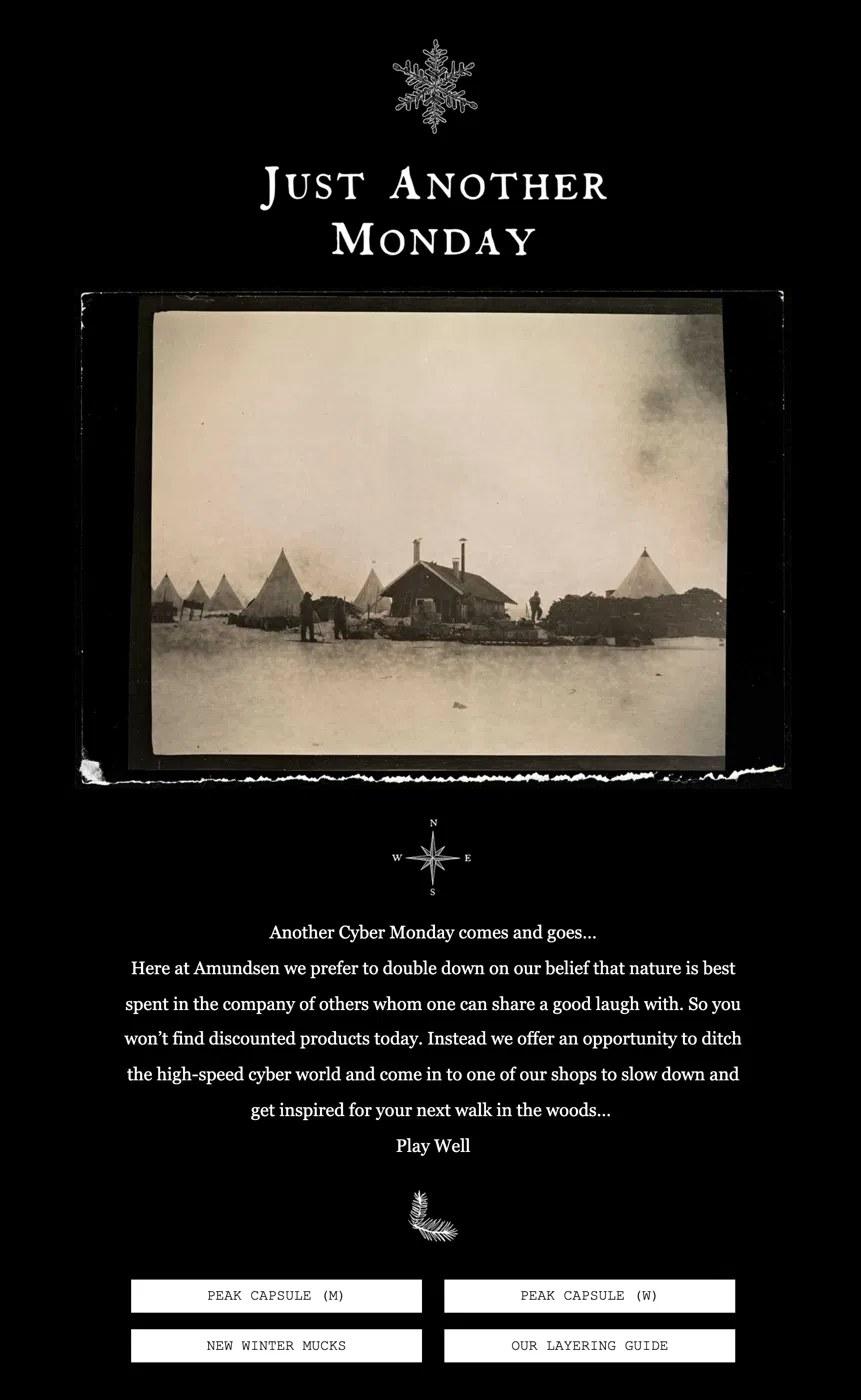
Brand-Centric and Gifting Focus: Not all emails need to scream "discount." Some brands use Cyber Monday as an opportunity to reinforce their brand identity or tap into broader holiday themes. Snif, for instance, frames its discounts around "holiday gifts," broadening the appeal beyond self-indulgence. Conversely, Amundsen’s "no-discount email" with the subject line "Just Another Monday" is a bold, brand-affirming move that skips discounts entirely, relying on its strong brand voice and aesthetic to encourage full-price shopping. This strategy works for brands with a deeply loyal customer base and a clear differentiation point, demonstrating authenticity amidst the commercial frenzy.
-
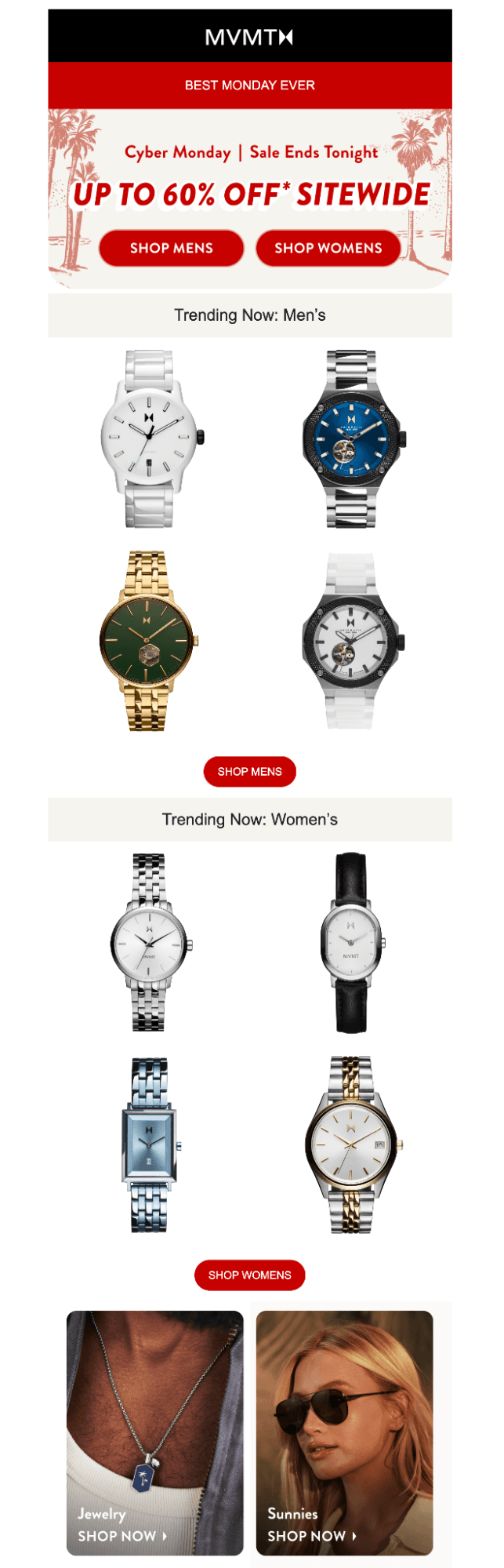
Product Navigation: For brands with extensive catalogs, emails like MVMT’s, which feature a clear "product grid," guide shoppers efficiently to relevant categories (e.g., men’s vs. women’s watches, trending items). When the sheer volume of products can be an obstacle, effective navigation becomes more crucial than aggressive persuasion.
Crafting Compelling Subject Lines: The Gateway to Engagement
In a crowded Cyber Monday inbox, the subject line is the gatekeeper to engagement. Brevity and clarity are paramount, with optimal lengths typically ranging from two to six words to ensure full visibility on mobile devices. Subject lines can be categorized by their psychological intent:
- Urgency: Phrases like "Last Chance: The Cyber Monday Deal You’ve Been Waiting For" or "Warning: These Cyber Monday Deals Are Selling Fast" create immediate pressure.
- VIP/Early Access: "Your VIP Early Access to Cyber Monday" or "(Name), Don’t Miss Your Personal Cyber Monday Deal" foster a sense of exclusivity and personal value.
- Delivery/Cutoffs: "Order by Midnight: Guaranteed Holiday Delivery" or "Final Hours for Holiday Arrival" shift focus to logistics, appealing to customers prioritizing convenience.
- Bundles/Thresholds: "Spend $100, Save 25%: Cyber Monday Only" clearly communicates added value for larger purchases.
- Emoji-Light Options: For audiences or brands preferring a more formal tone, subject lines like "This Cyber Monday Offer Beats Black Friday" or "The Cyber Monday Deal That Changes Everything" rely on strong language and intriguing propositions without visual cues. Research, such as a 2023 study by Koch et al., indicates that an excessive use of emojis can diminish message credibility for certain demographics, highlighting the need for audience-specific customization.
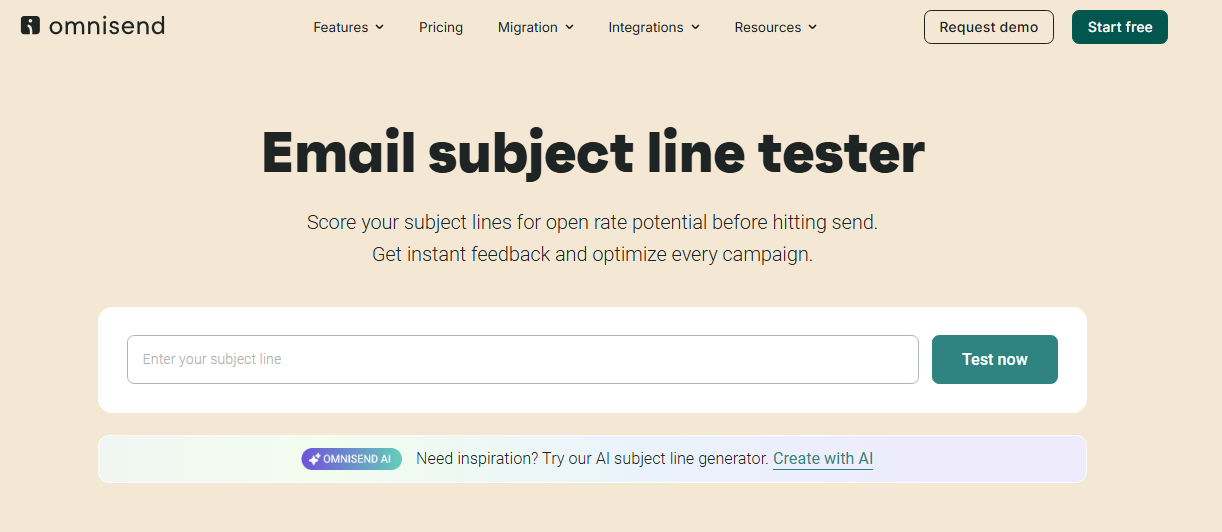
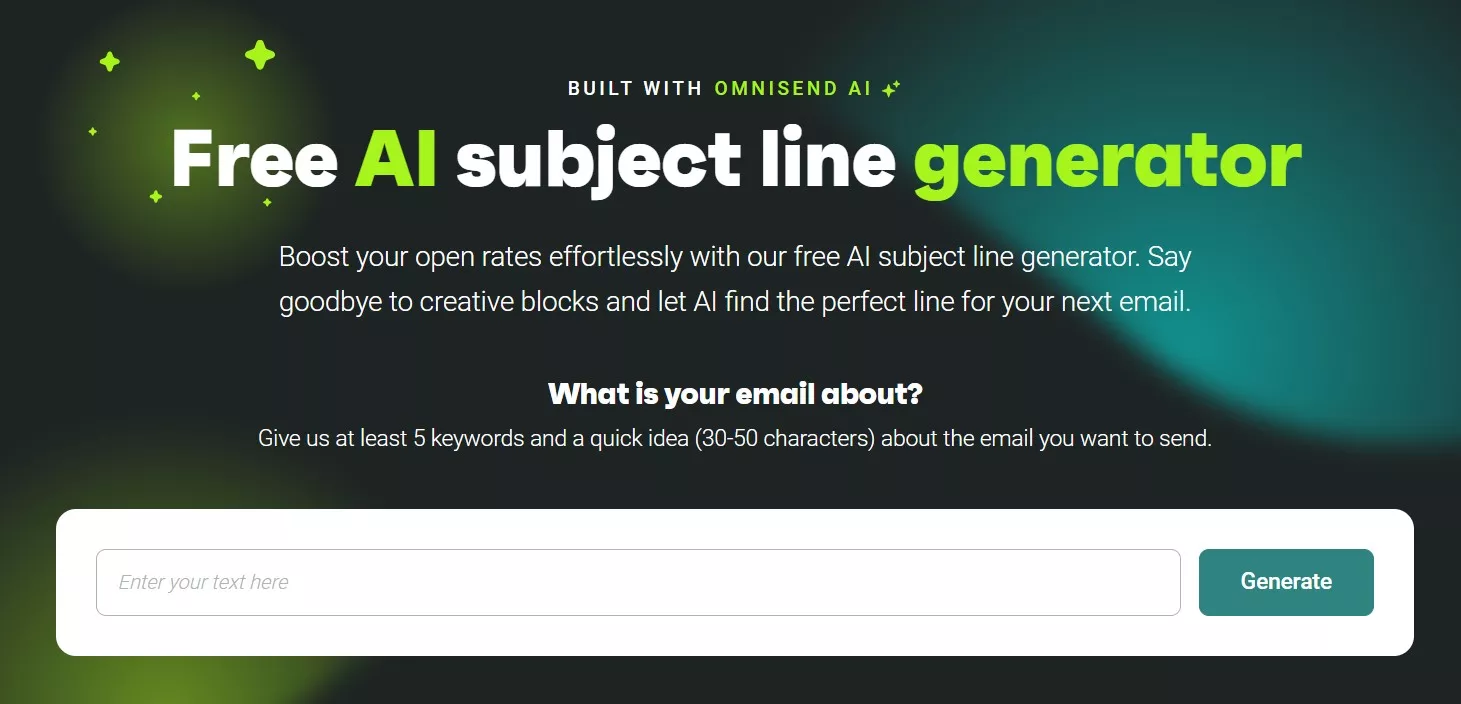
Tools like Omnisend’s subject line tester and AI generator can significantly aid marketers in developing and optimizing subject lines, allowing for A/B testing to identify what resonates most effectively with their specific audience segments.
The Science of Timing: Maximizing Open Rates and Conversions
Strategic timing is as critical as compelling content. Research indicates that optimal send times for Cyber Monday emails often cluster around 2 PM, 5 PM, and 8 PM in the customer’s local time zone, reflecting various points throughout the day when consumers might be checking emails or taking a break. However, these are general guidelines, and individualized testing remains crucial.
The Cyber Monday period, extending across the BFCM weekend, necessitates a carefully orchestrated cadence:
-
Teaser Emails (Friday – Sunday, Pre-Cyber Monday): These emails build anticipation without revealing full offers. Sent 1-2 days before Cyber Monday, they prime the audience, generating curiosity. A teaser email should target active subscribers, excluding recent purchasers, and use subject lines like "Something big is coming on Monday." SMS or push notifications can reinforce the message for non-openers.
-
Launch Emails (Monday AM/PM): The main event. The initial launch email should go out Monday morning (6 AM – 9 AM), detailing the full Cyber Monday offer. A follow-up launch can be sent in the afternoon (2 PM – 3 PM) specifically to those who did not open the morning email, ensuring broad reach without annoying engaged customers. Subject lines should lead with value and urgency, such as "Cyber Monday is HERE!" or "Up to 75% Off: Your Cyber Monday Deals Are Live!" Personalization based on purchase history can offer VIPs exclusive access or better discounts.
-
Last-Call Emails (Monday Evening): These create final urgency for customers who haven’t purchased. Sent Monday evening (6 PM – 9 PM, with an 8 PM spike often performing best), these emails leverage FOMO. They should exclusively target subscribers who received previous emails but have yet to make a purchase, potentially offering different incentives for hesitant buyers. Subject lines like "Four hours left" or "Last chance ends at midnight" are highly effective. SMS and push notifications can serve as powerful, immediate reminders for cart abandoners or those close to the deadline.
Crucially, "timezone optimization" is vital to ensure emails arrive at the right local time for each customer, maximizing open rates across different geographic regions. Mobile users, who constitute a significant portion of holiday shoppers, check emails throughout the day, making multiple, strategically timed sends even more impactful.
Navigating the Inbox: Ensuring Deliverability and Trust
The increased email volume during Cyber Monday heightens the risk of campaigns landing in spam folders. Major email providers like Gmail and Outlook intensify their spam filtering during peak shopping periods due to a surge in malicious attempts. Maintaining a strong "sender reputation" is paramount for deliverability. This reputation is built over time based on recipient interactions (opens, clicks, unsubscribes, spam complaints).
Key strategies for ensuring email deliverability include:
- Domain Warm-up: Gradually increasing email volume from a new IP address or domain to build a positive sending history with ISPs.
- Controlled Send Volume: Avoiding sudden, massive spikes in email sends, which can trigger spam filters.
- List Hygiene: Regularly cleaning email lists to remove inactive or invalid addresses, reducing bounce rates and improving engagement metrics.
- Honest Subject Lines: Avoiding misleading or overly aggressive language that could be flagged as spam.
- Content Quality: Modern spam detection systems analyze both sending patterns and message content. Emails should be well-formatted, relevant, and provide clear value, steering clear of excessive images, spam trigger words, or broken links.
Furthermore, integrating SMS and push notifications as complementary channels is no longer a luxury but a necessity. These channels offer immediate, high-visibility touchpoints for time-sensitive messages like abandoned cart reminders, shipping cutoffs, or final deadline alerts, effectively cutting through email clutter without bombarding customers. The strategy should be sequential: send an email, wait a few hours, then use SMS for non-openers, and a final push notification as the deadline approaches.
Case Studies in Action: Brands Leading the Charge
Real-world examples illustrate the power of these strategies:
-
Kerrits: This equestrian apparel brand saw a remarkable 50% increase in revenue-per-promotional email after implementing Omnisend’s automation capabilities. Their success with urgency-driven Cyber Monday emails, focusing on clear savings and product categories, highlights the effectiveness of a streamlined message. Automated welcome and cart abandonment emails also proved highly lucrative, generating $6.50 per send.
-
Rachel Riley: The British childrenswear label achieved a staggering 77.33% year-over-year growth in BFCM sales through Omnisend. Nearly half of its store revenue during this period came via email and SMS, with automations contributing 46% of those sales. Their innovative "mystery bag" approach for deep discounts captured customer imagination and drove significant conversions.
-
B-Wear: This brand demonstrated how effective segmentation and multi-offer emails can drive substantial revenue, with 40% of its total sales now originating through Omnisend. Their tiered offers allowed customers to self-select their preferred deals, leading to high engagement. Their welcome series converts at an impressive 66%, and SMS sales covered nearly two years of platform fees in just six months.
-
Amundsen: Taking a distinctive brand-first approach, Amundsen achieved a 1,010% increase in revenue per email from automated campaigns. While opting out of Cyber Monday discounts, their focus on brand identity and customer experience paid dividends. Automations now generate 30% of their Omnisend sales, with order confirmation emails alone contributing 17% of their annual revenue driven by the platform. This case study underscores that a strong brand can sometimes defy conventional discount-heavy strategies during peak sales periods.
These examples underscore that regardless of industry or specific promotional strategy, robust email marketing automation, combined with a deep understanding of customer behavior and strategic deployment, translates directly into tangible revenue growth.
Broader Implications: The Future of Peak Season Marketing
The continuous evolution of Cyber Monday and the broader BFCM period points towards several key implications for the future of peak season marketing. Consumer expectations for personalization and seamless experiences are higher than ever. Generic, one-size-fits-all campaigns are increasingly ineffective. This necessitates sophisticated segmentation, dynamic content, and multi-channel orchestration.
Automation platforms are no longer just tools for efficiency; they are strategic partners enabling brands to execute complex campaigns at scale, ensuring messages are timely, relevant, and delivered through the preferred channels of individual customers. The balance between aggressive sales tactics and maintaining brand integrity will remain a critical challenge. While discounts drive immediate sales, brands must also cultivate long-term relationships and avoid becoming solely reliant on promotional pricing, as demonstrated by Amundsen’s unique approach.
The mobile-first imperative will only strengthen. Marketers must ensure all communications, from email designs to website landing pages, are fully optimized for mobile devices, reflecting how a majority of consumers engage with online shopping. Finally, the emphasis on data analytics and continuous testing will intensify. The ability to quickly analyze campaign performance, identify winning strategies, and iterate in real-time will differentiate successful brands from their competitors.
Conclusion: A Blueprint for Digital Retail Triumph
Successful Cyber Monday email campaigns are a symphony of compelling offers, precise timing, and flawless execution. The brands that consistently win during this critical shopping period are those that prioritize preparation, leverage robust automation, and relentlessly test and optimize their strategies.
To achieve Cyber Monday triumph, retailers should:
- Diversify Email Content: Move beyond single-offer emails to incorporate urgency, exclusivity, value-maximization, and brand-centric messaging.
- Optimize Subject Lines: Prioritize brevity, clarity, and psychological triggers, using A/B testing and AI tools for refinement.
- Master Timing and Automation: Implement a strategic three-email sequence (teaser, launch, last-call) with timezone optimization to reach customers effectively throughout the day.
- Ensure Deliverability: Maintain a healthy sender reputation through domain warm-up, list hygiene, and honest content practices.
- Integrate Multi-Channel Reminders: Utilize SMS and push notifications as complementary channels for high-urgency messages, especially for cart abandoners and final deadlines.
By implementing these strategies, businesses can transform Cyber Monday from a mere sales event into a powerful demonstration of digital marketing prowess, delivering exceptional results this holiday season and beyond. The digital retail landscape is ever-changing, but the foundational principles of effective, customer-centric communication remain the bedrock of success.