Iffa Jayyana

In the intricate world of digital marketing, where every pixel and word is meticulously crafted to capture audience attention, a curious paradox often emerges: the humble email footer, despite its critical importance, frequently receives only cursory attention. Marketers dedicate countless hours to perfecting subject lines, agonizing over call-to-action buttons, and exhaustively A/B testing preview text. Yet, when it comes to the email footer, the standard practice often involves merely pasting in the content from the previous campaign. This prevalent oversight represents not only a significant missed opportunity for brand reinforcement and subscriber engagement but also, in an increasingly regulated digital landscape, a tangible compliance risk that can carry severe financial and reputational penalties. The footer, far from being a mere afterthought, is arguably the most consistent piece of digital real estate in every email communication, acting as both a legal safeguard and a subtle yet powerful extension of a brand’s identity.
The Underestimated Power of the Email Footer
The email footer serves a multifaceted role that extends far beyond a simple legal disclaimer. It is a foundational element that tells recipients who the sender is, provides clear avenues for communication, and, crucially, offers an unambiguous exit strategy for those who no longer wish to receive messages. This latter function is not merely a matter of good manners; it is a legally mandated requirement across numerous jurisdictions worldwide. Adhering to these regulations is paramount for any business engaging in commercial email communication. By getting the footer right, companies not only protect themselves from legal repercussions but also actively build and maintain trust with their subscriber base, reinforcing their brand identity with every message sent. A well-constructed footer signals professionalism and respect for the recipient’s inbox, differentiating legitimate businesses from less scrupulous senders. Conversely, neglecting these details, even in an otherwise brilliant campaign, can inadvertently flag an email as spam, severely damaging sender reputation and deliverability rates.
A History of Regulation: Ensuring Inbox Integrity

The evolution of email marketing regulations provides essential context for understanding the footer’s significance. In the early days of the internet, unsolicited commercial email, or "spam," became a pervasive problem, overwhelming inboxes and eroding user trust. This necessitated government intervention to protect consumers and regulate commercial communications.
- 2003: The CAN-SPAM Act (Controlling the Assault of Non-Solicited Pornography And Marketing Act) in the United States was one of the earliest comprehensive federal laws governing commercial email. It established requirements for commercial messages, gave recipients the right to have emails stopped, and spelled out tough penalties for violations. Key provisions directly impacting footers included the mandatory inclusion of a physical postal address and a clear, conspicuous, and functional unsubscribe mechanism.
- 2014: Canada’s Anti-Spam Legislation (CASL) took a more stringent approach, focusing heavily on explicit consent for sending commercial electronic messages. It requires businesses to obtain consent, clearly identify themselves, and provide an easy-to-use unsubscribe mechanism. CASL’s "implied consent" provisions are time-limited, pushing marketers towards explicit consent, often reinforced by footer reminders.
- 2018: The General Data Protection Regulation (GDPR) in the European Union set a new global benchmark for data privacy and protection. While not exclusively an email marketing law, GDPR profoundly impacted how businesses collect, store, and process personal data, including email addresses. For email footers, GDPR reinforced the need for clear consent, easy access to data privacy policies, and a straightforward, single-click unsubscribe option, emphasizing the "right to be forgotten."
These regulations, among others globally, underscore a clear legislative trend: empowering subscribers with control over their inboxes and holding senders accountable. For marketers, this means the footer is not just a checkbox for compliance but a dynamic element that must evolve with regulatory changes and global best practices.
Supporting Data: The Measurable Impact of a Strategic Footer
The tangible benefits of a well-crafted footer are reflected in critical email marketing metrics:
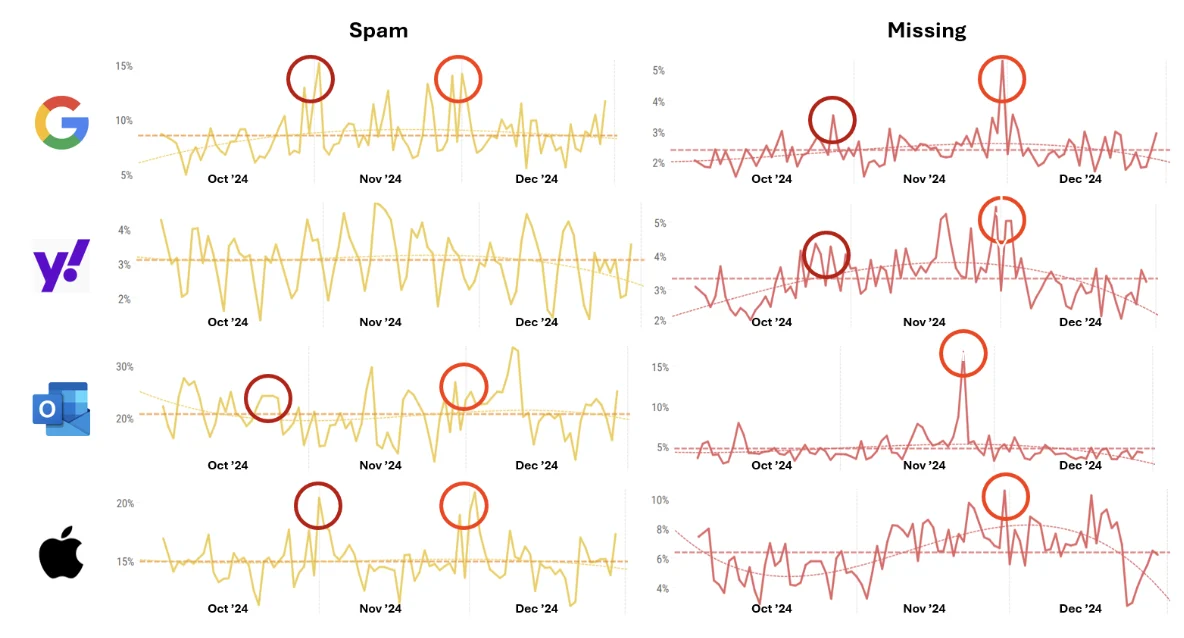
- Improved Deliverability and Sender Reputation: Industry reports consistently show a direct correlation between clear, compliant footers and higher email deliverability rates. When subscribers can easily find an unsubscribe link, they are far less likely to mark an email as spam. Data from email service providers indicates that campaigns with clearly visible unsubscribe options experience, on average, a 15-20% lower spam complaint rate compared to campaigns where the link is obscured or difficult to locate. Spam complaints are a significant negative signal to internet service providers (ISPs) and can quickly lead to blacklisting, severely impacting a sender’s ability to reach the inbox.
- Enhanced Subscriber Trust and Engagement: A transparent footer fosters trust. When a subscriber sees a legitimate physical address, a working unsubscribe link, and clear sender information, it signals professionalism and respect. This transparency can translate into higher engagement rates, as subscribers are more likely to open and interact with emails from trusted senders. Furthermore, offering a preference center in the footer (allowing subscribers to tailor the types of emails they receive) has been shown to reduce overall unsubscribe rates by up to 30%, as it provides an alternative to a complete opt-out.
- Brand Consistency and Professionalism: The footer is a consistent brand touchpoint. Using the same fonts, colors, and logo, along with consistent messaging, reinforces brand identity. This subtle reinforcement contributes to brand recall and loyalty. According to marketing analytics, brands maintaining consistent visual elements across all digital channels, including email footers, can see brand recognition increase by up to 20%.
- Mobile Accessibility: With over 60% of emails now opened on mobile devices (a significant increase from the 53% reported in 2014), optimizing the footer for mobile is non-negotiable. Text must be legible, and links must be large enough and spaced adequately for easy tapping. Poor mobile optimization in the footer can lead to frustration, accidental clicks, and a degraded user experience, potentially driving unsubscribes or spam reports.
Essential Elements: What’s Required for Compliance
While specific regulations vary by region, several elements are consistently non-negotiable for commercial email footers:
- A Valid Physical Postal Address: This is a cornerstone of anti-spam legislation. It provides accountability and a means for subscribers to contact the sender outside of digital channels. This can be the business’s current street address, a post office box registered with the U.S. Postal Service, or a private mailbox registered with a commercial mail receiving agency.
- A Clear and Conspicuous Unsubscribe Mechanism: Subscribers must have an easy way to opt out of future emails. This link must be functional for at least 30 days after the email is sent, and unsubscribe requests must be honored within 10 business days. Hiding this link, making it tiny, or requiring multiple steps to unsubscribe are common pitfalls that lead to compliance violations and subscriber frustration. The trend is towards single-click unsubscribe functionality, making it as effortless as possible for the user.
- Identification of the Sender: The email must clearly indicate who is sending the message. This can be the business name, brand name, or a clear representation thereof.
- Statement of Consent (GDPR/CASL specific): For regions like the EU and Canada, reminding subscribers why they are receiving the email (e.g., "You are receiving this email because you subscribed to our newsletter…") helps reinforce consent and reduces the likelihood of spam complaints from recipients who may have forgotten signing up.
A quick check for any marketer should be: "If I removed everything from my footer except the physical address and the unsubscribe link, would I still be compliant?" If the answer is no, then essential elements are missing, and immediate action is required.
Beyond Compliance: Strategic Opportunities for Engagement
Once the mandatory legal requirements are met, the footer transforms into a valuable strategic asset. Marketers can leverage this space to enhance subscriber experience and deepen brand connection:
- Preference Center Link: Instead of a full unsubscribe, offer subscribers the option to manage their email preferences. This allows them to choose the types of content they wish to receive, the frequency, or even pause subscriptions temporarily. This empowers users and often prevents a complete opt-out.
- Social Media Links: Provide direct links to your brand’s social media profiles. This encourages cross-platform engagement, allows subscribers to connect with your brand on their preferred channels, and expands your social footprint.
- Privacy Policy Link: A link to your company’s privacy policy demonstrates transparency and reinforces your commitment to data protection, especially crucial under regulations like GDPR and CCPA.
- "Forward to a Friend" Option: This simple link encourages organic reach and allows satisfied subscribers to easily share your content with their network, acting as a powerful referral tool.
- Contact Us/Customer Support: Beyond the mandatory physical address, providing a direct link to a contact page or support email can improve customer service and satisfaction.
- Company Logo: Including a small, consistent logo reinforces brand identity and visual recognition, especially in a minimalist footer.
- Copyright Information and Terms of Service: Standard legal disclaimers that contribute to a professional appearance.
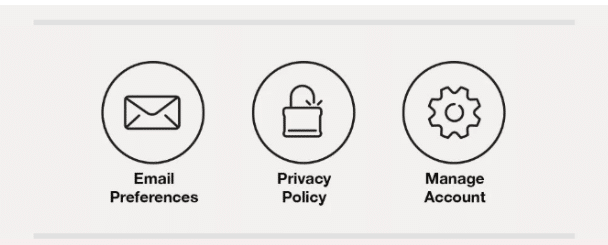
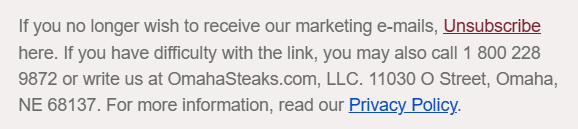
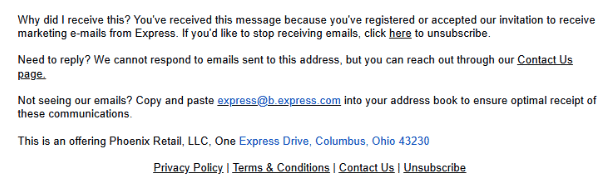
Examples from leading brands demonstrate effective implementation. Some, like Omaha Steaks, integrate large, tappable buttons for key actions (e.g., "Update Preferences," "View Online"), improving accessibility and user experience, even while maintaining a traditional unsubscribe link. Other brands proactively remind subscribers of their consent basis, stating, "You are receiving this message because you registered or accepted our invitation to receive marketing messages," which significantly reduces instances of emails being marked as spam due to forgotten opt-ins.
Best Practices for an Optimized Email Footer
To truly harness the potential of the email footer, adherence to strategic best practices is essential:
- Keep it Clean and Concise: A cluttered footer with a dozen links and excessive disclaimers is overwhelming and difficult to navigate, especially on mobile. Prioritize required elements and add only a few high-value extras that genuinely benefit the subscriber or brand. The goal is clarity and ease of use.
- Never Bury the Unsubscribe Link: Attempting to hide the unsubscribe link is a counterproductive tactic. It frustrates subscribers, often leading them to mark the email as spam instead of opting out. Spam complaints are far more detrimental to sender reputation and deliverability than a clean unsubscribe. Industry experts and compliance bodies universally condemn this practice, emphasizing that an easy exit improves long-term sender health.
- Design for Mobile-First: With the majority of email opens occurring on smartphones, the footer must be responsive. Ensure text is large enough to read without zooming, and links are sufficiently spaced to prevent mis-taps. A usable mobile footer contributes significantly to a positive user experience.
- Maintain Consistency: Employ the same footer format, branding elements (fonts, colors, logo), and messaging across all email campaigns. This consistency fosters recognition, builds trust, and reinforces a professional brand image over time. Deviations can create confusion and erode trust.
- Regularly Test All Links: Broken unsubscribe links, dead social media icons, or outdated privacy policy links are common, yet entirely avoidable, mistakes. Implement a rigorous testing protocol to check every footer link before each send, particularly after template updates or platform migrations. A non-functional unsubscribe link is a compliance violation.
- Periodically Review and Update: The digital landscape is dynamic. Regulations evolve, business contact information may change, and social media channels may be added or deprecated. Conduct a comprehensive review of your email footer at least once a year, or whenever significant company or regulatory changes occur, to ensure all information is accurate and compliant. This proactive approach prevents outdated information from becoming a liability.
Statements from Industry Experts:
"Email marketing experts consistently emphasize that the footer is not merely a legal formality but a crucial touchpoint for nurturing subscriber relationships," states a spokesperson from a leading email marketing platform. "Ignoring it is akin to leaving the back door open for compliance issues and brand erosion."
A compliance officer from a global data protection agency adds, "Companies failing to adhere to evolving international email regulations risk substantial fines and irreparable damage to their brand’s trustworthiness. The footer is your first line of defense."
"According to industry analysts, a well-optimized footer, especially one featuring an easily accessible preference center, can significantly reduce spam complaints and improve overall email deliverability rates by empowering subscribers rather than frustrating them," comments a senior data scientist specializing in email analytics.
The Broader Impact and Implications
The diligent management of email footers carries profound implications across the entire email marketing ecosystem. For brands, it means enhanced reputation, improved deliverability, higher subscriber engagement, and significantly reduced legal risks. For subscribers, it translates to a better user experience, greater control over their inbox content, and a higher degree of trust in the senders they engage with. For the broader email ecosystem, it contributes to a healthier environment with less spam and more legitimate, valuable communication.
In an era where data privacy is paramount and consumer trust is a valuable currency, the email footer stands as a testament to a brand’s commitment to transparency, legality, and subscriber respect. It might be the smallest section of an email, but its responsibilities are outsized. By treating it with the same intentionality and strategic thought as the rest of the campaign, marketers can transform a potential liability into a powerful asset that consistently delivers compliance, builds trust, and reinforces brand identity. Don’t let a footer misstep jeopardize your sender reputation or marketing efforts. Leveraging advanced email intelligence platforms can further ensure every send is compliant, deliverable, and perfectly on-brand, automatically mitigating risks and boosting performance in less time.
Originally published on August 26, 2026

 Sagoh