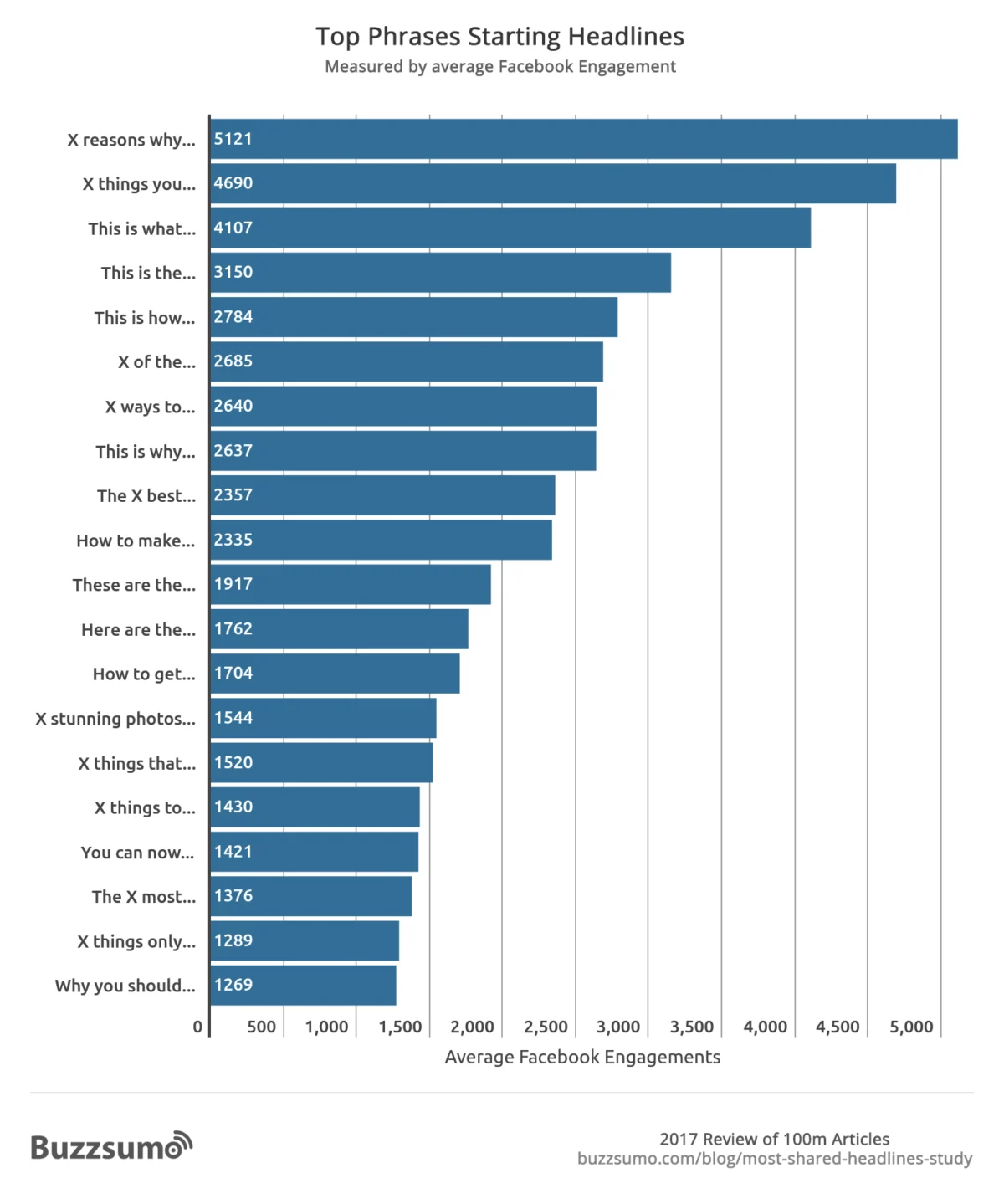
A comprehensive analysis by BuzzSumo, encompassing 100 million article headlines published between 2019 and 2020, has unveiled significant shifts in audience engagement patterns on Facebook and Twitter since a similar study conducted in 2017. The research, which also incorporated insights from leading marketing experts, provides a crucial roadmap for content creators navigating the complex, algorithm-driven landscape of modern social media. Far from being a mere article title, a headline serves as a critical gateway, acting as a subject line, a tweet, or a video title, designed to capture attention and foster connection. In an era of content saturation and increasingly discerning audiences, understanding the nuances of effective headline writing is paramount.
Methodology and Scope of the Research
Building upon its foundational 2017 study, BuzzSumo meticulously examined 100 million headlines from its extensive index to identify trends in engagement on Facebook and Twitter. The analysis focused on "trigrams" – three-word phrases – deemed to be satisfying, memorable, and impactful, influencing centuries of communication from poetry to advertising. To prevent results from being skewed by exceptionally popular sites or outliers, the methodology included stringent data cleaning protocols. For instance, only one headline trigram/phrase per domain was included in the analysis, and the three most shared examples of each trigram were removed to mitigate the impact of extreme outliers. Engagement was primarily measured by average median shares. This updated research aims to provide publishers and content creators with actionable insights into which headline types resonate most effectively across major social platforms today.
The Evolving Landscape of Headline Effectiveness
The digital content ecosystem has undergone profound transformations in recent years, driven by evolving platform algorithms, heightened competition, and a more sophisticated audience. BuzzSumo’s 2019-2020 study highlights several key areas where headline performance has shifted dramatically compared to 2017.
Optimal Headline Length: Shorter and More Specific
Contrary to some outdated advice advocating for extremely brief headlines, the latest research indicates a sweet spot for engagement. The ideal headline length on Facebook and Twitter was found to be 11 words and 65 characters. This represents a notable reduction from the 2017 optimum of 15 words and 95 characters. This shortening suggests a growing preference for "speed to insight" among users, who are increasingly overwhelmed by the sheer volume of online content. With a 64% increase in online content published since 2016, audiences demand conciseness and clarity, favoring headlines that are specific and reveal enough detail to entice a click without being overly verbose.
The Enduring Power of Numbers
Numbers continue to be a powerful tool in headline writing, with the number 10 consistently reigning as the "magic number" for driving engagement. Beyond this, single-digit numbers (3 through 9) also performed exceptionally well, dominating the top seven positions for most-shared headlines on Facebook and Twitter. Interestingly, the study found no strong preference for odd or even numbers within the top 20. However, larger double-digit numbers like 15 and 20, which were somewhat popular in 2017, appear to have fallen out of favor. This reinforces the trend towards quicker information consumption; longer lists and larger numbers seem less appealing to share, aligning with the overall shift to snappier headlines.
A Tale of Two Eras: Headline Trends from 2017 to 2020
The most striking revelation of the updated study is the radical transformation in effective headline phrases over just a few years. On Facebook, there was a 100% difference between the top 20 headline phrases in 2017 and 2020, while Twitter saw only two phrases remain consistent. This dramatic divergence can be attributed to the maturing social media algorithms and evolving audience preferences.
The Decline of Emotional, Clickbait, and Tribal Headlines
The 2017 study highlighted the dominance of explicitly emotional and sensational headlines on Facebook, featuring phrases like "will make you," "melt your heart," and "shocked to see." Quizzes ("can we guess") and tribal headlines ("X things only [group] will understand") also performed strongly, appealing to inclusivity and identity.
However, the 2019-2020 analysis revealed a stark decline in these types of headlines. Phrases like "will make you" saw a massive drop in average shares, from 8,691 in 2017 to just 143,000 for the top headline in 2020 (compared to the top trigram’s 26,702 average shares). This shift is directly linked to Facebook’s algorithmic adjustments, which began demoting "clickbait" content in May 2017. The platform further refined its algorithms in January 2018 to prioritize "trustworthy news" and again in June 2020 to boost "original and authoritative news reporting." These changes effectively marginalized overly emotional, sensational, quiz-based, and tribal content in favor of more substantive and credible narratives.
The Rise of Instructional and Hyperbolic Language (Facebook 2019-2020)
In the wake of these algorithmic shifts, new headline categories have emerged as dominant on Facebook:
- Ranking: Phrases like "of the year" (e.g., "Person of the Year") topped the charts, generating discussion around awards and public votes. The top phrase "of the year" garnered an impressive 26,702 average shares.
- Newness: Headlines incorporating "in X years" (often as "for the first time in X years") resonated by highlighting rare or unique events, building intrigue and encouraging clicks. This category also saw high engagement for "for the first" and "the first time."
- Instructional: This category proved particularly successful. Phrases like "you need to," "need to know," "you should," and "how to" instilled a sense of obligation or urgency, often leveraging FOMO (Fear Of Missing Out). These headlines promise valuable, concise information, directly appealing to users seeking practical guidance or critical updates.
- Hyperbole: Exaggerated statements using superlatives ("one of the most," "of the best," "of all time") continued to drive engagement, though with a nuance. Unlike the raw emotional appeal of 2017, current hyperbolic headlines often reference "exceptional content," suggesting a more refined form of exaggeration.
- Curiosity and Guidance: These themes, often in the form of listicles ("X reasons why") or direct questions ("what is the"), aim to reveal, explain, or analyze, indicating a user desire to learn and gain insights.
Twitter’s Distinct Preferences: Research, Analysis, and Immediacy
While some overlap exists, Twitter audiences exhibit distinct preferences. The phrase "future of" was the most engaging trigram, indicating a strong appetite for forward-looking analysis and predictions. Similarly, headlines starting with "study" and "report" performed exceptionally well, underscoring Twitter’s role as a platform for sharing research and data-driven insights.
Twitter audiences also showed a strong inclination for immediacy and reactivity, with a significant number of top-performing ending phrases related to dates and current developments (e.g., "2020"). This suggests users turn to Twitter for real-time information and breaking news. However, the study revealed a significant trend: Twitter shares dropped by 14% from 2017 to 2020, despite monthly active users remaining largely stable. This could imply a dilution of average shares due to a more varied headline landscape or a shift in how users engage with content on the platform. Intriguingly, the most shared headline phrase on Facebook had 590 times more average shares than the top phrase on Twitter, highlighting a fundamental difference in content virality between the two platforms.
Publisher Shifts and Algorithmic Influence
The publisher landscape has also transformed dramatically. On Twitter, only two of the top 10 domains from 2017 remained in the top 10 for 2019-2020. Similarly, on Facebook, major news organizations like cnn.com, dailymail.co.uk, nbcnews.com, washingtonpost.com, cbsnews.com, and time.com have risen to prominence. This shift directly reflects Facebook’s deliberate move away from clickbait and its prioritization of "trustworthy" and "authoritative" news sources, as articulated in its algorithm updates from 2018 and 2020. For publishers, this means that content quality and journalistic integrity are increasingly rewarded by platform algorithms, leading to greater visibility for reputable sources.
Cross-Platform Commonalities and Strategic Implications
Despite the observed divergences, the study also identified a notable increase in homogeneity between Facebook and Twitter headline phrases. In 2017, only one phrase overlapped between the top 20 headlines on both platforms; by 2019-2020, eight of the top 20 phrases were common to both. Furthermore, 10 phrases (25% of the overall sample) that started headlines crossed over. These "crossover" phrases, often instructional or curiosity-driven, suggest a core set of engagement drivers that transcend specific platform dynamics, enabling content creators to craft headlines with broader appeal.
However, the vast difference in average shares between platforms underscores the importance of tailoring content distribution strategies. While a shared headline can work, testing and adapting headlines for each platform remains a best practice.
Expert Commentary and Strategic Imperatives
Marketing experts widely echoed the study’s findings, emphasizing the critical need for content creators to adapt. Heidi Cohen, Chief Marketing Officer at Actionable Marketing Guide, noted that the research reflects three key customer behavior changes due to the pandemic: an increased need for timely, relevant information; a greater desire for guidance and instruction; and a search for community and connection. She advises marketers to focus on "core marketing basics" and to continually understand evolving customer needs.
Rand Fishkin, founder of SparkToro, highlighted that the study "confirms some [assumptions], mythbusts others, and illuminates the nuance of what’s really working." Ross Simmonds, founder of Foundation, found it "fascinating to see that years after BuzzFeed shook up the journalism industry with ‘click friendly’ headlines that they’re now being adopted by the masses and even those who originally pushed back on the approach." He emphasized the success of instructional copy as an "amazing insight" that taps into the "human desire of not missing out on information."
Brian Dean of Backlinko pointed out the "huge shift" on Facebook from "BuzzFeed-style clickbait" to instructional headlines, indicating that "today’s Facebook users need to know that the content is going to teach them something new." Amanda Milligan, Marketing Director at Fractl, further supported this, linking the rise of instructional language to people’s "growing desire to hear and learn from experts," which inherently "demonstrates authority."
Practical Takeaways for Content Creators
The BuzzSumo study offers invaluable, data-backed guidance for crafting headlines that resonate in today’s dynamic digital landscape:
- Prioritize Clarity and Specificity: Aim for headlines that are around 11 words and 65 characters to cater to modern attention spans.
- Leverage Numbers Strategically: The number 10, followed by single digits (3-9), continues to drive high engagement. Use numbers to promise clear, actionable takeaways.
- Embrace Instructional Language (Especially for Facebook): Phrases like "you need to," "need to know," "how to," and "everything you need" tap into a desire for knowledge, guidance, and can evoke FOMO.
- Use Hyperbole Judiciously: Superlatives ("one of the most," "of the best") can still work, but ensure they reference genuinely exceptional content rather than pure sensationalism.
- Focus on Newness and Rankings: "Of the year" and "in X years" phrases appeal to intrigue and a desire for the latest, most significant developments.
- Tailor for Twitter’s Appetite: For Twitter, emphasize research, reports, analysis, and forward-looking content ("future of"). Be reactive and current.
- Understand Platform Algorithms: Recognize that Facebook prioritizes authoritative news and instructional content, while Twitter favors data and immediate insights.
- Test and Adapt: No single formula guarantees success. Continuously test different headline approaches across platforms to understand what resonates best with your specific audience.
- Beyond the Click: Remember that a truly effective headline doesn’t just get a click; it accurately represents valuable content that satisfies the reader’s expectation.
In conclusion, the digital realm demands a sophisticated approach to headline creation. The era of generic clickbait is waning, replaced by a preference for specific, instructional, and authoritative content. By understanding these evolving trends and the underlying psychology, content creators can craft headlines that not only capture attention but also build trust and drive meaningful engagement across social media platforms. The ongoing evolution of algorithms and audience behavior necessitates continuous adaptation and a data-driven strategy for sustained success.