rifanmuazin
The dynamic world of e-commerce marketing is witnessing a significant shift, as a growing number of online retailers are actively exploring alternatives to established platforms like Klaviyo. While Klaviyo has long been lauded for its sophisticated segmentation and automation capabilities, particularly suited for advanced customer journeys, businesses are increasingly scrutinizing its value proposition in 2026. This comprehensive analysis delves into the reasons behind this migration trend, examines the leading contenders vying for market share, and provides a strategic guide for e-commerce brands seeking the optimal marketing automation solution.
The Genesis of the Shift: Klaviyo’s Dominance and Emerging Challenges
Klaviyo ascended to prominence by offering robust tools that empowered e-commerce brands to create highly personalized, data-driven customer experiences. Its strengths lie in its deep integration with e-commerce platforms like Shopify and WooCommerce, allowing for granular data collection, intricate customer segmentation, and the orchestration of complex, revenue-generating email and SMS flows. For many years, it was considered the gold standard for mid-to-large e-commerce enterprises aiming to maximize customer lifetime value through advanced retention marketing.
However, the market landscape is continuously evolving, and with it, the expectations and constraints of e-commerce businesses. A notable turning point occurred in February 2025, when Klaviyo implemented a significant change in its pricing structure. Previously, businesses could manage their costs by maintaining lower tiers even with a substantial number of inactive profiles. The revised policy mandated that plans must now directly correspond to the total number of active profiles, irrespective of engagement levels. This adjustment immediately translated into higher operational costs for many businesses, particularly smaller to medium-sized enterprises (SMBs) with extensive but partially unengaged contact lists.
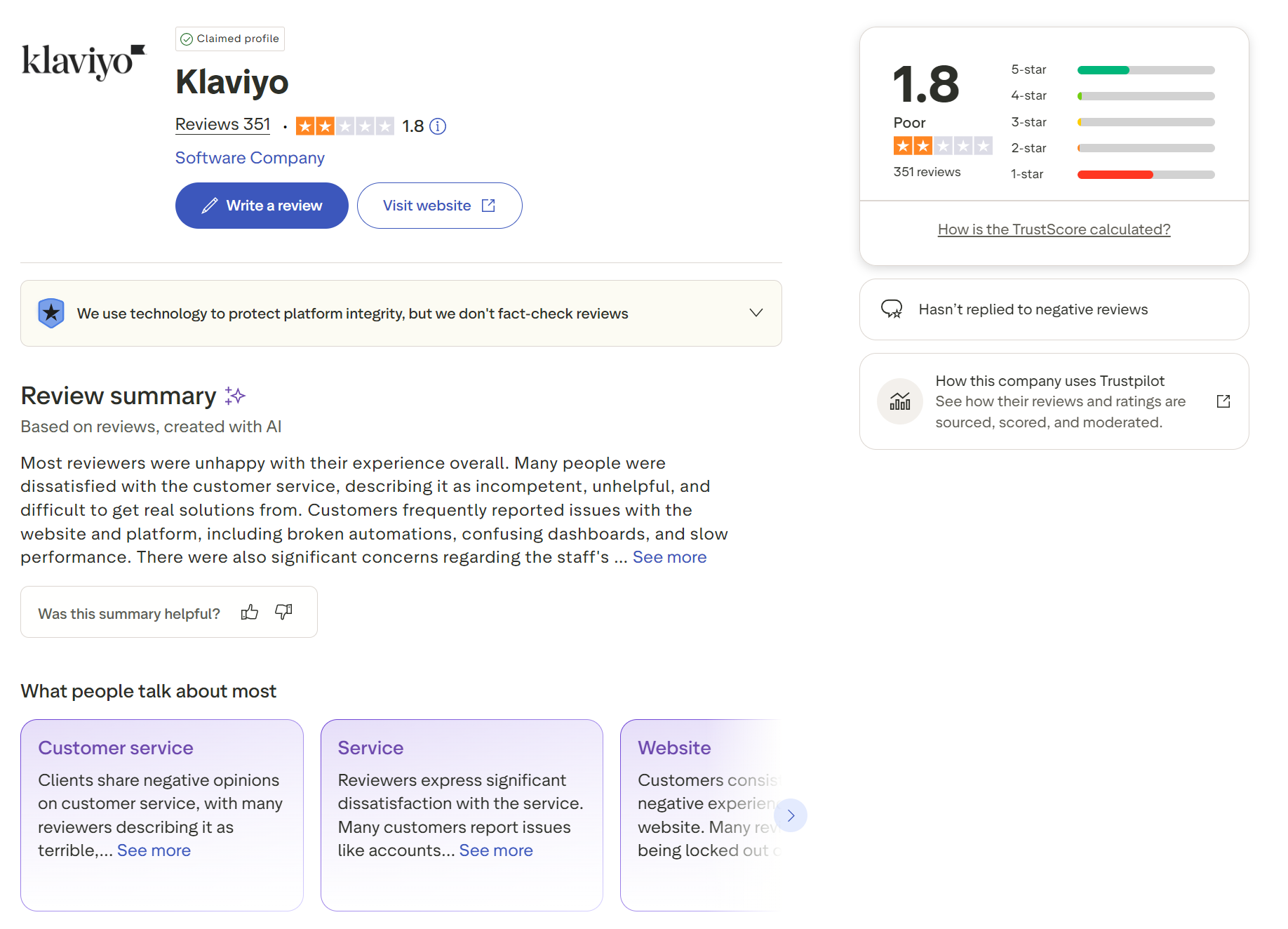
This shift was met with considerable feedback across various review platforms. Reports from G2 and Trustpilot, prominent business software review sites, consistently highlight user complaints regarding Klaviyo’s increased pricing and perceived diminished value for money. On Trustpilot, Klaviyo’s overall rating of 1.8/5, significantly lower than many of its competitors, underscores a broader dissatisfaction among a segment of its user base, with frequent mentions of "poor customer experience" and "changing pricing policies." Similarly, Capterra reviews echo sentiments describing Klaviyo as "powerful and advanced" but "VERY expensive," especially for businesses operating on tighter budgets.
Beyond pricing, other operational challenges have contributed to the search for alternatives. The platform’s comprehensive feature set, while powerful, often presents a steep learning curve for lean e-commerce teams, typically comprising 2-10 individuals. Review summaries on G2 frequently cite "steep learning curve" and "challenging initial setup" as significant hurdles. This complexity can slow down implementation and limit smaller teams’ ability to leverage the platform’s full potential without extensive training or dedicated retention marketing specialists. Furthermore, some users have expressed frustration with support response times, with reports of "lengthy response times" and even instances of "lost revenue and wasted hours" due to unresolved issues.
Another critical limitation for globally-minded e-commerce brands is Klaviyo’s restricted SMS coverage. While supporting over 19 countries, this geographical constraint can hinder businesses aiming for broader international reach in their mobile marketing strategies. In contrast, several competitors offer global SMS capabilities, providing a more versatile solution for expanding brands. These combined factors—cost, complexity, support, and regional limitations—have collectively fueled the growing interest in exploring alternative marketing automation platforms.

A Deep Dive into Leading Klaviyo Alternatives for 2026
The market has responded with a diverse array of platforms, each offering distinct advantages tailored to various business needs and scales. This section provides an in-depth comparative analysis of ten prominent Klaviyo alternatives, evaluating their use cases, features, pricing, and overall suitability.
1. Omnisend: The E-commerce Champion for Value and Multichannel
G2 Rating: 4.6/5 (based on 1,170+ reviews as of April 2026)
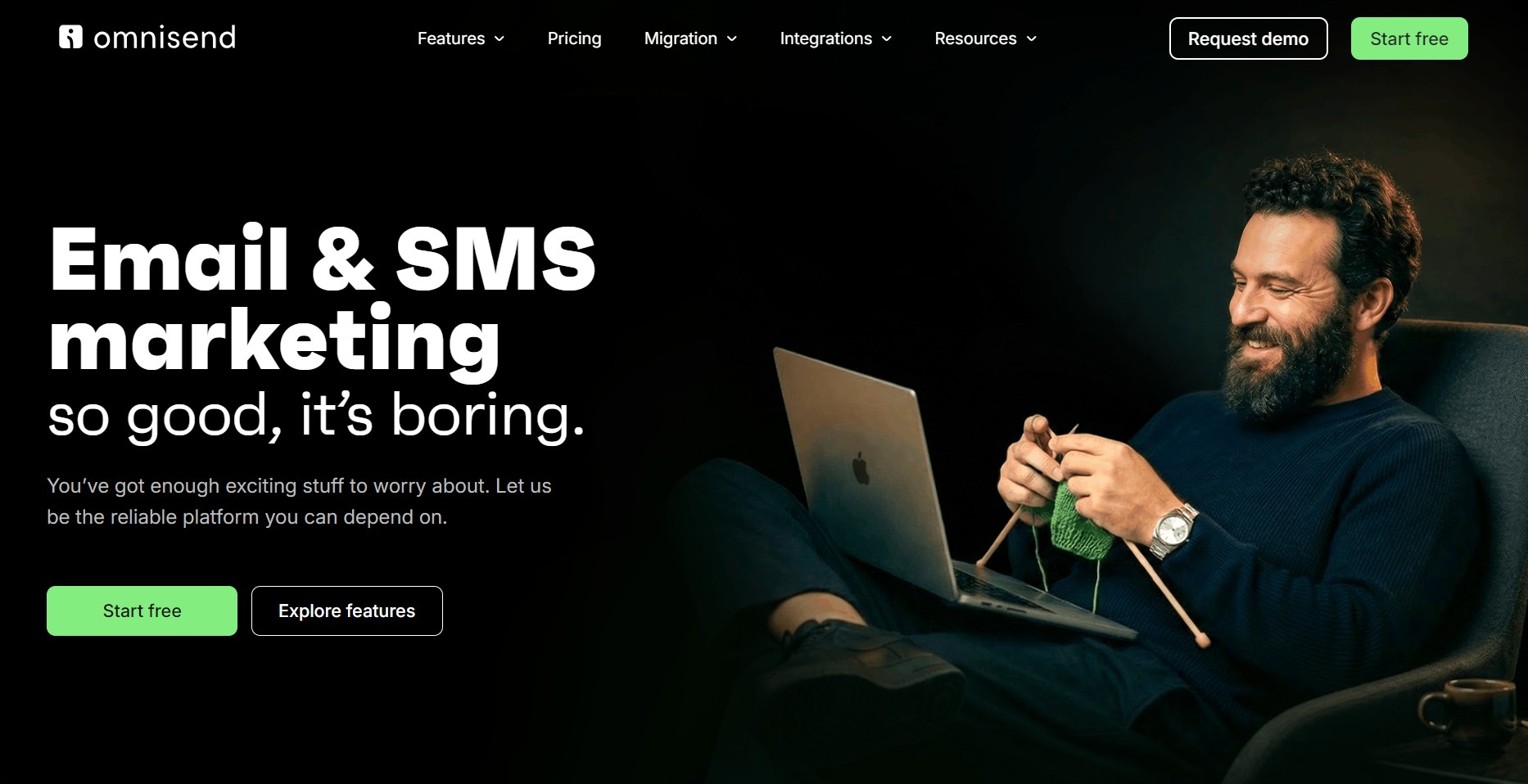
Omnisend emerges as a formidable competitor, positioned as the most direct and cost-effective alternative for small to mid-sized e-commerce brands, particularly those operating on Shopify, WooCommerce, and BigCommerce. Its core strength lies in providing a comprehensive multichannel marketing platform (email, SMS, and web push notifications) within a single, user-friendly interface. Omnisend’s pricing plans are notably 15-30% lower than Klaviyo’s at comparable contact tiers, offering significant cost savings without compromising on robust e-commerce features.
Key attributes include:
- Ecommerce-Native Workflows: Designed from the ground up for online stores, Omnisend offers seamless integration with major e-commerce platforms, facilitating quick setup of essential automations like welcome series, abandoned cart recovery, and browse abandonment flows.
- Multichannel Integration: Provides integrated email, SMS, and web push capabilities across all plans, enabling cohesive customer journeys. This contrasts with Klaviyo, which often restricts advanced multichannel features to higher-tier plans.
- Ease of Use & Low Learning Curve: Reviewers consistently praise Omnisend’s intuitive dashboard and customizable templates, reducing the setup burden often associated with more complex platforms.
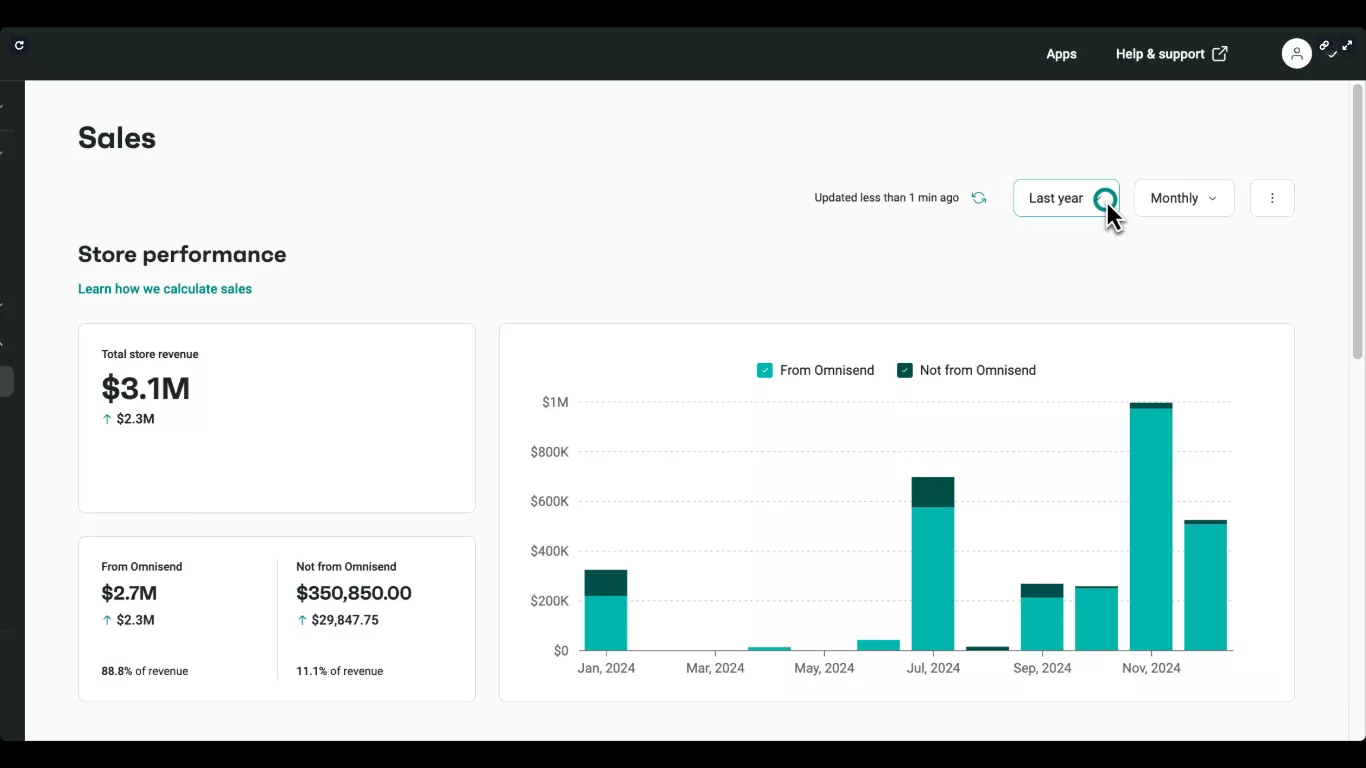
- Strong Performance: Success stories, such as Vagari Bags achieving 40-50% email open rates and a £121.38 return for every £1 spent after switching from Klaviyo, underscore its effectiveness.
- Transparent Pricing: Offers a Free Forever plan with access to standard features, making it accessible for startups, and transparent pricing tiers scale predictably with contact lists.
2. ActiveCampaign: The CRM and Automation Powerhouse for Scaling Teams
G2 Rating: 4.4/5 (based on 14,640+ reviews as of April 2026)
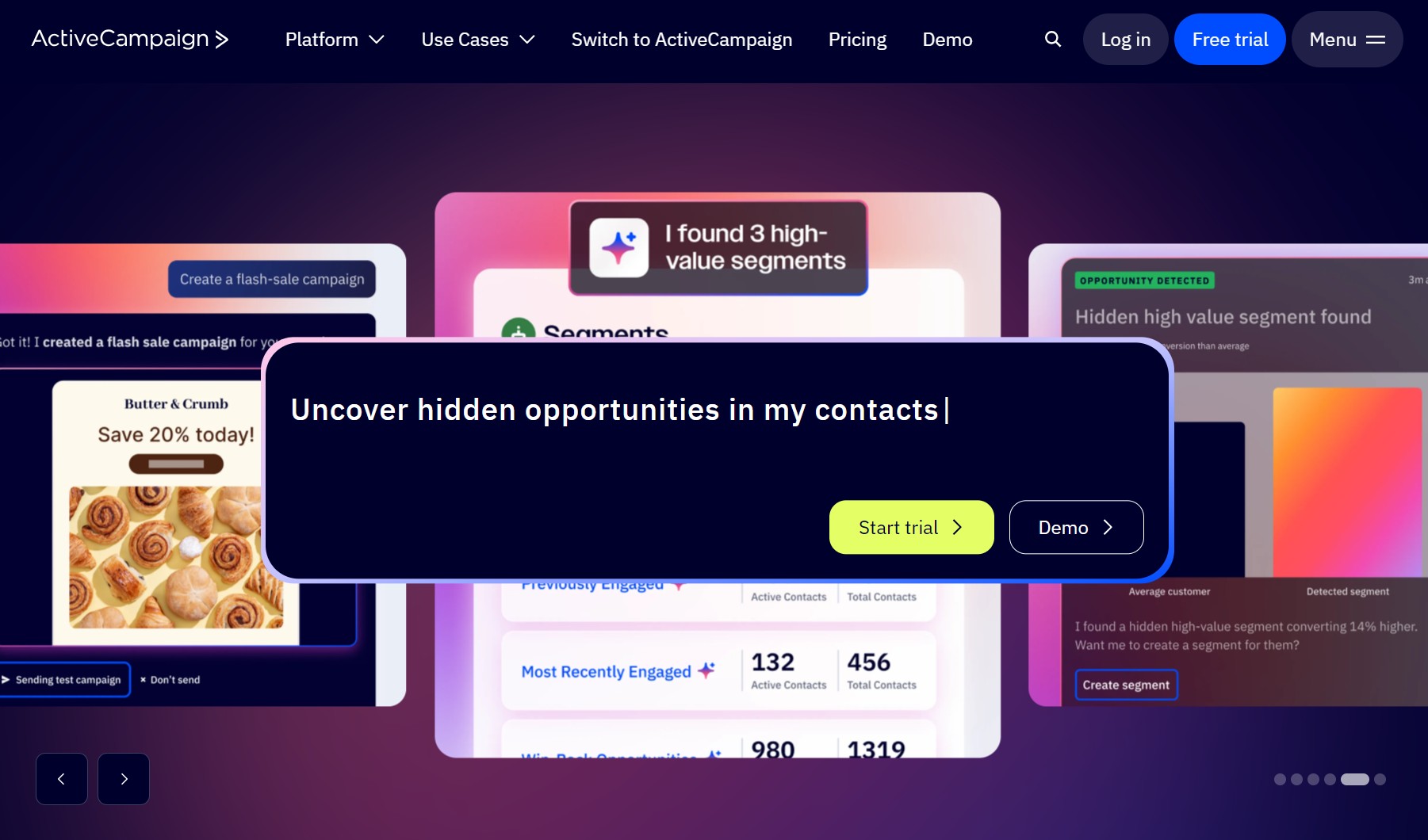
ActiveCampaign stands out for businesses requiring advanced automation capabilities that extend beyond standard e-commerce flows, integrating seamlessly with CRM and sales automation. It is particularly well-suited for enterprise teams scaling into complex lifecycle marketing, B2B scenarios, or those needing broader marketing orchestration.
Its distinguishing features include:
- Deep Automation & Branching Logic: Offers one of the most powerful automation builders, supporting intricate conditional logic, lead scoring, and multi-step customer journeys.
- Integrated CRM: Provides CRM functionalities within the same ecosystem, allowing businesses to unify sales and marketing efforts and leverage customer data more comprehensively.
- AI Tools: Includes various AI-powered tools to enhance efficiency and personalization.
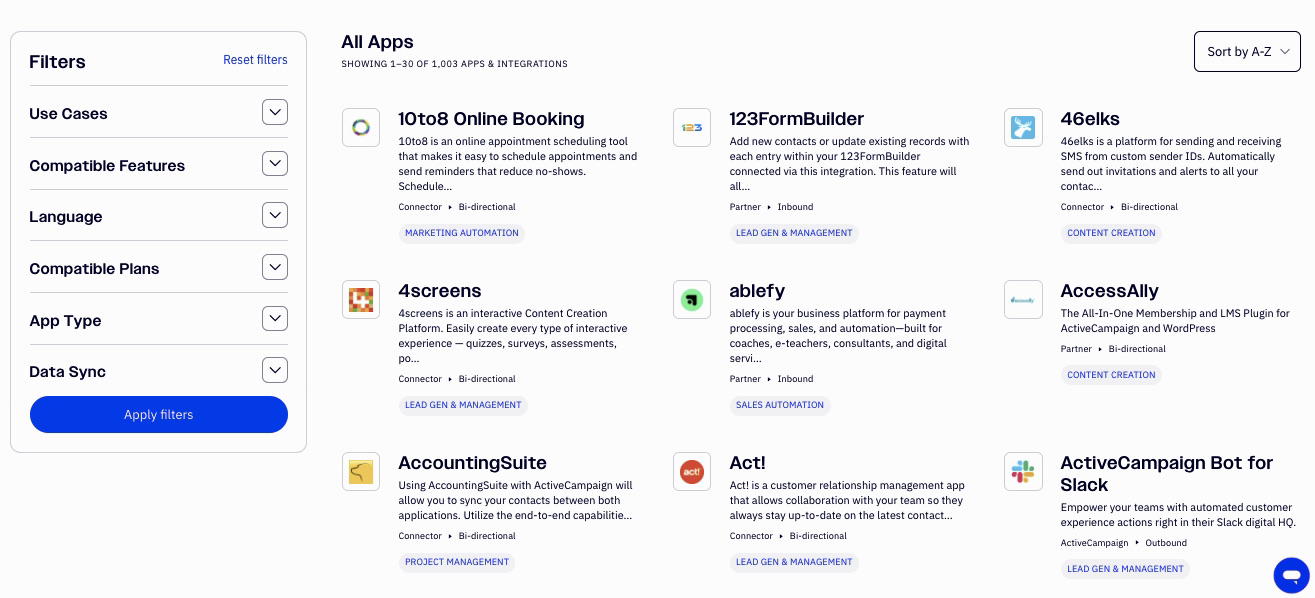
- Broad Integrations: A vast marketplace of integrations supports diverse business ecosystems.
While offering comparable depth to Klaviyo, ActiveCampaign generally presents a slightly lower learning curve and a more comprehensive suite for non-e-commerce specific marketing needs.
3. Drip: Tailored for Subscription Services and DTC Retention
G2 Rating: 4.4/5 (based on 470+ reviews as of April 2026)
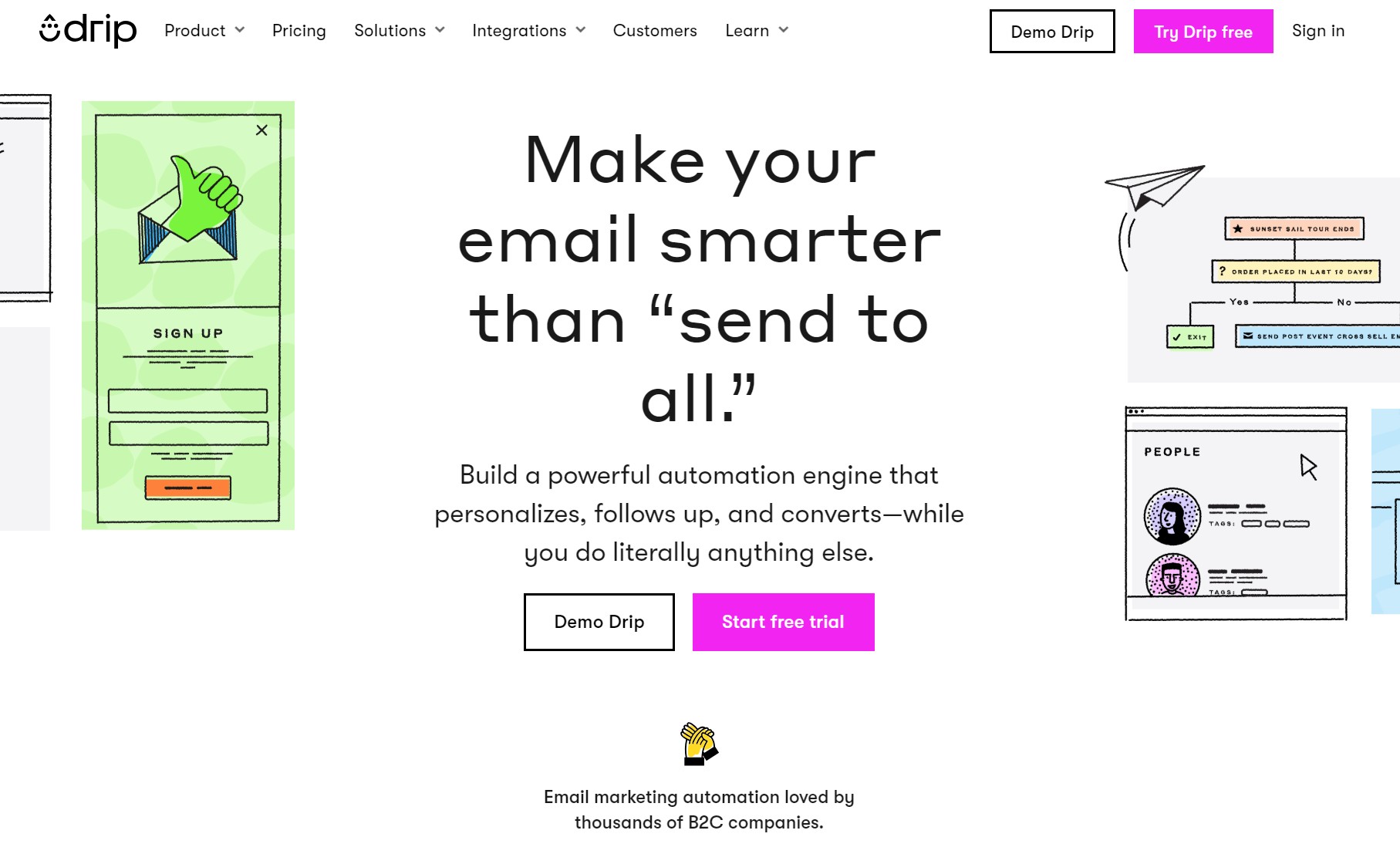
Drip is a strong Klaviyo alternative for subscription services and direct-to-consumer (DTC) brands focused on customer retention and lifecycle marketing. Its platform is designed to facilitate list growth, behavioral-based email marketing, and refinement of the customer experience through adaptive flows.
Key strengths include:

- Retention-Focused Automation: Excels in creating workflows that respond to customer behavior, ideal for managing subscriptions, churn prevention, and personalized re-engagement.
- High Deliverability: Known for maintaining excellent email deliverability rates.
- Ease of Learning: Similar to Omnisend, Drip offers an easier learning curve compared to Klaviyo, accelerating setup.
- Unlimited Email Sends: All tiers include unlimited email sends, appealing to businesses with high-volume campaign needs.
However, Drip comes with a higher entry price point ($39/month), which might be a consideration for very small startups.
4. Brevo (formerly Sendinblue): The All-in-One Marketing Suite with Send-Volume Pricing
G2 Rating: 4.5/5 (based on 2,530+ reviews as of April 2026)
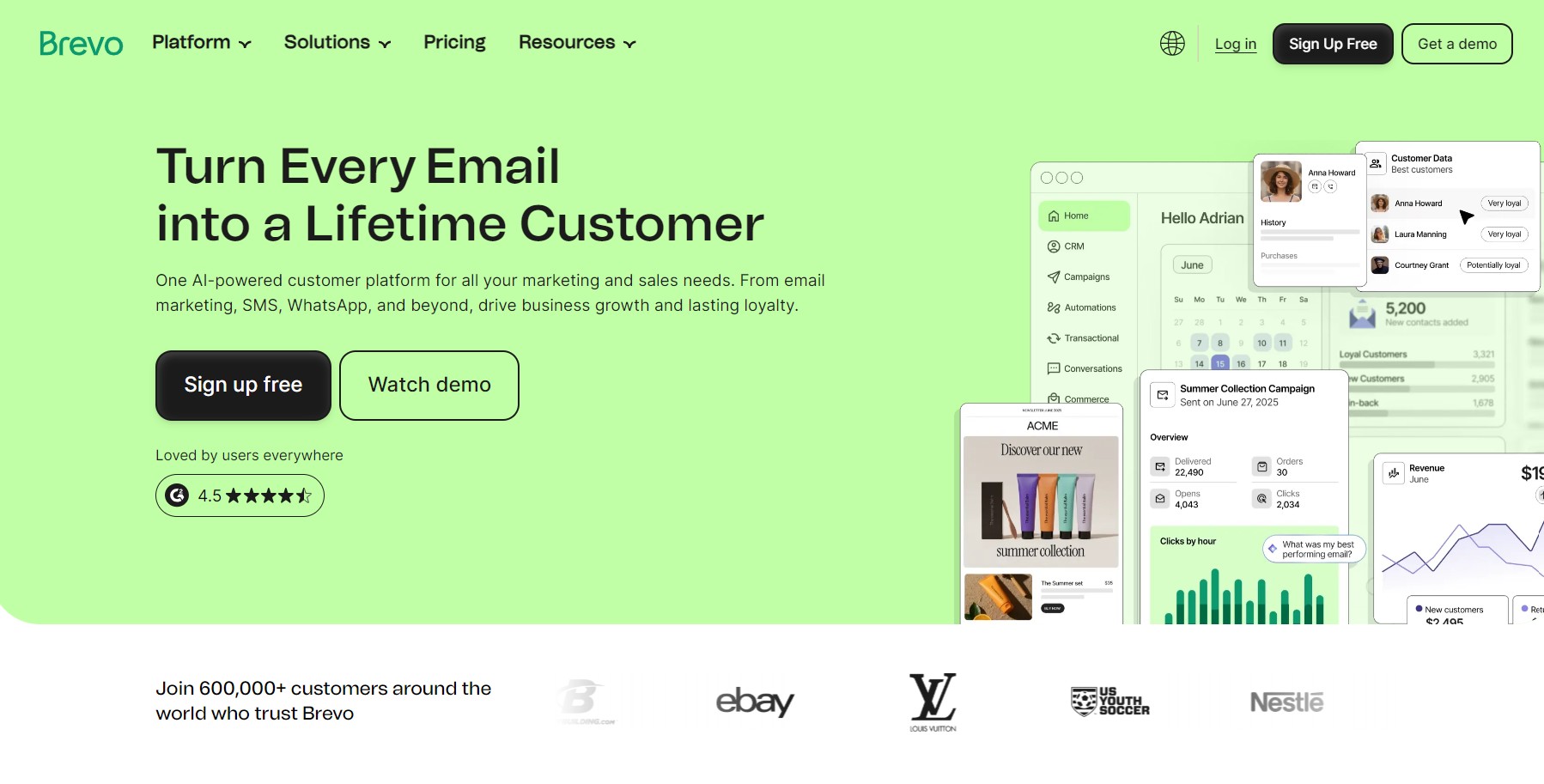
Brevo positions itself as an affordable all-in-one marketing and CRM suite, offering email, SMS, WhatsApp, transactional messaging, and a basic CRM. Its unique pricing model, based on email send volume rather than contact count, makes it an attractive option for businesses with large contact lists but moderate sending frequency.
Notable features:
- Comprehensive Suite: Integrates various communication channels and CRM functionalities, ideal for small to mid-sized businesses seeking a consolidated platform.
- Send-Volume Pricing: Offers a generous free plan allowing 300 emails/day and affordable paid plans based on sends, providing cost predictability.
- AI Features: Includes AI tools like the Aura chatbot.
- Shopify Integration: Holds a 4.8/5 rating on the Shopify App Store, indicating strong e-commerce compatibility.
While robust, e-commerce-first brands might need to evaluate its automation depth against more specialized platforms like Omnisend.
5. MailerLite: The Beginner-Friendly Option for Simplicity and Mass Sends
G2 Rating: 4.6/5 (based on 1,000+ reviews as of April 2026)
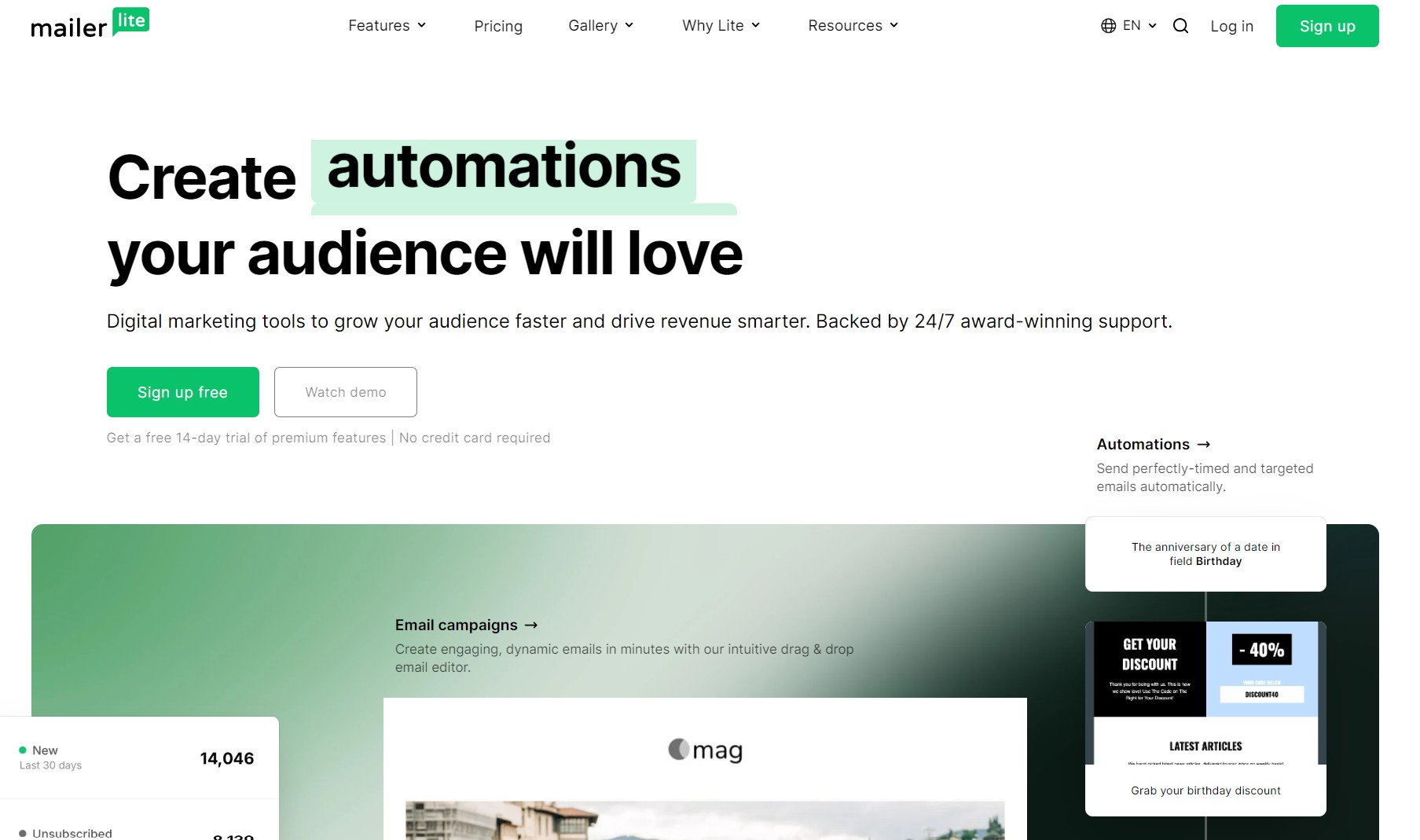
MailerLite is designed for simplicity, offering an accessible entry point into email marketing for beginners, creators, micro-businesses, and startups. It trades the advanced data and complexity of platforms like Klaviyo for ease of use and generous send limits.
Key benefits:
- User-Friendly Interface: Known for its intuitive drag-and-drop editor and straightforward automation builder.
- Generous Free Plan: Offers a free plan with up to 12,000 emails per month for 1,000 contacts, and unlimited emails in its Growing Business plan.
- Essential Marketing Tools: Provides core functionalities like email campaigns, landing pages, and forms without overwhelming users.
MailerLite is best for those prioritizing usability and value over highly granular e-commerce retention features.
6. Privy: Optimized for Small, Fast-Growing Shopify Stores
G2 Rating: 4.6/5 (based on 120+ reviews as of April 2026)
Privy is tailored specifically for small Shopify stores, aiming to be a singular tool for automating email and SMS campaigns to nurture customer journeys. Its strength lies in powerful list-building features and straightforward integrations.
Highlights:
- List Building Focus: Excels with features like pop-ups, banners, and spin-to-win wheels to capture leads effectively.
- Shopify Native App: Boasts a 4.5/5 rating on the Shopify App Store, indicating solid integration.
- Unlimited Sends: Useful for managing campaign volume without additional costs.
Privy is ideal for basic customer journeys but may lack the granular control and advanced segmentation offered by Klaviyo or Omnisend at scale.
7. Attentive: The SMS and RCS Marketing Specialist
G2 Rating: 4.5/5 (based on 1,370+ reviews as of April 2026)
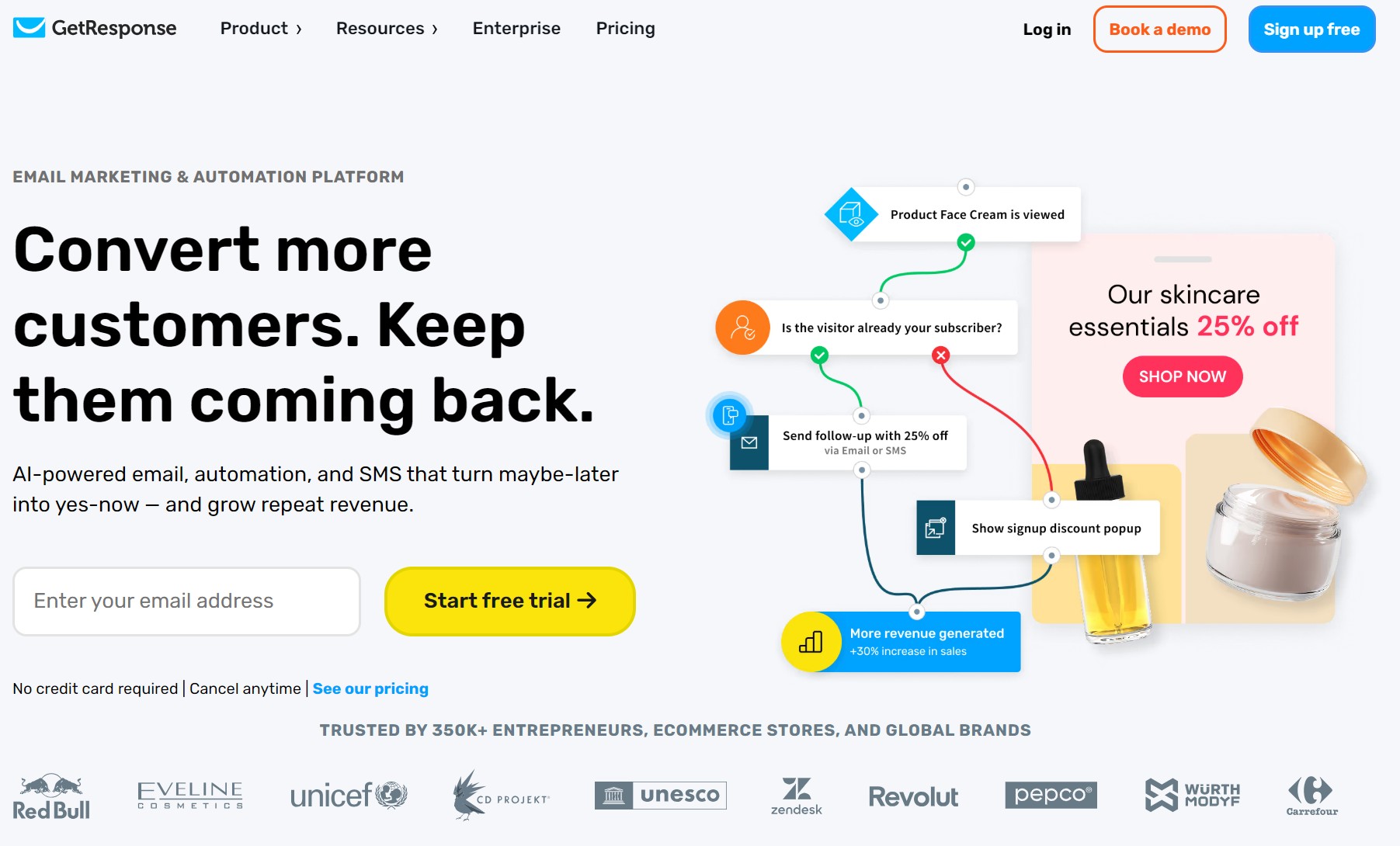
Attentive carves out a niche as a premium Klaviyo alternative for businesses with a mobile-first audience, specializing in SMS and RCS (Rich Communication Services) marketing. It handles both one-way campaigns and advanced two-way SMS communication, often leveraging AI-powered live agents.
Distinctive features:
- Advanced SMS/RCS: Offers sophisticated text message marketing, including interactive RCS messages and AI-driven conversational commerce.
- Mobile-First Approach: Positions email as a secondary channel, focusing heavily on text message engagement.
- Custom Pricing: Tailored solutions for mid-size to large businesses with specific budget allocations for mobile marketing.
Attentive is a strong contender for brands prioritizing deep mobile engagement but cannot compete with general email marketing depth.
8. GetResponse: For Content Creators, Webinars, and Lead Nurturing
G2 Rating: 4.3/5 (based on 1,110+ reviews as of April 2026)
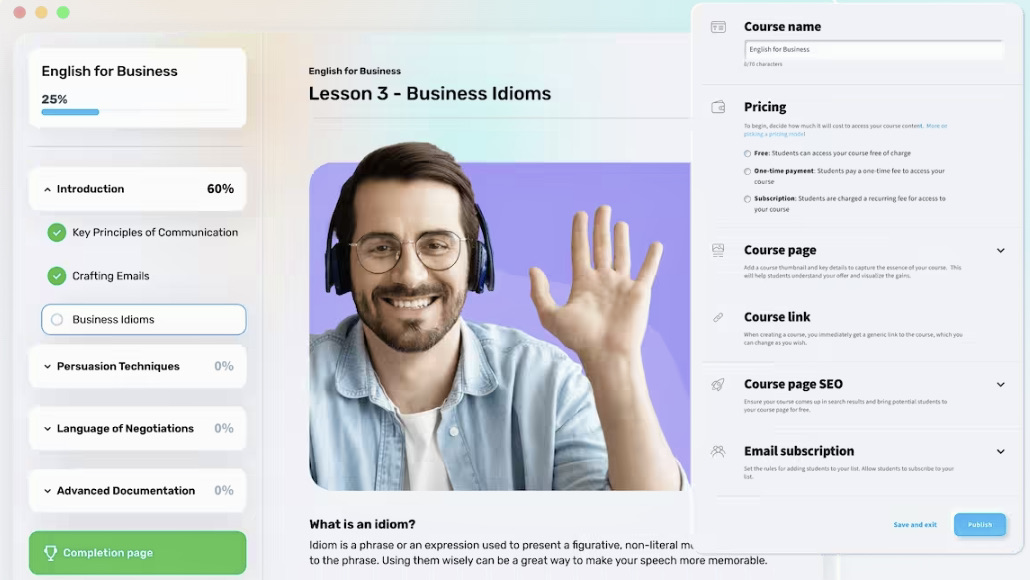
GetResponse differentiates itself by integrating webinars, paid newsletters, and course creation tools alongside email marketing. It is less of a direct e-commerce automation alternative and more suited for businesses with a content-driven or educational business model.
Core offerings:
- Webinar & Course Platform: Unique integration of webinar hosting and online course creation, enabling content monetization.
- Sales Funnel Builder: Tools for building comprehensive sales funnels, including landing pages and conversion tracking.
- Varied Plans: Caters to basic email campaigns, large marketing teams, and content creators with specialized plans.
GetResponse is ideal if content and paid courses are primary revenue channels, but its e-commerce flow depth is generally less sophisticated than Klaviyo or Omnisend.
9. Moosend: Budget-Friendly Automation with Unlimited Campaigns
G2 Rating: 4.7/5 (based on 730+ reviews as of April 2026)
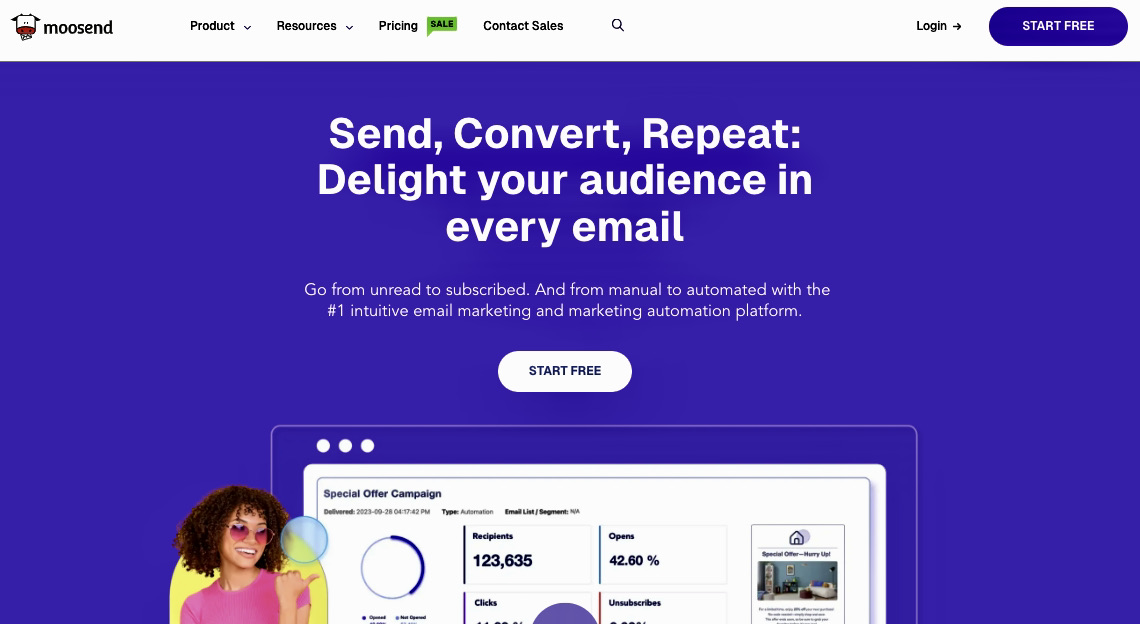
Moosend offers an anomaly in the market with an extremely generous entry-level Pro plan. For just $9/month, it provides unlimited email campaigns and sends to up to 500 contacts, significantly outstripping Klaviyo’s basic offerings in terms of send volume.
Highlights:
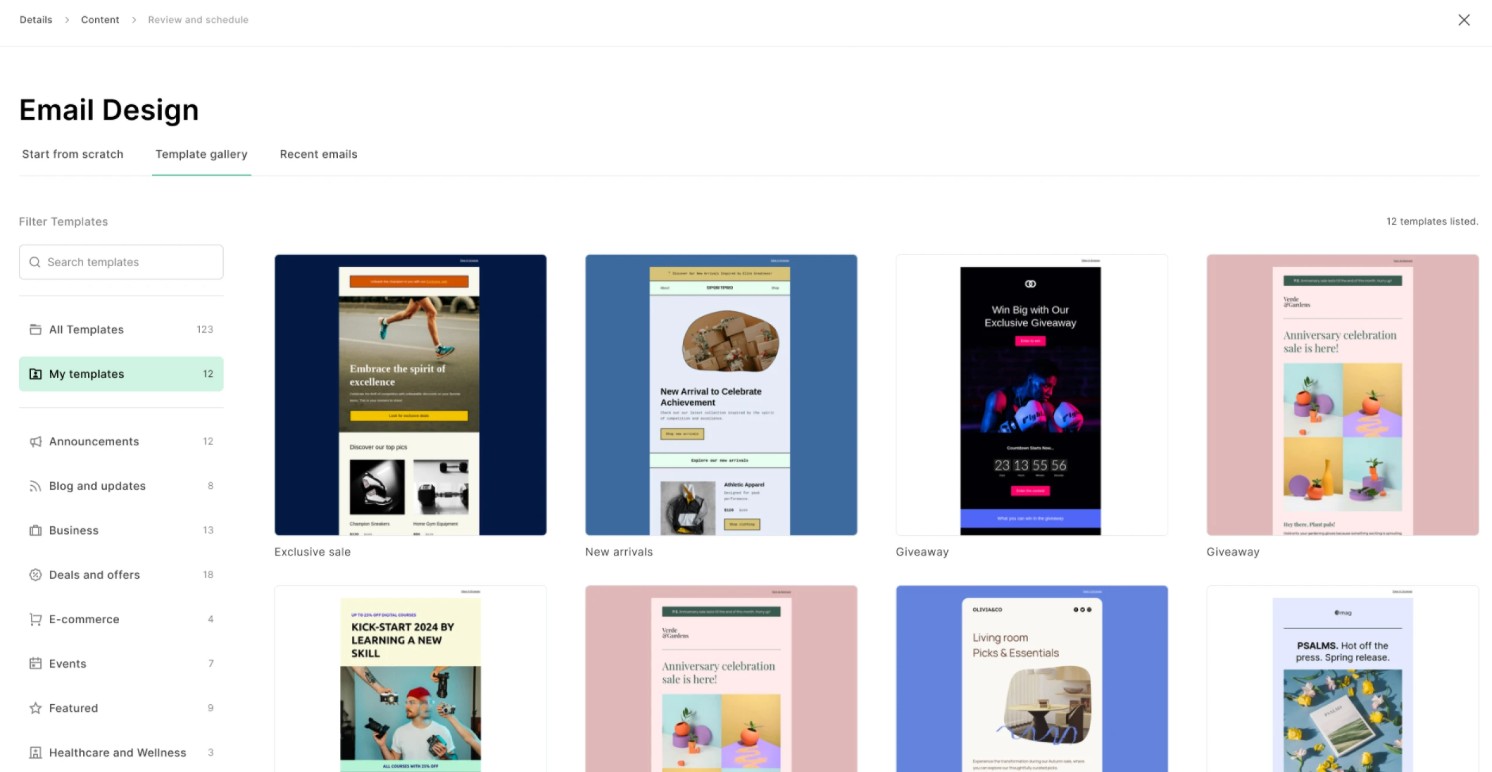
- Cost-Effective Unlimited Sends: Unbeatable value for high-volume email campaigns at a low price point.
- Easy Automation Workflows: Supports advanced automation sequences, making it suitable for both email-first teams and some e-commerce scenarios.
- High G2 Rating: Indicates strong user satisfaction for its price-to-feature ratio.
However, its Pro plan notably lacks transactional emails, custom reports, subscription forms, and landing pages, which might require additional tools or an upgrade to its undisclosed-price Moosend+ plan.
10. Mailchimp: The Accessible Starting Point for Small Businesses
G2 Rating: 4.4/5 (based on 5,300+ reviews as of April 2026)
Mailchimp remains a popular Klaviyo alternative for small businesses due to its familiarity, ease of learning, and comprehensive "jack-of-all-trades" approach. It offers a balance of email campaigns, basic flows, and additional marketing features like pop-ups and surveys.
Key advantages:
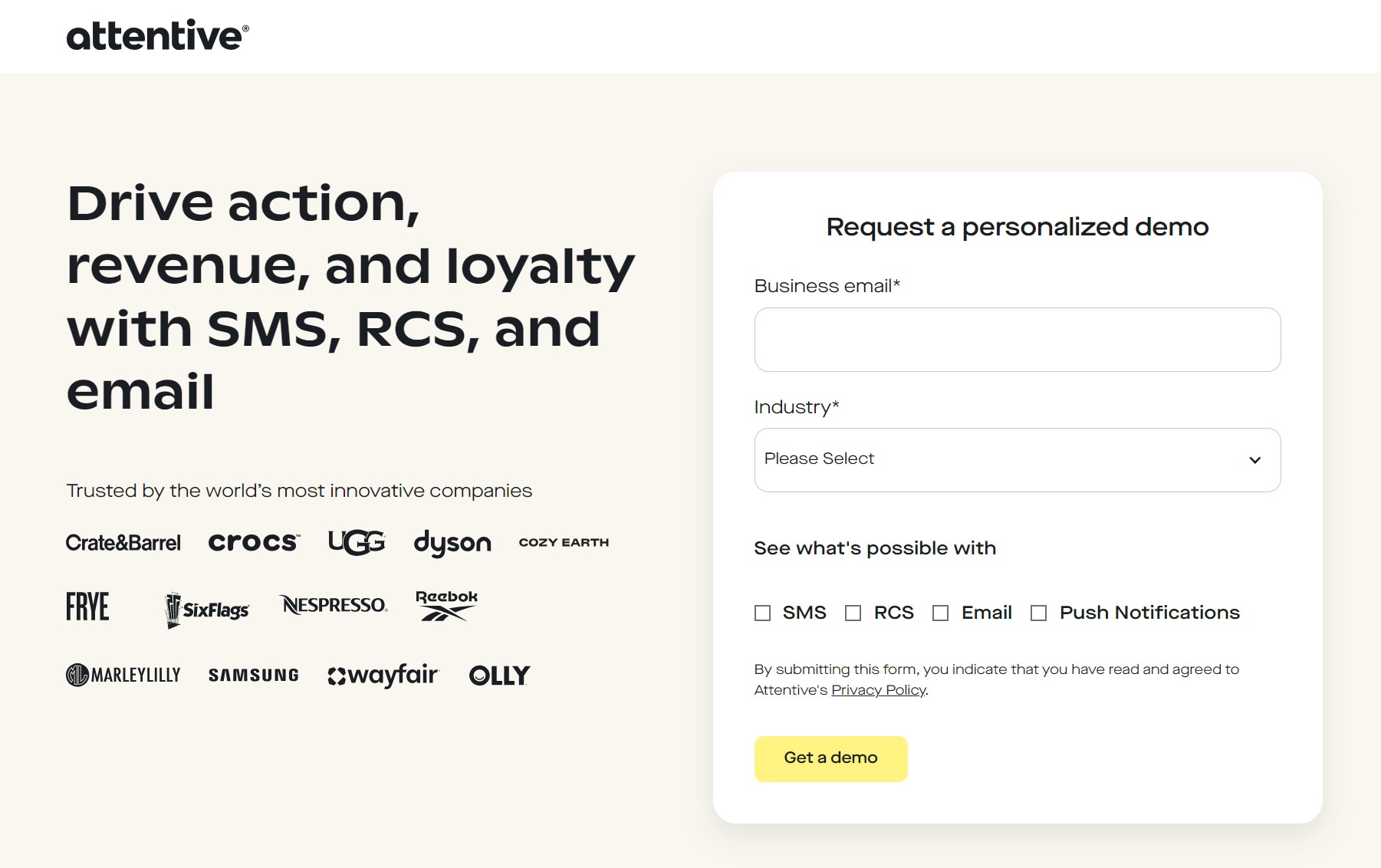
- User Familiarity: Widely recognized and often the first email marketing tool for many businesses.
- Generous Free Plan: Provides basic email marketing functionalities for up to 500 contacts, including pop-ups and surveys.
- Multifaceted Marketing: Offers email, basic SMS integration, and transactional email (with separate pricing).
Mailchimp is an excellent starting point for small businesses with straightforward campaign needs but falls short on the complex customer journeys and deep segmentation required by growing e-commerce stores.
Pricing Analysis: Strategic Implications for E-commerce
The comparative pricing table reveals clear differences in cost structures among these platforms. Klaviyo’s profile-based pricing, particularly after the February 2025 update, can quickly escalate costs as contact lists grow, even if many profiles are inactive. This model significantly impacts profitability for businesses with large, dynamic databases.
| Platform/Contacts | Up to 250 | 500 | 1,000 | 2,500 | 5,000 | 10,000 | 25,000 |
|---|---|---|---|---|---|---|---|
| Klaviyo | Free | $20 | $30 | $60 | $100 | $150 | $400 |
| Omnisend | Free | $16 | $20 | $44 | $81 | $132 | $282 |
| Privy | $30 | $30 | $30 | $60 | $90 | $165 | $390 |
| Drip | $39 | $39 | $39 | $39 | $89 | $154 | $369 |
| ActiveCampaign | $15 | $15 | $15 | $39 | $79 | $149 | $391 |
| Brevo | Free | $9 | $9 | $9 | $9 | $17 | $39 |
| MailerLite | Free | Free | $15 | $25 | $39 | $73 | $159 |
| Attentive | Custom | Custom | Custom | Custom | Custom | Custom | Custom |
| GetResponse | Free | Free | $19 | $29 | $54 | $79 | $174 |
| Moosend | $9 | $9 | $16 | $32 | $48 | $88 | $160 |
| Mailchimp | Free | $13 | $26.50 | $45 | $75 | $110 | $270 |
Note: Pricing as of April 2026, subject to change. Some plans may offer different features at similar price points.
Omnisend consistently offers better value across all tiers, providing a more predictable cost structure for growing e-commerce businesses. Platforms like Brevo and MailerLite, with their send-volume-based or highly generous free plans, present compelling options for businesses with specific budget constraints or mass-sending requirements, albeit often with a trade-off in specialized e-commerce features. The implications of these pricing models are profound: businesses must align their budget with their strategic marketing needs, considering not just current costs but also scalability as their contact list expands.
The Migration Imperative: Easing the Transition
Switching marketing automation platforms is often perceived as a daunting task, fraught with risks of data loss, workflow disruption, and revenue impact. This perception can tie e-commerce teams to suboptimal tools longer than necessary. Recognizing this challenge, many alternative platforms, such as Omnisend, have developed specific migration tools and clear step-by-step guides to facilitate a smooth transition.
Omnisend, for example, offers a dedicated Klaviyo Data Import Tool that streamlines the transfer of contacts, profiles, and historical data. The typical five-step migration process involves connecting the e-commerce store, setting up the import tool, exporting and importing segments, rebuilding workflows, and carefully warming up the sender reputation. While no tool can automatically import complex flows and campaigns verbatim, platforms like Omnisend offer 24/7 live chat support across all plans to assist in replicating intricate workflows, minimizing the perceived risks and ensuring business continuity.
Strategic Selection: Choosing the Right Klavivo Alternative
The optimal Klaviyo alternative is not a universal solution but rather a strategic choice dictated by a business’s specific needs, budget, team capabilities, and marketing objectives.
| Scenario | Best Pick | Why |
|---|---|---|
| Shopify or WooCommerce, desire for fast setup | Omnisend | Built for e-commerce, native apps, pre-built automations work immediately. |
| Deep automation, CRM, and branching logic required | ActiveCampaign | Supports advanced flows with integrated CRM for complex lifecycle marketing. |
| Large list, tight sending budget | Brevo or MailerLite | Brevo offers 300 emails/day free; MailerLite offers 12,000/month free, unlimited in paid plans. |
| Solo operator or micro-brand, just starting out | MailerLite | Simplest interface, generous free plan, avoids overwhelming features. |
| Revenue attribution and ROI tracking paramount | Drip or Omnisend | Both provide detailed attributed revenue per campaign/flow, customer breakdowns, and LTV. |
| Non-purely e-commerce (events, courses, webinars) | GetResponse | Specialized plans with content monetization, course creation, and webinar features. |
For Shopify or WooCommerce stores prioritizing quick setup and robust e-commerce features, Omnisend is often the prime choice. Its native integrations and pre-built workflows ensure a rapid launch of essential automations without requiring extensive developer input.
Businesses demanding deep conditional automation across email, SMS, and CRM, particularly those with complex B2B or hybrid models, will find ActiveCampaign to be the most suitable. Its powerful automation builder and integrated CRM empower intricate lifecycle orchestration.
For companies with a large contact list but a constrained sending budget, Brevo and MailerLite offer compelling solutions. Brevo’s send-volume-based pricing and MailerLite’s generous free and low-cost unlimited email plans provide cost-effective options for mass communication.
Solo operators or micro-brands embarking on their email marketing journey will benefit from MailerLite’s intuitive interface and generous free plan, which offers a gentle entry without overwhelming complexity. GetResponse’s Creator plan also serves content-focused entrepreneurs well.
When revenue attribution and per-campaign ROI are critical metrics, Drip and Omnisend stand out. Both platforms offer sophisticated reporting that tracks attributed revenue, average order values, and customer lifetime value, providing clear insights into marketing performance.
Finally, for businesses that are not purely e-commerce and also manage services, events, courses, or webinars, GetResponse’s integrated webinar and course creation features make it an ideal choice. For basic service-oriented campaigns, Mailchimp remains a simple, affordable option.
The Future Outlook for E-commerce Marketing Automation
The landscape of e-commerce marketing automation is poised for continued evolution. The increasing sophistication of AI-powered tools, demand for hyper-personalization, and the need for truly integrated multichannel experiences will drive platform development. As businesses grow, the emphasis will remain on finding solutions that offer scalability, robust analytics, and intuitive usability without prohibitive costs or excessive complexity. The trend of seeking flexible, feature-rich, and cost-effective alternatives to established giants like Klaviyo is not merely a transient phase but a reflection of a maturing market where diverse business needs demand tailored, intelligent solutions.
Conclusion
In 2026, the market for e-commerce marketing automation platforms offers a rich tapestry of choices beyond Klaviyo. While Klaviyo retains its strengths for large-scale, highly complex segmentation needs, its recent pricing adjustments and learning curve have opened the door for formidable alternatives. For the majority of e-commerce stores, especially those on Shopify and WooCommerce, Omnisend presents an optimal blend of dedicated e-commerce automation, integrated multichannel marketing, and superior value. Other platforms like ActiveCampaign, Drip, Brevo, and MailerLite offer specialized advantages catering to specific business models, budget constraints, and team capabilities. The key to successful selection lies in a meticulous evaluation of individual business requirements against the diverse offerings of the market, ensuring that the chosen platform aligns perfectly with growth ambitions and operational realities.
FAQs
What’s cheaper than Klaviyo?
Omnisend offers better value across all tiers, including a Free Forever plan with comprehensive multichannel access. For pure sending limits, MailerLite and Brevo provide more value than Klaviyo, though often with less specialized e-commerce features.
Is Braze a good alternative to Klaviyo?
Braze is a robust customer engagement platform suitable for enterprises and large businesses. It offers a deep focus on customer journeys and AI, making it a strong competitor for organizations with extensive data requiring a unified platform, but it operates at a higher price point and complexity level than most SMBs would consider.
Can I migrate from Klaviyo to another platform without losing my data?
While no email tool automatically imports your exact flows and campaigns from Klaviyo, many platforms, like Omnisend, offer tools to seamlessly transfer contacts, profiles, and associated data. Omnisend’s Klaviyo Data Import Tool, combined with 24/7 live chat support, assists in rebuilding workflows to replicate existing ones, minimizing data loss and disruption.
Which Klaviyo alternative is best for Shopify?
Based on Shopify App Store ratings, Brevo, Mailchimp, and Omnisend all boast a 4.8/5 rating, surpassing Klaviyo’s 4.5/5. Among these, Omnisend stands out for its impressive e-commerce-focused features for segments, flows, and reports, making it a strong contender for Shopify stores.
Does Klaviyo have deliverability problems?
No, Klaviyo generally maintains excellent email deliverability. According to reputable industry reviews, such as EmailToolTester, it is among the most reliable email marketing tools in terms of deliverability, consistently scoring high marks.