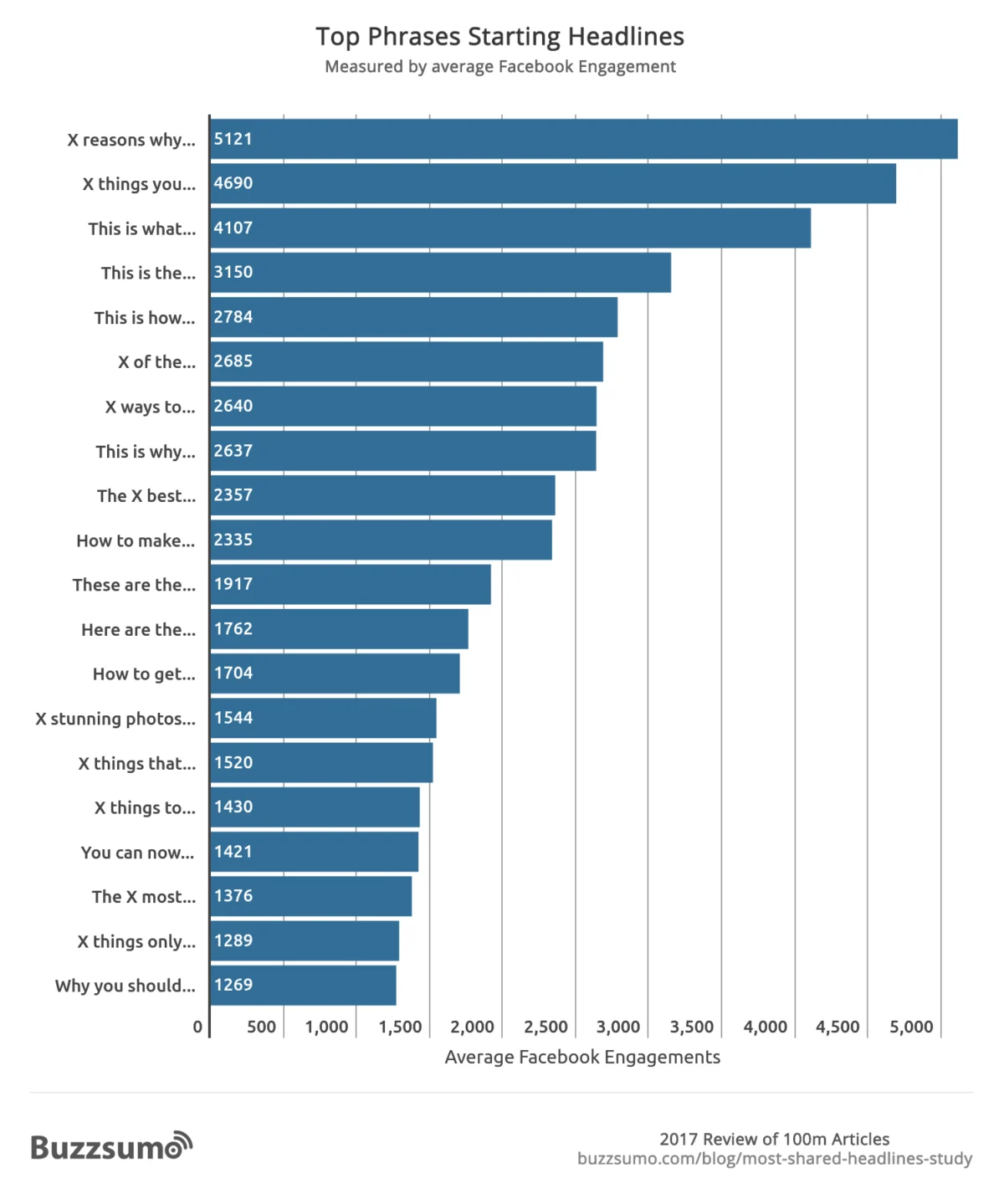
A comprehensive analysis by BuzzSumo, drawing insights from 100 million headlines, has unveiled a profound transformation in what captures audience attention on Facebook and Twitter between 2017 and 2020. This follow-up study to Steve Rayson’s influential 2017 research provides critical data for content creators navigating an increasingly competitive and algorithm-driven digital landscape. The findings demonstrate a marked pivot from sensational, emotionally charged, and identity-focused content towards more informative, instructional, and concise headlines, reflecting both evolving platform algorithms and sophisticated audience preferences.
The Shifting Sands of Engagement: A 2017 Retrospective
In 2017, the digital content sphere was markedly different. BuzzSumo’s initial study revealed that headlines leveraging explicit emotional triggers, quizzes, and tribal identity reigned supreme on Facebook. Phrases such as "will make you," "melt your heart," "tears of joy," and "shocked to see" consistently drove the highest engagement, promising readers an immediate, visceral reaction. Quizzes, exemplified by phrases like "can we guess" and "only X in," capitalized on personal curiosity and the desire to prove oneself. Similarly, "tribal" headlines, such as "X things only [group] will understand," fostered a sense of belonging and reinforced group identity, leading to widespread sharing among niche communities. The optimal headline length at this time was found to be approximately 15 words and 95 characters, suggesting a preference for more descriptive and elaborate titles. On Twitter, while "will make you" also performed well, there was a greater emphasis on "newness" and explanatory content, indicating a slight divergence in platform dynamics.
However, this era of pervasive emotional and clickbait content began to wane. A significant turning point occurred on May 17, 2017, when Facebook announced it would begin actively demoting "headlines that exaggerate the details of a story with sensational language." This algorithmic adjustment marked the beginning of a larger trend towards promoting more trustworthy and substantive content.
2020: A New Era of Headline Dynamics
The updated BuzzSumo analysis, conducted between 2019 and 2020, paints a picture of a dramatically altered content landscape. The top 20 headline phrases on Facebook showed a complete overhaul, with 100% difference compared to 2017. Twitter also saw significant changes, with only two phrases retaining their top positions. This stark evolution is attributed to a combination of algorithmic maturity, evolving audience preferences, and a changing publisher ecosystem.
Key Findings from the 2019-2020 Analysis:
-
Optimal Headline Length: Forget the lengthy titles of yesteryear. The sweet spot for engagement on Facebook and Twitter has shrunk significantly to 11 words and 65 characters. This reduction of approximately four words and 30 characters since 2017 underscores an audience demand for rapid information consumption in an era of content overload, which has seen online content increase by 64% since 2016.
-
The Power of Numbers: The "magic number" in headlines remains 10. Beyond this, single-digit numbers from three to ten consistently drive the most social media engagement. While there’s no strong preference for odd or even numbers, the trend indicates a move away from larger numbers (e.g., 15, 20), suggesting that readers prefer more concise lists that offer quick insights rather than extensive inventories.
-
Facebook’s Dominant Themes: The most engaging three-word phrases on Facebook now center around specific, valuable, and sometimes exaggerated information.
- "Of the year" emerged as the top phrase, typically associated with rankings and awards (e.g., "Person of the Year"). This generates discussion between "fans" and "haters," driving shares.
- "In X years," "for the first," and "the first time" highlight newness and surprise, building intrigue by detailing rare occurrences (e.g., "For the first time in history…").
- Instructional headlines proved exceptionally successful, with phrases like "you need to" and "need to know" dominating. These create a sense of urgency and FOMO (Fear Of Missing Out), promising critical information or necessary action (e.g., "Everything you need to know about washing your hands…").
- Hyperbole, while less overtly emotional than in 2017, still performs well through phrases like "one of the most" and "of the best." These exaggerated statements often refer to exceptional content, fulfilling a lingering audience desire for superlatives without resorting to raw emotional manipulation.
- Other strong themes included Curiosity (revealing, explaining, analyzing), Guidance ("How to" content), and Story (case studies or narratives about people/topics).
-
Twitter’s Unique Preferences: Twitter audiences exhibit a strong appetite for current affairs, research, and forward-looking discussions.
- "Future of" is the most shared three-word phrase, indicating a preference for analytical and predictive content.
- Headlines starting with words like "study" and "report" perform exceptionally well, suggesting that Twitter is a prime platform for sharing research-backed insights.
- Time-centric phrases like "2020" and other indicators of immediacy and reactivity dominate headline endings, reflecting Twitter’s role as a real-time news and information platform.
-
Increasing Homogeneity and Cross-Platform Strategy: A notable development is the increased overlap in successful headline phrases between Facebook and Twitter. In 2017, only one phrase appeared in the top 20 for both platforms; by 2020, this number had risen to eight. This suggests that while distinct preferences exist, certain headline principles are becoming universally effective. Instructional phrases like "need to know" and "what to do" are particularly strong crossover performers.
Engagement Dynamics: A Tale of Two Platforms
The study also revealed a significant divergence in engagement growth. While the most engaging Facebook trigram in 2020 ("of the year") garnered an average of 26,702 shares—a threefold increase over Facebook’s 2017 top phrase—Twitter shares for top phrases decreased by nearly 4x over the same period. This occurred despite Twitter’s monthly active users remaining largely stable, indicating a potential dilution of average shares across more varied headline phrases or a shift in user behavior towards different forms of engagement on the platform. The sheer scale of Facebook’s engagement is striking, with its top phrase averaging 590 times more shares than Twitter’s.
The Evolving Publisher Landscape
The shifts in headline performance are intrinsically linked to changes in the publisher ecosystem. Facebook’s continued algorithmic development, particularly its January 19, 2018, announcement to prioritize "trustworthy news" and further refinement on June 30, 2020, to boost "original and authoritative news reporting," has had a profound impact. This is evident in the rise of established news outlets like cnn.com, dailymail.co.uk, nbcnews.com, washingtonpost.com, cbsnews.com, and time.com among the top publishers for engaging headlines on Facebook. This preferential treatment has undoubtedly shaped the types of headlines that succeed, pushing out sensational clickbait in favor of credible, informative content.
Industry Voices on the New Landscape
Marketing experts have weighed in on these transformative findings:
Heidi Cohen, Chief Marketing Officer at Actionable Marketing Guide, highlighted the influence of the pandemic, noting "3 key customer behavior changes due to the pandemic." She recommends marketers "focus on core marketing basics" and "test new options for reaching your broader audience."
Rand Fishkin, Founder of SparkToro, emphasized the study’s value for content creators, stating it "won’t just help you with writing headlines… but with contrasting what’s worked in the past vs. what works today," debunking myths about clickbait and emotional triggers.
Ross Simmonds, Founder of Foundation, pointed out the fascinating adoption of "click friendly" headlines by mainstream entities and the "amazing insight" of instructional copy. He linked this to "human psychology and the human desire of not missing out on information."
Brian Dean, Founder of Backlinko, observed the "huge shift from the heyday of Facebook organic, which was all about BuzzFeed-style clickbait," noting that "today’s Facebook users need to know that the content is going to teach them something new."
Amanda Milligan, Marketing Director at Fractl, found the "instructional headline trend fascinating," attributing it to "people’s growing desire to hear and learn from experts." She suggests brands leverage their authority through such language.
Strategic Implications for Content Creators
The latest BuzzSumo research offers invaluable guidance for anyone crafting headlines today. The days of simply copying viral phrases are over; success now hinges on understanding underlying principles:
- Prioritize Clarity and Value: Headlines must be specific, revealing enough detail to draw readers in, and promise tangible value (e.g., learning, new information, unique insights).
- Embrace Instruction and Utility: Content that tells readers what they "need to know" or "should do" resonates strongly, particularly on Facebook. This taps into a desire for actionable advice and competence.
- Leverage Newness and Surprise: Highlighting rare events, "first times," or unexpected facts continues to be a potent engagement driver.
- Be Concise Yet Informative: The ideal length of 11 words/65 characters on average reflects a preference for efficiency. Get to the point quickly without sacrificing essential information.
- Numbers Still Matter, but Smaller: Use numbers, especially "10" and single digits, to signal clear, digestible lists, aligning with the "speed to insight" trend.
- Tailor for Platforms (But Note Convergence): While instructional and hyperbolic themes thrive on Facebook, Twitter users seek research, current affairs, and forward-looking analysis. However, the increasing overlap in successful phrases suggests that a well-crafted, informative headline can perform across both.
- Focus on Trust and Authority: With Facebook actively promoting authoritative sources, publishers benefit from crafting headlines that reflect credibility and expertise.
Methodology in Brief
This extensive study analyzed 100 million article headlines published between 2019 and 2020 on Facebook and Twitter. Researchers focused on three-word phrases (trigrams) and two-word phrases (bigrams) that generated the highest average shares. To prevent popular sites from skewing results, only one headline trigram example per domain was included in the analysis. The data was meticulously cleaned to ensure accuracy and relevance, providing a robust foundation for these critical insights into modern content engagement.
The landscape of headline writing is dynamic, constantly shaped by technological advancements and evolving human psychology. Staying abreast of these shifts, as illuminated by BuzzSumo’s ongoing research, is paramount for any content creator aiming for sustained online engagement and impact.