The imperative for small businesses to adopt AI in their SEO strategies is unequivocally supported by recent market trends. According to HubSpot’s latest AI Trends for Marketers report, a substantial two-thirds of marketers globally now leverage AI in their professional roles, a figure that escalates to 74% among American marketers. This data highlights not merely a trend, but a fundamental shift in marketing paradigms. For small businesses, this translates into a stark reality: investing in AI SEO tools, whether through time allocated to learning or direct financial outlay, is no longer optional but a strategic necessity to avoid being outmaneuvered by better-equipped competitors.
The Evolving Landscape of Search and AI Integration
The digital ecosystem is in constant flux, driven significantly by advancements in AI. Search engines like Google are increasingly incorporating AI into their core algorithms, leading to more nuanced and context-aware search results. The emergence of AI-powered search experiences, such as Google’s Search Generative Experience (SGE) or various AI answer engines, means that traditional SEO metrics are being augmented by a new dimension: Answer Engine Optimization (AEO). This shift necessitates that businesses not only optimize for keyword rankings but also for how their brand, products, and services are summarized and presented in AI-generated answers.

For small businesses, this evolving landscape presents both challenges and unprecedented opportunities. Historically, advanced SEO techniques required significant human expertise and substantial resources, often placing them out of reach for smaller operations. AI democratizes many of these capabilities, offering tools that can automate tedious tasks, provide data-driven insights, and even generate content at scale, thereby allowing lean teams to "do more with less." However, this democratization also brings complexity, as the sheer volume of AI tools can be daunting to navigate. The crucial task for small businesses is to cut through this noise and identify tools that offer tangible, ongoing value without requiring extensive training or prohibitive costs.
Strategic Considerations for AI SEO Tool Selection
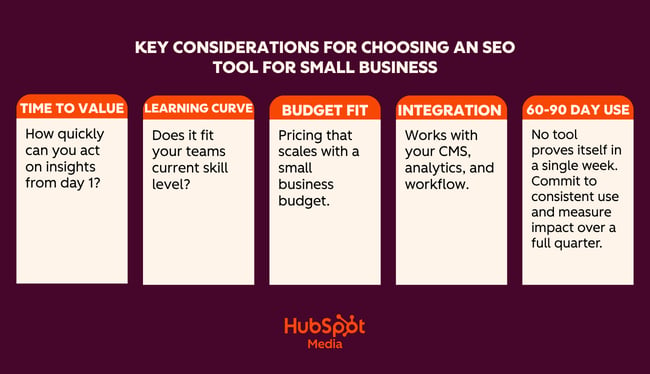
Choosing the right AI SEO tools demands a strategic approach, focusing on factors that directly impact a small business’s operational efficiency and return on investment. Industry analysts and small business advisors frequently emphasize key criteria beyond mere feature sets:
- Time-to-Value: This metric assesses how quickly a tool can be set up and begin delivering actionable insights or outputs. For a small business with limited dedicated SEO personnel, a tool requiring weeks of configuration or external consultation might negate its potential benefits. The ideal tool offers rapid deployment and immediate data surfacing, such as Google Search Console (GSC), which provides invaluable SEO performance data within 24 hours of integration. In contrast, comprehensive platforms like HubSpot, while requiring more setup time and potentially a financial investment, offer a broader suite of integrated functionalities across marketing, sales, and service, justifying the initial investment for businesses seeking a unified platform.
- Learning Curve: The utility of any tool is directly proportional to a team’s ability to use it consistently and effectively. Enterprise-grade platforms, while powerful, can overwhelm small business users with an abundance of features they may not need or understand. Tools that offer intuitive interfaces, guided workflows, plain-language recommendations, and clear next steps are invaluable. They reduce the burden of expert interpretation, empowering non-specialist marketers to implement SEO best practices.
- Cost and Budget Fit: The optimal AI SEO solution resides at the intersection of functionality, usability, and affordability. Small businesses must prioritize tools that address specific bottlenecks at a reasonable price point, with an eye towards scalability. Considering the long-term cost implications—one, three, or even five years down the line—is crucial. A tool that necessitates expensive upgrades beyond the business’s future budget could lead to the costly and time-consuming process of switching platforms. A pragmatic approach involves identifying the top three time-consuming SEO tasks and evaluating tools specifically against their ability to solve these critical bottlenecks.
- Integration Ease: The ability of an AI SEO tool to seamlessly integrate with existing systems significantly boosts adoption rates and enhances overall workflow efficiency. Platforms that connect SEO data directly to a Content Management System (CMS), Customer Relationship Management (CRM) system, or other marketing automation tools create a cohesive operational environment. Such integrations don’t just add new capabilities; they improve and enhance existing workflows, making them more appealing and motivating for teams. Mulesoft’s research underscores this, indicating that 86% of IT leaders believe AI agents can introduce complexity rather than value without proper integration.
- 60 to 90-Day Usage as the Real Test: Initial enthusiasm from demonstrations or trial periods rarely captures the full picture of a tool’s long-term value. The true measure lies in consistent usage at the 60- to 90-day mark and the team’s ability to point to concrete outcomes attributed to the tool. Small businesses should negotiate extended testing periods or opt for monthly billing initially to thoroughly assess a tool’s fit before committing to annual subscriptions.
Strategic Application of AI in SEO: Capabilities and Human Oversight
While AI offers transformative capabilities for small business SEO, it’s critical to understand its limitations and the enduring necessity of human oversight. Small business SEO cannot solely rely on automation; human expertise, creativity, and judgment remain indispensable.
- Drafting and Scaling Content (with Caution): AI tools can rapidly generate drafts of blog posts, FAQs, service page copy, and meta descriptions, providing a significant time-saver for businesses struggling with consistent content publication. For objective topics or simple definitional questions (e.g., "What is anchor text?"), AI can produce high-quality initial drafts. However, for thought leadership pieces, content requiring unique perspectives, expert opinions, or nuanced industry insights (e.g., "Is SEO dead in the age of AI search?"), human writers and editors are crucial. AI lacks genuine experience and can sometimes produce generic or factually inaccurate content. Every AI-drafted piece must undergo rigorous human review to ensure factual accuracy, alignment with brand voice, and the incorporation of genuine expertise—qualities Google increasingly rewards.
- Finding Keyword and Topic Ideas: AI excels at generating broad keyword clusters, identifying customer questions, and unearthing related topics that might otherwise be missed during manual research. This capability can save hours for small teams. Nevertheless, human marketers must validate these AI-generated ideas against real search volume data using tools like Google Keyword Planner and apply a "human sense check" to ensure relevance and strategic fit. While proficient at ideation, AI is less reliable for complex content clustering or deep Search Engine Results Page (SERP) analysis.
- Optimizing Existing Pages: AI tools can efficiently audit existing web pages and suggest improvements for title tags, meta descriptions, heading structures, and readability. For small businesses with numerous underperforming pages, this audit-and-improve workflow can yield meaningful results without a substantial budget. For less critical pages, AI-generated optimizations may suffice. However, important pages, particularly those central to conversion or brand identity, benefit significantly from a layer of human review and judgment to ensure optimal impact and strategic alignment.
Spotlight on Essential AI SEO Tools for Small Businesses
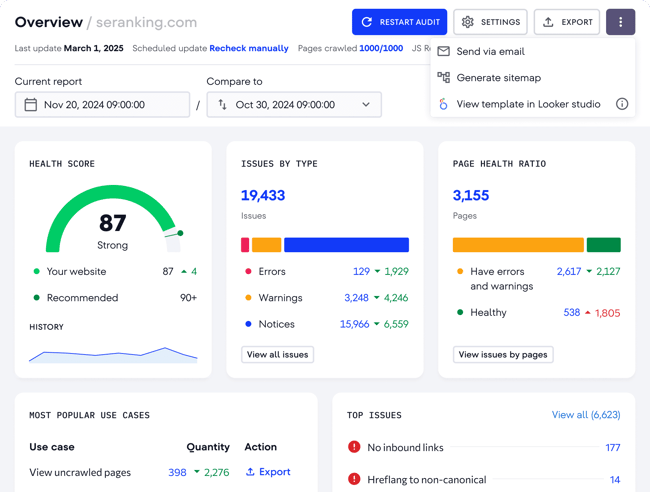
The market offers a diverse range of AI SEO tools, each addressing specific facets of the SEO workflow. A strategic combination of free and paid solutions can provide a robust foundation for small businesses.
Tools for SEO and Technical Audits:
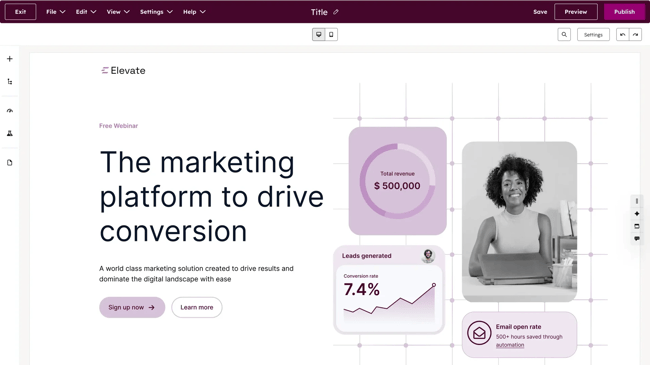
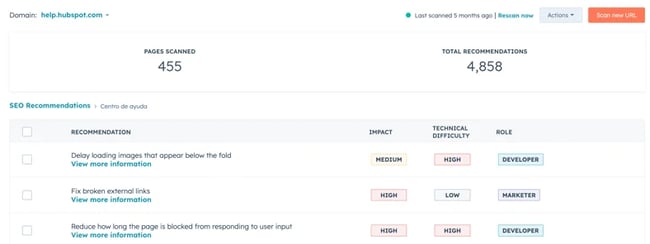
- HubSpot SEO Recommendations: Integrated within Marketing Hub, HubSpot’s SEO recommendation tools offer a highly unified approach. Unlike standalone audit tools that present raw data, HubSpot connects recommendations directly to the content editor, CRM, and reporting dashboard. It prioritizes on-page updates for non-experts, explaining why an issue is flagged, its impact on search performance, and the specific action required to resolve it. This clarity aids prioritization and empowers non-technical teams. HubSpot scans for common issues like broken links, missing meta descriptions, and slow-loading pages. Its integration with the CRM makes it particularly valuable for B2B companies, linking SEO performance directly to leads and revenue. Pricing varies by Marketing Hub edition, with basic features on free/Starter plans and advanced features requiring Pro or Enterprise subscriptions.
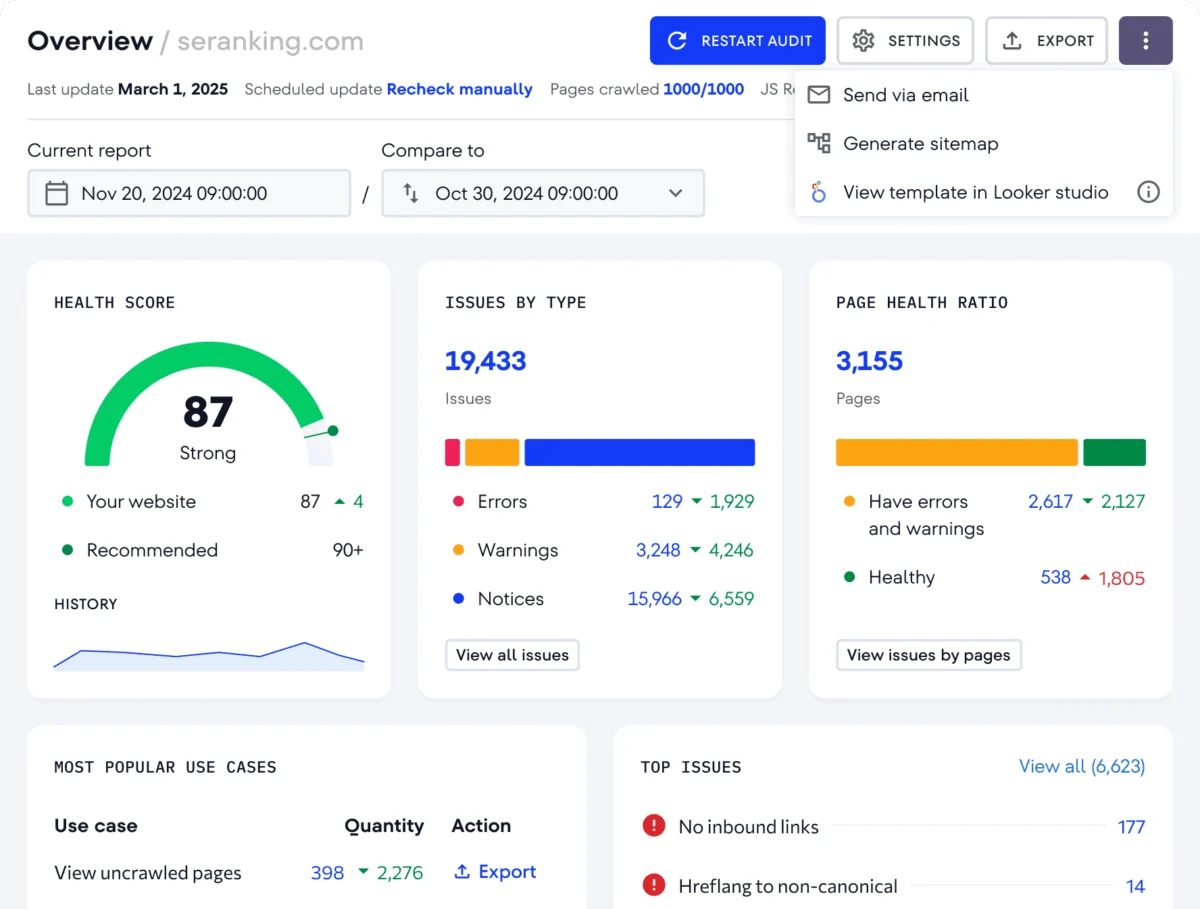
- SE Ranking: A comprehensive, AI-powered platform offering keyword tracking, site audits, competitive research, and AI-specific insights. It covers keyword research, backlink analysis, competitor monitoring, and content gap identification. SE Ranking strikes a balance between the depth of premium platforms and accessibility for small business budgets, providing actionable recommendations without requiring an in-house SEO specialist. Plans start at a Wallet tier, with a 14-day free trial. For teams considering more robust alternatives with larger budgets, Semrush and Ahrefs are industry leaders, offering extensive features for advanced SEO.
AI-Powered Content Creation and Optimization:
- HubSpot Content Hub (with Breeze AI): This platform consolidates content strategy, creation, optimization, and performance measurement. Its topic cluster tool is invaluable for building topical authority by structuring content around pillar pages and supporting cluster content, a proven strategy for compounding organic traffic. Breeze, HubSpot’s AI layer, acts as a co-pilot for content writers, generating structured drafts, suggesting internal links, optimizing meta descriptions, and even repurposing content across channels (Content Remix). The Brand Voice capability ensures AI-generated content aligns with established brand guidelines, maintaining consistency. Because Content Hub is integrated with HubSpot’s CRM, content performance can be directly tied to leads, pipeline, and revenue, providing clear ROI justification. Content Hub offers a free plan, with paid plans starting at $20/user/month, and advanced AI features on Pro and Enterprise editions.
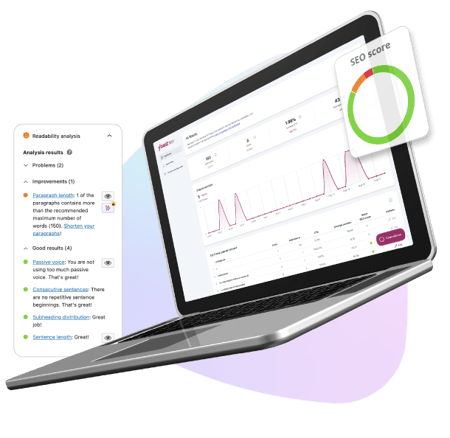
- Yoast: For small businesses utilizing WordPress, Yoast is a quintessential SEO plugin. It integrates directly into the WordPress editor, providing real-time on-page SEO guidance. Key features include readability analysis, focus keyphrase optimization, and XML sitemap management. While its free version offers solid foundational support, Premium and AI+ packages provide enhanced features starting at $9.90/month. Yoast is an optimization assistant rather than a full SEO platform, best used in conjunction with tools for keyword research and competitor analysis. Businesses already on HubSpot’s Content Hub may find Yoast’s functionality redundant.
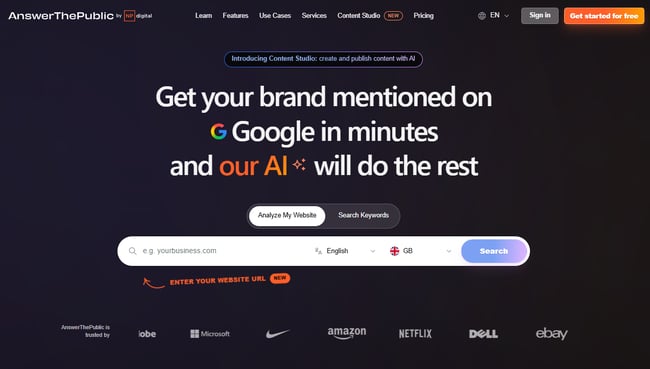
- AnswerThePublic: This content ideation tool leverages Google autocomplete data to visualize questions, prepositions, comparisons, and related searches around a given keyword. It’s an excellent resource for quickly populating a content calendar with topics that real audiences are actively searching for. The visual format helps identify natural topic cluster opportunities. AnswerThePublic offers three free searches per day, with paid packages starting at $13.33/month for more extensive features. It’s a highly effective budget tool, though its functionality might overlap with capabilities within comprehensive platforms like HubSpot.
Tools for Tracking Rankings and AI Visibility:
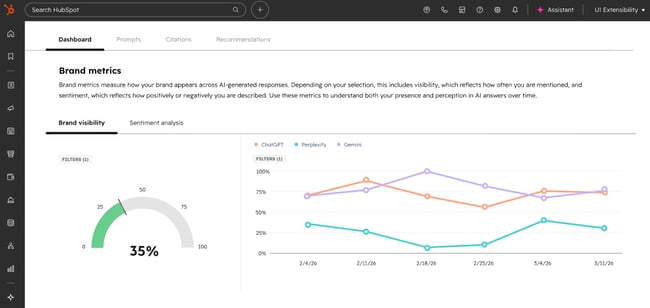
- HubSpot AEO (Answer Engine Optimization): Designed to monitor and improve a brand’s appearance in AI-generated answers across platforms like ChatGPT, Perplexity, and Gemini. Its unique CRM integration allows it to suggest prompts based on industry, competitors, and customer segments, providing context other standalone AEO tools lack. HubSpot AEO tracks brand mentions, descriptions, competitor comparisons, and identifies visibility gaps. This allows marketers to move from identifying a visibility gap to publishing targeted content directly within the HubSpot ecosystem. A free 28-day trial is available, with paid plans starting at $50/month.
- HubSpot AEO Grader: A free diagnostic tool that provides a fast snapshot of how AI engines currently perceive a brand. It analyzes AI visibility across ChatGPT, Perplexity, and Gemini, cross-validating responses to produce a composite score out of 100 across five dimensions: Brand Recognition, Trustworthiness, Authority, Differentiation, and Recommendation. The Grader offers a structured, plain-English breakdown, making it an ideal starting point for businesses new to AI visibility, helping to inform subsequent content planning.
- Google Analytics (GA4): The foundational analytics tool for any website, offering free, robust tracking of traffic sources, visitor behavior, and conversion outcomes. GA4’s AI features include automated insights, predictive metrics, and anomaly detection, making it an indispensable tool for understanding website performance and user engagement. It’s particularly useful for segmenting audiences by AI referral source and tracking conversion impact.
- Google Search Console (GSC): A non-negotiable, free tool that provides direct insights from Google about a website’s search performance. GSC tracks search queries, impressions, clicks, indexed pages, technical issues, and Core Web Vitals. Its AI-powered insights present complex data in plain English, enabling even non-SEO experts to understand and act on critical website performance metrics. Setting up GSC should be a day-one priority for any business with a website.
The Broader Implications and Future Outlook
The rapid evolution of AI in SEO signifies a permanent shift in how businesses must approach their digital presence. Small businesses that embrace AI tools strategically will gain a significant competitive advantage, optimizing their limited resources to achieve disproportionate results. Failure to adapt, conversely, risks rendering their marketing efforts inefficient and their brand invisible in an increasingly AI-driven search environment.
The future of SEO is intrinsically linked with AI, moving towards more intelligent, personalized, and conversational search experiences. Small businesses that integrate AI not as a replacement for human ingenuity but as an amplification tool—a co-pilot for their lean teams—will be best positioned for success. This means focusing on creating high-quality, authoritative content that can be easily understood by both human users and AI systems, while continuously monitoring how their brand is perceived across both traditional search results and AI-generated answers.
Conclusion
For small businesses aiming to streamline operations without compromising capability, an integrated platform approach, such as that offered by HubSpot, presents a compelling solution. By consolidating technical SEO recommendations, on-page optimization, content strategy, AI visibility monitoring, and CRM integration, one platform can effectively replace multiple disparate tools. This unification simplifies the technology stack, enhances data attribution, and empowers lean teams to connect SEO efforts directly to tangible business outcomes. Whether opting for a comprehensive platform or a carefully curated suite of specialized tools, the underlying principle remains: the right AI SEO tool is the one that efficiently solves multiple problems, scales with the business, and empowers teams to navigate the complex digital landscape with confidence.