Evan Lee Salim
The intersection of generative artificial intelligence and retail finance has reached a significant milestone as Anthropic’s Claude AI begins to offer direct integration with major Indian brokerage platforms. Through the implementation of the Model Context Protocol (MCP), investors are now moving beyond simple chat-based research toward a unified ecosystem where AI can access demat accounts, analyze real-time portfolio data, and facilitate trade execution. This shift represents a transition from "passive" AI research to "active" agentic finance, allowing retail traders to leverage institutional-grade analytical tools through a conversational interface. As brokers like Zerodha, Dhan, Groww, Upstox, and FYERS explore or implement these connections, the landscape of the Indian stock market is bracing for a surge in AI-driven retail participation.

The Technological Foundation: Understanding MCP and AI Integration
The primary catalyst for this evolution is the Model Context Protocol (MCP), an open standard that allows AI models like Claude to connect securely with external data sources and tools. Traditionally, an investor would need to manually export Excel sheets from their broker’s back-office and upload them to an AI for analysis. This process was cumbersome and often resulted in outdated data. With MCP, the AI acts as a secure bridge. By adding a custom connector URL within the Claude interface, users can authorize the AI to communicate directly with their broker’s API.
Security remains a paramount concern in this digital architecture. The integration process is designed so that sensitive credentials, such as broker passwords and two-factor authentication (2FA) codes, are handled exclusively on the broker’s own secure login pages. Claude receives a tokenized permission to "read" or "write" data based on the user’s authorization level, ensuring that the AI never actually "possesses" the account’s primary security keys. This layered security approach is essential for maintaining trust in a market governed by the stringent regulations of the Securities and Exchange Board of India (SEBI).
A Chronological Workflow for the AI-Enhanced Investor
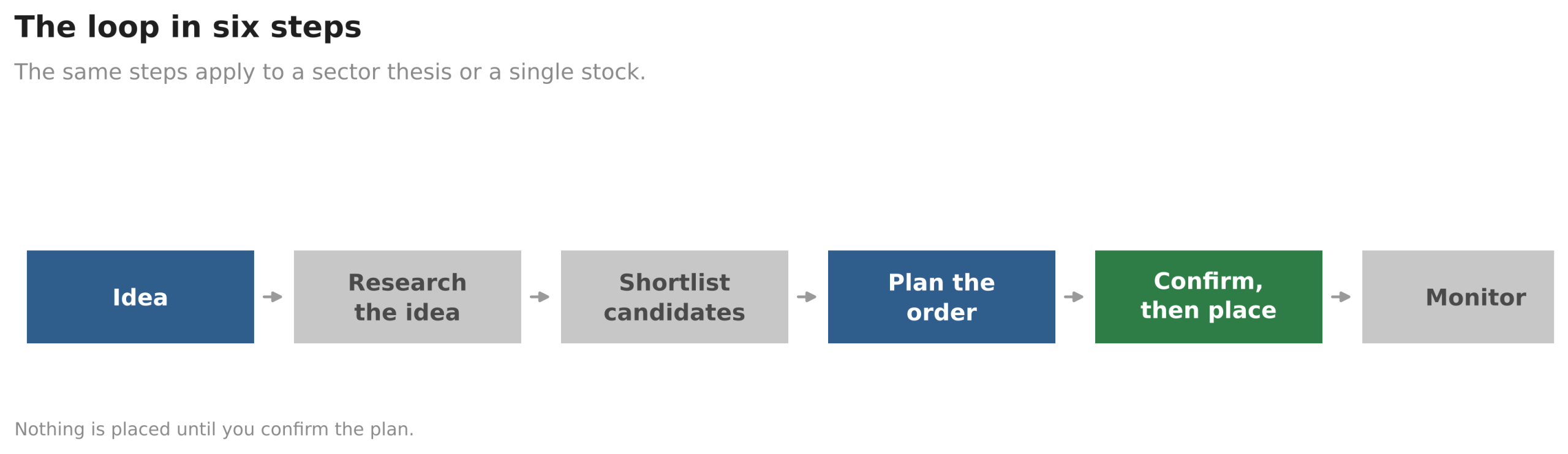
The practical application of Claude in a trading day typically follows a structured chronology, beginning with a morning synchronization and ending with an after-market review.
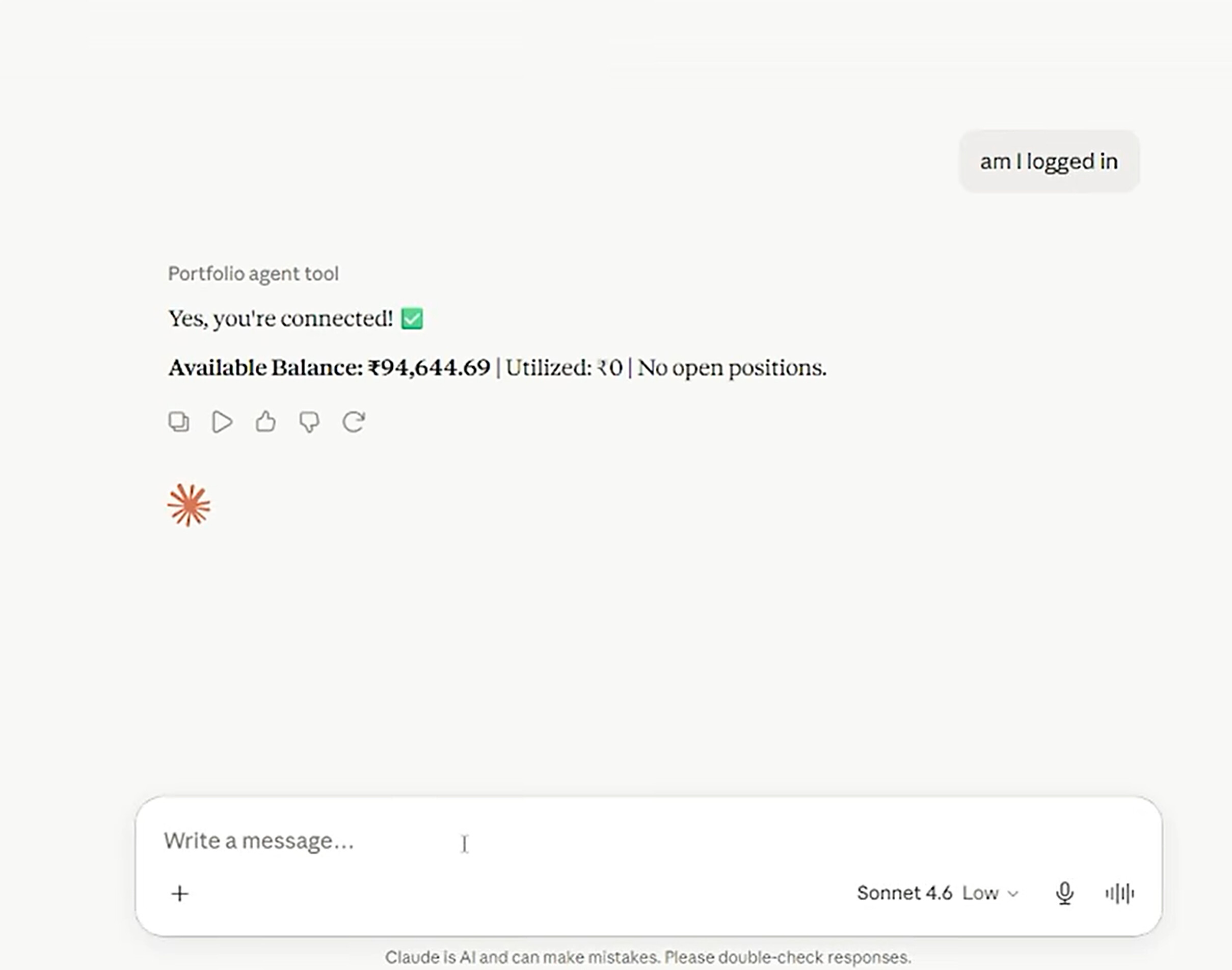
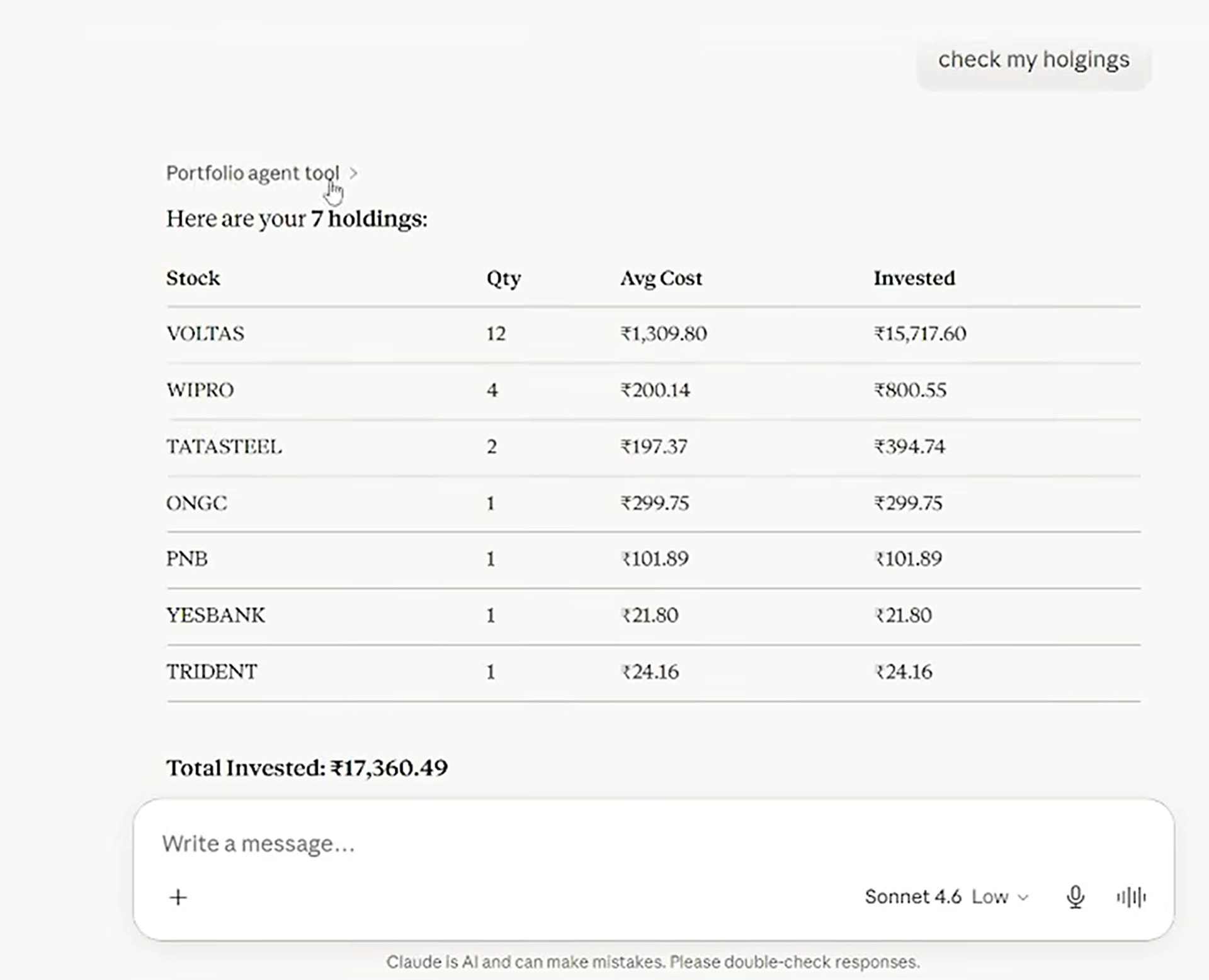
The session begins with a status check. By asking a simple query such as "Am I logged in?", the investor verifies the live connection. The AI immediately retrieves the available cash balance and checks for any open positions or utilized margins. This five-second check replaces the need to navigate through multiple menus in a mobile app. Following this, the investor typically moves to a holdings review. Claude can present a formatted summary of the user’s portfolio, listing quantities, average buy prices, and current market values without the need for manual data entry.
Once the status is established, the workflow shifts to thematic research. For example, an investor anticipating a specific economic trend—such as a particularly harsh summer—can ask Claude to identify sectors likely to benefit, such as cooling appliances, power utilities, or beverage manufacturers. The AI scans current news, financial filings, and market data to provide a shortlist of candidates.
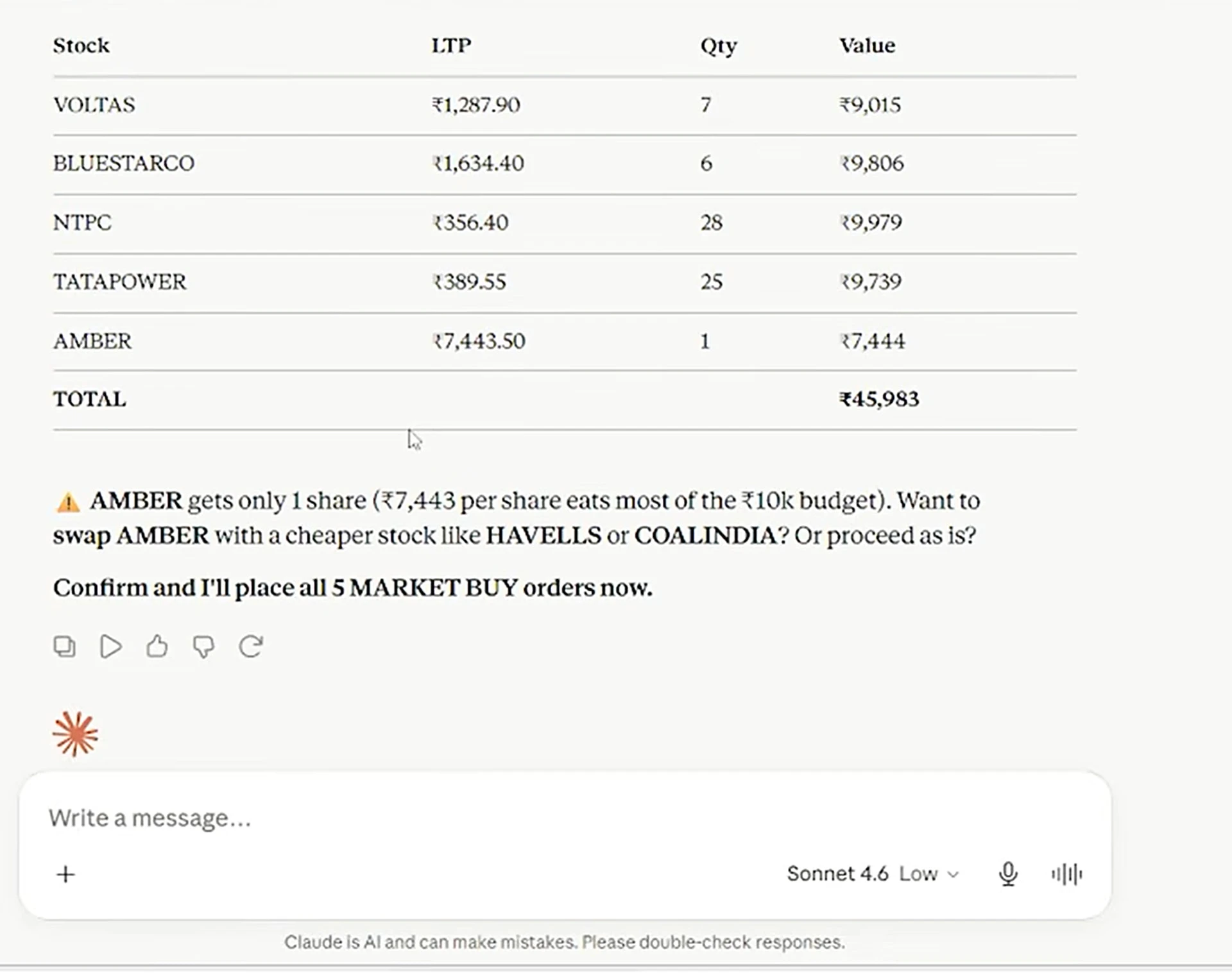
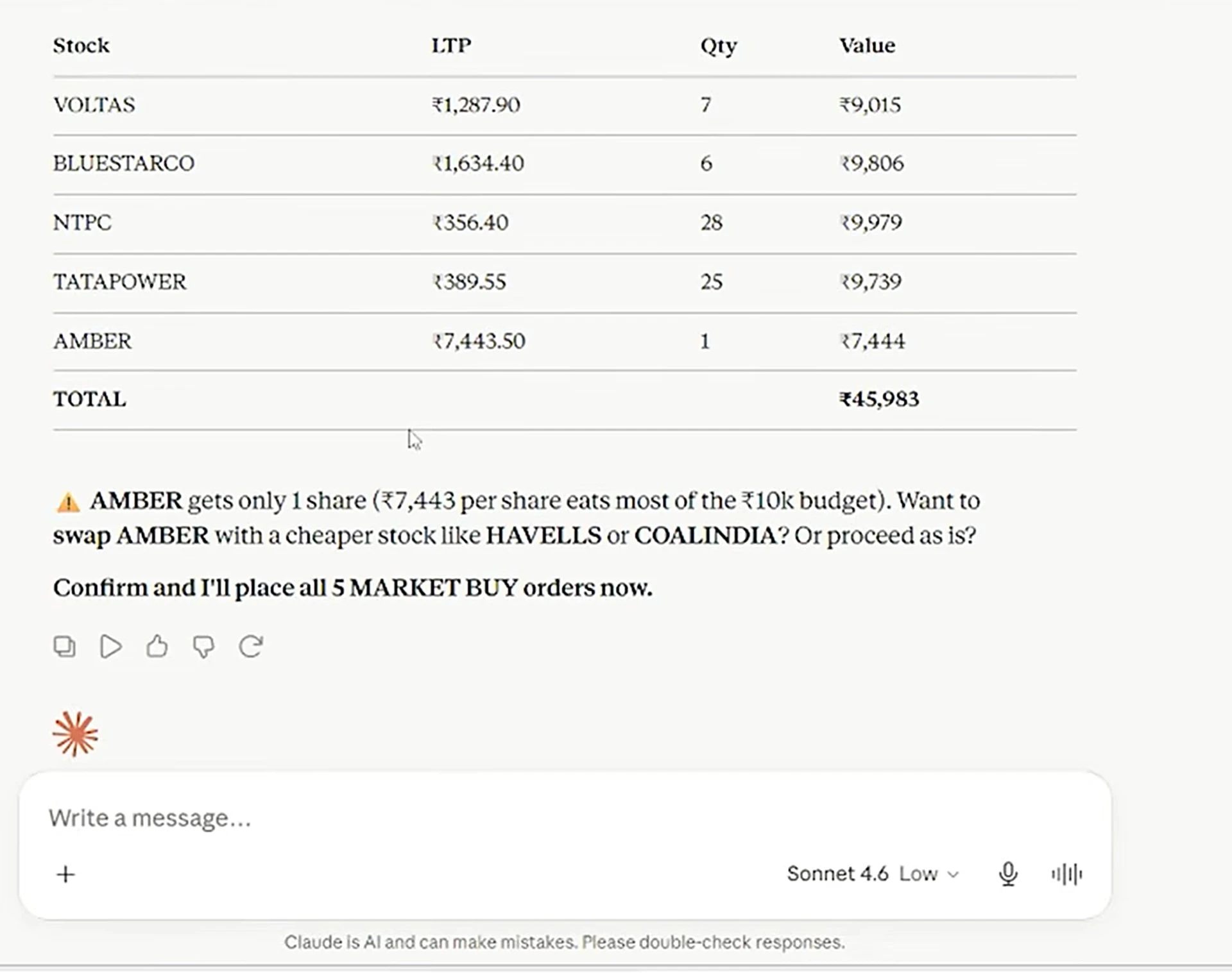
The final stage of the chronology involves trade planning and execution. Rather than placing a "market order" immediately, the AI facilitates a "planning gap." It drafts a table showing the proposed allocation, the current Last Traded Price (LTP), and the calculated quantity based on the user’s budget. Only after the user reviews this table and provides an explicit confirmation does the AI send the order to the broker’s server.
Deep-Dive Analysis: The Fundamental Screening Framework
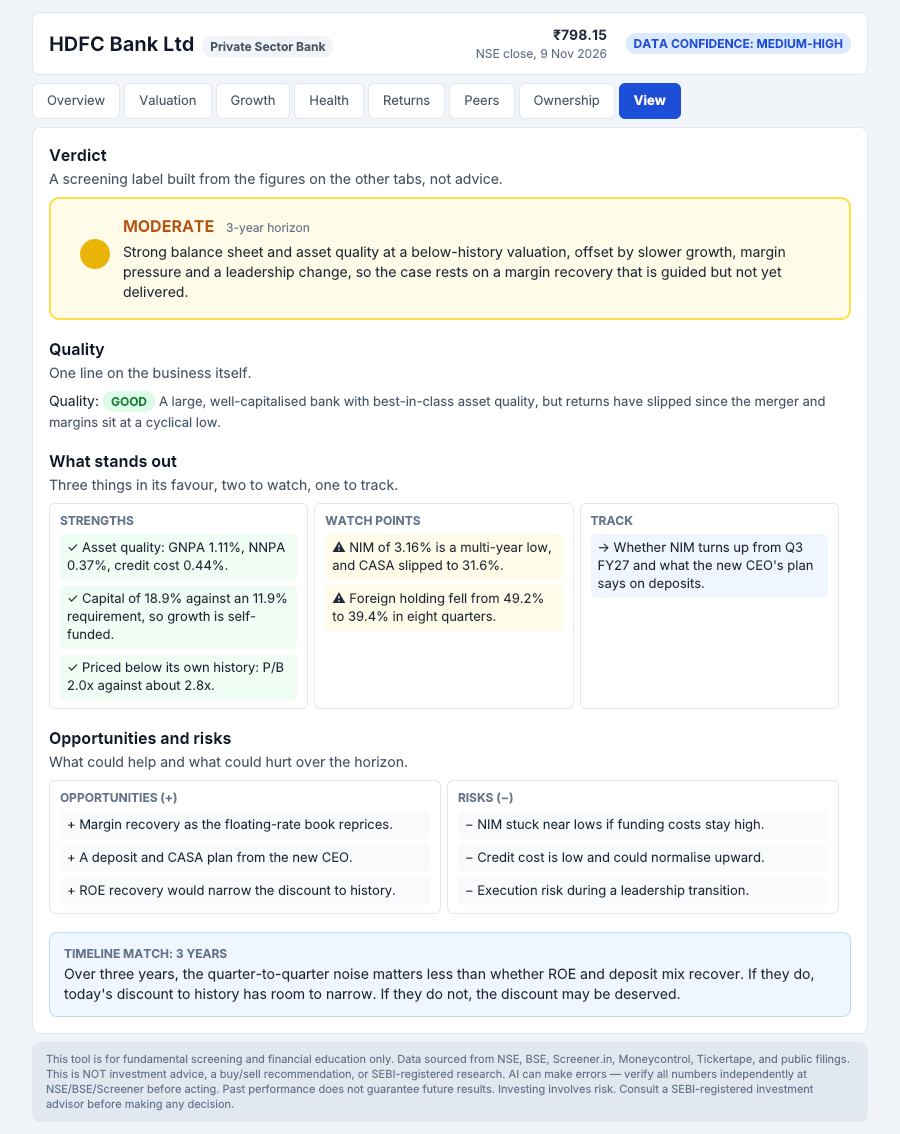
One of the most powerful features of the Claude integration is its ability to perform comprehensive fundamental analysis on any listed Indian stock. By utilizing advanced prompting techniques, investors can generate multi-tabbed HTML reports that rival those produced by professional equity research desks.
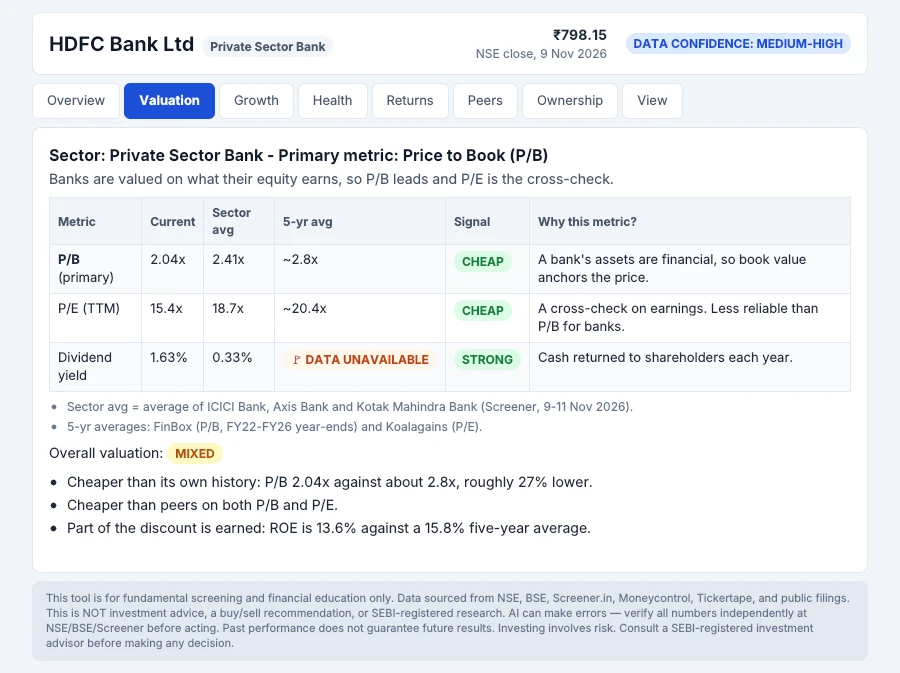
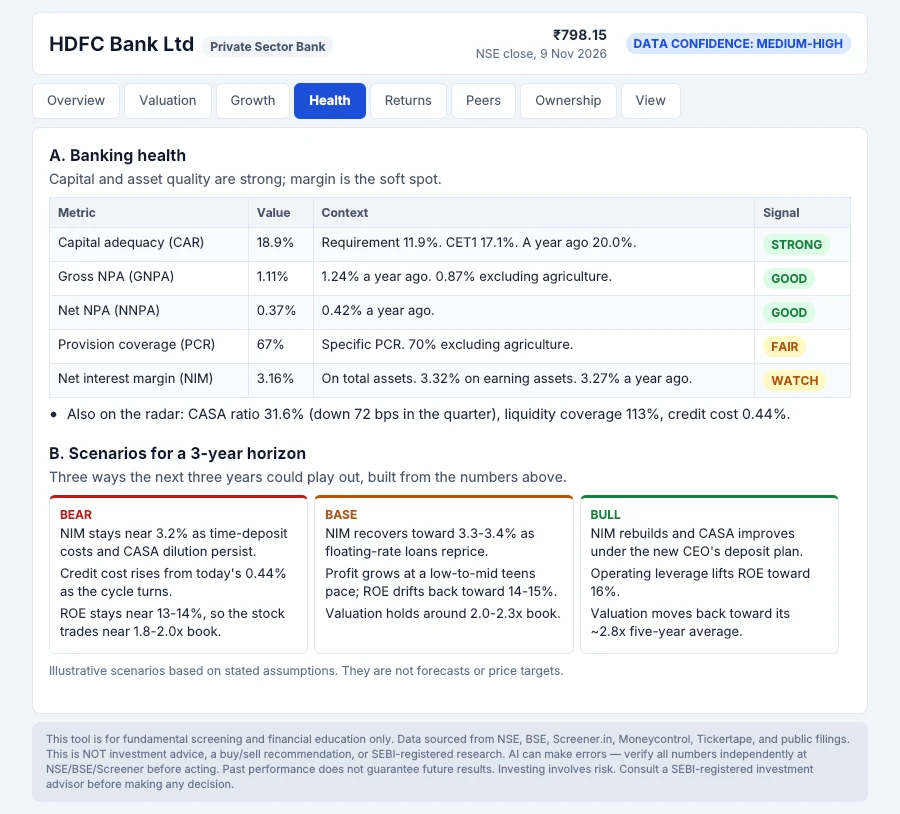
The analysis framework for Indian stocks generally covers eight critical dimensions:
- Valuation: Comparing Price-to-Earnings (P/E) or Price-to-Book (P/B) ratios against five-year averages and sector peers.
- Growth: Analyzing Revenue and Net Profit CAGR over three- and five-year periods.
- Health: For manufacturing firms, this focuses on Debt-to-Equity and Interest Coverage; for banks, it shifts to Gross NPA (Non-Performing Assets) and Capital Adequacy Ratios (CAR).
- Returns: Evaluating Return on Equity (ROE) and Return on Capital Employed (ROCE).
- Ownership: Tracking the movements of promoters, Foreign Institutional Investors (FIIs), and Domestic Institutional Investors (DIIs).
- Peer Comparison: Benchmarking the stock against its direct competitors.
- News Sentiment: Filtering noise from significant regulatory or corporate announcements.
- Verdict: A synthesis of the data based on the user’s specific investment horizon.
Supporting data suggests that this automated screening significantly reduces the "analysis paralysis" common among retail investors. By flagging "Data Unavailable" instead of hallucinating figures, Claude maintains the integrity of the financial report, a crucial requirement for making informed decisions.
Portfolio Health and Risk Mitigation
Beyond individual stock picking, the integration allows for a holistic "Health Score" for an investor’s entire portfolio. The AI evaluates the portfolio based on concentration limits—such as ensuring no single stock exceeds 15% of the total value and no single sector exceeds 30%. This systematic approach to diversification is often overlooked by beginners who tend to over-index on "hot" sectors like defense or railways.
The risk analysis module also simulates market stress scenarios. Claude can calculate the potential rupee loss if the Nifty 50 were to drop by 10% or if a specific sector were to face a 15% correction. This "what-if" analysis provides investors with a tangible understanding of their risk appetite before a market downturn occurs. Official responses from the fintech community suggest that such tools are vital for long-term wealth creation, as they encourage a disciplined, data-backed approach rather than emotional trading.
Broker Capabilities and Market Limitations
While the potential is vast, the current state of integration varies across the Indian brokerage landscape. Platforms like Dhan and certain self-hosted Kite (Zerodha) configurations allow for full transactional capabilities, including buying and selling. Others, such as Upstox, currently operate in a "read-only" mode, providing data for analysis but requiring the user to execute trades within the broker’s native app.
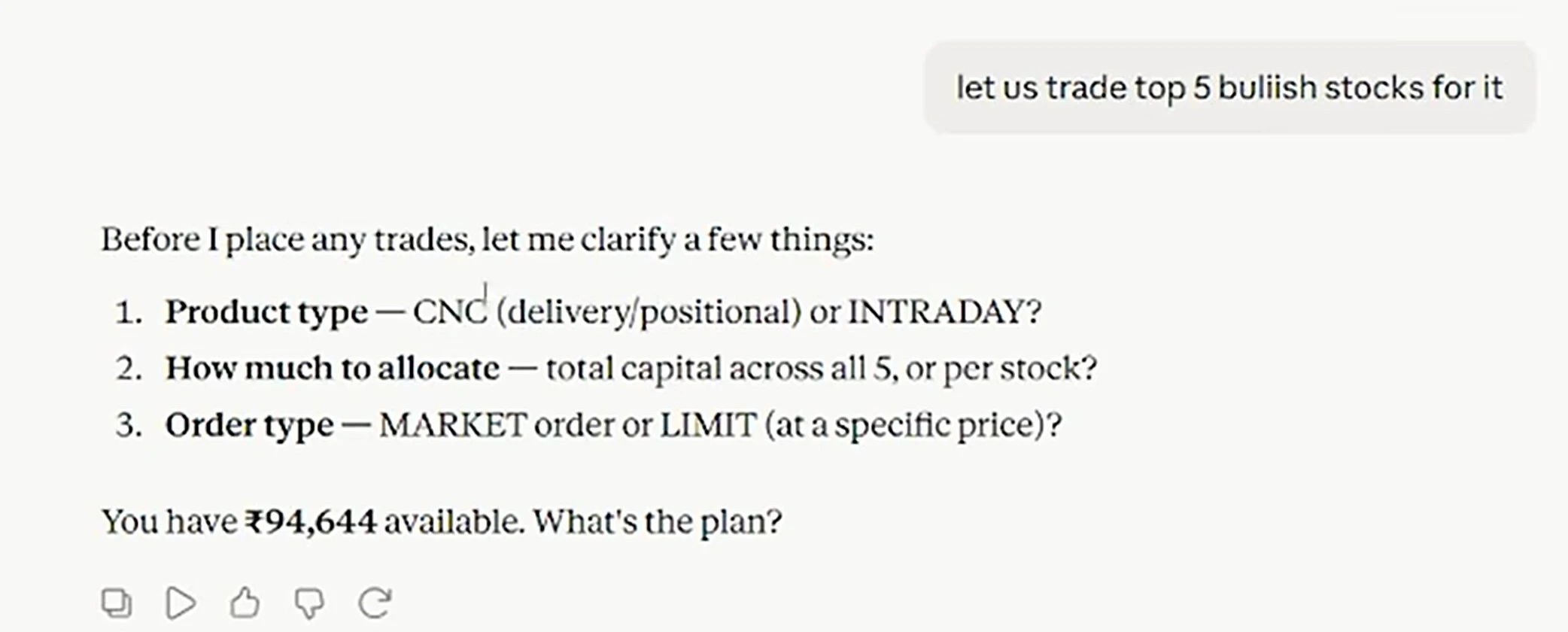
Market experts note that the "read-only" limitation is often a deliberate choice by brokers to ensure compliance with SEBI’s algorithmic trading guidelines. There is a fine line between an "AI assistant" and an "unregulated robo-advisor." Consequently, the industry is seeing a trend where the AI prepares the order details (quantity, price, and product type like CNC for delivery), but the final "Buy" button remains under the direct control of the human user.
Broader Impact and Future Implications for the Indian Market
The democratization of high-level financial analysis through Claude and MCP is expected to have several long-term implications for the Indian capital markets. First, it reduces the information asymmetry between institutional players and retail traders. Access to real-time data processing and complex fundamental screening was previously the domain of those who could afford Bloomberg terminals or expensive proprietary software.
Second, the "daily loop" facilitated by AI—pre-market briefings, mid-day alerts, and post-market summaries—is likely to increase the "financial literacy" of the average investor. By forcing the user to interact with data-driven summaries rather than sensationalist headlines, the AI acts as a filter that prioritizes signal over noise.
However, the rise of AI in trading also introduces new risks. The phenomenon of "AI Hallucination," where a model might confidently state an incorrect financial figure, necessitates a "verify-then-act" policy. All major players in this space, including Analytics Vidhya and MadeForTrade, emphasize that these tools are for educational and screening purposes, not a substitute for professional financial advice.
As India’s retail investor base continues to grow—with millions of new demat accounts opened every month—the integration of tools like Claude provides a necessary technological scaffold. It allows the new generation of "digital-native" investors to navigate the complexities of the NSE and BSE with a sophisticated, AI-powered co-pilot. The future of Indian trading appears to be one where the human makes the decisions, but the AI does the heavy lifting of data synthesis, risk calculation, and plan formulation.

 Azzam Bilal Chamdy
 Raul Delapena Setiawan