

The intensely competitive landscape of Black Friday commerce demands precision in marketing, with email timing emerging as a critical factor distinguishing success from obscurity. Internal data consistently demonstrates that early morning (6-9 AM) and late evening (8-10 PM) consistently outperform midday email sends, providing valuable insight for retailers preparing for the 2026 holiday shopping season. This strategic approach, coupled with advanced automation tools, is essential for maximizing engagement and driving revenue in an increasingly crowded digital inbox.
The Evolving Black Friday Phenomenon and Marketing Challenges
Black Friday, traditionally the day after Thanksgiving in the United States, has evolved from a single-day shopping frenzy into an extended "Cyber Season" spanning several weeks. It marks the unofficial start of the holiday shopping period, characterized by deep discounts and aggressive promotional campaigns across both brick-and-mortar and online channels. The advent of Cyber Monday further cemented the importance of digital sales, creating a contiguous period of high consumer spending that now often extends into "Cyber Week" or even "Cyber 10."
For marketers, this extended period presents both immense opportunity and significant challenges. Consumers are inundated with promotional messages, with dozens of emails flooding inboxes hourly from competing brands. In this environment, an email’s timing can be the sole determinant of whether it is opened, clicked, and converted, or simply buried and deleted. The stakes are particularly high, as industry benchmarks reveal that an email opened within the first hour typically generates significantly more clicks than one opened after six hours, underscoring how each hour of delay can diminish a campaign’s earning potential.
Why Precision Email Timing is Paramount
The sheer volume of promotional messages during Black Friday creates an unprecedented level of inbox congestion. Retailers aiming to capture consumer attention must strategically select send times when competition is lowest and audience engagement is highest. Failing to do so means messages risk being lost in the digital noise, effectively rendering even the most compelling offers invisible.
Beyond general inbox clutter, geographical time zones introduce additional complexity. A uniform 9 AM EST email, for instance, reaches potential customers in California at 6 AM when many are asleep, while landing in London at 2 PM during a potential afternoon slump. Such single-send strategies inherently force marketers to prioritize certain audience segments over others, leading to missed opportunities. Furthermore, the common practice of sending emails at perceived peak times like 9 AM, noon, or 5 PM often exacerbates the problem, creating "traffic jams" where messages drown in the collective promotional tide, failing to generate anticipated revenue.
Optimal Send Windows for Black Friday Email Types
While general advice points to 6–9 AM for early deal hunters, 12–2 PM for lunch-break shoppers, and 8–10 PM for after-work browsing, these windows are highly dependent on specific customer habits, regional time zones, and competitive activity. Data-driven insights remain paramount. Different email types also demand distinct timing strategies to maximize their impact:
- Early Access Teasers (6–7 AM): These are best deployed in the early morning. Loyal customers and VIPs often check their emails first thing, eager for exclusive deals and a head start on promotions.
- Main Sale Launch (8–9 AM): This window aligns with the morning email routine, providing an all-day shopping opportunity and capitalizing on the initial rush of Black Friday excitement.
- Flash Sales (12–1 PM): Midday, particularly during lunch breaks, is ideal for flash sales. Shoppers are often browsing and ready to make quick, impulsive purchases to capitalize on time-sensitive offers.
- Inventory Updates (3–4 PM): Sending updates in the mid-afternoon can re-engage shoppers during a potential lull, reminding them about available items or limited stock, thereby reigniting interest.
- Final Hours/Last Chance (8–10 PM): Evening hours are crucial for urgency messaging. Consumers winding down after work are receptive to "last chance" notifications, leveraging Fear Of Missing Out (FOMO) to drive conversions.
- Thank You/Preview (11 PM–12 AM): Post-purchase excitement can be harnessed late at night or early morning for thank-you messages, order confirmations, and even previews of upcoming deals, encouraging future engagement.
Ultimately, a brand’s proprietary customer data should always override general industry advice. If analytics show a majority of customers consistently open emails by 7:30 AM, then campaigns should be scheduled accordingly, irrespective of broader conventional wisdom.
The Extended Black Friday Timeline: From October Kick-off to Cyber Tuesday 2026
The Black Friday promotional cycle has expanded significantly, necessitating a multi-phased approach that begins well before the traditional Thanksgiving weekend.
Phase 1: Early October – The Anticipation Build-Up
Mid-October presents a crucial, less competitive window for initiating Black Friday campaigns. Inboxes are clearer, and audiences are often in the early stages of building their holiday gift lists. Data from 2023, for instance, showed that brands sending emails during the week of October 22 saw a notable 26% increase in orders compared to the previous year. This early engagement allows for critical list segmentation, gathering valuable customer insights, and refining strategies before the November rush.
- Early October Strategy: Focus on "coming soon" teasers featuring flagship products. Build exclusive VIP lists for early access. Share valuable content like gift guides to assist customers in planning their purchases. The objective at this stage is to provide value and build anticipation, not to push immediate sales aggressively.
- Mid-to-Late October Execution: Transition to launching pre-sale events for loyal customer segments. This period is ideal for A/B testing various subject lines, content formats, and call-to-actions while open rates are still relatively high. Crucially, automated sequences for cart and browse abandonment should be refined and tested, ensuring they function optimally before traffic spikes in November. Mid-to-late October marks a shift towards more direct offers.
- Learning from October’s Data: Analyze click-through rates and conversions to identify high-performing products that deserve prominent placement in November campaigns. Low-performing items can be cut or bundled. Observe which subject lines drive the highest open rates – for example, "Early Bird Special" might resonate more than "Exclusive Preview" with a specific audience. This month serves as a vital testing ground, informing inventory decisions and campaign focus for the peak selling period.
Phase 2: November – The Ramp-Up and Intensification
As November progresses, email cadence naturally increases. The entire month should be viewed as a progressive build-up to the Cyber 10.
- Early November (November 1-12, 2026): Begin sending more frequent, yet still value-driven, marketing messages. This is the time to start teasing irresistible deals and building momentum.
- Mid-November (November 13, 2026): Approximately two weeks before Black Friday, competition significantly intensifies. This is a strategic point to unveil "trump card" offers and create highly actionable campaigns to prevent competitors from siphoning off customers. Supplementing emails with SMS messages for non-openers or highly engaged customers can amplify anticipation.
Phase 3: The Cyber 10 (November 22 – December 2, 2026)
The "Cyber 10" represents the absolute peak of the Black Friday and Cyber Monday shopping period. For 2026, this critical window spans from Sunday, November 22, to Wednesday, December 2.
| Day | Date | Focus |
|---|---|---|
| Day 1 | 11/22/2026 | Cyber Week Begins: Early access for VIPs, initial wave of deals. Build excitement. |
| Day 2 | 11/23/2026 | Warm-up Deals: Broaden offers, encourage wish list creation. |
| Day 3 | 11/24/2026 | Pre-Black Friday Specials: Highlight specific product categories or bundles. |
| Day 4 | 11/25/2026 | Last Chance Pre-BF: Final push before Thanksgiving, urgency messaging. |
| Day 5 | Thanksgiving | Thanksgiving Day Deals: Focus on "after-dinner shopping," exclusive holiday offers. |
| Day 6 | Black Friday | Main Event: High-impact, aggressive deals. Focus on doorbusters and limited-time offers. |
| Day 7 | 11/28/2026 | Black Friday Weekend: Continue main deals, emphasize weekend-exclusive offers. |
| Day 8 | 11/29/2026 | Cyber Sunday: Transition to online-focused deals, build anticipation for Cyber Monday. |
| Day 9 | Cyber Monday | Online Extravaganza: Highlight tech, digital products, and exclusive online bundles. |
| Day 10 | Cyber Tuesday | Final Call/Extension: Last chance for deals, clear remaining inventory, reinforce urgency. |
During these ten days, marketers must arm their emails and SMS campaigns with the most compelling deals and offers. Thanksgiving Day, Black Friday, and Cyber Monday are historically the most intense in terms of both sales volume and competitive activity. It is crucial to promote deals in advance and sustain promotional efforts throughout this entire period, rather than waiting for the specific day itself.
Best Practices for Optimized Black Friday Email Timing
Achieving optimal results requires a multifaceted strategy that extends beyond simply picking a time slot.
- Segment for Relevance: Tailor send times and content based on audience segments. Loyal customers might receive early access emails at 6 AM, while new subscribers could get product education at lunchtime. Geographic segmentation is also vital to account for time zones. VIPs should receive distinct treatment, including personalized offers and timings.
- Maximize Reach with Resends: Not all subscribers will see the first email. Resending campaigns 24-48 hours later with fresh subject lines and adjusted timings can significantly increase reach. For example, a morning non-opener might engage with an evening send. Changing a subject line from "Black Friday Starts Now" to "Final Hours: 40% Off" can create renewed urgency and capture missed attention. Fashion retailer Naked & Famous Denim, for instance, reported a 7.47% additional revenue and reached 2,100 extra subscribers per campaign by utilizing automated resending.
- Layer Channels for Better Results: Email should be part of a broader multichannel strategy. Integrate SMS for critical touchpoints such as cart abandonment reminders, flash sale alerts, or final hour notifications. Text messages often achieve higher immediate visibility than emails, especially for urgent communications. Combining email and SMS within automation workflows can significantly enhance overall campaign effectiveness.
- Test and Adjust Continuously: A/B testing send times should commence in October, allowing customer behavior and results to guide the Black Friday schedule. Monitor open rates, click-through rates, and conversion metrics rigorously. Experiment with various Black Friday email templates to identify which designs and calls-to-action generate the most engagement. What proved successful last year may not yield the same results today, necessitating constant adaptation.
Leveraging Technology: Omnisend’s Automated Send Time Optimization
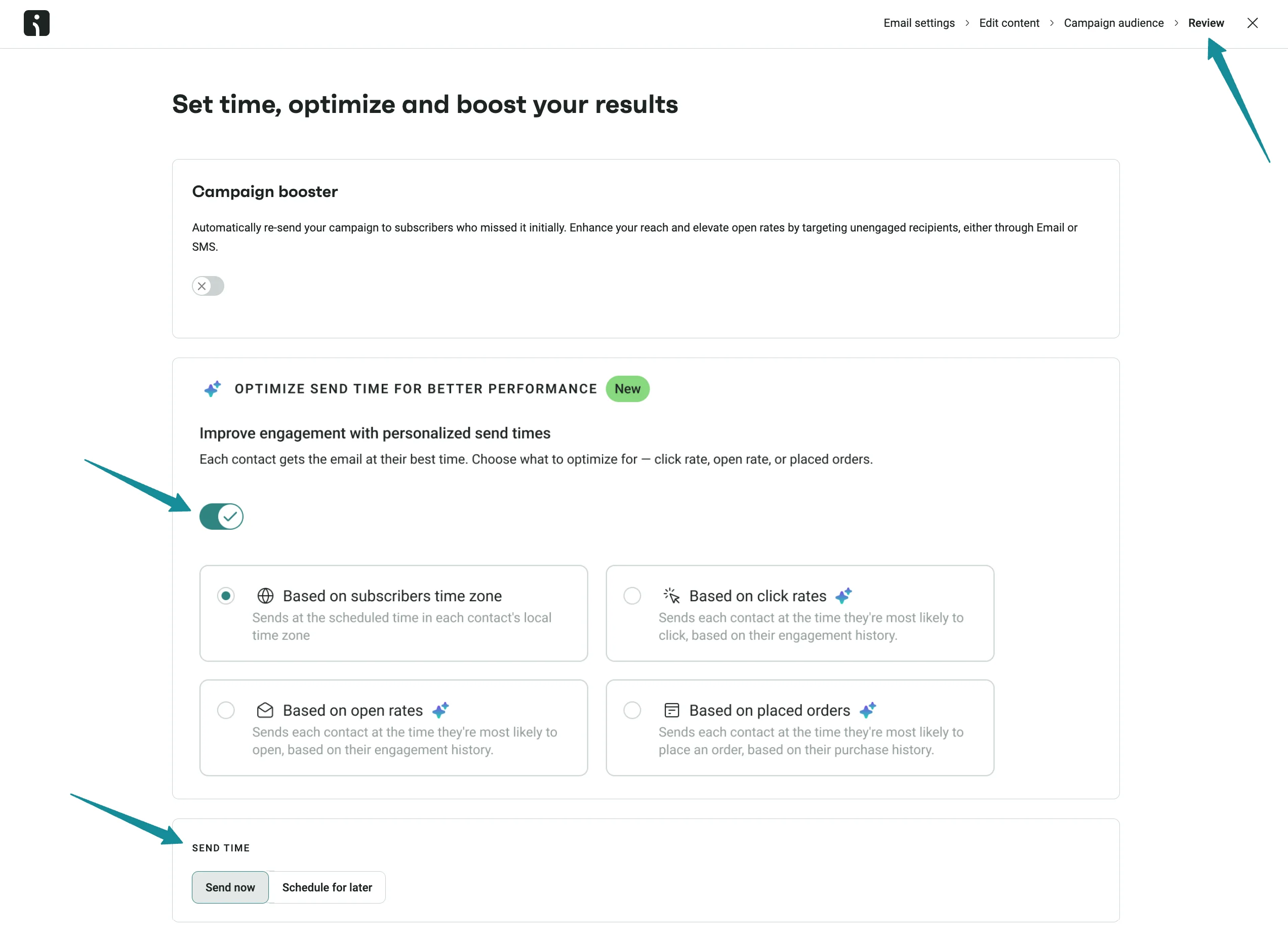
Recognizing the complexities of manual timing optimization, marketing automation platforms like Omnisend offer advanced features to streamline this process. Omnisend’s "Optimize Send Time for Better Performance" feature removes the guesswork by individually timing each contact’s email delivery. This addresses both time zone discrepancies and individual inbox competition by delivering messages precisely when each subscriber is most likely to be active.
When scheduling a campaign, marketers simply select the desired date. Omnisend then evaluates each contact’s historical engagement data and determines the optimal hour within a 24-hour window for that specific individual to receive the email. This functionality is driven by four distinct delivery modes:
- Optimize for Opens: Emails are sent when the contact is historically most likely to open.
- Optimize for Clicks: Delivery is timed for when the contact is most prone to click links within an email.
- Optimize for Orders: Messages are delivered when the contact has historically made purchases.
- Send by Local Time Zone: Emails are sent at a specified time relative to each contact’s local time zone, ensuring geographical relevance.
To utilize engagement-based delivery modes, a store must have previously sent at least 10 email campaigns to establish sufficient data. This feature is typically available on advanced plans (e.g., Omnisend’s Pro plan) or via specialized add-ons, and currently applies to email campaigns only. This automated, data-driven approach significantly enhances the likelihood of emails being seen and acted upon, freeing marketers to focus on content and offer strategy.
Conclusion: Data-Driven Timing for Black Friday Success
In the hyper-competitive Black Friday environment of 2026, email timing is not a mere logistical detail but a core strategic imperative. Starting campaigns in mid-October builds crucial anticipation, while employing unconventional send times helps avoid the fierce inbox competition of peak hours. Segmenting audiences for relevant messaging at optimal moments and implementing smart resend strategies are vital for capturing missed opportunities.
Ultimately, a brand’s own customer data provides the most accurate roadmap. Tracking when individual customers open, click, and purchase allows for continuous refinement of approach. This data, combined with advanced automation tools that personalize delivery times for each subscriber, removes much of the guesswork. Black Friday email success is not a matter of luck, but a meticulously planned and data-driven timing strategy that cuts through the noise and maximizes sales.








