rifanmuazin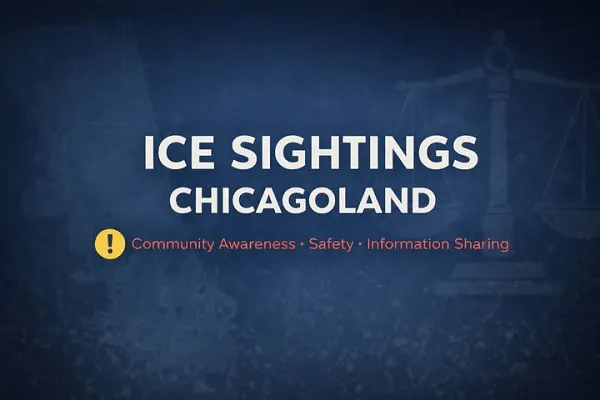
A significant legal victory for free speech advocates unfolded recently as a federal judge granted a preliminary injunction protecting a Facebook group and an associated mobile application that track the activities of U.S. Immigration and Customs Enforcement (ICE) agents. The ruling allows the "ICE Sightings – Chicagoland" Facebook group and the "Eyes Up" app to continue their operations, preventing the U.S. government from coercing technology platforms to remove them. This decision stems from a lawsuit alleging that the government, under the previous Trump administration, suppressed constitutionally protected speech by pressuring Facebook and Apple to dismantle these ICE monitoring efforts. The judge’s order indicates a strong likelihood that the plaintiffs will ultimately succeed in their case, affirming the right of citizens to share publicly available information, even when such information pertains to government agency movements and operations.
The Genesis of the "ICE Sightings" and "Eyes Up" Initiatives
The "ICE Sightings – Chicagoland" Facebook group emerged as a community-driven effort to monitor and disseminate information regarding ICE activities, particularly in the Chicago metropolitan area. Its primary goal was to provide real-time alerts to residents about ICE presence, raids, and operations, enabling individuals and families, especially those in vulnerable immigrant communities, to be aware and take precautions. The information shared was sourced from publicly observable activities, eyewitness accounts, and other open data points. Complementing this Facebook group, the "Eyes Up" mobile application was developed to offer a more streamlined and accessible platform for these alerts, leveraging smartphone technology to deliver timely notifications to users. Both initiatives operated on the premise of transparency and community self-defense, utilizing publicly available information to foster awareness within targeted communities.
The government’s opposition to these platforms reportedly escalated through direct and indirect pressure on technology companies. The lawsuit alleges that various federal agencies, including elements within the Department of Homeland Security (DHS) and the Department of Justice (DOJ), engaged with Facebook and Apple, urging them to remove the group and the app, respectively. The government’s purported rationale for these demands often centered on concerns for agent safety, operational security, and the potential for harassment of federal officers. However, the plaintiffs argued that these concerns were a pretext for stifling speech that shed light on government actions, thereby violating their First Amendment rights.
Understanding the Preliminary Injunction
The granting of a preliminary injunction is a critical procedural step in legal proceedings. It is not a final judgment on the merits of the case but rather a temporary order designed to prevent irreparable harm to the plaintiffs while the lawsuit proceeds. For an injunction to be issued, the plaintiffs typically must demonstrate:
- A strong likelihood of success on the merits: The judge must believe that the plaintiffs have a good chance of winning their case at trial.
- Irreparable harm without the injunction: The plaintiffs would suffer significant harm that cannot be remedied later if the injunction is not granted immediately.
- The balance of equities favors the plaintiffs: The potential harm to the plaintiffs outweighs any potential harm to the defendants if the injunction is granted.
- The public interest is served by the injunction: The order aligns with broader societal interests.
In this instance, the judge’s decision to issue the preliminary injunction strongly signals that the court views the government’s actions as a probable infringement on free speech. As reported by Engadget, the ruling explicitly aims "to stop the Trump administration from coercing platforms to take these projects down," reaffirming that citizens are within their constitutionally protected rights to share information gathered from public observation, even if it pertains to government activities that the government itself might prefer to keep less visible.
Background: ICE Operations and Public Scrutiny
Immigration and Customs Enforcement (ICE), a component of the Department of Homeland Security, is responsible for enforcing federal immigration laws. Its activities range from border security to interior enforcement, including arrests, detentions, and deportations of individuals suspected of violating immigration laws. ICE’s role has been a subject of intense national debate, particularly during the Trump administration, which pursued aggressive immigration enforcement policies. These policies often led to increased visibility of ICE operations in communities, sparking both support from those advocating for stricter immigration controls and strong opposition from civil liberties groups and immigrant rights organizations.
Critics of ICE operations often highlight concerns about due process, racial profiling, and the impact on families and communities. In response, community groups and activists have increasingly turned to public monitoring and transparency initiatives. The "ICE Sightings" and "Eyes Up" projects are emblematic of this trend, representing a form of citizen oversight intended to empower communities and ensure accountability. The information they shared, such as the location of ICE vehicles, agents, or ongoing operations, was deemed crucial by their users for safety and legal preparedness.
Chronology of a Contentious Battle
The precise timeline of the "ICE Sightings – Chicagoland" group and the "Eyes Up" app’s creation and subsequent challenges underscores the escalating tension between public transparency and government efforts to control information.
- Early 2010s: Community-led efforts to monitor ICE activities begin informally, growing in scope as immigration enforcement intensifies.
- Mid-2010s: The "ICE Sightings – Chicagoland" Facebook group is established, gaining traction as a hub for real-time information sharing among local residents and activists. The specific date of its inception is not widely publicized but aligns with the increasing digital mobilization around immigration issues.
- Late 2010s: The "Eyes Up" app is developed, offering a more dedicated and technologically advanced platform for delivering alerts about ICE movements, reflecting a sophisticated approach to citizen monitoring.
- 2019-2020: During the peak of the Trump administration’s immigration enforcement, reports suggest that federal agencies, including DHS and DOJ, began actively engaging with social media platforms and app stores. These engagements allegedly included requests or demands for the removal of content and applications deemed to interfere with law enforcement operations or endanger agents. While specific dates of government pressure are part of the ongoing lawsuit, it is understood to have occurred over a period as these platforms gained prominence.
- Platform Actions: Following government pressure, Facebook reportedly restricted the visibility or functionality of the "ICE Sightings" group, and Apple was allegedly pressured regarding the "Eyes Up" app, leading to its removal or restrictions on its availability. These actions sparked outrage among the platforms’ creators and users, who viewed them as capitulations to government censorship.
- Lawsuit Filing: The managers of the "ICE Sightings – Chicagoland" Facebook group and the developers of the "Eyes Up" app subsequently filed a lawsuit against the U.S. government, alleging First Amendment violations and government overreach in suppressing protected speech. The exact date of the lawsuit filing is a matter of court record but generally follows the alleged platform removals.
- Preliminary Injunction Granted: The recent judicial decision to grant a preliminary injunction marks a critical turning point in the legal battle, temporarily reinstating or protecting the platforms’ ability to operate while the underlying case proceeds.
Legal Context: First Amendment and Government Coercion
The core of this case rests on the First Amendment’s protection of free speech and the legal doctrine of "state action." The First Amendment generally prohibits the government from abridging freedom of speech. While private companies like Facebook and Apple are not directly bound by the First Amendment in their content moderation decisions, government pressure on these companies can, under certain circumstances, be deemed "state action" and thus a violation of constitutional rights.
The "state action" doctrine holds that when a private entity’s actions are so intertwined with or controlled by the government that they essentially become an arm of the state, then those actions can be subject to constitutional scrutiny. In cases where the government coerces or significantly encourages a private platform to suppress speech, courts may view the platform’s action as attributable to the government, thereby triggering First Amendment protections. This principle was central to cases like Missouri v. Biden, where plaintiffs alleged that the Biden administration coerced social media companies to censor content related to COVID-19 and elections. The courts in those cases have grappled with the fine line between legitimate government communication with platforms and unconstitutional coercion.
The judge in the "ICE Sightings" case likely found sufficient evidence to suggest that the government’s engagement with Facebook and Apple crossed this line, moving from mere requests to coercive demands that led to the suppression of speech. The information being shared – the publicly observable movements of government agents – typically falls under protected speech, absent compelling national security concerns or direct incitement to violence, which the plaintiffs would argue was not present here. This ruling reinforces the idea that citizens have a right to monitor their government and disseminate information about its activities, serving as a check on executive power and promoting transparency.
The Paradox of Free Speech Advocacy: A Critical Examination
This case profoundly highlights a recurring paradox in contemporary American politics: the selective application of free speech principles by various political figures and entities. While conservative politicians, in particular, often champion "free speech absolutism" and criticize social media platforms for perceived censorship, their actions sometimes contradict these stated ideals when the speech in question is not aligned with their interests.
Donald Trump’s Stance and Actions:
Former U.S. President Donald Trump has been one of the most vocal critics of social media platforms, frequently accusing them of censoring conservative voices. In a 2024 memoir, he reportedly claimed that Meta CEO Mark Zuckerberg "betrayed him" by steering Facebook against him, particularly after Meta’s decision to ban Trump from Facebook and Instagram in 2021 following the January 6th Capitol riots. Trump’s inflammatory statements preceding and during the riots led platforms to conclude he incited violence, resulting in his temporary or permanent removal. He even reportedly warned Zuckerberg in his memoir, "We are watching [Zuckerberg] closely, and if he does anything illegal this time he will spend the rest of his life in prison."
Earlier, in 2020, Trump signed an executive order targeting Section 230 of the Communications Decency Act, a legal protection shielding social platforms from liability for user-generated content and moderation decisions. This move came after Twitter added fact-check indicators to some of his tweets, which he perceived as censorship. Trump argued that major social media platforms wielded "unchecked power" to "censor and edit" user views, stifling conservative voices. His frustration eventually led him to found Truth Social, his own social media platform designed to replicate Twitter, ostensibly as a bastion of uncensored speech.
However, the irony is stark: while Trump vehemently opposed what he considered censorship of his own speech, his administration simultaneously sought to suppress the speech of others, as evidenced by the allegations in the "ICE Sightings" case. The government’s efforts to compel Facebook and Apple to remove content critical of or merely monitoring ICE operations directly contradict the "free speech" principles Trump often espoused when advocating for his own ability to speak freely on platforms. This demonstrates a transactional view of free speech, where its defense is often tied to whether it serves one’s own political agenda.
Elon Musk and X (formerly Twitter):
The acquisition of Twitter by Elon Musk in 2022, rebranding it as X, was predicated on a stated commitment to "free speech absolutism." Musk positioned himself as a champion of unfettered discourse, promising to restore free speech to the platform. Yet, his tenure has also been marked by actions that appear to contradict this philosophy.
A notable example is Musk’s decision to ban the "ElonJet" account, which used publicly available information to track the movements of his private jet. Weeks before the ban, Musk had explicitly stated he would not restrict the account, citing his commitment to free speech. The subsequent ban, justified by safety concerns, drew criticism for appearing to be a selective application of his free speech principles, prioritizing his personal safety over the dissemination of publicly available information.
Furthermore, X under Musk has faced accusations of reducing the reach of certain media organizations and amplifying conservative political perspectives, as detailed in reports. While X claims to prioritize "freedom of speech, not freedom of reach," critics argue that algorithmic adjustments and content moderation decisions have disproportionately affected outlets and viewpoints not aligned with Musk’s own. This pattern suggests a nuanced, and at times contradictory, approach to free speech that mirrors the selective application seen in political figures like Trump.
Broader Implications of the Ruling
The preliminary injunction in the "ICE Sightings" case carries significant implications across several domains:
- For Civil Liberties and Transparency Advocates: This ruling is a victory for civil liberties groups and organizations advocating for government transparency. It reaffirms the constitutional right of citizens to monitor government activities and disseminate information, acting as a crucial check on state power. It empowers communities to use digital tools for self-protection and collective action.
- For Government Agencies: The decision serves as a reminder to government agencies that their operations are subject to public scrutiny, and attempts to suppress the dissemination of publicly available information will be met with legal challenges. It delineates the boundaries of government authority in influencing private platforms’ content policies.
- For Social Media Platforms: The case highlights the precarious position of social media companies, caught between government pressure, user demands, and their own terms of service. The ruling may embolden platforms to resist government demands that they perceive as infringing on user rights, knowing that courts are willing to intervene to protect constitutional speech. It also underscores the need for clear and transparent policies regarding government requests for content removal.
- The Future of Free Speech in the Digital Age: This case contributes to the ongoing, complex debate about the nature and boundaries of free speech in the digital era. It reinforces the idea that the First Amendment applies even to digital forms of communication and collective action. It also emphasizes that the government’s power to influence or compel private platforms’ content decisions is not absolute and is subject to judicial review.
In conclusion, the federal judge’s preliminary injunction protecting the "ICE Sightings – Chicagoland" Facebook group and the "Eyes Up" app is a landmark decision affirming the constitutional right to free speech against alleged government overreach. It not only provides immediate protection for these specific platforms but also sends a broader message about the importance of citizen oversight and transparency, particularly concerning government agencies. Moreover, it starkly illuminates the often-hypocritical stance of political figures and influential platform owners who champion free speech when it serves their interests but are quick to seek its suppression when it does not. As the legal proceedings continue, this case will undoubtedly remain a focal point in the enduring struggle to balance government interests with fundamental civil liberties in the digital public square.