
 rifanmuazin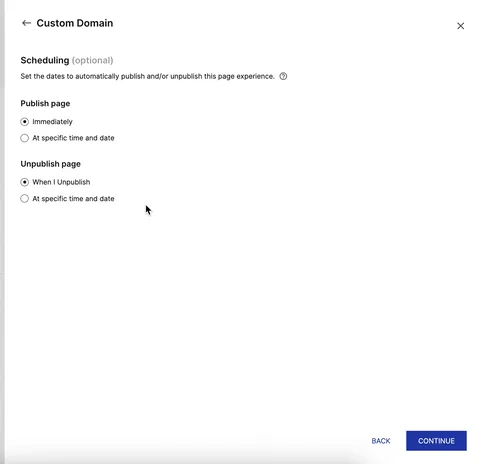
The digital marketing landscape is undergoing a significant transformation as software providers pivot toward comprehensive automation and multi-functional design tools to meet the increasing demands of global brands. Instapage, a leading platform in the landing page and conversion rate optimization (CRO) sector, has officially announced a suite of new features designed to alleviate the operational burdens faced by modern marketing teams. The update, which includes a robust Scheduling tool, a new category of Website Page Templates, and the formal introduction of the Instapage Early Access Program, marks a strategic expansion of the platform’s capabilities beyond traditional post-click optimization.
These developments come at a time when marketing departments are under mounting pressure to deliver hyper-personalized experiences across diverse audience segments while maintaining lean operational costs. By integrating automated publishing and broadening the scope of its no-code builder to include full website pages, Instapage is positioning itself as a more versatile utility in the competitive MarTech ecosystem, directly challenging traditional content management systems (CMS) and specialized web design tools.
Strategic Automation Through Advanced Campaign Scheduling
The cornerstone of the latest update is the Scheduling feature, now available to users on select service plans. This functionality is designed to address a persistent pain point in digital campaign management: the manual labor required to sync landing page visibility with time-sensitive promotions. Previously, marketers were often required to be present at specific hours—sometimes during weekends or holidays—to manually publish or unpublish pages to coincide with the start and end of specific advertising pushes, such as Black Friday sales or limited-time product launches.
The new Scheduling tool allows users to pre-determine exact dates and times for three critical actions: publishing a new page, updating an existing live page, and unpublishing content once a campaign has concluded. This automation ensures that the user experience remains consistent with active advertisements, preventing the common “404 error” or “expired offer” friction points that can drastically lower conversion rates.
Industry analysts suggest that such automation tools are no longer a luxury but a necessity. According to recent productivity data in the marketing sector, professionals spend approximately 20% of their work week on repetitive administrative tasks. By automating the deployment cycle, Instapage aims to reclaim this time for its users, allowing them to focus on high-level strategy and creative development. The feature also serves as a safeguard against human error, ensuring that outdated pricing or obsolete messaging does not remain live due to oversight.
Expansion into No-Code Website Development
While Instapage has historically defined itself as a landing page specialist, user behavior data has indicated a growing trend of customers utilizing the platform’s drag-and-drop builder to construct entire websites. Recognizing this shift, the company has introduced a dedicated “Website Pages” template category. This move signals a broadening of the platform’s value proposition, moving it closer to the territory of general-purpose website builders while retaining its core focus on conversion-centric design.
The new library includes pre-customized templates tailored for nine specific industries, including Real Estate, Beauty, and Consumer Products. These templates are engineered with the same conversion principles that have defined Instapage’s landing pages, such as optimized white space, clear calls-to-action (CTAs), and mobile-responsive layouts.
The decision to provide industry-specific templates is rooted in the psychological aspects of consumer trust. In the Real Estate sector, for instance, landing pages require high-resolution visual galleries and lead-capture forms that integrate with CRM systems. In contrast, the Beauty industry demands aesthetic-heavy layouts that emphasize brand storytelling and social proof. By providing these specialized frameworks, Instapage reduces the “blank canvas” anxiety often associated with web design, enabling small-to-medium enterprises (SMEs) and agencies to deploy professional-grade sites in a fraction of the time traditionally required.
The Instapage Early Access Program: A Product-Led Growth Initiative
In an effort to foster a more collaborative relationship with its user base, Instapage has also launched its Early Access Program. This community-focused initiative allows selected members to test and provide feedback on new features before they reach general availability. This approach is a hallmark of product-led growth (PLG) strategies, where user feedback directly informs the development roadmap, ensuring that the final product solves real-world problems effectively.
Members of the program will have the opportunity to influence the trajectory of the platform. Recent additions that were refined through similar developmental philosophies include the “Carousels” feature, which allows for interactive content displays, and the “Popups” tool, designed for lead capture without disrupting the user flow. Furthermore, a redesigned Dashboard was recently rolled out to provide users with a more intuitive interface for managing high volumes of pages and sub-accounts.
The launch of the Early Access Program reflects a broader trend in the SaaS (Software as a Service) industry, where “beta-testing” has evolved into a structured engagement model. By involving the most active users in the development cycle, Instapage aims to reduce churn and increase the “stickiness” of its platform by delivering features that are pre-validated by the market.
Market Context and Competitive Implications
The expansion of Instapage’s feature set occurs against the backdrop of a rapidly growing no-code market. Market research reports suggest that the global no-code development platform market is expected to grow at a compound annual growth rate (CAGR) of nearly 30% through 2030. As businesses seek to bypass the traditional bottlenecks of IT and engineering departments, tools that empower non-technical marketers to build sophisticated digital assets are seeing unprecedented adoption.
Instapage’s primary competitors, such as Unbounce, Leadpages, and HubSpot, have also been aggressively updating their suites to include more automation and AI-driven features. Instapage’s focus on the “post-click” experience—the journey a user takes after clicking an ad—remains its primary differentiator. However, by adding website templates and scheduling, the company is attempting to capture a larger share of the marketer’s daily workflow.
The implications of these updates are particularly significant for advertising agencies. Agencies managing multiple clients often struggle with the complexity of coordinating hundreds of disparate campaigns. The ability to schedule updates across a portfolio of clients from a single dashboard provides a scalable solution that can lead to higher profit margins for the agency and more reliable results for the end client.
Timeline of Recent Platform Evolutions
The rollout of Scheduling and Website Templates is part of a calculated sequence of updates released by Instapage over the past year.
- Q3 2023: Introduction of AI-powered content generation tools to assist in copy creation for landing pages.
- Q4 2023: Launch of the New Dashboard, streamlining the navigation and data visualization for high-volume users.
- Q1 2024: Release of interactive elements including Carousels and enhanced Popup triggers to improve on-page engagement.
- Q2 2024: Official launch of the Scheduling feature and the expansion into the Website Page Template category.
This timeline suggests a strategic move toward becoming a comprehensive digital experience platform rather than a single-point solution. By layering automation (Scheduling) on top of versatile design (Website Templates) and community-driven innovation (Early Access), Instapage is building a cohesive ecosystem for digital growth.
Analysis of Broader Industry Impact
The shift toward “scheduled marketing” reflects a broader move toward the “always-on” digital economy. As global markets operate across every time zone, the ability for a North American marketing team to schedule a product launch to go live at 9:00 AM in Tokyo without manual intervention is a critical operational advantage.
Furthermore, the blurring lines between landing pages and websites indicate a change in how brands perceive their digital footprint. In the past, a website was a static “digital brochure,” while landing pages were the dynamic, conversion-oriented “salespeople.” Today, brands are demanding that their entire website function with the efficiency of a landing page. Instapage’s new templates facilitate this by bringing CRO-focused design to every page of a site, from the “About Us” section to the product catalog.
Industry experts anticipate that the next phase of this evolution will likely involve deeper integrations with Artificial Intelligence (AI) for predictive scheduling—where the software suggests the optimal time to publish or update a page based on historical traffic patterns and conversion data. While Instapage has not yet announced such capabilities, the current update provides the foundational infrastructure necessary for such future advancements.
Conclusion and Future Outlook
Instapage’s latest feature releases represent a significant milestone in the platform’s history. By addressing the dual needs of operational efficiency and design versatility, the company is adapting to a market that demands both speed and precision. The Scheduling feature provides the logistical control necessary for complex global campaigns, while the Website Page Templates open new doors for businesses seeking a unified design solution.
As the Early Access Program begins to yield new insights, the marketing community can expect a continued cadence of updates aimed at further reducing the friction between a creative idea and a live, converting digital experience. For marketers looking to optimize their conversion rates while minimizing manual overhead, these tools offer a glimpse into a more automated and integrated future for digital advertising.
The company continues to offer a 14-day free trial, allowing new users to test these advanced features and evaluate the platform’s impact on their conversion goals. As the MarTech landscape continues to consolidate, Instapage’s focus on the intersection of design, automation, and user feedback may well set the standard for the next generation of marketing platforms.








