

The rapid proliferation of digital content and the increasing sophistication of generative artificial intelligence have ushered in an era where the verification of information is both more critical and more challenging than ever before. For content creators, journalists, and researchers, the burden of ensuring accuracy in LinkedIn posts, articles, and white papers has become a significant bottleneck in the production process. While the ideal of maintaining a meticulously organized "second brain" for research remains a goal for many, the reality often involves a frantic, retrospective search for sources during the final stages of drafting. To address this friction, new methodologies in workflow automation are emerging, leveraging platforms like n8n to streamline the validation of claims against primary sources and trusted databases.

The Landscape of Digital Misinformation and the Verification Gap
In the current media ecosystem, misinformation spreads significantly faster than factual corrections. According to various digital forensics studies, false narratives often achieve a reach six times greater than truthful reporting. This environment places an immense responsibility on individual publishers to validate every numerical figure, historical fact, and scientific claim before publication. However, manual fact-checking is a resource-intensive endeavor. It typically involves identifying specific claims within a text, conducting targeted web searches, evaluating the credibility of various sources, and documenting the findings for transparency.
The automation of this process does not seek to remove the human element entirely—which remains essential for nuanced judgment—but rather to reduce the "friction" of data retrieval and initial verification. By implementing an automated pipeline, creators can shift their focus from the repetitive task of searching for URLs to the higher-level task of synthesizing verified information.

Architectural Overview of the Automated Fact-Checking Workflow
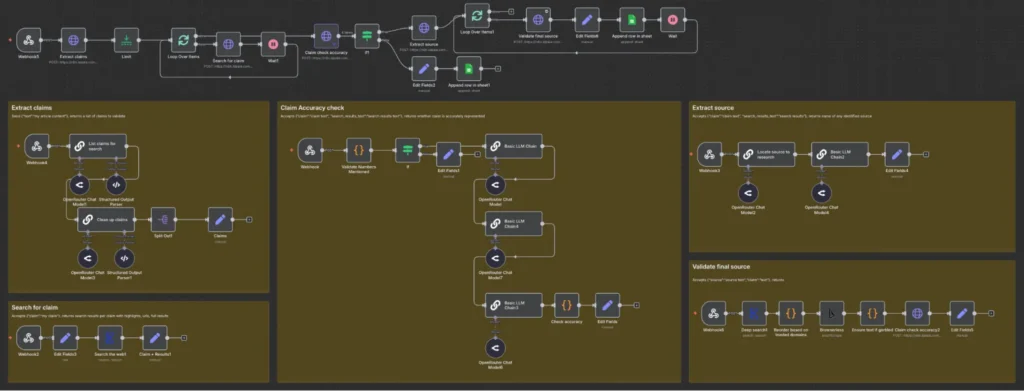
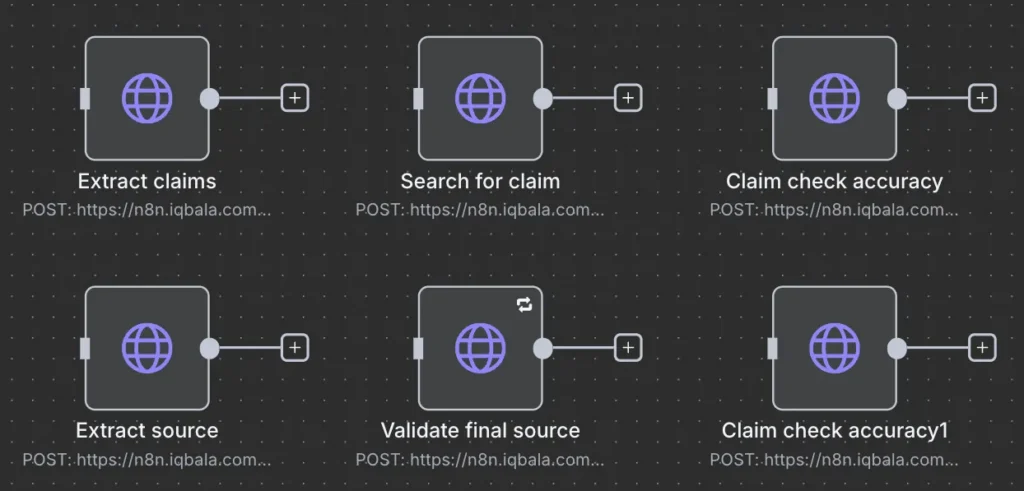
The automated system developed to solve this challenge is built on n8n, an extendable workflow automation tool that allows for the integration of various APIs and artificial intelligence models. The architecture is designed as a series of modular "mini-APIs" or sub-workflows, which can be called independently or as part of a cohesive chain. This modularity ensures that the system can be scaled or updated as new search technologies or AI models become available.
The workflow operates through a structured five-part sequence:

- Claim Extraction and Self-Reflection: Identifying verifiable statements within a raw draft.
- Targeted Web Research: Utilizing specialized search engines to find relevant documentation.
- Multi-Model Accuracy Assessment: Comparing the extracted claims against search results using AI-driven logic.
- Source Concatenation and Refinement: Summarizing the evidence found.
- Primary Source Validation: Cross-referencing the findings against a pre-approved list of high-authority domains.
Phase 1: Claim Extraction and the Self-Reflection Loop
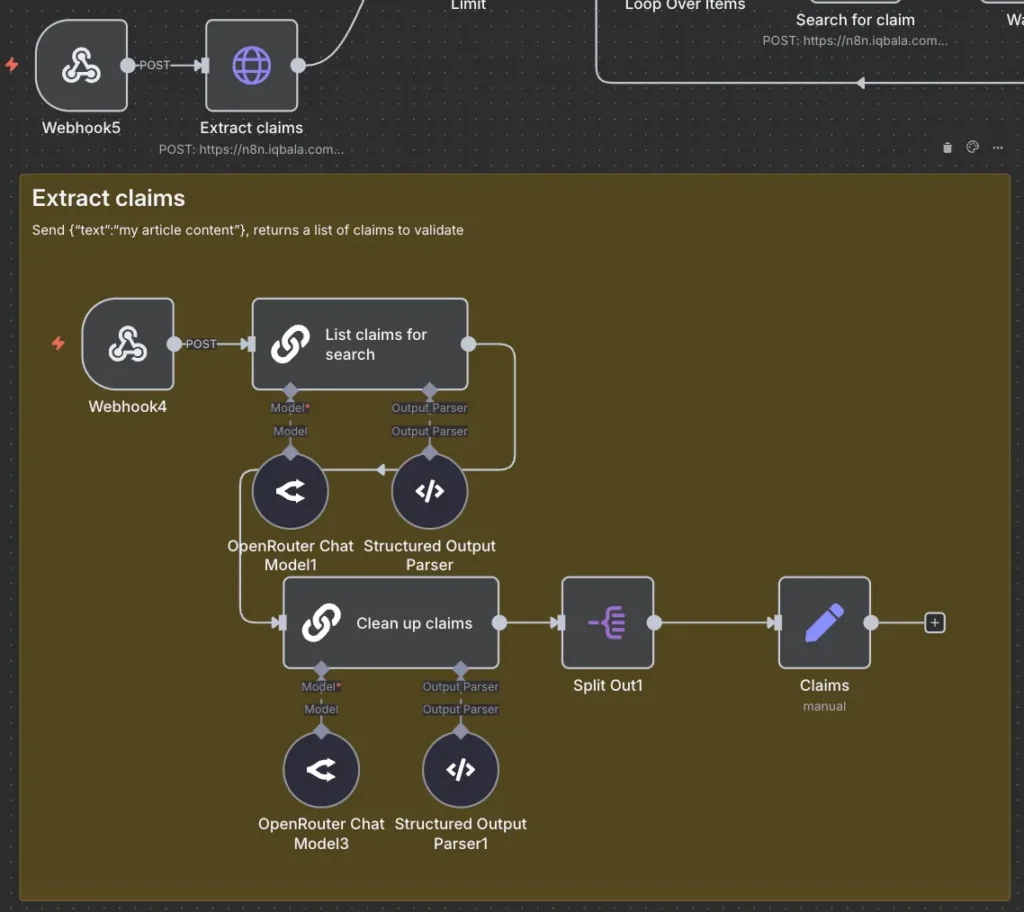
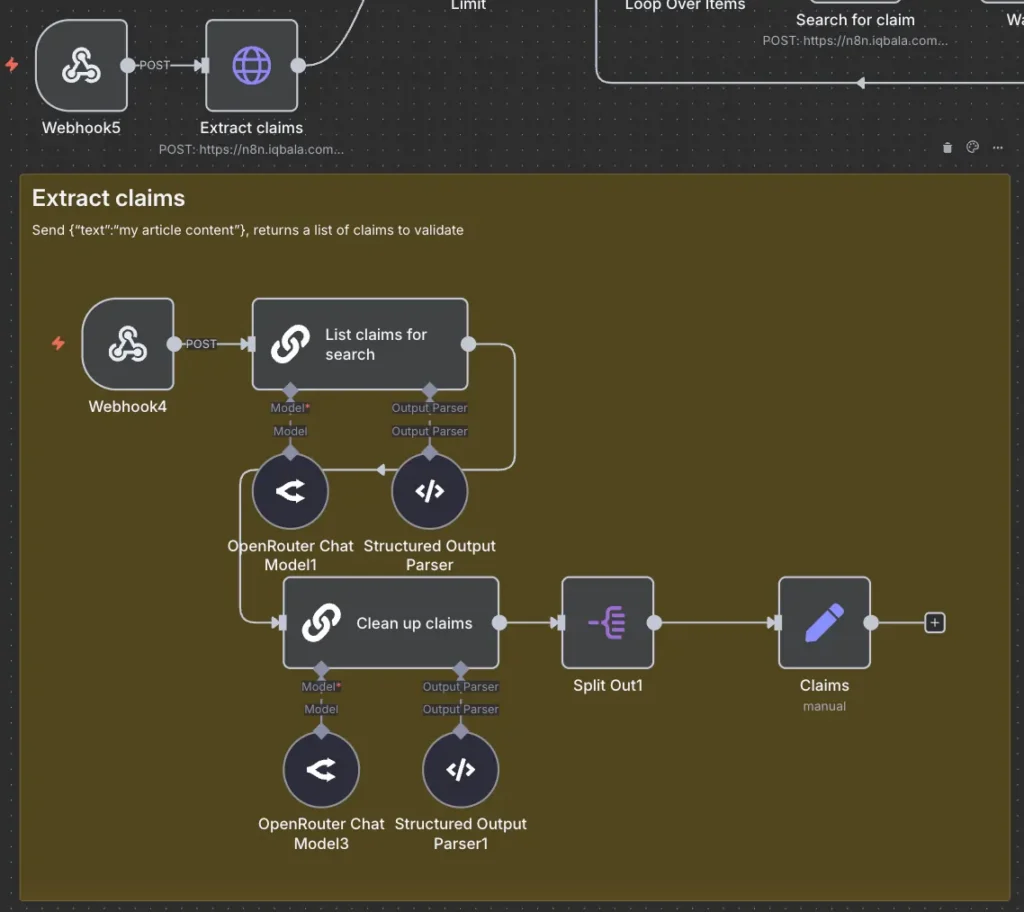
The process begins when a user submits a rough draft to a webhook. The initial stage utilizes an AI node, such as Google’s Gemma 4 or Meta’s Llama series, to parse the text. The primary objective is to transform a narrative into a list of concise, verifiable claims. For instance, a sentence such as "Market growth exploded last year due to a 20% increase in tech adoption" would be distilled into the claim: "Tech adoption increased by 20% in the previous calendar year."
To ensure the integrity of this extraction, the workflow employs a "self-reflection" mechanism. This involves a second AI node that reviews the list generated by the first, checking for hallucinations or misinterpretations of the original text. Research into agentic AI workflows suggests that this "double-check" method significantly reduces errors in the initial processing phase, providing a cleaner dataset for the subsequent search stages.
Phase 2: Advanced Search via the Exa API
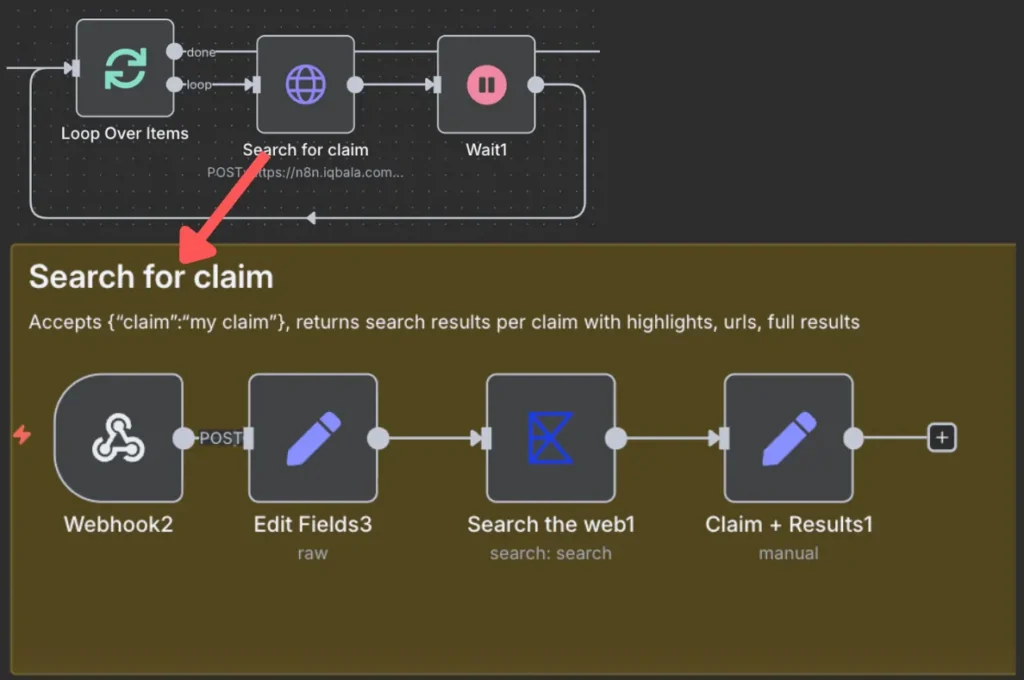
Standard search engines are often optimized for consumer intent rather than research precision. To overcome this, the workflow integrates the Exa API (formerly Metaphor), a search engine designed specifically for use by large language models (LLMs). Exa allows the system to conduct "neural searches," which focus on the semantic meaning of a claim rather than just keyword matching.
Because many research APIs impose rate limits on free-tier users, the workflow incorporates a batching logic. It splits the list of claims into groups—typically ten at a time—executes concurrent searches, and introduces a mandatory delay before proceeding. This ensures stability and prevents the system from being flagged for excessive requests. The output of this phase is a collection of "highlights"—the most relevant snippets of text from the top search results.
Phase 3: The Best-of-Three Accuracy Check
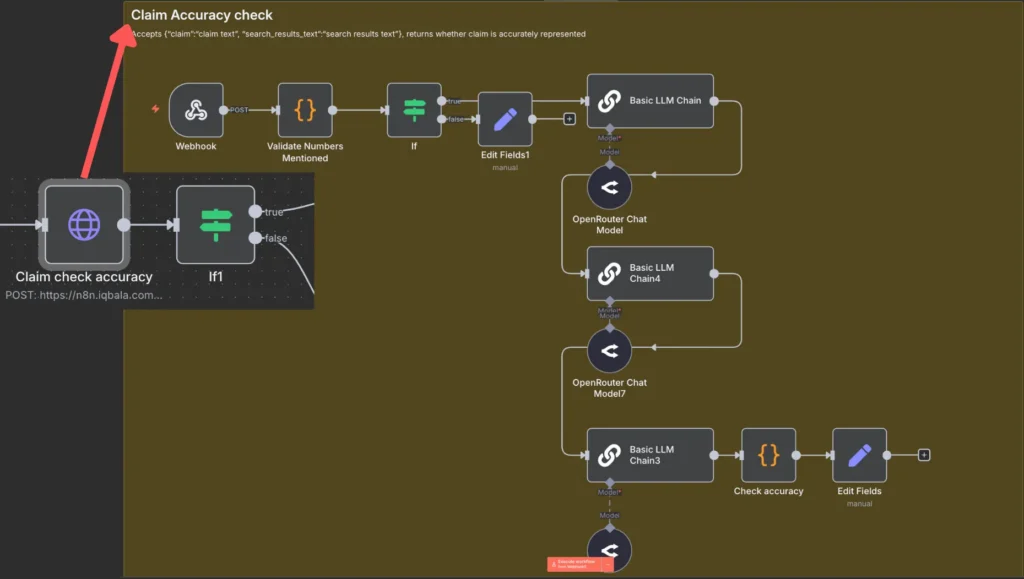
One of the most innovative aspects of this automated system is its approach to determining truthfulness. AI models can occasionally produce "false positives," where they incorrectly validate a claim. To mitigate this, the workflow runs a "text representation check" three times for every claim-source pairing.
This deterministic approach operates on a majority-vote system. If the AI validates a claim in two out of three instances, it is marked as "Validated: TRUE." If it fails to reach this threshold, the system flags the claim as "Validated: FALSE." It is important to note that a "FALSE" status does not necessarily mean the claim is untrue; rather, it indicates that the automated system could not find sufficient evidence to support it, signaling the need for manual intervention by the author.
Phase 4: Source Extraction and Conciseness
Once a claim is validated, the system must document where the supporting information was found. This stage involves an AI node that identifies the specific source URL and rewrites the supporting evidence into a concise summary. For smaller AI models, such as the Llama-3.2 1B, this two-step process—locating the source and then summarizing it—prevents the model from becoming overwhelmed by large blocks of search data, leading to higher quality output.
Phase 5: Deep Validation Against Trusted Domains and PDF Parsing
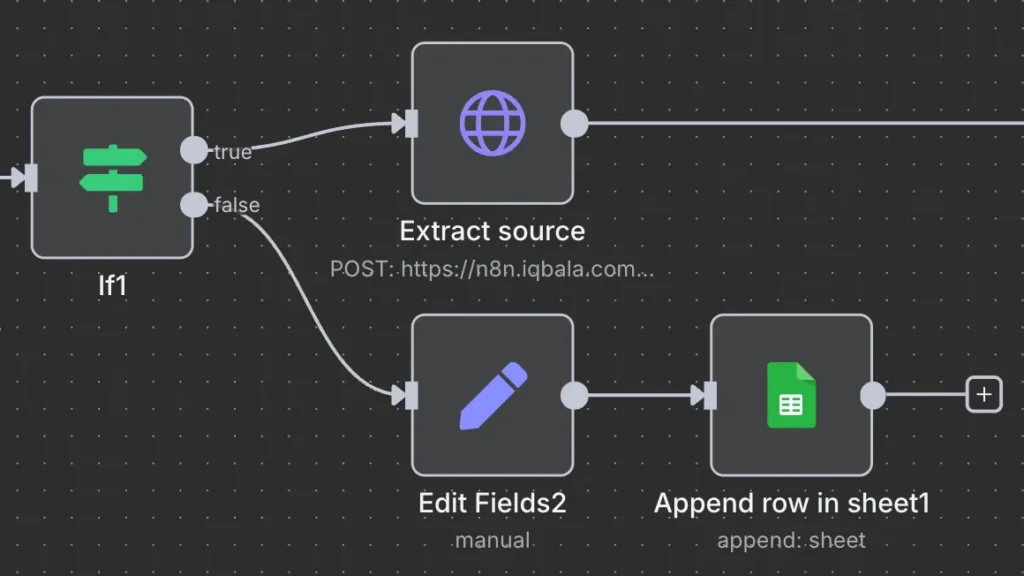
The final and most rigorous stage of the workflow involves validating the claim against a "Trusted Domain List." In an era of "AI-generated SEO spam," not all websites are created equal. The developer of this workflow hardcoded a list of high-authority domains—such as government databases, academic journals, and reputable news organizations—to prioritize in the final check.
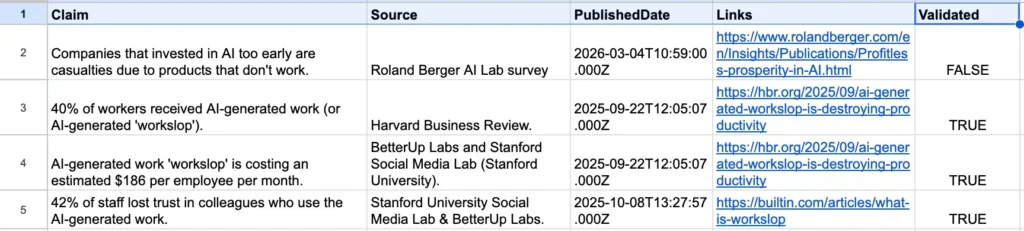
To access the full content of these primary sources, the system utilizes "Browserless," a tool that allows the workflow to "scrape" the text from a webpage as if a human were viewing it. This is particularly crucial for claims supported by PDF documents, which are notoriously difficult for standard search crawlers to parse. The Browserless node extracts the raw text from the page or PDF, and the system runs a final accuracy check against this primary data. The resulting information, including the claim, the source URL, the publication date, and the validation status, is then automatically exported to a Google Spreadsheet.
Chronology of Development and Iteration
The development of this fact-checking tool followed a clear evolutionary path, reflecting the iterative nature of software engineering in the AI space:
- Initial Concept: The realization that manual fact-checking was the primary cause of delays in content publishing.
- Prototype Alpha: A single-node AI system that attempted to search and validate claims simultaneously, which resulted in high hallucination rates.
- Beta Iteration: The introduction of the modular "mini-API" structure, allowing for specialized nodes to handle extraction, search, and validation separately.
- Current Version: The implementation of the "best-of-three" logic and the integration of Browserless for deep-source scraping.
- Future Roadmap: Plans to transition the entire n8n setup into a single, streamlined API endpoint and the addition of semantic similarity checks to further improve deterministic accuracy.
Supporting Data: The Efficiency Gains of Automation
While the automated workflow introduces some latency—taking several minutes to process a long article due to rate-limiting and deep-scraping—the efficiency gains are substantial. A manual fact-check of 20 distinct claims can take a human researcher anywhere from 60 to 120 minutes, depending on the complexity of the sources. The n8n workflow reduces the human labor required to approximately 5 to 10 minutes of final review.
Furthermore, the use of smaller, specialized models like Gemma 4 throughout the workflow reduces the computational cost and energy consumption compared to using massive, general-purpose models for every task. This "small model" strategy is becoming a standard in enterprise AI for its balance of performance and resource management.
Broader Implications for Journalism and Content Integrity
The implications of this technology extend beyond individual productivity. As newsrooms and marketing departments face shrinking budgets, the ability to automate the "drudge work" of verification could be the key to maintaining editorial standards. However, industry experts caution that such tools should be viewed as "augmented intelligence" rather than a replacement for human editors.
The "Validated: FALSE" flag serves as a critical safety net. It forces the creator to confront claims that lack clear evidence, potentially preventing the spread of unintentional misinformation. Moreover, by documenting the "Primary Source" in a structured spreadsheet, the workflow provides an audit trail that can be shared with readers to build trust and transparency.
Conclusion and Future Outlook
The integration of n8n, Exa, and Browserless into a cohesive fact-checking pipeline represents a significant step forward in the democratization of high-level research tools. By reducing the friction associated with validating claims, this system allows creators to uphold the highest standards of accuracy without sacrificing the speed of publication. As AI models continue to evolve and API costs decrease, it is likely that these types of automated verification workflows will become standard components of the modern writing process, ensuring that in the race for digital attention, truth is not left behind.







