

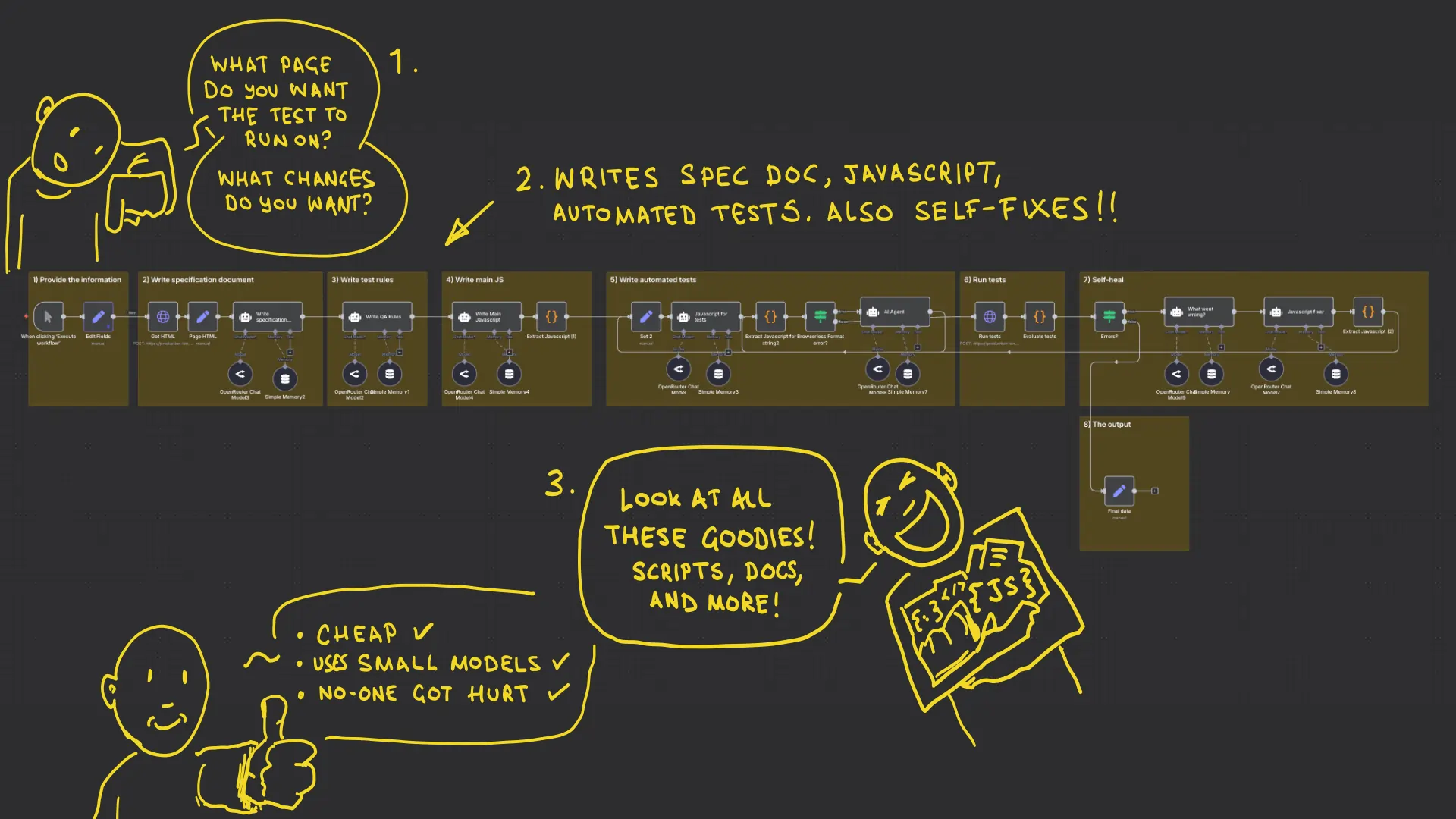
The integration of generative artificial intelligence into front-end development has reached a new milestone with the emergence of automated, self-healing workflows designed specifically for client-side A/B testing. As digital organizations strive for greater agility in Conversion Rate Optimization (CRO), the traditional bottleneck of manual JavaScript development is being challenged by systems that not only write code but also perform quality assurance (QA) and error correction autonomously. This development represents a significant shift in the experimentation landscape, moving away from high-latency, expensive Large Language Models (LLMs) toward more sustainable, cost-effective Small Language Models (SLMs) that can be executed locally or via low-cost cloud APIs.

The core of this innovation lies in a specialized workflow—frequently built on automation platforms like n8n—that manages the entire lifecycle of an experiment’s technical implementation. By leveraging the Browserless API for headless browser rendering and SLMs for logic generation, developers can now produce production-ready JavaScript for experiments at a fraction of the traditional cost, often estimated at less than $0.06 per experiment. This methodology prioritizes efficiency and deterministic outcomes over the brute-force computational power typically associated with high-end AI agents.
The Technical Framework of Automated Experimentation
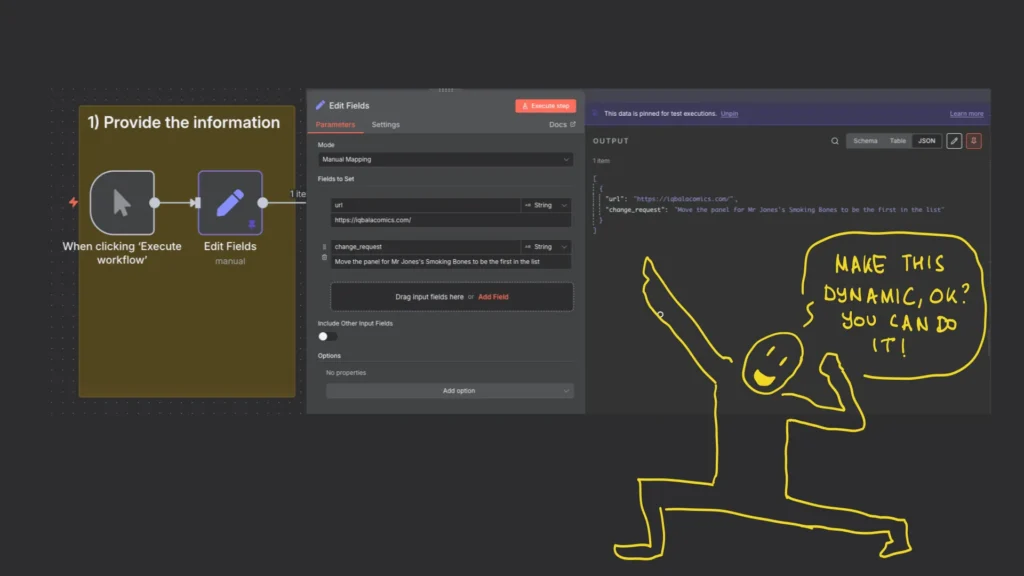
The architecture of a self-healing A/B test workflow is predicated on the concept of "agentic" behavior without the associated overhead of autonomous agents. Instead of allowing an AI to wander through a codebase, the workflow follows a rigid, serialised path. The process begins with two primary inputs: the URL of the target webpage and a natural language description of the intended change, such as "reorder the navigation panels" or "change the call-to-action button color based on scroll depth."

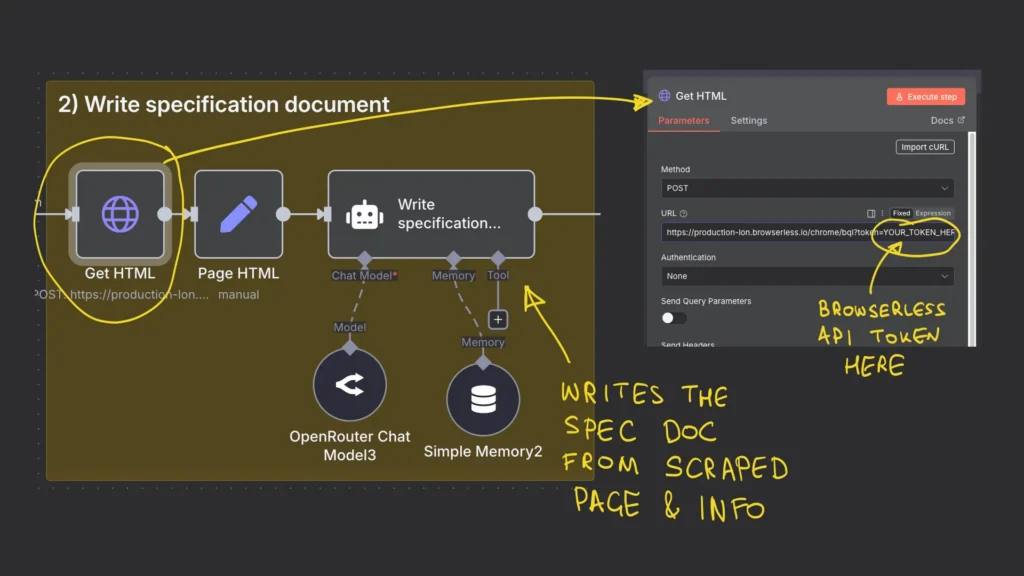
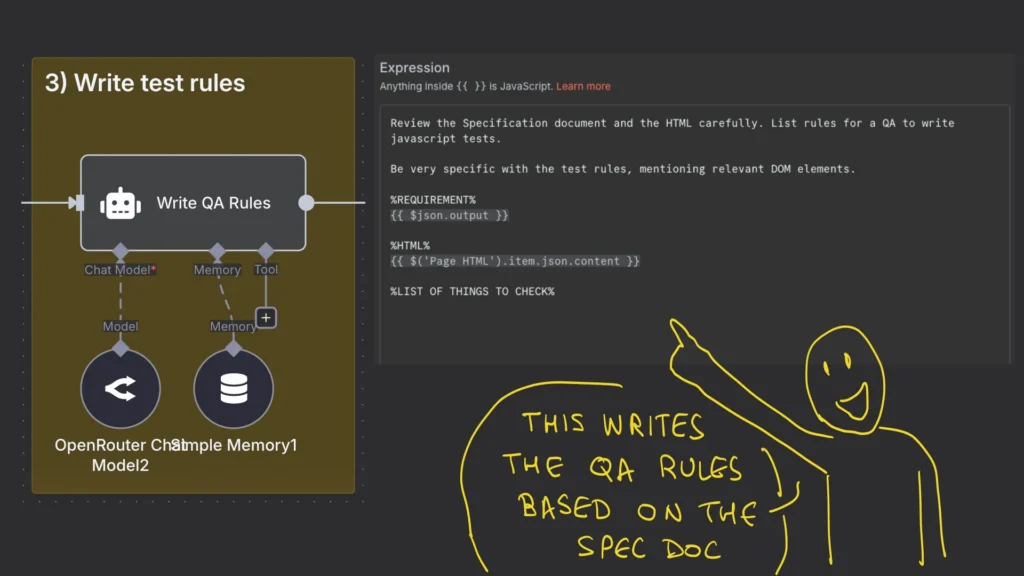
To ensure the AI operates with high context, the system utilizes a headless browser—typically via the Browserless service—to fetch the live HTML and Document Object Model (DOM) structure of the page. This raw data is then fed into an SLM, which acts as a senior technical architect. Rather than writing code immediately, the model first produces a comprehensive technical specification. This document serves as a roadmap, breaking down the DOM manipulations required and identifying potential conflicts with existing site architecture.
The Role of Small Language Models in Sustainable Development
One of the most significant aspects of this new workflow is the move toward Small Language Models. While models like GPT-4 or Claude 3.5 Sonnet are highly capable, they are often "overkill" for the specific task of writing client-side JavaScript for A/B tests. SLMs, such as Llama 3 (8B) or Mistral-7B, offer several distinct advantages for enterprise development teams:
- Cost Efficiency: Using OpenRouter or similar gateways, the token cost for an SLM to process a webpage’s HTML and generate code is negligible. In many cases, the entire process costs less than a single cent in compute power.
- Local Execution: For organizations with strict data privacy requirements, SLMs can be run locally using tools like Ollama. This ensures that proprietary website code and experiment ideas never leave the internal network.
- Speed: SLMs generate responses significantly faster than their larger counterparts, allowing the "self-healing" loop to run multiple iterations in seconds.
- Sustainability: The lower computational requirements of SLMs result in a smaller carbon footprint, aligning with green computing initiatives.
Chronology of the Self-Healing Workflow
The execution of an automated experiment development cycle follows a precise chronological sequence designed to minimize human intervention while maximizing code reliability.
Phase 1: Context Acquisition and Specification
The workflow initiates by scraping the target URL. The resulting HTML is cleaned of unnecessary scripts to save on token usage. The SLM then generates a "Technical Spec" and a set of "QA Rules." These rules define what success looks like—for example, "the element with ID #hero-cta must exist and have a background color of #FF0000."
Phase 2: Code Generation and Testing
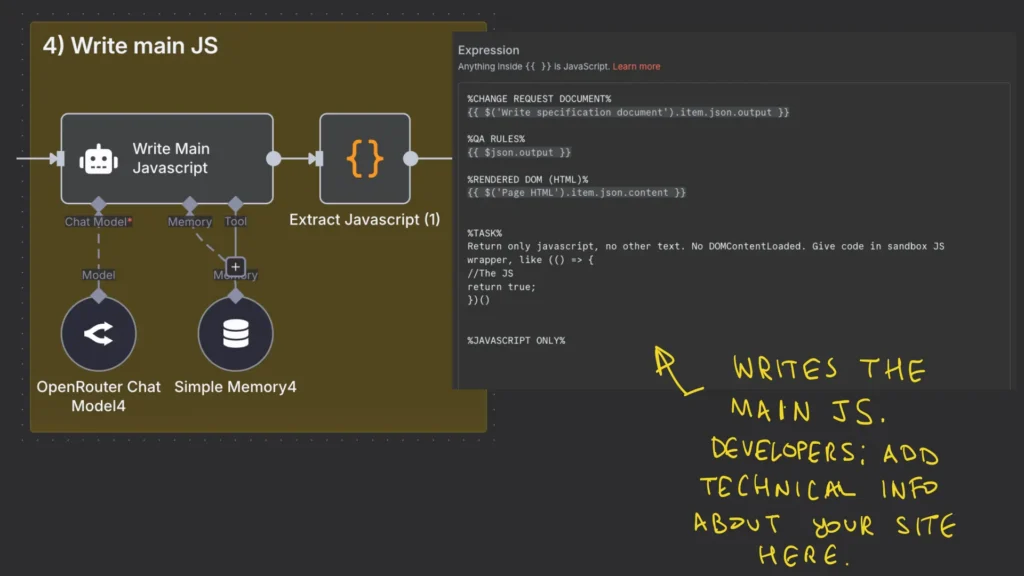
With the specification finalized, the SLM generates the primary JavaScript payload. Simultaneously, it writes a separate script of automated tests. These tests are deterministic; they are standard JavaScript assertions that check the state of the DOM after the primary payload has been executed.
Phase 3: The Rendering and Validation Loop
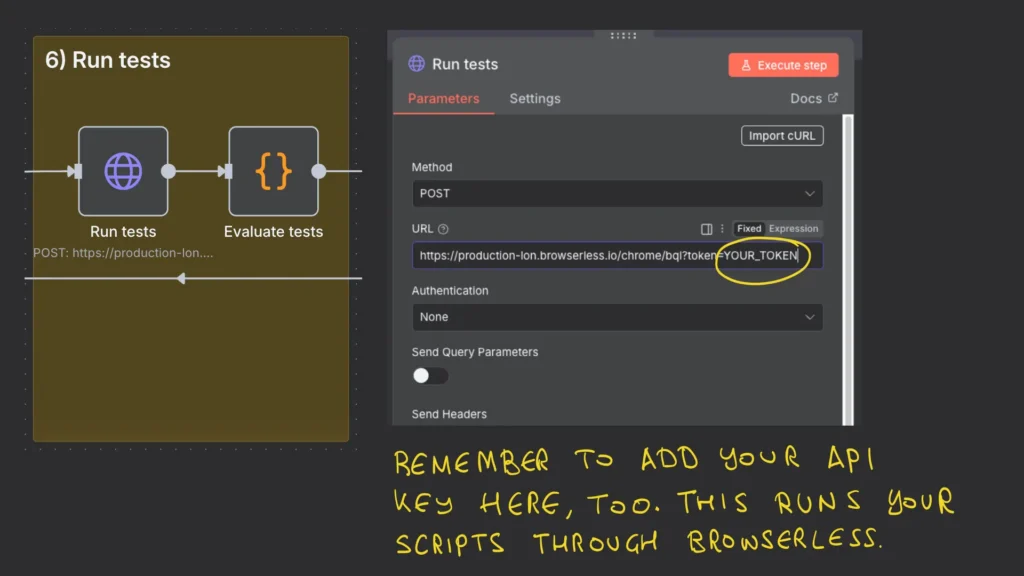
The primary code and the test script are sent back to Browserless. The headless browser executes the primary code on the live page and then runs the test assertions. The results of these tests (Pass/Fail) along with any console errors are captured.
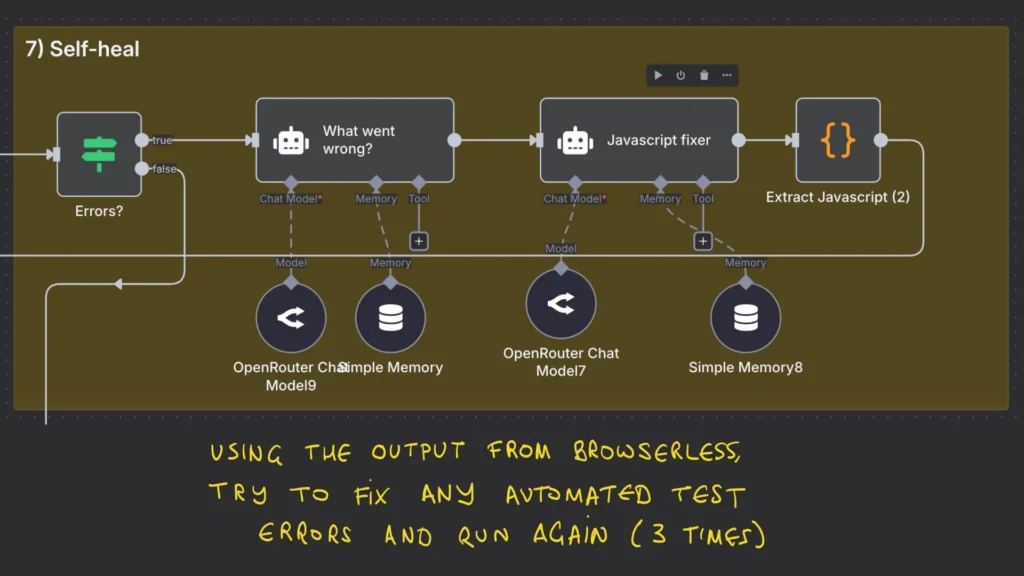
Phase 4: Autonomous Self-Healing
If the tests fail or if the browser reports a syntax error, the workflow enters the "self-healing" phase. The error logs and the original code are sent back to the SLM with a prompt to "fix the error." This loop is typically capped at three attempts. This cap prevents "token-maxing"—the phenomenon where an AI enters an infinite loop of incorrect fixes, draining the API budget.
Phase 5: Final Output and Integration
Once the code passes all internal QA checks, the workflow outputs a package containing the final JavaScript, the technical documentation, and the QA report. This can then be automatically pushed to experimentation platforms like Convert, Optimizely, or VWO.
Economic Impact and Efficiency Data
The shift toward this automated model is driven by compelling economic data. Traditional A/B test development often requires a front-end developer to spend between two to six hours per variation, depending on complexity. At an average developer rate of $60 to $150 per hour, a single experiment variation can cost an organization between $120 and $900 in labor.
In contrast, the automated workflow utilizing SLMs reduces the developer’s role to that of a "reviewer." The AI handles the initial 90% of the labor-intensive coding and QA.
- Compute Cost: ~$0.02 – $0.06 per run.
- Time to Completion: 1–3 minutes.
- Human Review Time: 5–10 minutes.
By reducing the cost of failure and the "friction of creation," organizations can significantly increase their testing velocity. A company that previously ran two tests per month might now have the capacity to run ten, directly correlating to a higher probability of finding significant conversion lifts.
Analysis of Implications: Determinism vs. Non-Determinism
A critical takeaway from this methodology is the emphasis on deterministic testing. A common mistake in AI implementation is asking an AI to "look at the code and tell me if it’s right." Because LLMs are probabilistic, their "opinion" on code quality can vary.
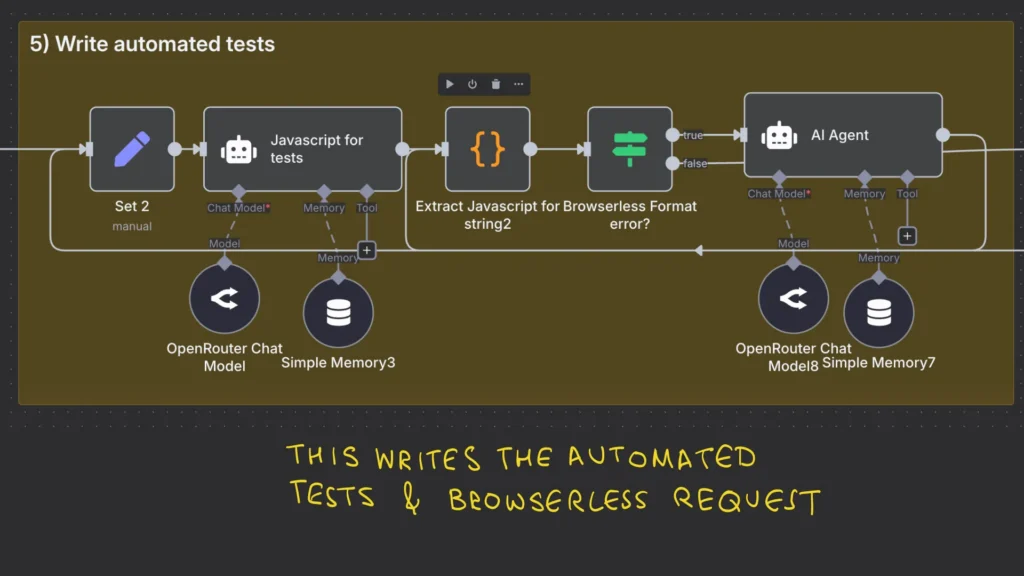
The self-healing workflow described here circumvents this by using the AI to write standard JavaScript tests. These tests are binary; they either pass or fail based on the actual state of the browser. By relying on a deterministic validation layer, the workflow ensures that the final output is not just "AI-approved," but functionally sound in a real-world browser environment.
Industry Reactions and Professional Perspectives
Industry experts, including experimentation consultant Iqbal Ali, emphasize that this technology is not intended to replace human developers. Instead, it is viewed as a tool for "augmentation." Developers are freed from the repetitive task of writing "hide/show" logic or reordering divs, allowing them to focus on more complex architectural challenges or deep data analysis.
Internal reactions from DevOps and QA teams have been cautiously optimistic. The ability to generate a technical specification document alongside the code provides a level of transparency that is often missing from AI-generated content. As one senior developer noted, "Having the AI explain its plan before it writes the code makes the code much easier to audit and trust."
Broader Impact on the Experimentation Industry
The democratization of high-velocity A/B testing is likely to have a profound impact on the competitive landscape of e-commerce and SaaS. As the barrier to entry for technical experimentation drops, the competitive advantage will shift from "who has the most developers" to "who has the best hypotheses."
Furthermore, this workflow serves as a blueprint for other areas of web development. The principles of automated fetching, SLM-based specification, and deterministic self-healing loops can be applied to web scraping, automated bug fixing, and even the generation of marketing landing pages.
As the technology matures, we can expect to see these "self-healing" capabilities integrated directly into Integrated Development Environments (IDEs) and Content Management Systems (CMS). For now, the use of modular tools like n8n and Browserless provides a flexible, low-cost entry point for businesses looking to stay at the forefront of the AI-driven digital transformation. The era of the "manual-only" developer is rapidly giving way to the era of the "AI-augmented architect," where the ability to design and manage these automated workflows becomes a core competency for digital professionals.







