
 rifanmuazin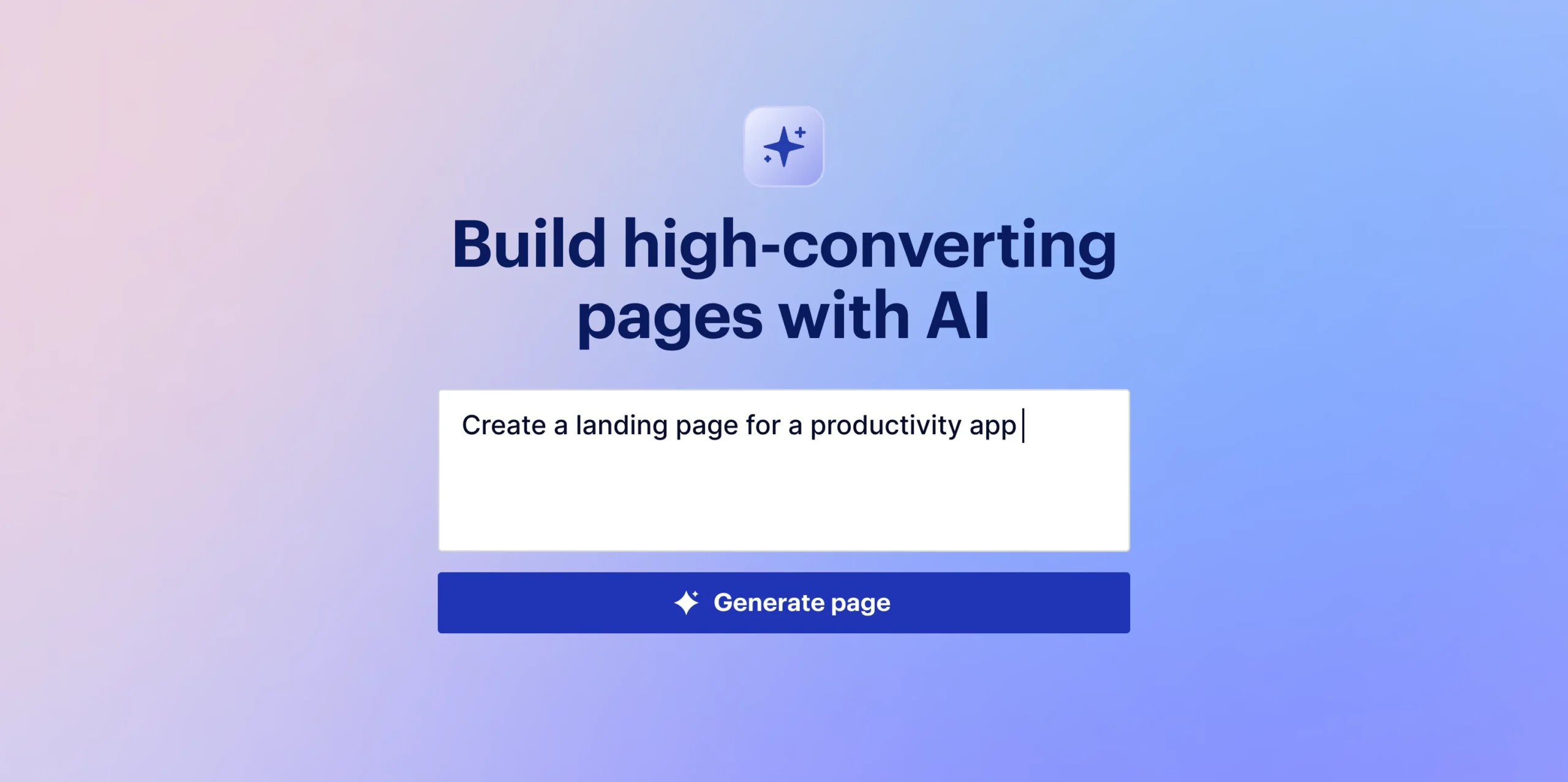
Instapage, a pioneer in landing page technology and conversion rate optimization (CRO) since 2012, has announced its official transition into a fully integrated, AI-powered marketing platform. This strategic evolution marks a significant shift from providing modular marketing tools to offering a unified ecosystem where artificial intelligence handles the heavy lifting of content creation, lead follow-up, and performance scaling. By embedding generative AI across its entire product architecture, Instapage aims to solve the persistent industry problem of "tool sprawl," where marketing teams are forced to stitch together disparate applications for design, copywriting, email automation, and analytics.
The cornerstone of this new release is a suite of features designed to eliminate the creative friction associated with building digital campaigns. The company’s latest wave of innovations includes AI-driven page generation, automated email creation, and AI Collections—a system designed to help businesses scale their digital footprint without a corresponding increase in headcount. These updates come at a time when marketing departments are facing increased pressure to deliver higher returns on investment (ROI) while operating with leaner teams and more restrictive budgets.
The Evolution of Landing Page Technology: From Builder to Platform
The trajectory of Instapage reflects the broader history of the MarTech (marketing technology) industry. Founded in 2012, the company initially gained prominence by offering a high-performance landing page builder that prioritized ease of use and design flexibility. Over the subsequent decade, the company expanded its scope to include a comprehensive suite of CRO tools, encompassing personalization, experimentation through A/B testing, and heatmaps.
Historically, the process of launching a high-converting landing page was a multi-stage endeavor involving copywriters, designers, and web developers. The "blank page syndrome" often acted as a bottleneck, where the transition from a conceptual marketing idea to a functional web page could take days or even weeks. Instapage’s early innovations focused on the "post-click" experience—optimizing what happens after a user clicks an ad. However, as digital advertising costs have risen, the need for faster execution and tighter integration between ad, page, and follow-up has become paramount.
The introduction of AI into the Instapage ecosystem began several years ago with the integration of AI-assisted copywriting. The 2026 suite of releases represents the culmination of this journey, moving beyond simple text generation to structural and architectural AI that can build entire digital environments based on simple natural language prompts.
AI Page Generation: Solving the Editing Bottleneck
One of the primary challenges identified by Instapage in the current AI landscape is the "editing breakdown." While many standalone AI tools can generate a basic web page layout, they often lack the flexibility required for professional-grade refinement. In many existing systems, if a user wishes to change a layout or move a section, the AI must regenerate the entire page, which consumes "tokens" (AI processing units) and forces the user to start their creative process over.
Instapage’s new AI page generator addresses this by combining generative capabilities with its established "pixel-perfect" drag-and-drop builder. When a user describes a page—specifying the target audience, the product offer, and the desired tone—the AI builds a conversion-ready page in seconds. This includes tailored messaging and an optimized layout based on historical conversion data. Crucially, once the page is generated, users have full creative control to move elements, change colors, or adjust specific sections manually without needing to re-prompt the AI. This hybrid approach ensures that the speed of AI is balanced with the precision of human design oversight.
Closing the Loop with AI-Powered Email Automation
A critical gap in many marketing workflows is the transition from lead capture to lead nurturing. Statistics from various industry reports suggest that leads contacted within the first five minutes of an interaction are significantly more likely to convert. However, managing immediate follow-ups across dozens of different campaigns often results in manual errors or delayed responses.
The new Instapage AI email generator is designed to live within the same environment as the landing pages. By eliminating the need to export lead data to a third-party email service provider (ESP) for initial follow-ups, the platform reduces the risk of data falling through the cracks. The AI can write tailored messaging for each specific interaction, allowing marketers to select the goal, audience, tone, and length of the message. This integration ensures that the messaging remains consistent from the initial ad click to the final email response, creating a seamless experience for the potential customer.
Industry Context and Supporting Data
The shift toward AI-driven marketing consolidation is supported by recent industry data. According to the 2024 MarTech Collaboration Report, the average enterprise now uses over 90 different marketing tools. This fragmentation leads to "data silos," where information about a customer’s behavior on a landing page is not effectively communicated to the email system or the CRM.

Furthermore, a study by Gartner indicates that by 2026, 80% of creative professionals will use generative AI daily. Instapage’s move to integrate these tools directly into the workflow reflects a broader trend of "embedded AI," where the technology is a feature of the workflow rather than a standalone product. The company’s focus on helping teams grow "without adding headcount" aligns with current economic trends. In the current fiscal climate, marketing budgets have seen a shift from aggressive expansion to efficiency-first strategies. Efficiency gains from AI in content production are estimated to save marketing teams between 20% and 40% of their operational time, according to McKinsey & Company.
Chronology of Instapage’s Strategic Development
To understand the impact of these new AI features, it is helpful to view them through the timeline of the company’s technological milestones:
- 2012: Launch of the Instapage landing page builder, focusing on the "No-Code" movement.
- 2014-2016: Introduction of advanced collaboration tools and integration with major CRMs like Salesforce and HubSpot.
- 2018: Launch of the Personalization toolset, allowing marketers to show different page versions to different audience segments.
- 2020-2022: Expansion into the full CRO suite, including heatmaps and server-side A/B testing.
- 2023: Initial rollout of AI Content Generator for ad copy and headlines.
- 2025-2026: Launch of the end-to-end AI platform, including AI Page Generation, AI Email, and AI Collections for mass-scale optimization.
Analysis of Implications for the Marketing Sector
The implications of an end-to-end AI marketing platform are profound for both small businesses and large enterprises. For smaller teams, it democratizes access to high-end design and sophisticated automation that was previously only available to companies with large creative departments. For larger organizations, it provides a way to maintain brand consistency and speed-to-market across hundreds of concurrent campaigns.
By removing the "stitching" of tools, Instapage is positioning itself as a central hub for campaign execution. This consolidation reduces the "technical debt" that many companies face when their various software subscriptions do not communicate effectively. However, this also places a greater responsibility on the platform to ensure data security and accuracy, as a single point of failure could impact the entire marketing funnel.
The use of AI in CRO also marks a shift from reactive to proactive optimization. Traditional A/B testing requires a human to hypothesize what might work better, run a test, and then analyze the results. AI-powered experimentation can analyze vast datasets of user behavior in real-time, suggesting and even implementing changes that are statistically likely to improve performance.
Official Responses and Market Reaction
While official statements from the company emphasize the empowerment of the "leaner team," market analysts suggest that this move is a necessary response to the saturation of the landing page builder market. Competitors like Unbounce and Leadpages have also begun integrating AI features, but Instapage’s focus on the entire "end-to-end" workflow—including email and scaling collections—appears to be an attempt to capture a larger share of the marketing budget.
Marketers who have participated in the beta testing of the AI features have noted the reduction in "context switching." One early adopter from a mid-sized SaaS company stated, "The ability to go from a prompt to a live page and an automated email sequence in under ten minutes has fundamentally changed our testing velocity. We can now test four times as many creative angles as we could last year."
Future Outlook
As Instapage continues the gradual rollout of its AI features, the focus will likely shift toward "AI Collections," a feature aimed at helping brands manage large-scale deployments. As digital privacy laws become more stringent and third-party cookies are phased out, the importance of "first-party data" collected through landing pages and direct email interactions will only increase.
Instapage’s transition suggests a future where the role of the marketer shifts from "creator" to "editor and strategist." In this new paradigm, the human provides the creative spark and the strategic direction, while the AI platform handles the execution, optimization, and scaling. For businesses looking to navigate the complexities of the 2026 digital landscape, the integration of AI is no longer an optional luxury but a fundamental requirement for remaining competitive in an increasingly automated world.
The company has confirmed that while select AI features are currently in beta, they are being rolled out to the broader user base throughout the year. New users can access these tools through a 14-day free trial, signaling Instapage’s confidence that the immediate utility of AI will be the primary driver for customer acquisition in the coming years.








