rifanmuazin
Artificial intelligence is rapidly transforming the landscape of information discovery, fundamentally rewriting the rules of search engine optimization (SEO) and brand visibility. For businesses operating in this evolving digital ecosystem, merely ranking high on traditional search engine results pages (SERPs) is no longer sufficient. The advent of large language models (LLMs) like ChatGPT, Google Gemini, and Perplexity AI has introduced a new paradigm where consumers increasingly rely on AI-generated answers and recommendations, shifting the focus from link lists to curated, context-aware responses. Brands that fail to achieve visibility within these AI-driven summaries risk losing out on crucial trust, credibility, and a growing segment of their customer base that now expects intelligent recommendations everywhere.
The Paradigm Shift in Search: From Links to Curated Answers
The evolution of search has been a continuous journey, moving from rudimentary keyword matching in the early days of the internet to sophisticated semantic understanding and personalized results. The latest leap, driven by advanced AI and machine learning, marks perhaps the most significant transformation yet. Unlike traditional search engines that primarily present a list of web pages based on relevance, LLMs synthesize information from vast datasets and the live web to formulate concise, often conversational answers. This shift means that instead of sifting through ten blue links, a user might receive a single, definitive answer directly from an AI, which may or may not mention specific brands.
This transition has profound implications. Google, a pioneer in search, is actively integrating AI into its core search experience through features like the Search Generative Experience (SGE), blurring the lines between classic search and AI-generated content. Industry reports indicate a significant uptake in AI tool usage, with platforms like ChatGPT attracting hundreds of millions of users monthly since its public debut in late 2022. A 2023 survey by HubSpot found that over 60% of marketers are already using AI tools, reflecting a broader industry embrace. This growing reliance on AI for information and recommendations signifies a fundamental change in consumer behavior: people are treating AI responses not just as generic search results, but often as trusted, personalized advice.
The "Blind Spot" for Brands in the AI Era
For years, SEO professionals have meticulously tracked keyword rankings, organic traffic, and conversion rates using a suite of specialized tools. However, the rise of AI-driven search has created a significant "blind spot." Traditional SEO analytics are not designed to monitor how a brand is represented or recommended within an AI’s synthesized answer. This means a brand could hold the coveted #1 spot on Google for a critical keyword and still be entirely absent from AI recommendations that a user receives for the same query.
This lack of visibility in AI responses can lead to several critical disadvantages. Competitors who are strategically optimizing for AI comprehension might be consistently recommended, gaining an edge in brand perception and customer acquisition. Furthermore, without proper monitoring, brands might be unaware of negative sentiment or inaccurate information circulating about them within AI-generated content, which can severely damage reputation and trust without immediate detection. As AI becomes the primary gateway to information for many, this blind spot is no longer a minor oversight but a critical strategic vulnerability.
Controlling the Narrative in an AI-Driven World
In this new environment, influencing how AI platforms perceive and portray a brand becomes paramount. LLMs construct a brand’s narrative by piecing together information from a multitude of sources: official websites, news articles, social media discussions, customer reviews, and industry reports. If these scattered sources present conflicting or inconsistent messages, the AI’s output will inevitably reflect this ambiguity. Therefore, maintaining a unified, consistent brand message across all digital touchpoints is more critical than ever.
Brands must consciously reinforce their core values and unique selling propositions (USPs) everywhere. Whether the message is "affordable luxury," "sustainable innovation," or "unrivaled customer support," it needs to be echoed consistently from the company’s official website and press releases to its social media presence and executive interviews. This strategic repetition helps the AI build a clear, coherent profile of the brand.
Addressing misinformation swiftly and publishing clarifications online are also crucial. Outdated or incorrect details, if left uncorrected, can be amplified by AI systems, perpetuating false narratives. Moreover, brands should leverage structured data (schema markup) to explicitly communicate their most important attributes, awards, and unique offerings. By providing AI platforms with an organized, machine-readable framework, brands can guide the AI to project their desired image, leaving less to algorithmic interpretation. This proactive approach ensures that the AI has no choice but to reflect the brand’s intended narrative.
Introducing Yoast AI Brand Insights: A Comprehensive Solution
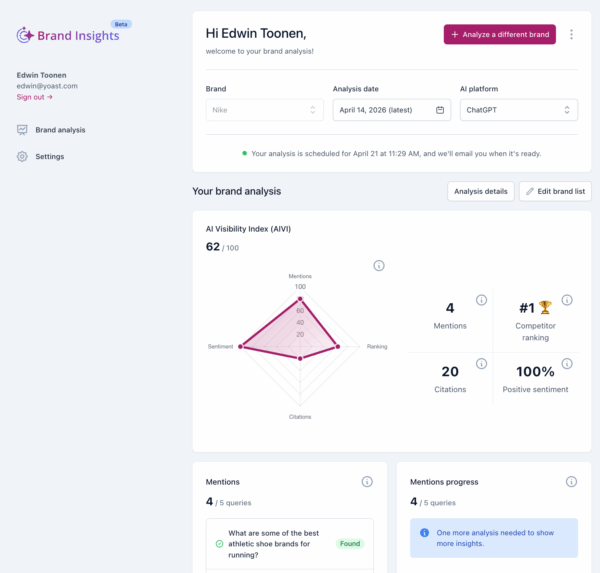
Recognizing this urgent industry need, Yoast has launched Yoast AI Brand Insights, a specialized tool designed to provide clarity and control over a brand’s AI visibility. This innovative platform tracks precisely how a brand appears in AI-generated answers from leading LLMs like ChatGPT, Perplexity, and Google Gemini. More than just data, Yoast AI Brand Insights aims to transform the "AI black box" into actionable intelligence, allowing brands to:
- Measure AI Visibility: Understand how often and in what context their brand is mentioned.
- Track Sentiment: Monitor the positive or negative tone associated with their brand in AI responses.
- Benchmark Against Competitors: See how their brand stacks up against rivals in the AI landscape.
- Identify Opportunities: Uncover queries where their brand should be visible but isn’t.
- Control the Narrative: Proactively shape the information AI platforms use to describe them.
The tool provides a clear, actionable view of a brand’s presence, sentiment, and credibility across major AI platforms, enabling marketers to move beyond traditional SEO and embrace an AI-first strategy.
Key Metrics for AI Visibility: Understanding AIVI
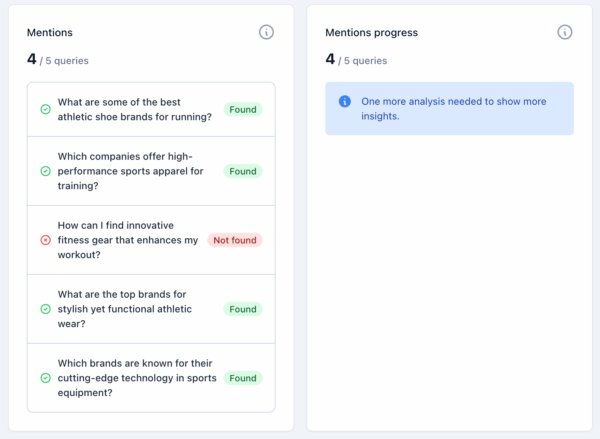
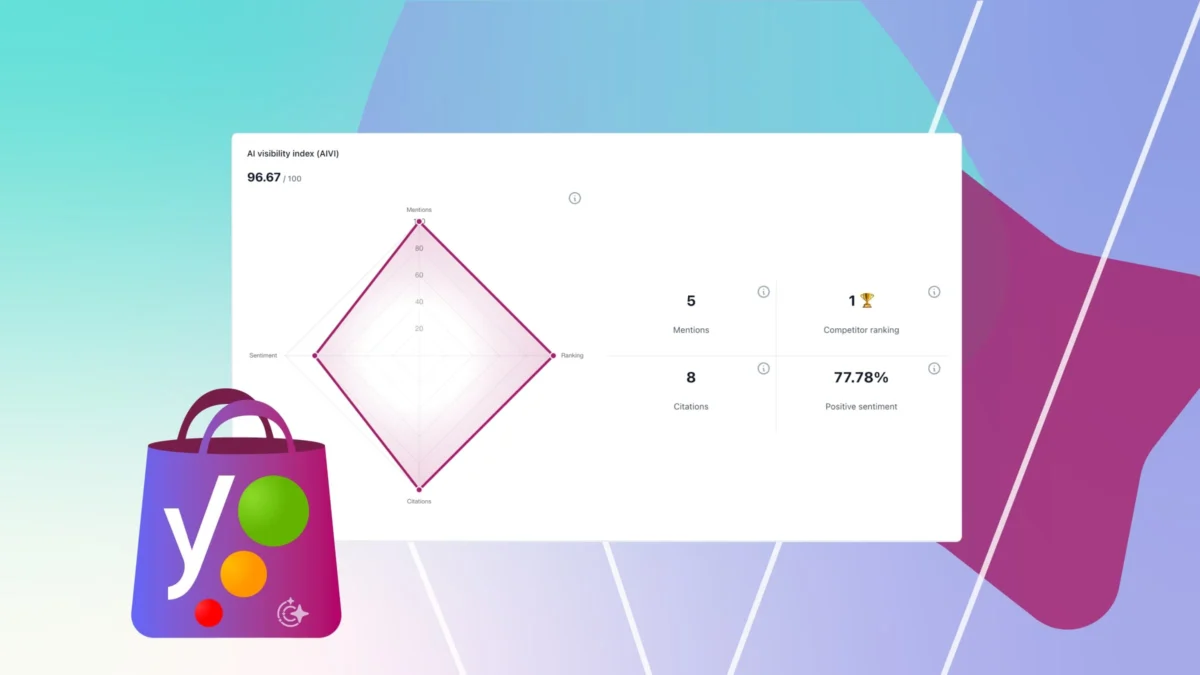
To effectively manage and improve AI visibility, understanding the relevant metrics is essential. Yoast AI Brand Insights introduces the AI Visibility Index (AIVI), a score (on a scale of 0-100) that quantifies a brand’s overall presence and positive perception across AI platforms for tracked terms. AIVI is comprised of several critical metrics:
-
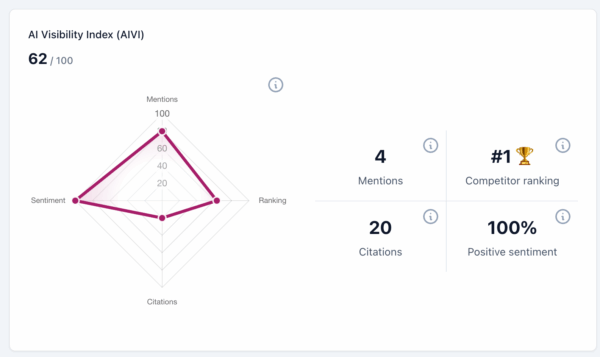
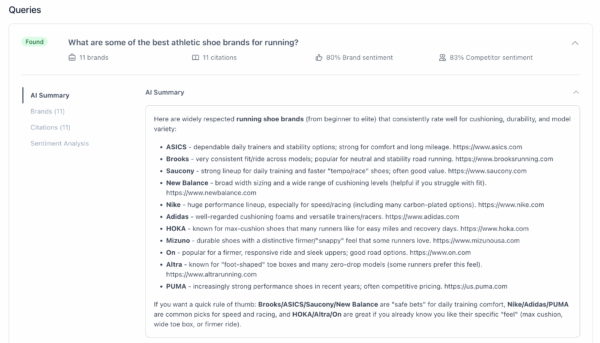
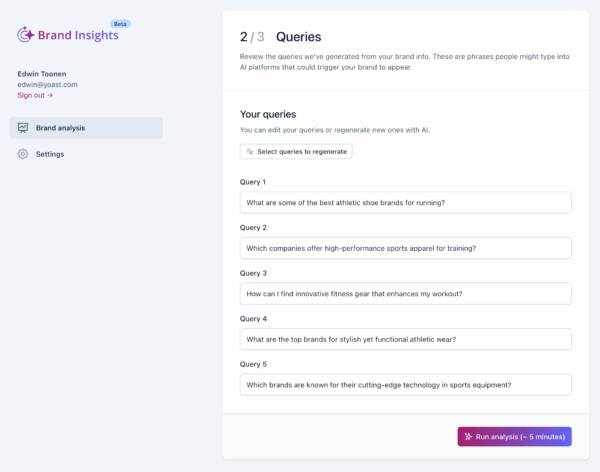
Mentions: This metric tracks the specific queries for which a brand appears in AI responses. For example, if a user asks, "What is the best project management software for remote teams?" and a brand like Asana or Monday.com is included in the AI’s answer, that counts as a mention. A higher number of relevant mentions directly correlates with greater visibility and brand recall. If mentions are low for critical queries, it signals a need to optimize content for those specific conversational prompts. Yoast AI Brand Insights provides AI-generated brand queries to help identify high-intent questions, encouraging the creation of content that directly addresses them, such as detailed blog posts or FAQ pages optimized for conversational language.
-
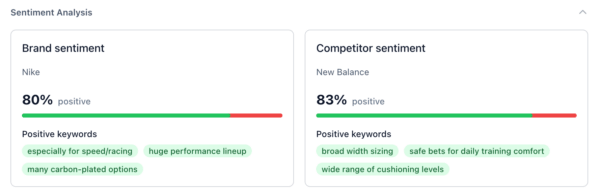
Sentiment: Sentiment measures the emotional tone (positive, negative, or neutral) of the words associated with a brand in AI responses. An AI describing a brand as "innovative" or "reliable" contributes to positive sentiment, while terms like "overpriced" or "unreliable" indicate negative sentiment. Positive sentiment is crucial for building trust and driving conversions, whereas negative sentiment can deter potential customers. Brands must actively monitor sentiment trends and respond to negative feedback on review sites, social media, and other platforms. Amplifying positive testimonials and "award-winning" claims in marketing can also steer AI perceptions in a favorable direction. Yoast AI Brand Insights’ weekly scans allow for timely detection and correction of sentiment shifts.
-
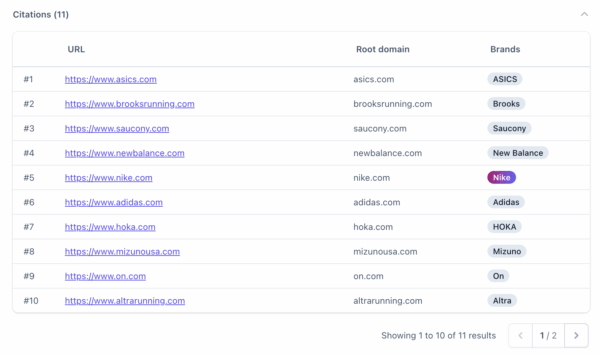
Citations: Citations refer to the external sources that AI platforms explicitly reference when generating an answer. For instance, if Google Gemini answers a query about "best investment platforms" and cites an article from The Wall Street Journal, that publication is the citation. While the AI may not directly cite a brand (e.g., Fidelity or Vanguard) within the answer, being consistently featured in these high-authority, cited sources significantly increases the likelihood of the brand being mentioned in AI responses over time. AI platforms use citations to validate their answers, making authoritative sources from industry publications, academic institutions, and trusted news outlets invaluable. Brands should focus on getting featured in relevant, high-credibility publications that cater to their target audience.
Actionable Strategies for Enhancing AI Visibility
Understanding these metrics is the first step; the next is implementing strategies to improve them. Yoast AI Brand Insights provides the data to inform these actions:
-
Optimize for AI Citations: Actively seek mentions and features on relevant, authoritative websites. This includes guest posting on industry blogs, getting included in "Top X Tools" roundup articles, and encouraging customer reviews on platforms like Capterra, G2, and Trustpilot. These serve as strong signals of trustworthiness for AI systems. Structuring content with clear headings, bullet points, FAQs, and schema markup also makes it easier for AI crawlers to digest and cite information accurately. Regular content updates are vital, as AI prioritizes fresh and relevant data.
-
Monitor and Improve Brand Sentiment: Use the sentiment analysis provided by Yoast AI Brand Insights to identify areas of concern. If AI responses associate the brand with negative terms, publicly address these issues, engage with customers on review sites to resolve complaints, and publish case studies or testimonials to highlight positive experiences. Conversely, identify positive terms used by AI (e.g., "trusted," "efficient") and integrate them into marketing campaigns and website content. Consistent monitoring allows for early detection and swift resolution of potential reputation issues.
-
Benchmark Against Competitors: The "Competitor ranking" tab in Yoast AI Brand Insights is crucial for understanding the competitive landscape. By analyzing which rivals are frequently mentioned by AI and how they are described, brands can refine their messaging and content strategy. For example, if a competitor is consistently labeled as "the fastest solution," a brand might focus on highlighting its "most comprehensive features" or "unbeatable support" to differentiate itself. Regular weekly competitor analyses, coupled with historical data, help track progress and adapt strategies.
-
Answer Brand-Specific Questions: AI excels at answering direct, specific questions about brands or products. Yoast AI Brand Insights suggests relevant queries such as "Is [Your Brand] reliable for small businesses?" Brands should proactively create content that directly answers these types of questions. This involves thorough keyword research using tools like AnswerThePublic or Google’s "People Also Ask" section to identify conversational queries. Publishing blog posts, detailed FAQs, or dedicated landing pages with structured data (FAQ schema, How-To schema) ensures AI platforms have clear, authoritative answers to draw from.
-
Track Progress with the AI Visibility Index (AIVI): Improving AI visibility is an ongoing process. Establishing a baseline AIVI score and regularly reviewing weekly scans helps track progress over time. Analyzing trends in mentions, sentiment, and citations allows brands to understand the effectiveness of their strategies. If the AIVI score stagnates or declines, it signals a need to revisit and adjust tactics, perhaps by experimenting with new content formats, pursuing different citation opportunities, or engaging more actively in online communities.
Influencing LLMs: Best Practices for Content and Presence
To truly influence LLMs and secure prominent brand mentions, a multi-faceted approach extending beyond traditional SEO is required:
-
Publish Authoritative Content: LLMs prioritize well-structured, factually accurate content that offers unique insights or expert opinions. Brands should invest in original research, publish industry reports, surveys, and case studies with proprietary data. Adopting the inverted pyramid structure (most important information first) and enriching content with statistics, expert quotes, and actionable insights makes it highly digestible for AI. HubSpot’s success with "Ultimate Guides" is a prime example of building authority that AI systems recognize and cite.
-
Get Mentioned on Relevant, High-Authority Sites: LLMs trust reputable sources. Brands must actively seek mentions on industry publications, respected news sites, and influential review platforms. This includes pitching stories to journalists, securing features in "Top X" lists, and encouraging customer reviews on platforms like G2, Trustpilot, and Google Reviews. The key is relevance; mentions on unrelated sites will yield little benefit.
-
Optimize for Conversational Queries: Since LLMs are designed for natural language interaction, content must be optimized for conversational, long-tail questions (e.g., "What’s the best CRM for startups?" rather than "best CRM"). Using question-focused headings, directly answering questions in the first paragraph, and creating comprehensive FAQ pages with schema markup are effective strategies.
-
Build Strong Citation Networks: Develop a robust network of high-quality mentions and backlinks that reinforce the brand’s authority. This involves creating linkable assets (ultimate guides, tools, templates), outreach to bloggers and journalists to reference content, and participating in press releases, podcasts, and webinars. The more high-quality, relevant citations a brand accumulates, the more likely LLMs are to feature it.
-
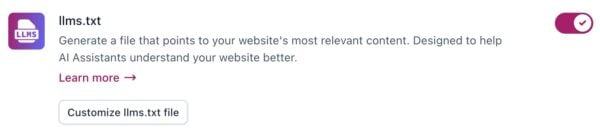
Ensure AI Crawler Accessibility: Technical SEO remains foundational. A fast, mobile-friendly website with clean URLs, proper meta tags, descriptive alt text, and comprehensive schema markup is essential for AI crawlers to discover and index content efficiently. Yoast SEO’s proposed
llms.txtfile offers a novel way to guide AI crawlers to the most important content, while ensuring therobots.txtfile doesn’t inadvertently block access. -
Be Active in Online Communities: LLMs draw information from forums, social media, and community platforms like Reddit, Quora, and LinkedIn. Brands can enhance their visibility by actively participating in these communities, providing valuable, non-promotional answers that naturally mention their brand, sharing thought leadership content, and engaging in relevant discussions.
The Future Landscape: An AI-First Approach
The shift towards AI-driven information discovery is not a fleeting trend but a fundamental recalibration of the digital landscape. Brands that recognize this early and adapt their strategies will gain a significant competitive advantage, building trust and securing customer loyalty in an increasingly AI-mediated world. Those that cling solely to traditional SEO metrics risk becoming invisible to a growing audience that relies on AI for its recommendations.
Yoast AI Brand Insights offers a crucial toolset for navigating this new frontier, providing the intelligence needed to measure, monitor, and improve AI visibility. By leveraging these insights, brands can proactively shape their narrative, optimize their content, and strategically position themselves to thrive in an AI-first future. The time for action is now; securing a brand’s future in AI visibility is no longer optional, but imperative.