Nana Muazin
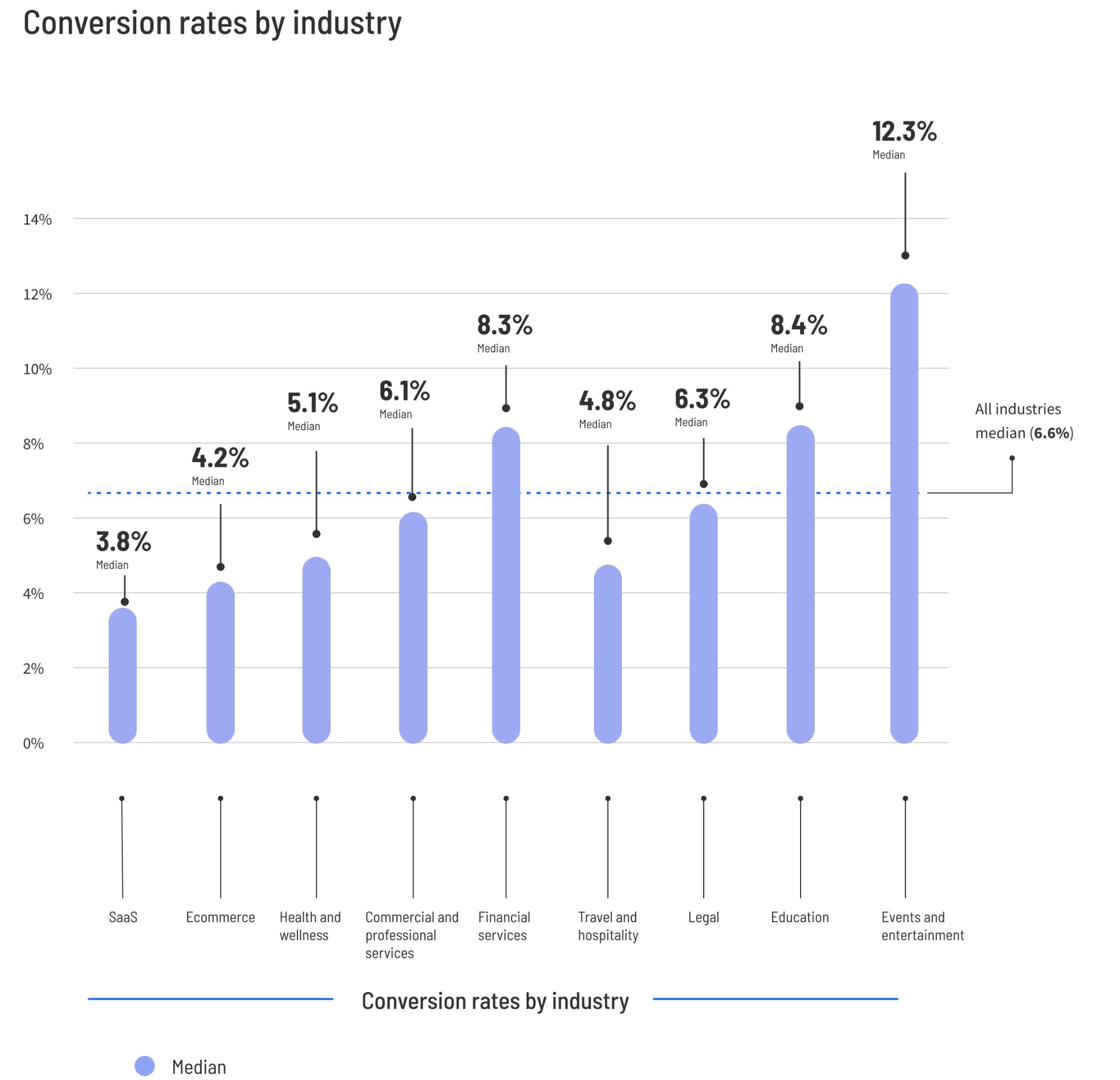
The digital marketing landscape has reached a point of critical maturation where the mere generation of traffic no longer suffices to ensure business viability. According to the 2024 Conversion Benchmark Report released by Unbounce, the median conversion rate for landing pages across all industries currently stands at 6.6 percent. This figure serves as a foundational baseline for marketers globally, yet experts caution that a single, aggregated number often obscures the nuanced realities of specific sectors, audience behaviors, and traffic channels. The report, which analyzed real-world data from over 57 million conversions across 41,000 landing pages and 464 million pageviews, highlights a widening performance gap between average performers and those in the top quartile.

The State of Conversion Rate Optimization in 2024
In the current economic climate, where customer acquisition costs (CAC) continue to fluctuate and privacy regulations impact targeting precision, conversion rate optimization (CRO) has shifted from a supplementary tactic to a core business strategy. The 2024 data suggests that while 6.6 percent is the median, "good" conversion rates—defined as those in the 75th percentile—range significantly from 11.4 percent to as high as 40.8 percent depending on the industry.
This disparity underscores the fact that conversion rates are not a one-size-fits-all metric. Performance is dictated by the complexity of the offer, the level of visitor intent, and the friction inherent in the conversion process. A "good" rate for a high-ticket SaaS subscription is fundamentally different from a "good" rate for a consumer sweepstakes entry.

Methodology and Data Scope
The 2024 findings are derived from one of the most comprehensive datasets in the marketing technology industry. By utilizing machine learning to categorize and analyze millions of interactions, the report avoids the pitfalls of small-sample bias. The study utilized median values rather than averages to ensure that "unicorn" pages—those with abnormally high conversion rates—did not skew the data, providing a more realistic "middle-of-the-pack" reference point for the typical digital marketer.
Sector-Specific Performance Analysis
Ecommerce and Retail
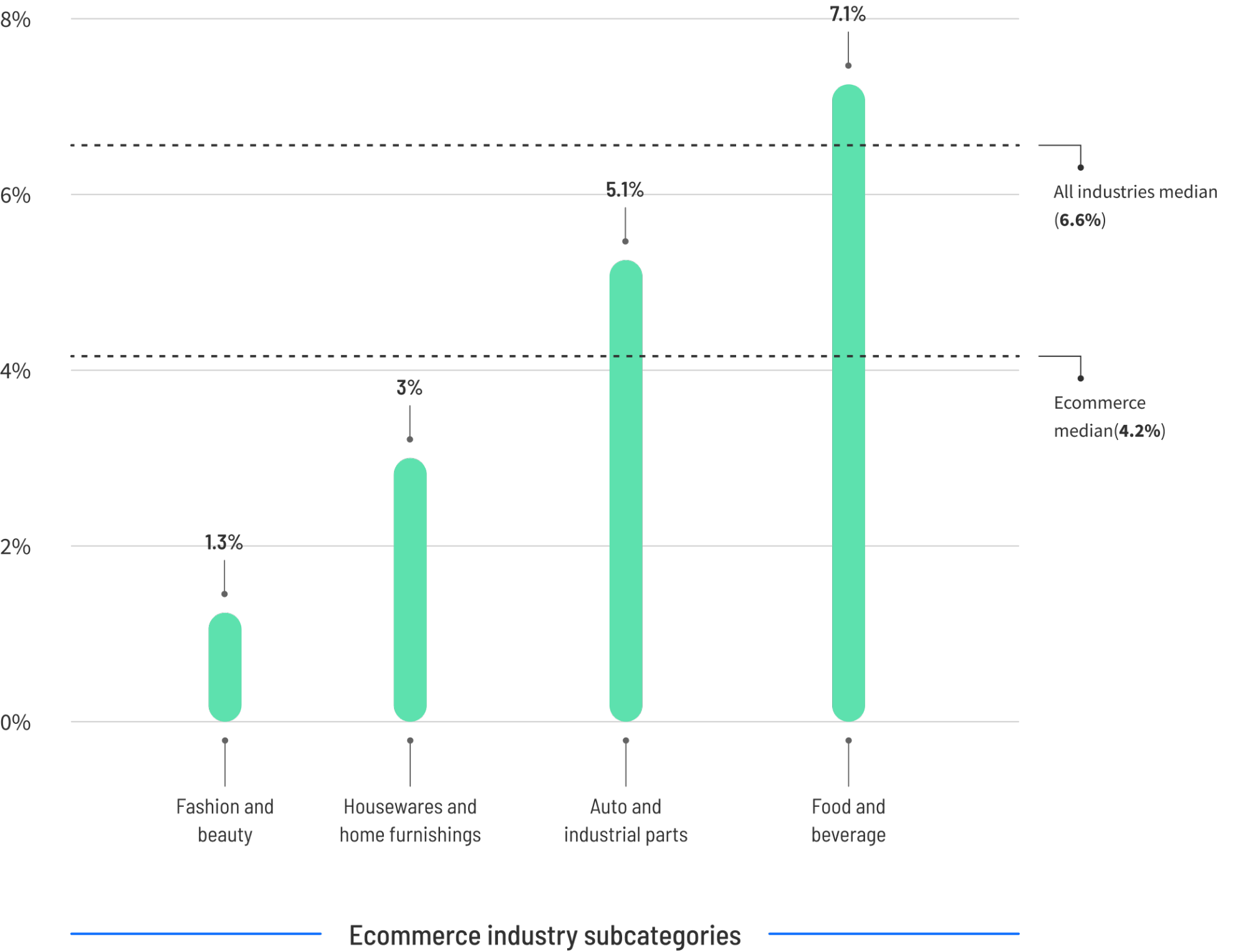
The ecommerce sector currently sees a median landing page conversion rate of 4.2 percent. While this may appear lower than the general median, it reflects a diverse array of campaigns including flash sales, seasonal promotions, and product launches. Top performers in the ecommerce space are achieving rates of 11.4 percent or higher, nearly triple the industry median.
Data indicates that food and beverage subcategories tend to outperform the broader ecommerce average with a 7.1 percent median, likely due to lower price points and higher emotional resonance. Conversely, fashion and beauty maintain a lower median of 1.3 percent, a result of high competition and the "window shopping" nature of social media traffic.
Software as a Service (SaaS)
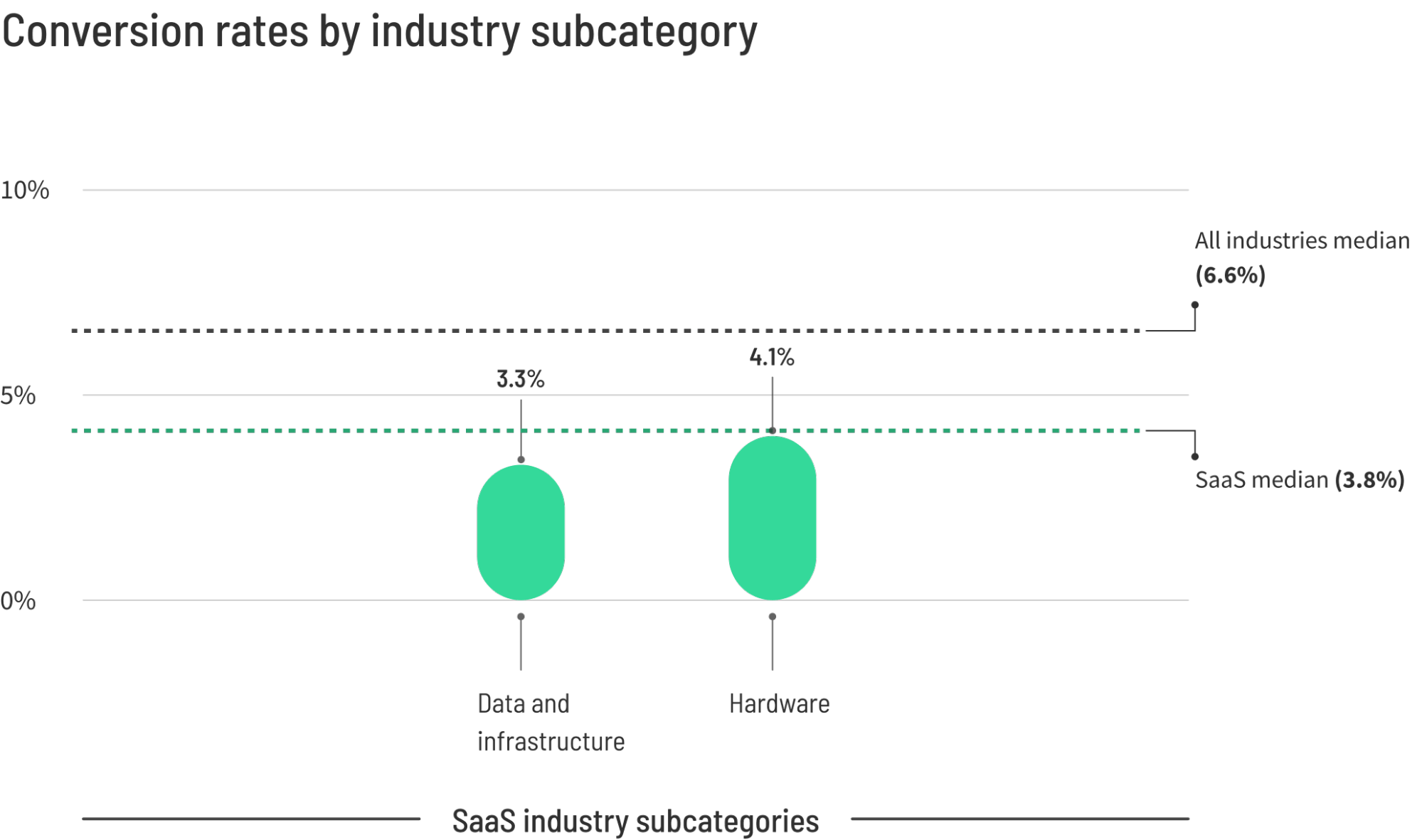
SaaS companies face a unique set of challenges, resulting in a median conversion rate of 3.8 percent. The complexity of software products, which often require long-term commitments or integration into existing workflows, naturally creates more friction. However, the top 25 percent of SaaS landing pages are breaking through this friction to achieve conversion rates of 11.6 percent or higher.
The report notes a distinction between hardware-focused SaaS (4.1 percent median) and data infrastructure solutions (3.3 percent median). Success in this sector is increasingly tied to "low-friction" offers, such as free trials that do not require a credit card or interactive product demos that provide immediate value.
Financial and Legal Services
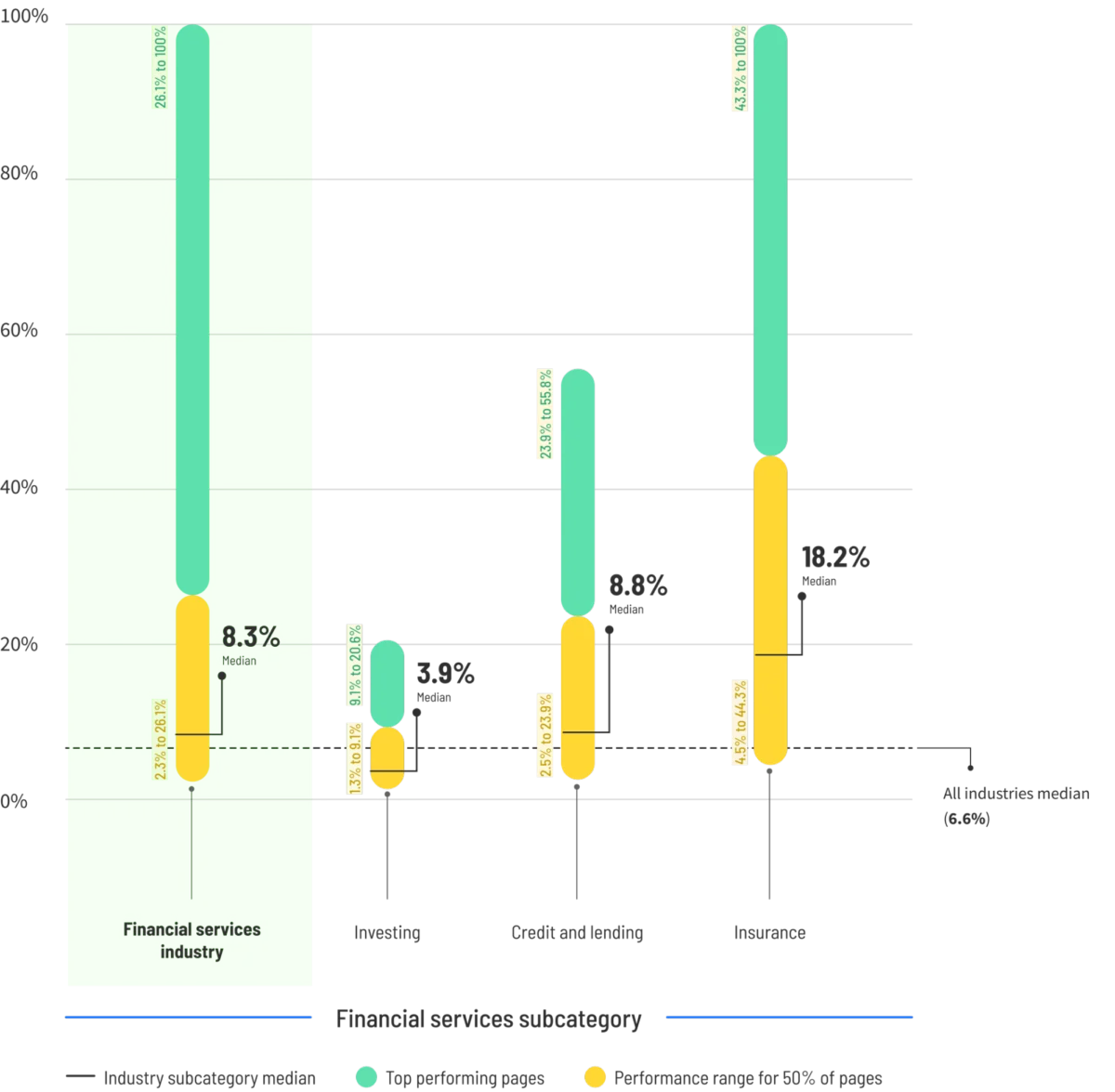
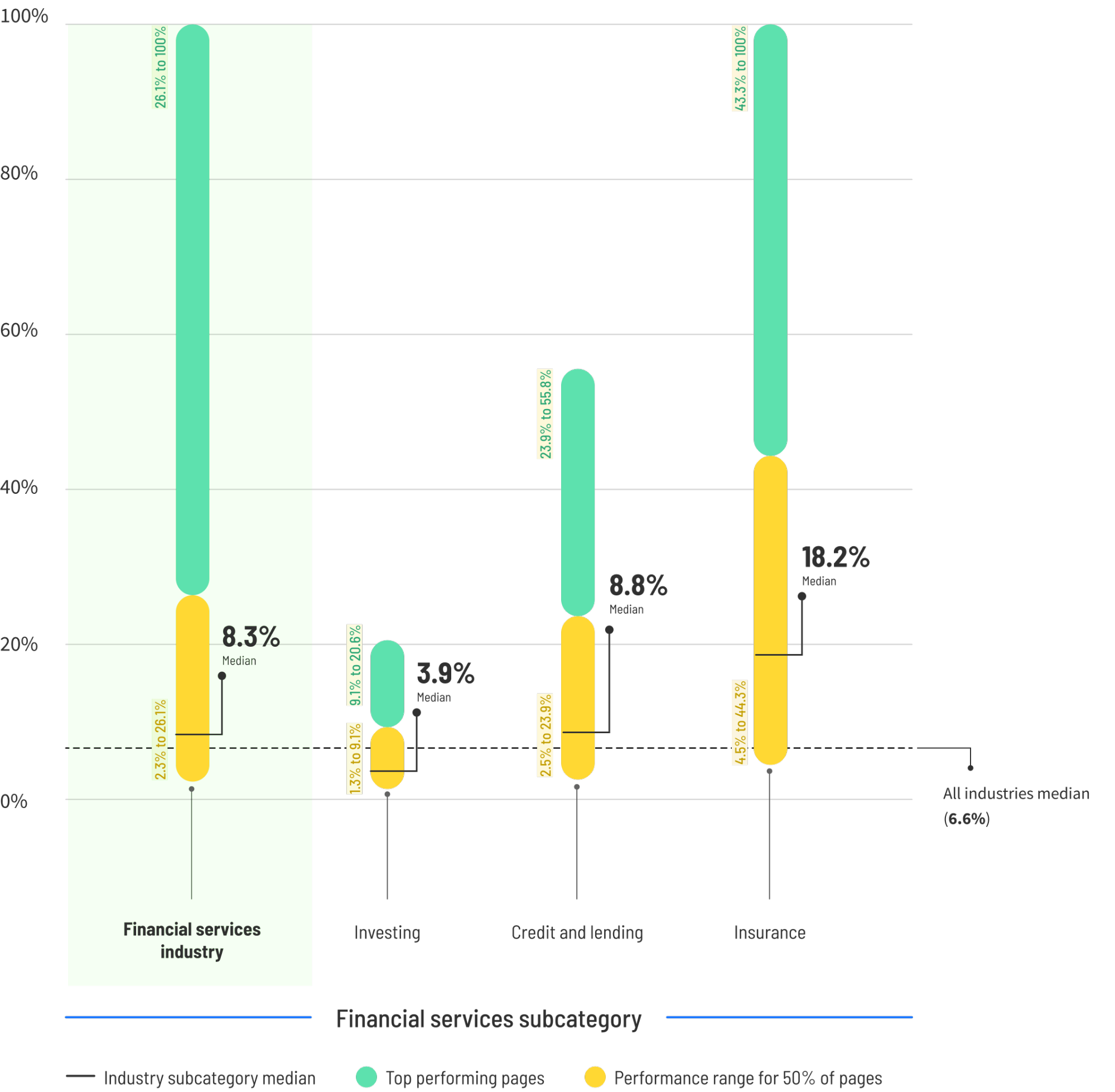
Financial services demonstrate a robust median conversion rate of 8.3 percent. This higher-than-average performance is attributed to the high-intent nature of the audience; individuals searching for insurance or investment options are typically further along in the decision-making funnel. Within this sector, insurance landing pages are particularly dominant, yielding a median rate of 18.2 percent.
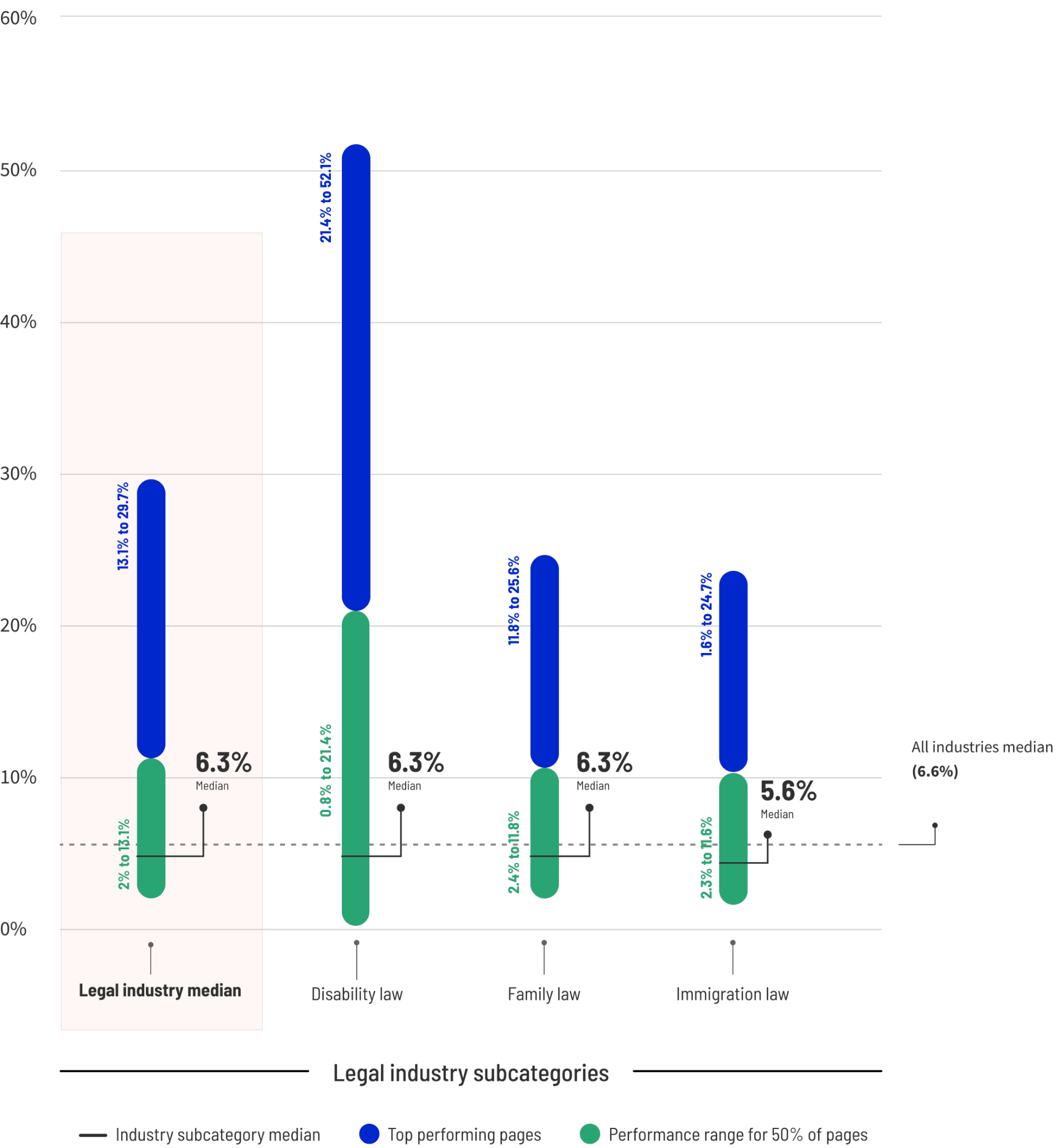
The legal industry follows a similar pattern of high-intent behavior, with a median rate of 6.3 percent. Interestingly, legal services see a significant boost on mobile devices, where conversion rates hit 21 percent compared to 15.9 percent on desktop. This suggests that legal needs are often urgent, with users searching for immediate assistance following accidents or legal notifications.
Education and Professional Services
The education sector remains one of the highest-performing categories, with a median conversion rate of 10.1 percent. Online courses are the primary driver here, boasting an 18.3 percent median rate. This is largely because online education often promises a direct, immediate solution to a specific professional or personal problem, such as learning a new technical skill.
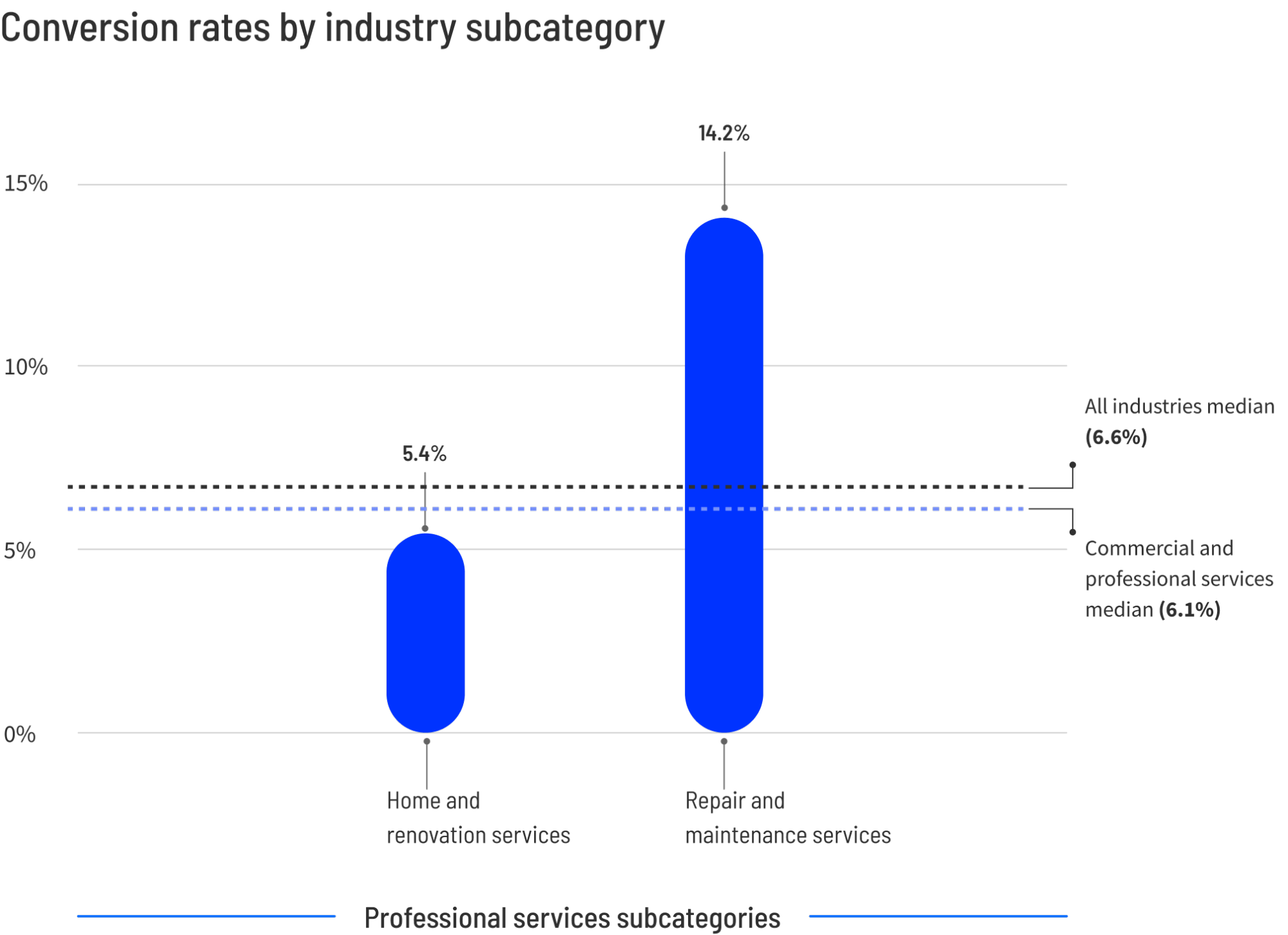
Professional services, encompassing everything from consulting to home repair, hold a median rate of 6.1 percent. The "urgency factor" is highly visible here: repair and maintenance services convert at nearly triple the rate of home renovation services, as a leaking roof demands immediate action while a kitchen remodel is a discretionary, long-term consideration.
The Impact of Traffic Channels and Device Types
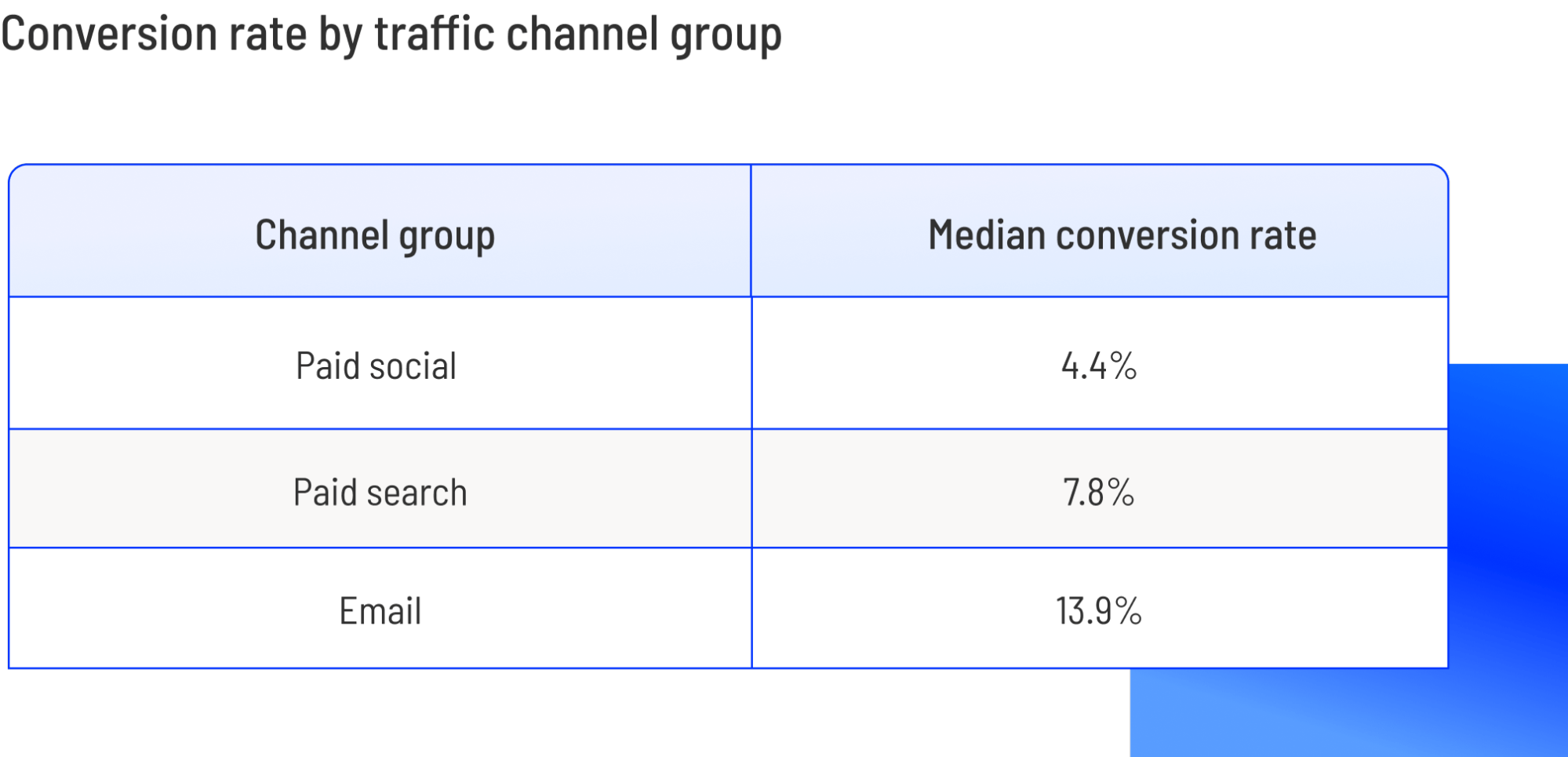
A critical takeaway from the 2024 data is the varying effectiveness of traffic sources. Across nearly every industry, email remains the highest-converting channel. In professional services, for example, email traffic converts at approximately 14 percent, while paid social traffic lags behind at 4.4 percent. This reinforces the value of first-party data and the importance of nurturing existing leads rather than relying solely on "cold" acquisition through social platforms.
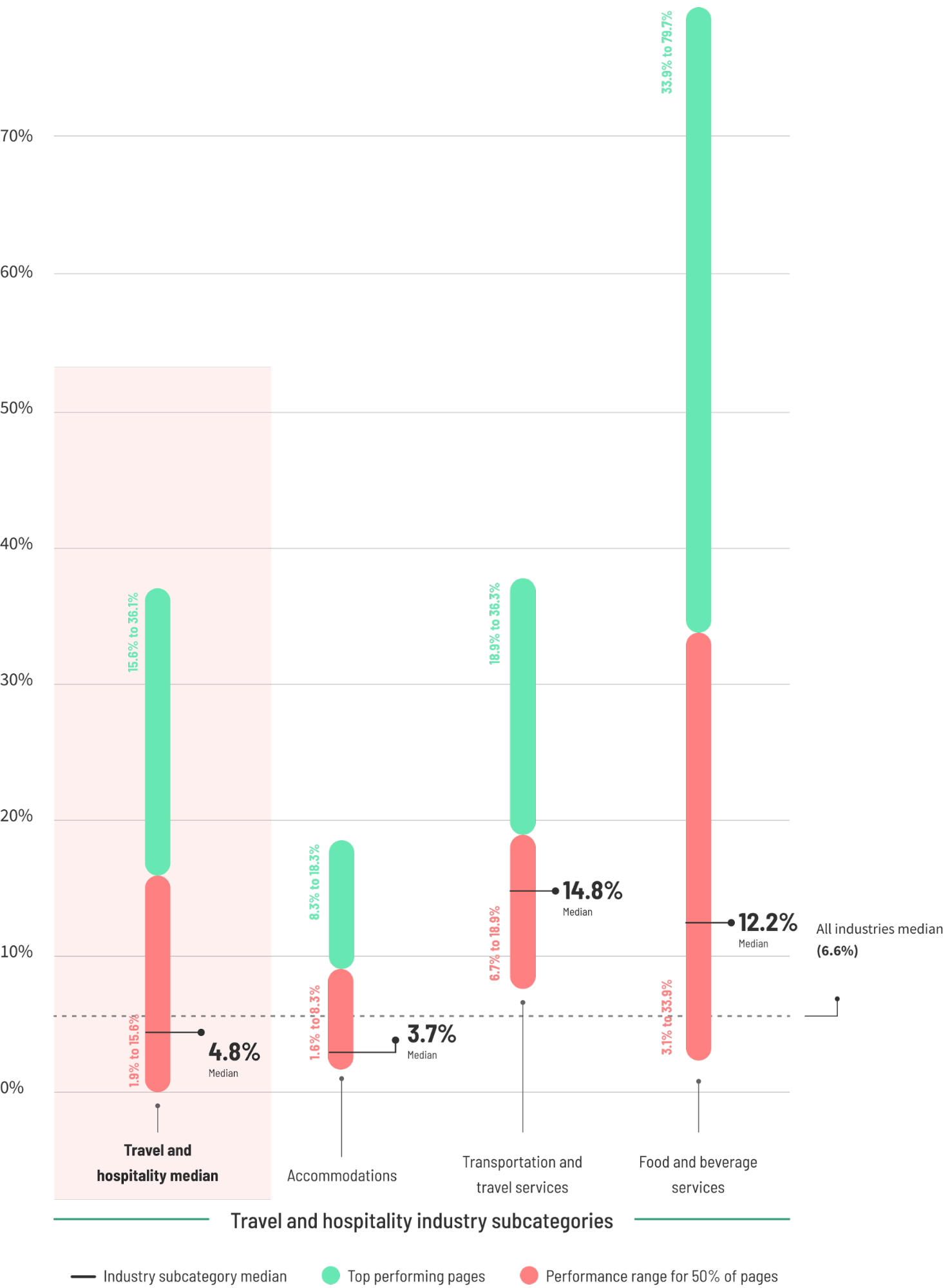
Device optimization also plays a pivotal role. While mobile devices account for a staggering 83 percent of all landing page visits, they do not always yield the highest conversion rates. In the travel and hospitality industry, desktop traffic converts 10.4 percent better than mobile, as consumers often use mobile for research but prefer the perceived security and larger screen of a desktop to finalize expensive bookings.
Cognitive Load and the "Reading Ease" Factor
One of the more surprising elements of the 2024 report is the correlation between linguistic simplicity and conversion success. Analysis of page copy revealed that landing pages written at a 5th to 7th-grade reading level convert at a median of 11.1 percent. This is 56 percent higher than pages written at an 8th to 9th-grade level and double the rate of pages using complex, "professional" jargon.
Psychologically, this is linked to cognitive ease. When a visitor can quickly process a value proposition without mental strain, they are more likely to proceed to the call to action (CTA). Industry experts suggest that the most successful marketers are now prioritizing "plain language" over sophisticated brand voice to reduce the bounce rate.
Strategic Implications and Expert Analysis
The widening gap between median and top-tier conversion rates suggests that "best practices" are no longer sufficient for competitive advantage. Industry analysts point to four specific areas where top-performing pages are differentiating themselves:
- Intent Matching: Aligning the landing page offer precisely with the keyword or ad copy that brought the visitor there.
- Social Proof Placement: Integrating testimonials and trust signals near the conversion point rather than at the bottom of the page.
- Friction Reduction: Minimizing form fields and removing secondary navigation menus that might distract the user.
- AI-Driven Personalization: Utilizing tools like Smart Traffic to automatically route visitors to the page variant most likely to convert based on their historical behavior and attributes.
Broader Impact on Digital Marketing Strategy
As the digital landscape becomes more saturated, the 2024 benchmarks indicate that the "average" is becoming a dangerous place for businesses to reside. With a median conversion rate of 6.6 percent, companies that fail to optimize are effectively wasting over 93 percent of their traffic spend.
The shift toward median-based benchmarking reflects a more mature, data-literate marketing industry. By understanding that "good" is relative to the sector, marketers can set more realistic KPIs and allocate budgets more effectively. For instance, a SaaS marketer should not be discouraged by a 4 percent conversion rate if they understand that they are already outperforming the industry median.
Conclusion and Future Outlook
The 2024 Conversion Benchmark Report serves as a reminder that the fundamentals of marketing—clarity, trust, and relevance—remain the primary drivers of digital success. However, the execution of these fundamentals is increasingly reliant on technical precision and an understanding of platform-specific nuances.
As we move toward 2025, the integration of generative AI in copy creation and automated A/B testing is expected to raise the baseline for "average" performance. For now, the path to the top 25 percent of the market is clear: simplify the message, optimize for the dominant device of the industry, and focus on high-intent traffic channels like email and paid search. The data confirms that while not all conversions are created equal, the opportunity for growth remains substantial for those willing to move beyond generic averages and embrace industry-specific optimization.

 Laily UPN
 Lina Hope