The landscape of digital presence has undergone a radical transformation, moving beyond the traditional metrics of traffic and keyword rankings to a complex ecosystem where artificial intelligence and user intent dictate market success. In the current 2026 environment, website analysis is no longer a simple checkup of page speed and conversion rates; it is a multi-dimensional evaluation of how a brand is perceived by both human users and large language models (LLMs). As buyers increasingly bypass traditional search engines in favor of AI-driven platforms like ChatGPT, Perplexity, and Google’s AI Overviews, the methodologies used to audit and optimize websites have been forced to evolve. This shift marks a transition from Search Engine Optimization (SEO) to a broader framework of Generative Engine Optimization (GEO) and holistic user experience (UX) evaluation.
The Shift in Discovery: From Search Queries to AI Conversations
The primary driver of this evolution is the changing nature of discovery. For over two decades, the digital marketing industry relied on the "click-through" model, where users entered a query into a search engine and selected a link. However, recent data from Gartner indicates that traditional search engine volume has dropped by approximately 25% as of early 2026. This decline is attributed to the rise of AI chatbots and virtual agents that provide direct answers, often removing the necessity for a user to visit a source website.
Furthermore, research conducted by the Pew Research Center highlights a significant shift in user behavior when AI summaries are present. Statistics show that users click on traditional search results in only 8% of visits when an AI summary is provided, compared to a 15% click-through rate when no such summary exists. For businesses, this means that "visibility" now requires appearing within the training data and real-time citations of AI models. Website analysis must now prioritize machine readability and the clarity of "trust signals" that AI agents use to verify the credibility of information.
The Five Pillars of Modern Website Analysis
To remain competitive in this new era, analysts must focus on five critical areas that define a website’s health and effectiveness. These pillars represent a blend of technical performance, content integrity, and behavioral psychology.
1. Search and AI Visibility
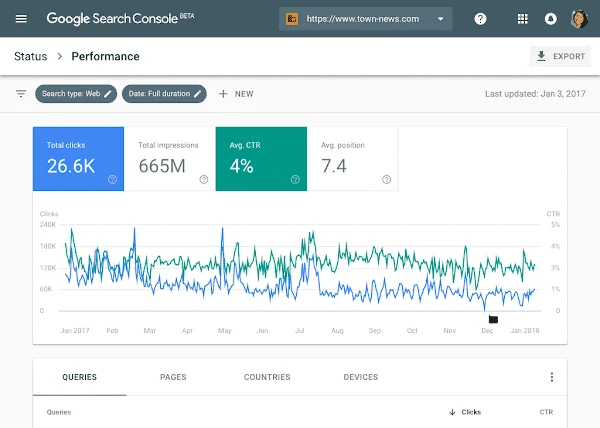
Visibility analysis now involves a dual-track approach. Analysts must continue to monitor performance in traditional Search Engine Results Pages (SERPs) while simultaneously auditing how the brand is represented in AI-generated responses. This involves using tools like Google Search Console to monitor traditional indexing and impressions, while also performing "brand sentiment audits" across AI platforms.
Key metrics in this category include the "Share of Model Mention," which tracks how often a brand is recommended by tools like ChatGPT or Gemini when users ask for category-specific advice. Technical visibility also requires ensuring that the site’s robots.txt and schema markup are optimized for AI crawlers, allowing machines to extract accurate data about products, services, and company values.
2. Website Performance and Technical Infrastructure
Technical health remains the foundation of user retention. In 2026, Core Web Vitals have expanded to include more nuanced metrics regarding interactivity and visual stability. Website analysis must verify that the infrastructure can handle high-speed rendering across various devices, including wearable tech and integrated AI hardware. A technical audit today looks for "friction points" in the code that might slow down mobile users or prevent AI agents from successfully parsing the site’s content.
3. User Behavior and Customer Experience (CX)
Quantitative data—such as bounce rates, session durations, and page views—provides only half of the picture. Modern analysis requires qualitative insights to understand the "why" behind user actions. This involves the use of heatmaps, session recordings, and scroll maps to visualize how users navigate a page.
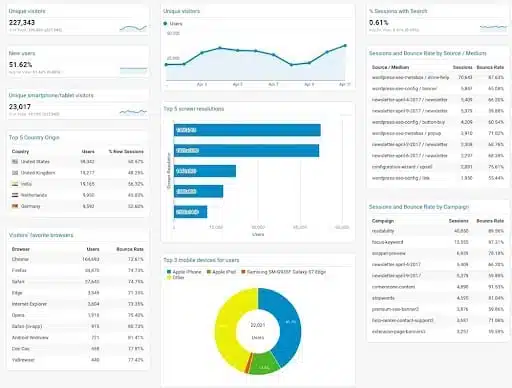
Analysts are increasingly focusing on "conversion friction," identifying moments where a user hesitates or abandons a process. By integrating tools like FigPii, businesses can observe real-time interactions, allowing them to see if a call-to-action (CTA) is being ignored or if a complex navigation menu is causing cognitive overload.
4. Content Quality and Trust Signals
In an era of AI-generated content, human-centric "trust signals" have become a premium currency. Website analysis now includes an audit of E-E-A-T (Experience, Expertise, Authoritativeness, and Trustworthiness). This involves evaluating whether the content provides unique value that cannot be easily replicated by a generic AI prompt.
Analysis in this area checks for the presence of verifiable author biographies, clear citations, updated case studies, and transparent business information. For e-commerce sites, this also includes the quality of user reviews and the responsiveness of customer support, both of which are factored into how search engines and AI models rank the site’s reliability.
5. Conversion and Usability Analysis
Usability is the bridge between a visitor and a customer. This area of analysis is split into functionality assessments and expert reviews. A functionality assessment asks whether the site’s features—such as search bars, filters, and checkout buttons—work seamlessly across all browsers.
Expert reviews, often called heuristic analyses, involve measuring the site against established principles of interface design. The industry standard remains Jakob Nielsen’s 10 Usability Heuristics, which include:
- Visibility of system status: Keeping users informed about what is going on.
- Match between system and the real world: Using words and concepts familiar to the user.
- User control and freedom: Providing clear "emergency exits" for mistaken actions.
- Consistency and standards: Ensuring users don’t have to wonder if different words mean the same thing.
- Error prevention: Designing to prevent problems before they occur.
- Recognition rather than recall: Minimizing the user’s memory load.
- Flexibility and efficiency of use: Catering to both novice and expert users.
- Aesthetic and minimalist design: Removing irrelevant information.
- Help users recognize, diagnose, and recover from errors: Expressing error messages in plain language.
- Help and documentation: Providing easy-to-search information when needed.
A Chronological Approach to Conducting Website Audits
The process of website analysis has shifted from a yearly "big audit" to a continuous cycle of improvement. To implement a successful analysis strategy, organizations typically follow a structured roadmap:
Phase 1: Objective Definition. Analysts begin by identifying specific business pain points, such as a drop in organic leads or high cart abandonment rates. Without a baseline goal, data collection becomes unmanageable.
Phase 2: Tool Selection. The modern toolkit includes SEO platforms (Ahrefs, Semrush), analytics suites (Google Analytics 4), and behavioral tools (FigPii, Hotjar). Specialized AI-readiness tools are also employed to check how well LLMs are scraping the site.
Phase 3: Data Collection and Benchmarking. This phase involves gathering three months of historical data to establish a performance baseline. Analysts compare their site’s performance against industry averages for conversion rates and load times.

Phase 4: Gap Identification. By cross-referencing quantitative data (GSC reports) with qualitative data (session recordings), analysts can pinpoint exactly where the site is failing. For instance, a page may have high traffic but zero conversions because the mobile layout hides the "Buy" button.
Phase 5: Implementation and Iteration. Improvements are made in sprints, starting with high-impact technical fixes followed by content optimizations. In 2026, this phase often includes A/B testing different messaging styles to see which resonates best with an AI-savvy audience.
The Role of Competitive Analysis in the AI Era
A significant point of debate among digital strategists is the necessity of competitive analysis. While some argue that focusing exclusively on one’s own site is the most efficient path, the prevailing consensus in 2026 is that competitive intelligence is vital for survival. Understanding where competitors are succeeding in AI recommendations allows a brand to identify "content gaps."
Competitive analysis currently focuses on three areas:
- Organic and Generative Traffic: Identifying which keywords and topics competitors are "winning" in both Google and AI chatbots.
- Customer Demographics: Using tools like Similarweb to understand if a competitor is reaching a demographic that your brand is currently overlooking.
- Paid Strategy (PPC): Monitoring the ad creatives and bidding strategies of rivals to gauge market demand and messaging trends.
Broader Impact and Future Implications
The implications of these shifts in website analysis are profound for the global economy. As websites become "data hubs" for AI agents, the quality of a site’s underlying data structure becomes as important as its visual design. This has led to the rise of new professional roles, such as AI Optimization Specialists and Machine Readability Auditors.
Furthermore, the emphasis on trust and credibility is a direct response to the flood of low-quality, AI-generated "spam" content that plagued the internet in the mid-2020s. Websites that pass a rigorous analysis in 2026 are those that prioritize human connection, transparency, and technical excellence.
Ultimately, the goal of website analysis has returned to its roots: providing the best possible experience for the end-user. Whether that user is a human browsing on a smartphone or an AI agent gathering data for a recommendation, the principles of clarity, speed, and reliability remain the ultimate metrics of success. Organizations that fail to adapt their analysis techniques to this new reality risk becoming invisible in an increasingly automated world. Those that embrace a comprehensive, data-driven approach will find themselves at the forefront of the next generation of digital commerce.


 Asro
Asro
 Dwi Wanna