Sagoh
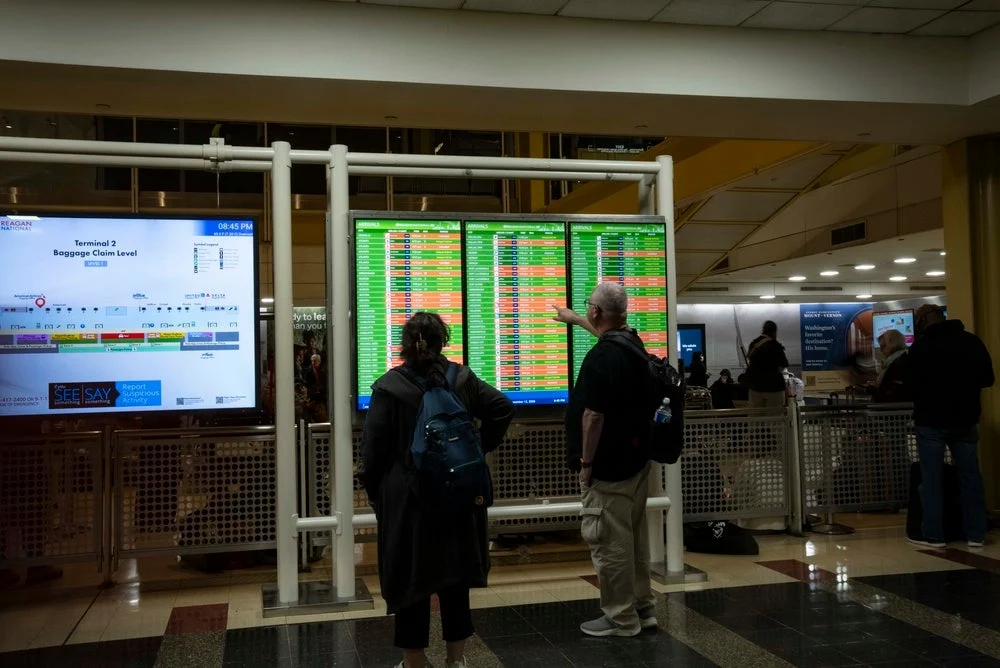
The United States aviation sector faced an unprecedented operational paralysis on November 13, 2026, when federal regulators issued an extremely rare nationwide ground stop, halting all domestic departures and leaving thousands of passengers stranded at major hubs like Ronald Reagan Washington National Airport. While the Department of Homeland Security (DHS) moved quickly to clarify that the incident did not appear to be the result of a "nefarious attack," the event has ignited a fierce national debate regarding the resilience of critical infrastructure and the transparency of government communication during times of crisis. The disruption, which stemmed from a major communications outage within the Federal Aviation Administration (FAA) systems, serves as a stark reminder of the fragile state of the technological frameworks that underpin American commerce and national security.
Chronology of a Systemic Failure
The events leading up to the November 13 ground stop began with isolated reports of technical anomalies across various sectors in the preceding weeks. On November 2, reports emerged from Europe indicating that hackers had successfully manipulated commercial refrigeration systems used by the U.S. Army, raising early alarms about the vulnerability of Internet of Things (IoT) devices in critical supply chains. By mid-November, these disruptions migrated to the domestic private sector, with major banking institutions and technology giants like Apple reporting intermittent service outages that frustrated millions of consumers.
The crisis reached a tipping point on the morning of November 13. At approximately 7:00 AM EST, the FAA’s primary communications network, responsible for relaying vital radar data and pilot instructions, began experiencing significant latency and data corruption. By 8:15 AM, aviation regulators determined that the integrity of the National Airspace System (NAS) could no longer be guaranteed, prompting the issuance of a nationwide ground stop. This maneuver, historically reserved for events of catastrophic proportions such as the September 11 attacks or the January 2023 NOTAM system failure, effectively froze the world’s busiest aviation market.
The recovery process was slow and marked by a lack of immediate information. It was not until late that afternoon that some flights were cleared for departure, and the backlog of delayed aircraft persisted for over 72 hours. The situation was further complicated on November 17, when reports surfaced that a highly classified national security communications network used by the National Security Agency (NSA) had also experienced a significant period of downtime, leading to public speculation about a coordinated offensive against U.S. digital assets.
Technical Root Causes and the Infrastructure Gap
Transportation Secretary Sean Duffy, in a series of briefings to members of Congress and the press, identified the primary cause of the FAA failure as the catastrophic malfunction of aging hardware. Specifically, Duffy pointed to legacy switches, routers, and telecommunications equipment that had become overloaded by the modern data demands of satellite-based navigation and real-time radar integration. These inconsistencies in radar data prevented air traffic controllers from maintaining the required separation standards for aircraft, leaving regulators with no choice but to ground the fleet.
The infrastructure in question is part of a complex transition managed in part by L3Harris, a major defense and technology contractor tasked with modernizing the FAA’s telecommunications systems. As the agency moves from older, terrestrial-based equipment to more advanced digital platforms, the "building the plane while flying it" metaphor has become a literal challenge. Critics argue that the transition period has exposed dangerous gaps where legacy systems are forced to interface with new technology, creating "single points of failure" that can bring down the entire network.
In response to the outage, the administration has proposed a massive $50 billion emergency funding request aimed at modernizing the nation’s air traffic control system. Secretary Duffy argued that this investment is long overdue, citing decades of neglected infrastructure and underfunding by previous administrations. However, the request has met with resistance from some lawmakers who demand greater accountability for how previous modernization budgets were spent and why redundancy systems failed to activate on November 13.
The Information Vacuum and the Crisis of Confidence
One of the most significant failures identified by analysts during the week of disruptions was not technical, but communicative. In the hours following the ground stop, the federal government’s initial silence created an information vacuum that was quickly filled by social media speculation and misinformation. Conspiracy theories ranging from foreign cyber warfare to extraterrestrial activity—the latter jokingly referenced by author Stephen King—proliferated online, eroding public trust.
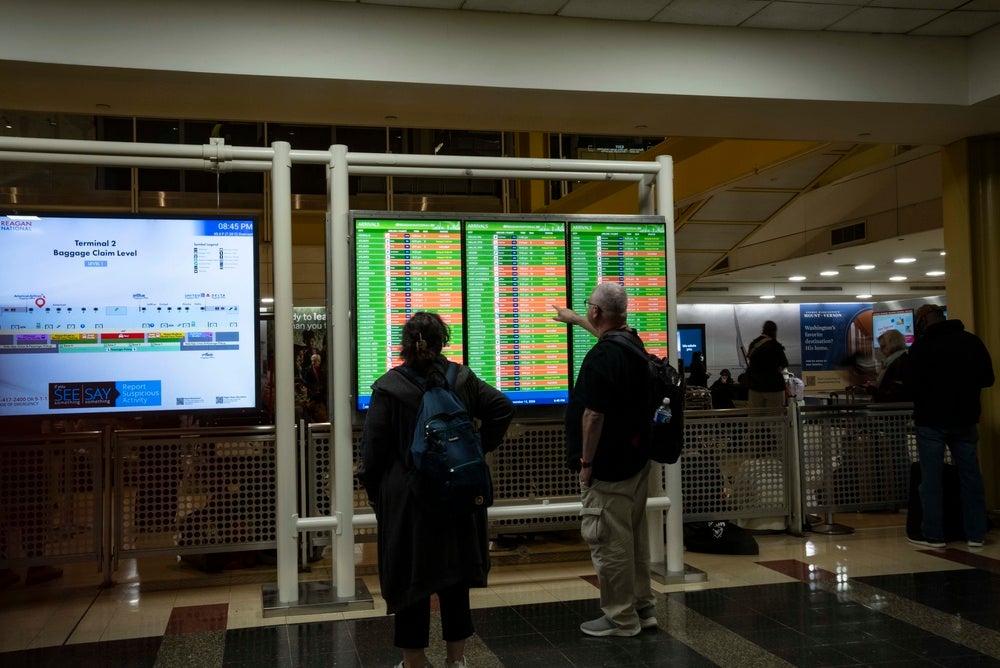
Experts in strategic communications note that in the absence of official updates, fear becomes the primary driver of public sentiment. While government agencies were understandably focused on identifying the technical glitch, the delay in providing a "holding statement"—an acknowledgment of the problem and a commitment to safety—allowed the narrative to spiral out of control. This lack of a consistent rhythm of communication exacerbated the anxiety of citizens who were already dealing with banking failures and tech outages.
Eventually, senior officials were deployed to provide the reassurance the public craved. Homeland Security Secretary Markwayne Mullin addressed the nation, urging citizens to "breathe" and stating with "98% certainty" that the events were not the result of a cyberattack. While the 2% margin of uncertainty remained a point of contention for some, the direct address helped stabilize public markets. Director of National Intelligence Jay Clayton reinforced this message, stating that the intelligence community had found no evidence of a coordinated effort by a nation-state to disable U.S. systems.
Broader Impact and Geopolitical Implications
The ground stop did more than just delay travelers; it had a tangible economic impact. Estimates suggest that the 24-hour disruption cost the aviation industry and the broader economy upwards of $1.2 billion in lost productivity, fuel waste, and logistical rescheduling. Furthermore, the simultaneous outages in the banking sector led to a temporary dip in consumer confidence, as Americans questioned the safety of their digital assets.
On the global stage, the timing of the outage was particularly sensitive. Secretary of State Marco Rubio was forced to address the technical failures during a high-stakes summit with leaders from Russia and China. Rubio emphasized that the United States was not under a systemic attack, characterizing the various incidents as "isolated and individual instances" unrelated to "nefarious actors, cyber hackers, or malign nation-states." Despite these assurances, the optics of the world’s leading superpower struggling with internal technical failures provided rhetorical ammunition for geopolitical rivals who have long questioned American operational readiness.
Analysis: Lessons in Leadership and Oversight
The events of November 2026 highlight a critical lesson for modern governance: accountability cannot be outsourced. While contractors like L3Harris play a vital role in infrastructure projects, the ultimate responsibility for the safety and reliability of public systems rests with government agencies. The tendency to shift blame to previous administrations or private partners is increasingly viewed by the public as a leadership failure.
To prevent a recurrence, industry experts suggest several key reforms:
- Mandatory Redundancy Audits: Regular, transparent testing of backup systems for all critical infrastructure, ensuring that a single router failure cannot ground a national fleet.
- Unified Crisis Communication Protocols: A standardized framework for inter-agency communication that prioritizes timely public updates over waiting for a "perfect" answer.
- Accelerated Decommissioning of Legacy Gear: Shifting the focus of modernization from "patching" old systems to a more aggressive replacement of outdated hardware.
The FAA ground stop was a wake-up call for a nation that has grown accustomed to the seamless operation of complex systems. As the investigation into the November 13 outage continues, the focus must remain on building a more resilient, transparent, and modernized infrastructure. The true test of leadership in the coming months will not be in how well officials can explain away the failure, but in how effectively they can ensure that the next time a switch fails, the country keeps moving.
In a world where digital and physical infrastructures are inextricably linked, the ability to maintain public trust is just as important as the ability to maintain a radar screen. The administration’s move toward more frequent briefings and a massive modernization budget is a start, but the road to rebuilding a "crisis-proof" America remains long and fraught with technical challenges. For the millions of Americans who depend on these systems every day, the expectation is simple: the systems must work, and when they don’t, the leaders must lead.


 Neng Nana