Social media archiving is no longer an optional best practice but a critical, legally mandated process for organizations operating in regulated sectors. It involves the meticulous capturing, preservation, and secure storage of all social media content—including posts, comments, direct messages, multimedia, edits, deletions, and their underlying metadata—in a format that is both tamper-proof and legally defensible. This rigorous approach ensures audit readiness, facilitates responses to public records requests and litigation, and ultimately protects institutions from significant legal and reputational damage in an increasingly digital world.
The rapid proliferation of social media platforms has transformed how government agencies, financial institutions, healthcare providers, and educational bodies interact with the public and conduct business. With billions of users generating unprecedented volumes of digital communication daily, these interactions often fall under the purview of long-standing regulations designed for traditional records. However, the ephemeral and dynamic nature of social media presents unique challenges, necessitating specialized archiving solutions that go beyond simple screenshots or manual logs. The core principle remains consistent: if it’s a public record or a business communication, it must be preserved.

The Evolving Landscape of Digital Communication and Regulation
For decades, organizations have maintained paper trails and electronic databases to comply with various record-keeping laws. However, the advent of social media fundamentally altered the communication landscape. Initially, many entities struggled to reconcile their digital outreach with existing legal frameworks. Governments, for instance, embraced platforms like X (formerly Twitter) and Facebook to engage constituents, only to discover that these digital interactions were subject to the same transparency and accountability laws as traditional public forums.
Regulatory bodies quickly adapted, clarifying that digital communications, regardless of their platform, constitute official records. The challenge then became how to reliably capture and store this data, especially given that social media platforms are private entities with their own terms of service and no inherent obligation to indefinitely preserve third-party content. Furthermore, platform API changes can restrict access to historical data without warning, making reliance on the platforms themselves a significant compliance risk. This regulatory evolution has underscored the urgent need for purpose-built archiving solutions that offer independent, tamper-proof records.
Mandatory Archiving Across Key Sectors
The obligation to archive social media content is not uniform; it varies significantly by industry, jurisdiction, and the specific nature of the communications. However, the overarching theme is consistent: preserve everything that constitutes a record.
Government Agencies and the Public Record: In the United States, the Freedom of Information Act (FOIA) and state open records laws classify social media content posted by government agencies as public records. This extends beyond official posts to include comments, direct messages, and even edits or deletions. The National Archives and Records Administration (NARA) provides guidance, but specific retention periods can vary widely by jurisdiction, with some content requiring permanent preservation.
Social media channels serve as vital public forums, making them subject to both open records laws and First Amendment protections. Agencies cannot arbitrarily block individuals from official accounts, and all comments—even those hidden or deleted—must be preserved. This is crucial for demonstrating compliance, especially in the face of First Amendment challenges. For example, if a comment is removed due to a violation of an acceptable use policy (e.g., hate speech, private information), the archived record, including metadata and contextual information, provides irrefutable proof of the reason for removal. The Department of Justice reported a significant surge in FOIA appeals, with a 59% increase in Fiscal Year 2025, underscoring the heightened scrutiny and the critical need for swift and accurate responses enabled by comprehensive archives.
Financial Services: SEC, FINRA, and the Scrutiny of Digital Transactions: Financial institutions face stringent archiving mandates under SEC Rule 17a-4 and FINRA Rules 3110 and 2210. These regulations require the preservation of all business-related communications, encompassing promotional content, client interactions, and any social media activity that could be deemed a business record. This includes not only content from official company accounts but also communications from employees’ personal accounts if used for business purposes.
FINRA’s guidelines categorize social media content into "static content" (long-term posts) and "interactive communications" (real-time dialogue), each with distinct supervision and retention requirements. Firms must implement robust written supervisory procedures for social media review, approval, and archiving. Regulators have intensified scrutiny of "off-channel communications" on platforms like WhatsApp and Signal. In a notable action, the SEC charged 11 firms in a single enforcement sweep for failing to preserve these records, resulting in millions of dollars in fines, signaling a zero-tolerance approach to such oversights.
Healthcare Providers: Protecting Patient Data Under HIPAA: Under the Health Insurance Portability and Accountability Act (HIPAA) Privacy Rule, healthcare providers must archive social content that involves protected health information (PHI) while upholding strict privacy and security standards. Unauthorized sharing of PHI on social media carries severe penalties, with fines potentially reaching up to $2,190,294 for violations stemming from willful neglect that are not timely corrected.
The archiving requirement extends to instances where patients initiate contact or inadvertently share personal health details in comments or direct messages on an organization’s social accounts. Even if such content is swiftly deleted by the provider to protect patient privacy, the original interaction must be meticulously preserved in the archive. Healthcare organizations must also provide comprehensive training to staff on recognizing PHI in social media interactions and establishing clear protocols for escalation and documentation.
Educational Institutions: Safeguarding Student Information with FERPA: The Family Educational Rights and Privacy Act (FERPA) dictates that social media communications pertaining to students are considered part of their educational record. This necessitates archiving any social media content that identifies a student or references their academic performance, disciplinary actions, or enrollment status. For example, if a university’s athletics department posts about a student athlete’s academic eligibility, that content becomes a FERPA-protected educational record and must be retained accordingly, typically for the duration of enrollment plus a defined period set by state law and institutional policy.
Global Considerations: Data Residency and Privacy: Archiving obligations also extend to geographical considerations, specifically data residency and privacy regulations. The EU’s General Data Protection Regulation (GDPR) imposes stringent rules on how personal data is collected, stored, and processed, including personally identifiable information found in social media content. Similarly, governments like British Columbia have specific guidelines for social media use by public servants, restricting certain topics. Australia’s privacy and public data policies, for instance, mandate that social content be archived within Australian data centers, thereby limiting the choice of archiving solutions for Australian government agencies. These regional variations underscore the need for archiving tools that offer flexible data storage options to meet diverse jurisdictional requirements.
The Imperative of a Robust Archiving Strategy: A Five-Step Workflow
Establishing and maintaining a compliant social media archiving process requires a systematic, proactive approach.
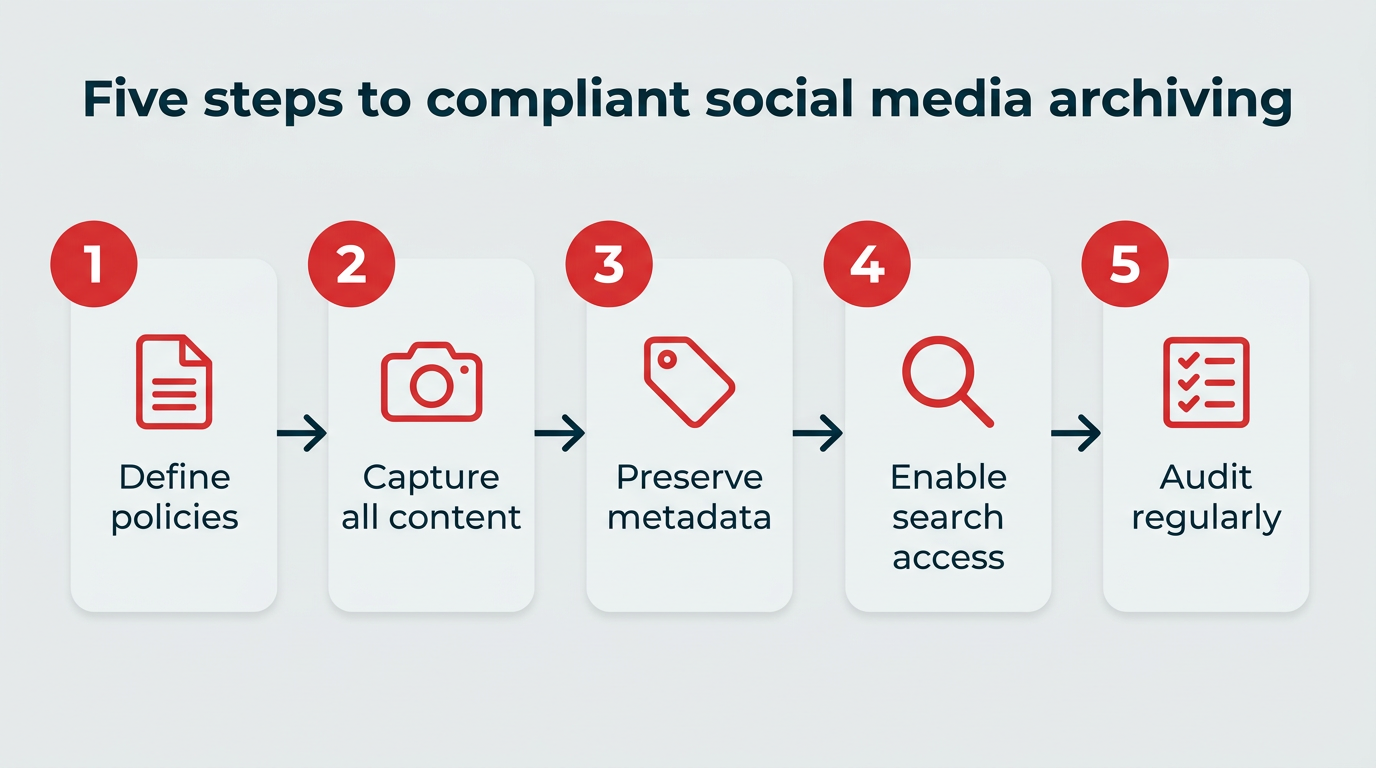
1. Establishing Comprehensive Policies and Procedures: The foundation of any compliant archiving system is a well-defined set of policies and procedures. These must be built upon a thorough review of all applicable legislation in the relevant jurisdiction, ensuring meticulous compliance with every detail. Archiving policies should be integrated into broader social media guidelines, making them easily accessible to all staff engaged with social media. Key considerations include a clear process for approving new social media accounts (each new account necessitates archiving), and a firm understanding of data residency requirements. These policies should be documented as part of a comprehensive governance plan, regularly reviewed, and communicated effectively.
2. Real-Time Capture and Preservation of All Content: The core of an archiving program is the real-time capture and preservation of all social media communications on or with official channels. Relying on social media platforms for indefinite content preservation is a critical error, as they are private entities not subject to open records laws. Furthermore, any edits or deletions of content by the organization or users must also be recorded, as open records laws mandate the archiving of every version of every public post. This includes comments that may be hidden or deleted for policy violations, such as privacy breaches or threats. Automated social media archiving tools are indispensable here, as they connect directly to platform APIs to capture content as it happens, ensuring no interaction is missed, even if it appears only for moments.
3. Ensuring Legal Defensibility Through Metadata and Context: A legally defensible archive is distinguished by its inclusion of comprehensive metadata and contextual information. Simple screenshots are insufficient as they lack critical background data and can be easily manipulated. Metadata, invisible on the surface, provides essential details like timestamps, author identification, device information, geolocation data, and a complete edit history. This metadata is crucial for proving the authenticity, completeness, and unmodified nature of archived records in legal proceedings. Contextual information, such as the surrounding comments in a thread, helps to capture the full intent of a post and validate decisions regarding content moderation. An archive rich in both metadata and context allows for the precise reconstruction of entire social media conversations.

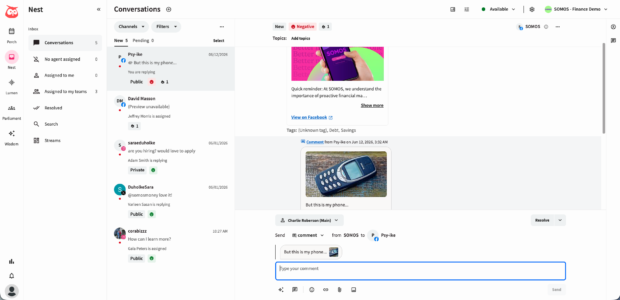
4. Prioritizing Accessibility and Searchability: An archive’s value is directly proportional to its accessibility and searchability. While security is paramount, authorized team members must be able to retrieve records efficiently in response to requests from citizens, journalists, or legal teams. Advanced search capabilities, allowing filtering by date range, keywords, or user data, are essential. Features like content tagging and note-taking within the archive further streamline retrieval. The ability to access hidden or deleted content is particularly vital for defending against First Amendment challenges, providing the full context for moderation decisions. Furthermore, archives should support export functionalities for eDiscovery or integration with external electronic records management systems (eRDMS). The previously mentioned surge in FOIA appeals highlights the need for archives that support rapid and accurate retrieval to meet strict deadlines and avoid legal repercussions.
5. Regular Auditing and Adaptability: The dynamic nature of social media platforms and evolving regulatory landscapes necessitates regular auditing of the archiving process. While the definition of "regularly" may vary, a quarterly social media audit, specifically including archiving policies and procedures, is a prudent minimum. This audit should verify that all new social media accounts have been integrated into the archiving system, review and update policies with staff (both new and existing), and monitor for any changes in legislation. A proactive audit cadence ensures that the archiving process remains aligned with regulatory shifts, new platform functionalities, and organizational growth, thereby minimizing compliance gaps.
Automated Archiving: The Only Reliable Path to Compliance
The distinction between automated and manual archiving methods is stark, particularly for regulated organizations. Automated solutions capture content the instant it is published or altered, providing real-time, comprehensive records. Manual methods, conversely, rely on human intervention—screenshots, PDF exports, or spreadsheet logs—and are inherently prone to omissions and errors.
Manual approaches fundamentally lack the legal defensibility required by regulators and courts. Screenshots carry no embedded metadata and are easily editable, making their authenticity questionable. Critically, any comment or post deleted moments after publication is permanently lost in a manual system. Automated tools, by contrast, connect directly to platform APIs, capturing posts, comments, edits, deletions, and hidden content in real-time, complete with rich metadata, and storing them in an unalterable format. This ensures a tamper-proof record suitable for eDiscovery. While automated solutions incur a subscription cost, they drastically reduce staff time and, more importantly, mitigate the high risk exposure associated with manual, incomplete record-keeping. For organizations subject to stringent records retention rules, automated, real-time capture is the only method that reliably meets the required legal standards.
Responding to Records Requests: A Streamlined Process
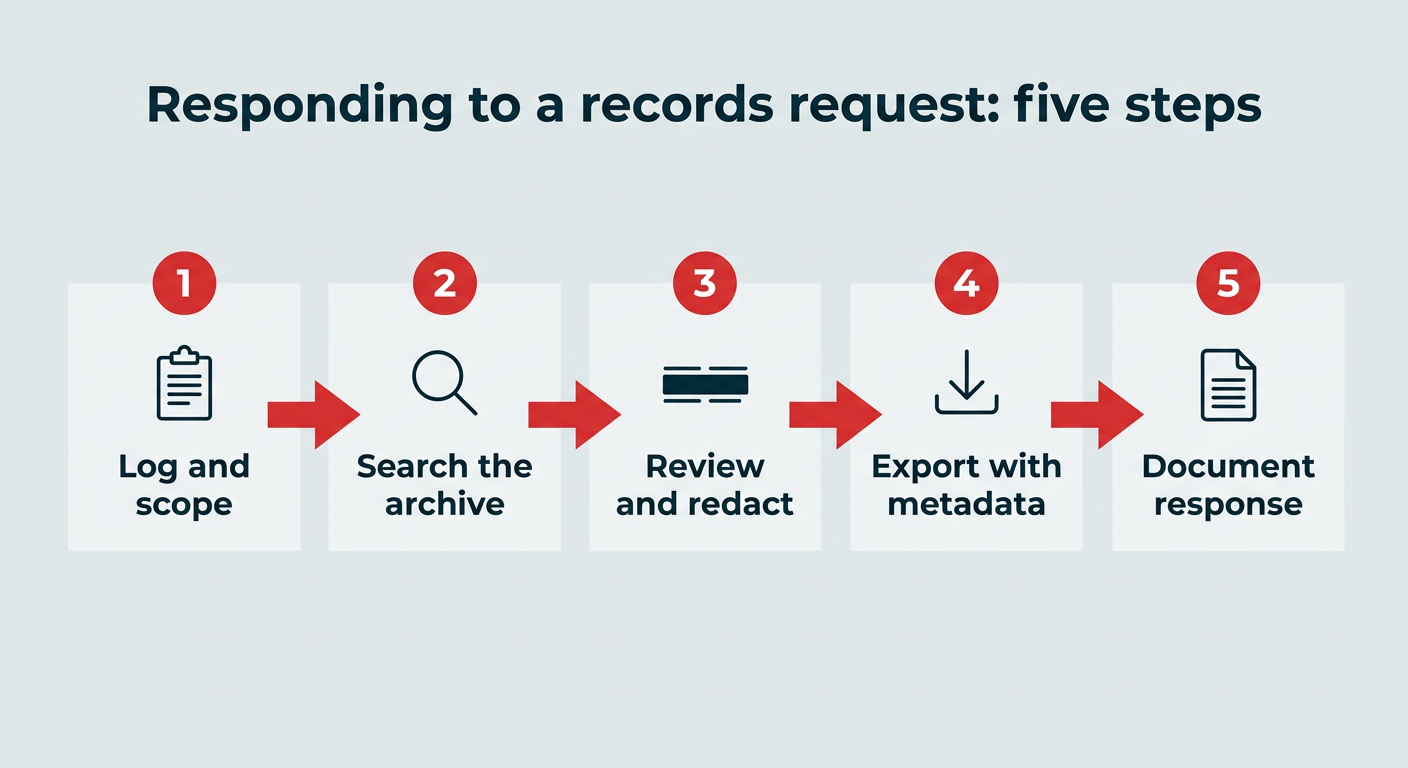
With a comprehensive and searchable archive in place, responding to FOIA or other records requests transforms from a frantic scramble into a structured retrieval task. The typical workflow involves five key steps: acknowledging the request, conducting a targeted search within the archive using specific parameters (e.g., date range, keywords, user data), reviewing and redacting any sensitive or privileged information, preparing a formal response, and finally, delivering the requested records. The ability to tag content, add internal notes, and schedule exports to an eRDMS further enhances efficiency and accuracy. Missing deadlines or providing incomplete responses can lead to court orders, financial penalties, and increased regulatory scrutiny, reinforcing the value of a robust and accessible archive.
Risks of Non-Compliance: A Costly Oversight
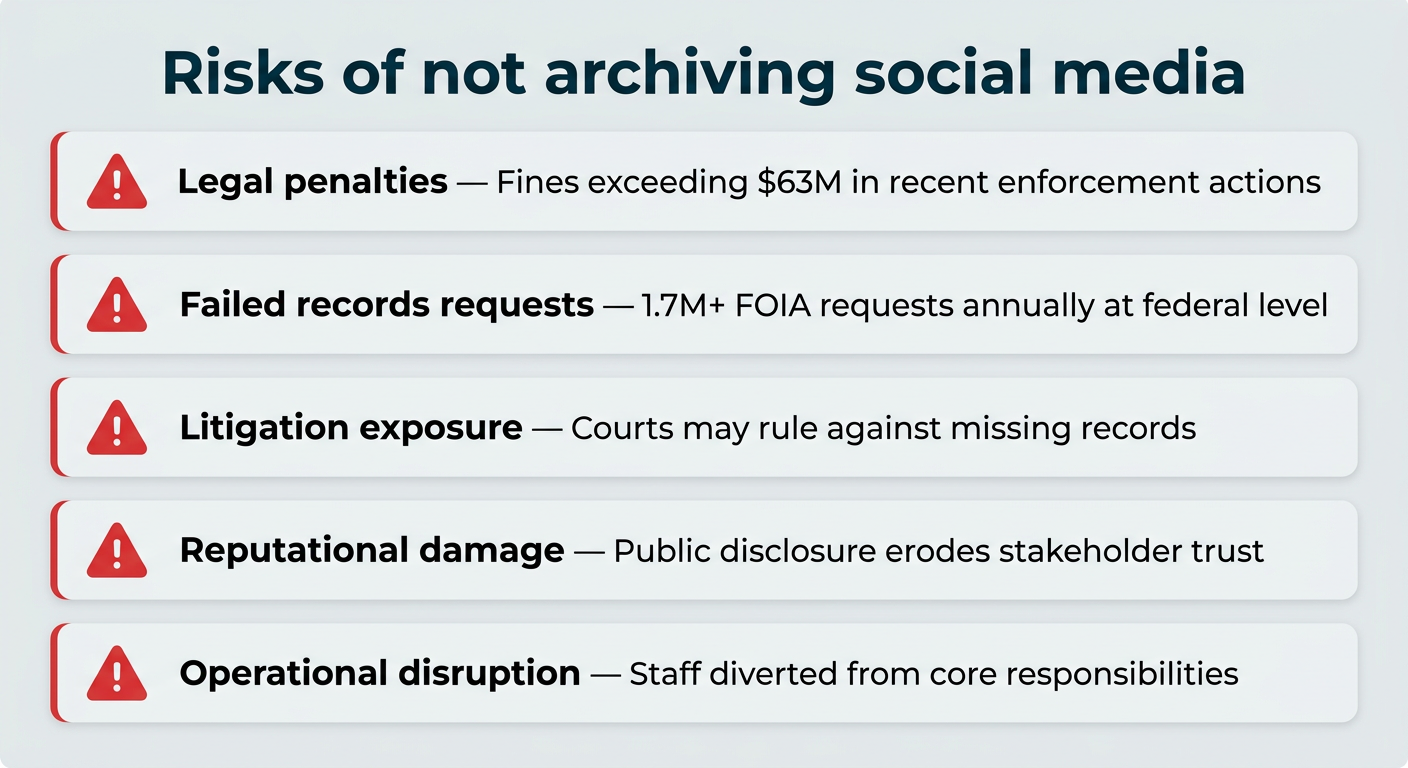
Failing to archive social media content adequately exposes regulated organizations to a multitude of severe consequences. These risks include substantial legal fines and penalties (e.g., millions under HIPAA, SEC/FINRA), significant reputational damage that erodes public trust, adverse findings during audits, costly litigation stemming from an inability to produce required records, and even First Amendment challenges if content moderation decisions cannot be fully substantiated. Furthermore, it hinders the ability to respond accurately and promptly to public records requests, exacerbating legal and public relations issues. The financial and operational cost of implementing a proper archiving solution is almost invariably lower than the immense costs associated with non-compliance.
Choosing the Right Archiving Solution
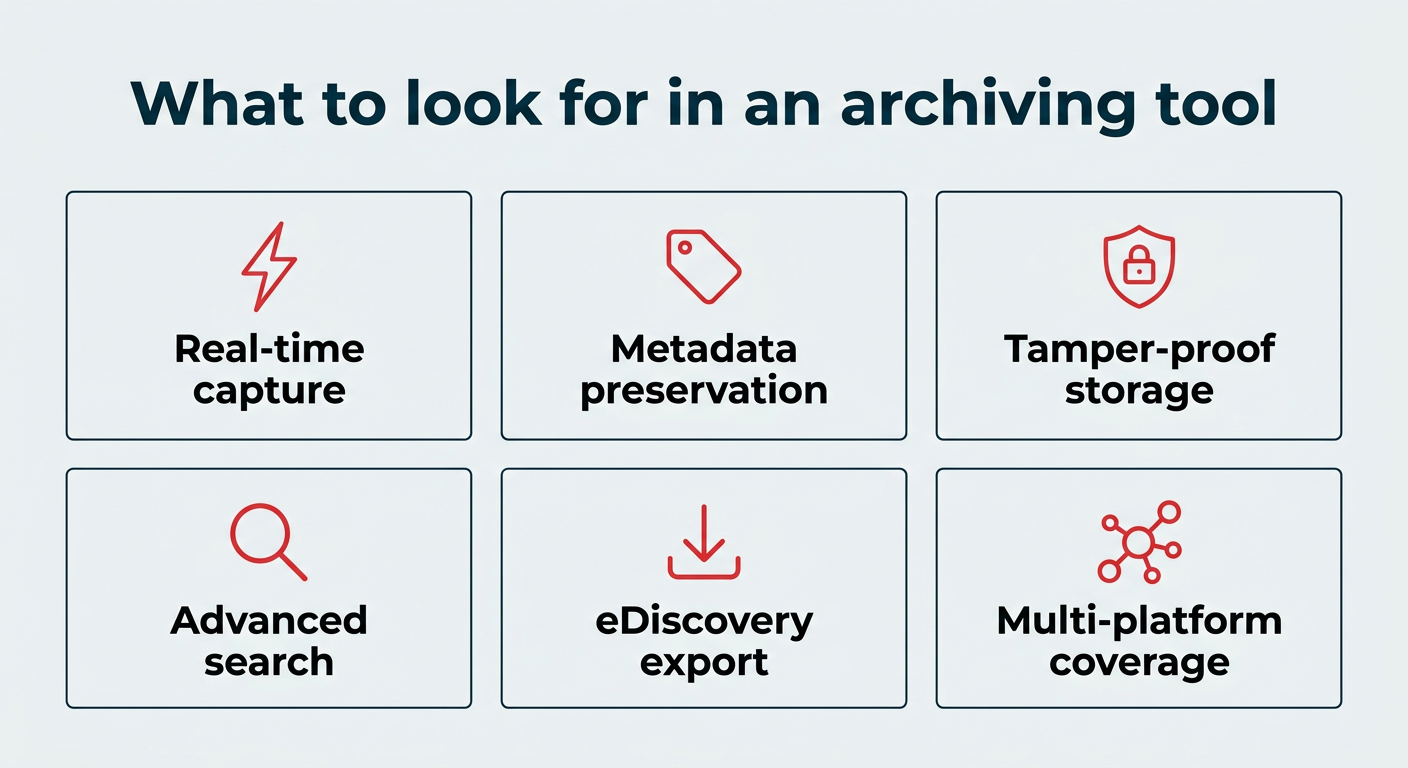
When evaluating compliance-focused archiving solutions, organizations must prioritize specific capabilities to ensure comprehensive coverage and legal defensibility. Key features to look for include:
- Real-time Capture: Ensuring no content, including ephemeral or quickly deleted items, is missed.
- Metadata Preservation: Capturing timestamps, author details, device information, and complete edit histories.
- Tamper-Proof Storage: Guaranteeing the integrity and authenticity of archived records.
- Advanced Search and Export: Facilitating efficient retrieval for audits, eDiscovery, and public records requests.
- Broad Platform Coverage: Supporting all social networks utilized by the organization.
- Regulatory Compliance: Meeting specific industry (e.g., FedRAMP, SEC, HIPAA) and regional (e.g., GDPR, data residency) mandates.
- Audit Trails: Documenting all actions taken within the archive.
- User Access Controls: Managing who can access and manage archived data.
- Scalability: Handling growing volumes of data across multiple accounts and departments.
- AI Integration: Enhancing content classification and risk detection.
Hootsuite stands out as a leading solution, demonstrating its commitment to security and compliance through FedRAMP authorization. This rigorous U.S. government security framework certifies Hootsuite as a viable automated social media archiving solution for federal agencies. Beyond government, Hootsuite also meets the stringent requirements of FCA, IIROC, SEC, PCI, AMF, and MiFID II, making it a trusted partner for financial services and other professional services firms. Over 2,700 government agencies already leverage Hootsuite for their social media management and archiving needs.

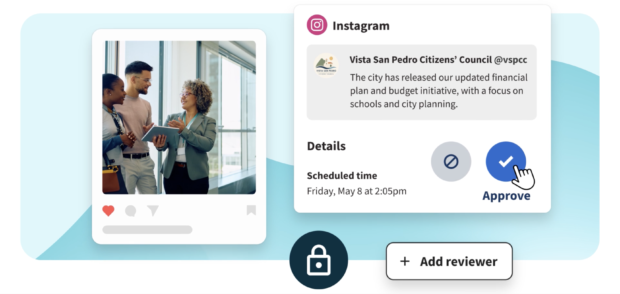
Hootsuite integrates seamlessly with specialized compliance solutions like Proofpoint and Brolly, which create secure archives encompassing social content, context, metadata, links, images, and videos. This integration ensures that new social media posts and comments, including edits, deletions, and hidden comments, are automatically archived in real-time, capturing even fleeting interactions crucial for compliance. Within the archive, advanced search, tagging, and note-taking capabilities facilitate efficient information retrieval for FOIA requests or legal discovery. The system also supports manual or automated export of archives to eRDMS. For enterprise organizations, Hootsuite’s Vigil layer provides comprehensive governance and control across accounts, while Wisdom enables plain-language querying of social data. Additionally, Perch by Hootsuite offers robust approval workflows and permission controls, proactively reducing compliance risk before content is even published.
In an era where digital footprints are under constant scrutiny, proactive and robust social media archiving is not merely a bureaucratic task but a strategic imperative. It underpins transparency, safeguards public trust, and acts as a vital shield against the ever-present risks of non-compliance in the digital age. Organizations across regulated sectors must embrace automated, comprehensive archiving solutions to navigate the complexities of modern communication and uphold their legal and ethical obligations.