


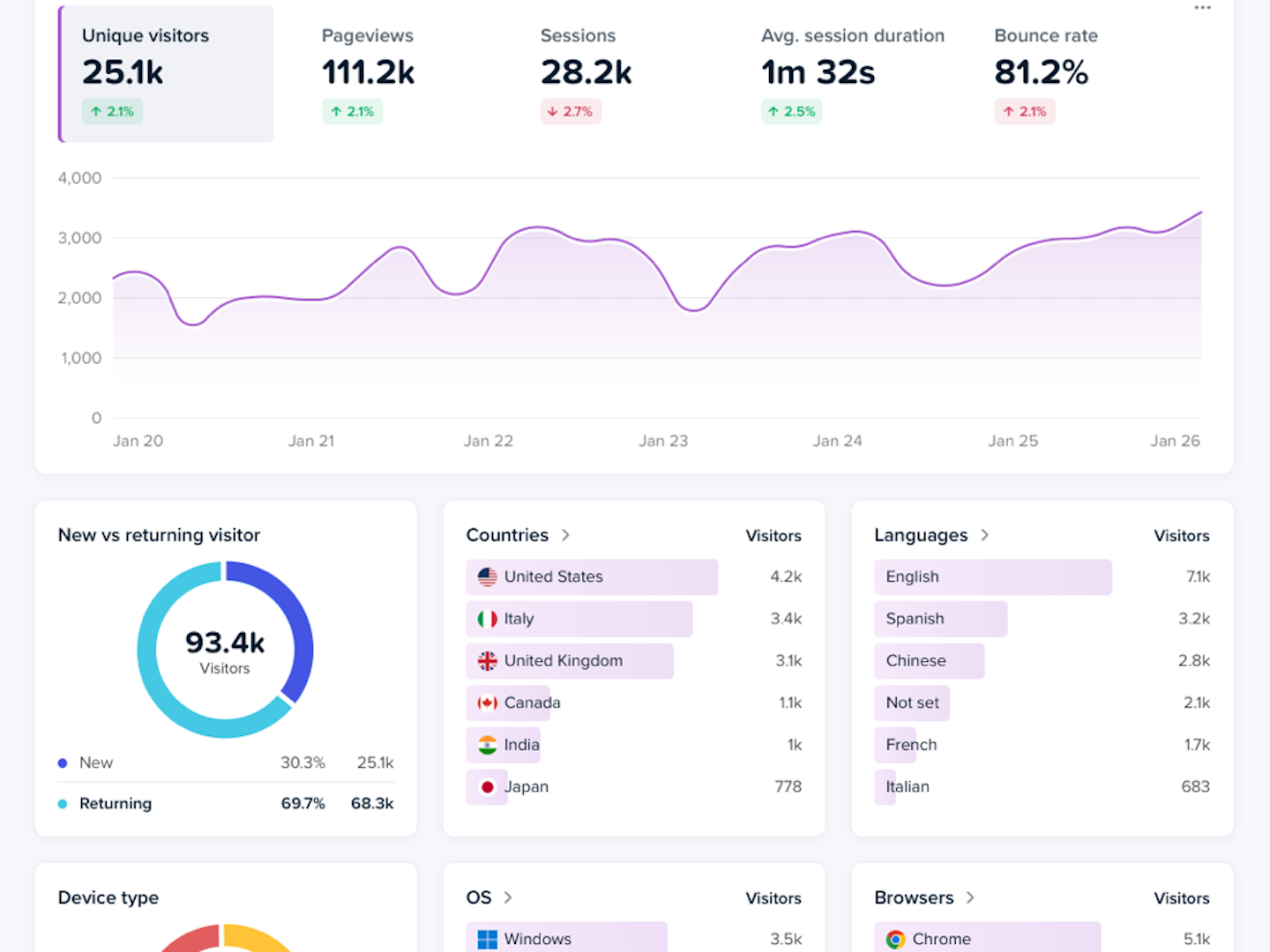
The launch of the Data Warehouse Connector marks a pivotal shift for Crazy Egg, which has spent nearly two decades evolving from a specialized heatmap tool into a comprehensive suite for user experience (UX) analysis. This latest development addresses a growing demand in the enterprise sector: the need for "raw" data. While visual heatmaps and session recordings provide immediate value to marketing and design teams, data scientists often require the underlying event logs to perform advanced multi-touch attribution, predictive churn modeling, and deep-funnel analysis.
Technical Architecture and Data Delivery
The Data Warehouse Connector operates by synchronizing every discrete event recorded by Crazy Egg—including clicks, scrolls, and session starts—into a storage bucket owned and governed by the client. This "bring your own storage" (BYOS) model ensures that sensitive user interaction data remains under the organization’s security protocols and compliance frameworks, such as GDPR, CCPA, and HIPAA.
Technically, the connector utilizes high-performance, open-source file formats to ensure compatibility with modern analytical engines. Data is delivered via daily syncs in Apache Parquet and Apache Iceberg formats. Parquet, a columnar storage format, is optimized for complex queries and is widely supported by cloud data warehouses like Snowflake, Amazon Redshift, and Google BigQuery. Apache Iceberg, an open table format for huge analytical datasets, provides the necessary metadata layer to handle schema evolution and ACID (Atomicity, Consistency, Isolation, Durability) transactions, making the data highly reliable for long-term storage and longitudinal studies.
The scope of the data included in these syncs is comprehensive. According to technical documentation, the connector provides a full historical backfill, ensuring that organizations do not lose past insights when they initialize the sync. The data packages include:
- Session Metadata: Timestamps, device types, browser versions, and geographic locations.
- Interaction Events: Precise coordinates of clicks, taps, and mouse movements.
- Engagement Metrics: Scroll depth percentages and time-on-page statistics.
- Conversion Tracking: Event triggers related to specific goals, such as form submissions or product additions to carts.
Strategic Context: The Modern Data Stack
The introduction of this connector comes at a time when the "Modern Data Stack" (MDS) has become the standard architecture for data-driven companies. In this paradigm, data is extracted from various sources (ETL/ELT), loaded into a central warehouse, and then transformed using tools like dbt before being consumed by BI tools like Tableau, Looker, or Power BI.
Historically, web analytics tools functioned as "black boxes." Users could see the results of the data processing within the tool’s proprietary interface but struggled to export the granular data points required to join web behavior with back-end financial or CRM data. By providing a direct warehouse connector, Crazy Egg removes this friction. A retail company, for instance, can now join a "click" event from a Crazy Egg heatmap with a "purchase" event in their Snowflake warehouse, enabling them to calculate the exact ROI of a specific UI change on their homepage.
Implications for Artificial Intelligence and Machine Learning
One of the most forward-looking applications of the Data Warehouse Connector is its utility in training machine learning models and powering AI-driven workflows. As companies race to develop proprietary AI agents and personalized customer experiences, the quality of the training data becomes the primary competitive advantage.
First-party behavioral data is arguably the most valuable asset for these models. By feeding raw Crazy Egg events into an internal AI pipeline, companies can create "agentic workflows" where AI models predict a user’s intent in real-time based on their mouse movement patterns or scroll behavior. For example, if a user’s behavioral signature matches a "frustration" pattern—characterized by rapid, repetitive clicking (often called "rage clicking")—an AI agent could automatically trigger a proactive support chat or offer a personalized discount to prevent abandonment.
Industry Reactions and Market Positioning
While Crazy Egg has not released a formal list of launch partners, industry analysts suggest that this move is a direct response to the increasing sophistication of growth marketing teams. Stephen Ngo, Director of Growth Marketing at Crazy Egg and a veteran of B2B startups like Paddle and ProfitWell, noted that the ability to connect on-site actions to subscription and purchase data is the "holy grail" for modern analytics pipelines.
Market analysts observe that Crazy Egg is competing in an increasingly crowded space that includes Session Replay and Product Analytics giants. However, by focusing on the ease of data portability and the use of open formats like Iceberg, Crazy Egg is appealing to the "data-first" philosophy of modern CTOs who are wary of vendor lock-in. The inclusion of historical backfills is also seen as a significant competitive advantage, as many competitors charge extra for access to legacy data or limit the look-back period for exports.
Timeline of Development and Future Outlook
The development of the Data Warehouse Connector follows a series of updates by Crazy Egg aimed at the enterprise market. Over the last 24 months, the company has bolstered its infrastructure to handle the massive data volumes generated by high-traffic global sites. The September 2026 launch of the connector represents the culmination of a multi-quarter engineering effort to transition from a dashboard-centric platform to a data-infrastructure-centric one.
Looking ahead, the roadmap for Crazy Egg’s data services is expected to include more frequent sync intervals—moving from daily syncs toward near-real-time streaming—and deeper integrations with reverse-ETL tools. Reverse-ETL allows companies to take the insights generated in the data warehouse and push them back into front-end tools like Salesforce or Braze, completing the "data loop."
Impact on Governance and Compliance
As global privacy regulations tighten, the Data Warehouse Connector provides a strategic advantage for compliance officers. Because the data is delivered to a storage bucket owned by the client, the organization maintains the "Right to Erasure" and other GDPR-mandated controls more easily. Instead of relying on a third-party vendor to delete specific user records across multiple internal systems, the organization can manage its data lifecycle policies centrally within its own cloud environment.
Furthermore, the use of Parquet and Iceberg allows for easier auditing. Data lineage—the ability to track a piece of data from its origin to its final destination in a report—is much clearer when the raw events are preserved in their original state rather than being aggregated or sampled by a third-party analytics engine.
Conclusion for Stakeholders
For existing Crazy Egg customers, the Data Warehouse Connector represents an opportunity to extract significantly more value from their existing subscription. For prospective enterprise clients, it removes one of the primary barriers to adoption: the inability to integrate behavioral data into a centralized "Single Source of Truth."
As organizations continue to navigate the complexities of digital transformation, the bridge between "what users see" and "what the business earns" will only become more critical. Crazy Egg’s latest offering ensures that the visual insights which made the company famous are now backed by the technical rigor required by the modern enterprise data stack.
Organizations interested in the Data Warehouse Connector are encouraged to coordinate with their account managers for custom configuration, particularly regarding data modeling and specific storage bucket permissions. The shift toward raw data accessibility signals a new era for Crazy Egg, one where the company serves not just as a tool for marketers, but as a vital component of the corporate data architecture.






