Reynand Wu
The traditional friction between sales and marketing departments often centers on a single, critical metric: the demo request. In the current B2B Software-as-a-Service (SaaS) landscape, many organizations find themselves trapped in a cycle where demo requests are declining, leading marketing teams to increase ad spend on "request a demo" calls-to-action (CTAs) while sales teams continue to report a decrease in both lead volume and quality. This persistent issue stems from a fundamental misunderstanding of the buyer’s journey and the psychological weight of the demo request itself. Unlike downloading a whitepaper or registering for a webinar, asking a prospect to book time with a sales representative is a high-friction commitment that requires a significant level of established trust and product awareness.
Industry data highlights the complexity of this process. According to the Dreamdata 2025 LinkedIn Ads Benchmark Report, the average B2B customer journey now spans 211 days and involves approximately 88 distinct brand touches. For high-investment software decisions, buyers are increasingly resistant to early-stage sales conversations, preferring to conduct exhaustive independent research before "raising their hand." Consequently, the success of a demo landing page is no longer determined solely by its design or copy, but by its placement within a broader educational ecosystem.
The Strategic Placement of Demo Requests in the Buyer Journey
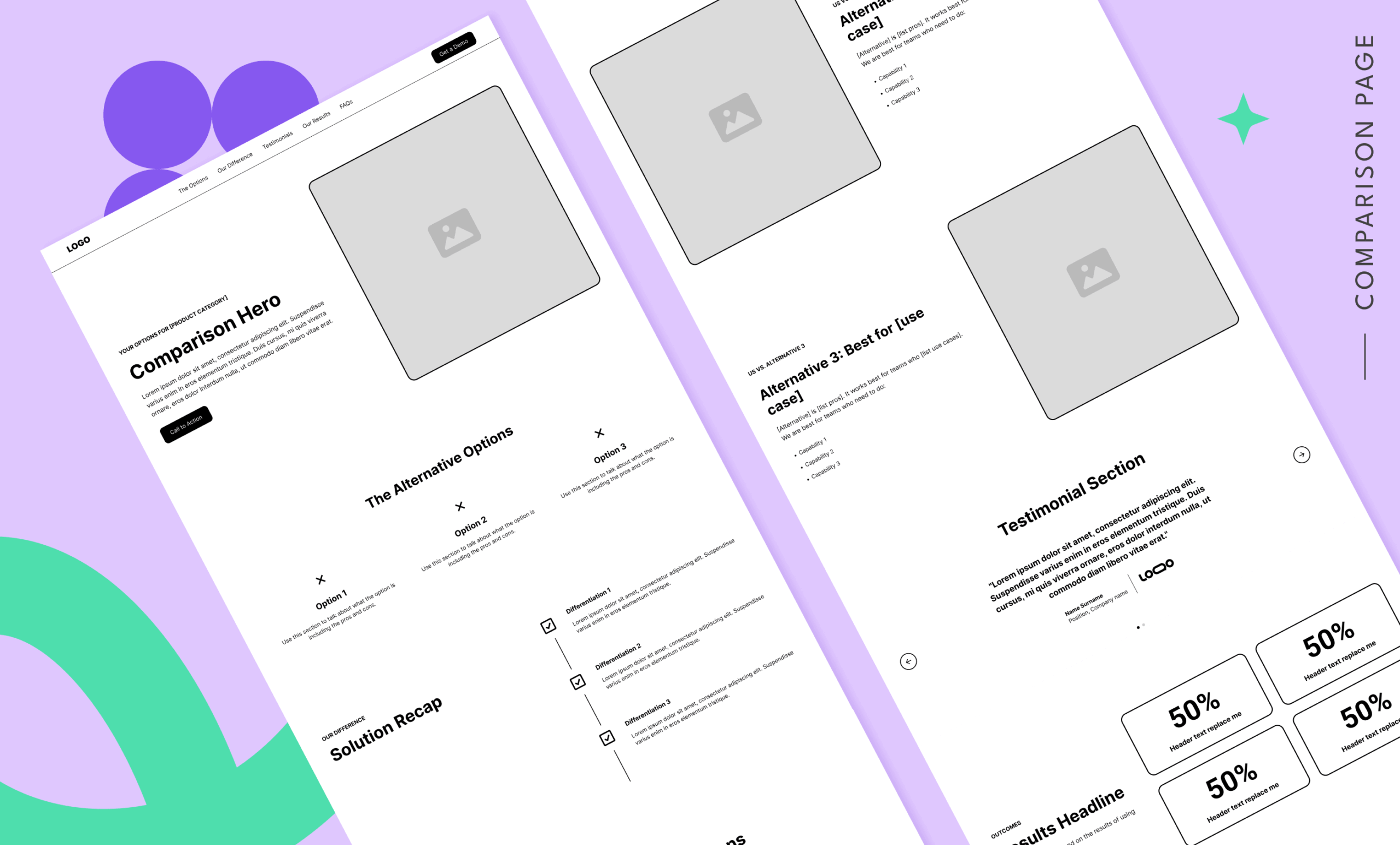
Marketing experts, including B2B landing page specialist Tas Bober, argue that the "request a demo" CTA is often deployed too early in the relationship. To address this, Bober advocates for a "Core Four" landing page framework designed to mirror the research process of a modern buyer. This framework categorizes pages into four distinct stages: the Solution Page, the Product Page, the Comparison Page, and finally, the Demo Page.
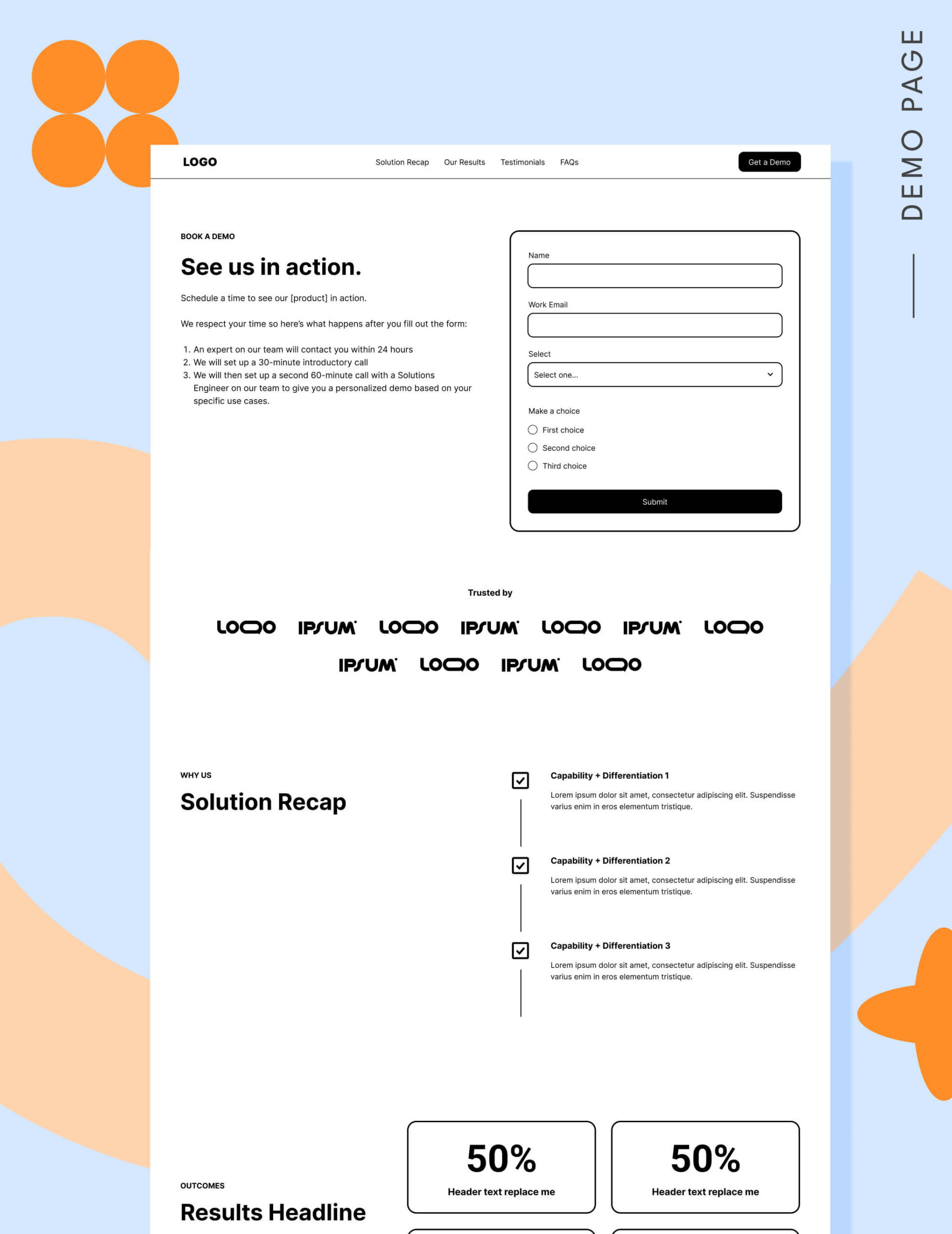
In this model, the demo landing page is not an entry point for cold traffic; rather, it is the final destination for "warm" prospects who have already validated the solution’s relevance to their problem. By the time a visitor reaches the demo page, they should ideally understand the product’s core value proposition and how it compares to competitors. The primary function of the demo page, therefore, is to remove any remaining friction and provide the final reassurance necessary for the prospect to commit to a live interaction.
Benchmarking Performance: Conversion Rates and Industry Standards
Understanding what constitutes a "good" conversion rate is essential for evaluating SaaS performance. First-party research from Unbounce’s 2024 Conversion Benchmark Report indicates that the median conversion rate for SaaS landing pages sits at approximately 3.8%. More specific data regarding high-intent demo pages suggests an even tighter margin, with average conversion rates hovering around 3.1%.
However, these benchmarks are highly dependent on traffic quality. Organizations that funnel cold, low-intent traffic to demo pages often see performance ceilings that no amount of A/B testing can overcome. Conversely, when traffic is restricted to high-intent segments—such as those coming from branded search queries, retargeting campaigns for high-intent site visitors, or specific bottom-of-the-funnel keywords—conversion rates can climb significantly higher.
The Traffic Audit: Identifying Qualified Prospects
A critical step in optimizing the demo experience is the rigorous auditing of traffic sources. Journalistic analysis of successful SaaS motions suggests that "demo" traffic should be curated with precision. High-performing teams typically prioritize the following traffic sources for their demo landing pages:
- Branded Search: Users searching specifically for the company by name.
- Bottom-of-the-Funnel (BOFU) Keywords: Search terms that include "demo," "pricing," or "trial."
- Retargeting: Engaging visitors who have spent significant time on product or pricing pages but have not yet converted.
- Direct Traffic: Prospects who have been nurtured through email or social channels and are returning specifically to engage.
Conversely, sending traffic from broad informational searches (e.g., "how to improve team productivity") directly to a demo page is increasingly viewed as a waste of resources. These users are in the "awareness" phase and are better served by educational content that builds the necessary foundation for a future demo request.
Anatomical Breakdown of a High-Converting Demo Page
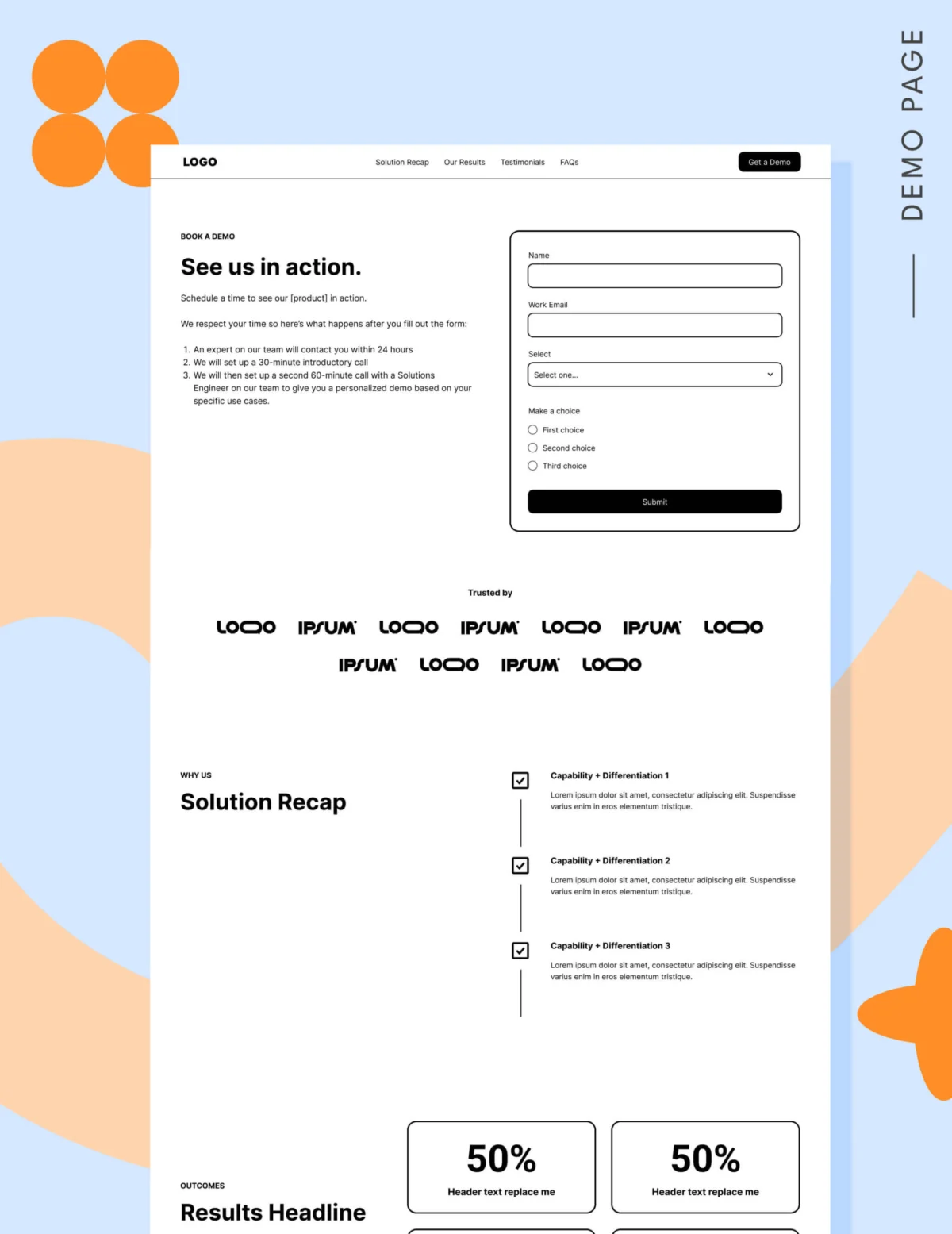
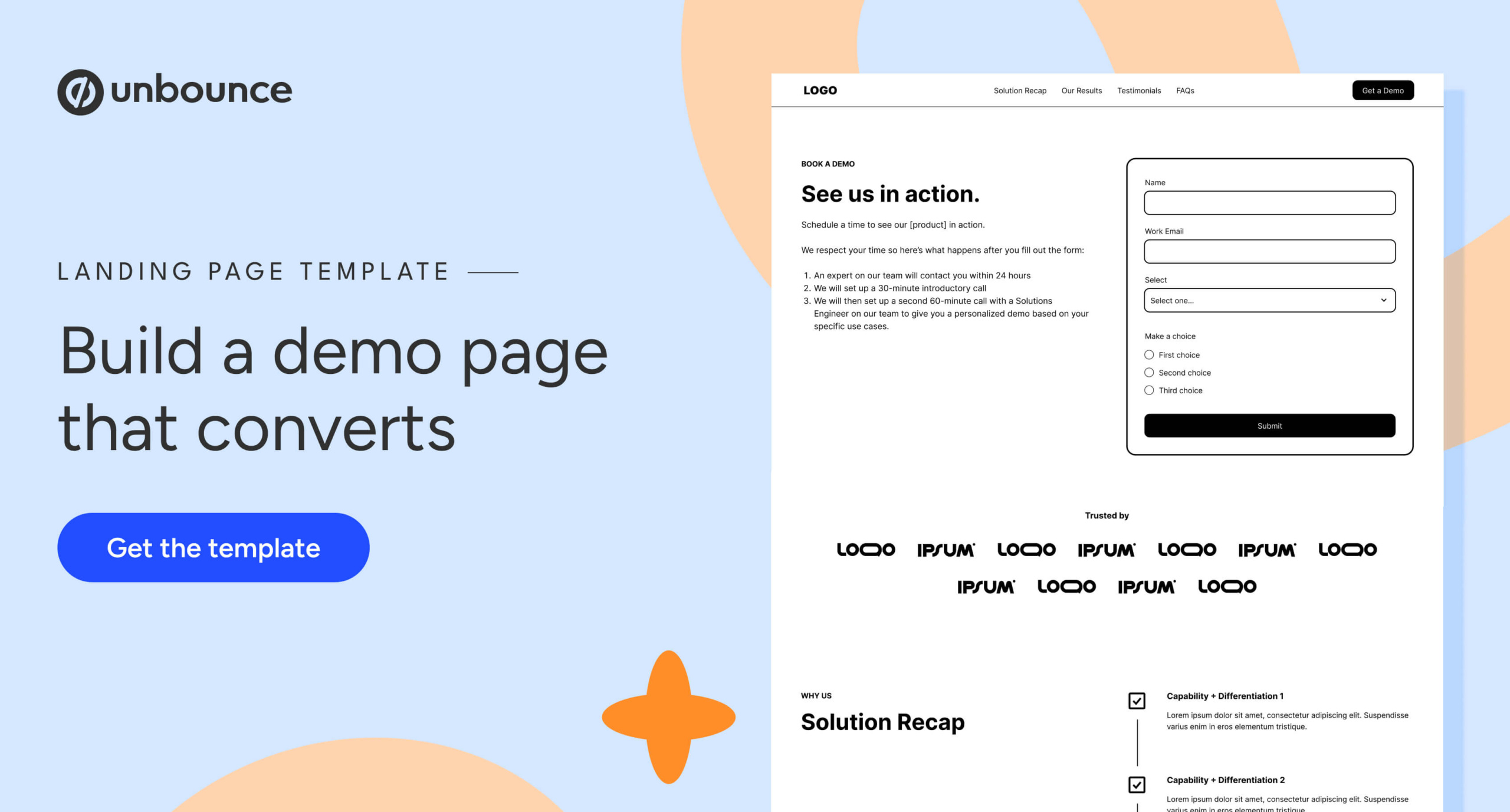
To maximize the 3-4% of visitors who are ready to convert, a demo landing page must be structured to answer final questions and build immediate confidence. Analysis of the "Tas Bober Demo Template" reveals several essential components that differentiate a high-performing page from a standard one.

The Hero Section and Immediate Transparency
Unlike other landing pages where the form might be placed lower to prioritize storytelling, the demo page should lead with the form "above the fold." However, the copy must go beyond a simple "Fill out this form." It should explicitly state what happens next. Will the user receive an immediate calendar link? Will a representative call them within 24 hours? Transparency regarding the "after-submission" experience significantly reduces the psychological barrier to entry.
The Power of the Logo Garden and Measurable Results
Social proof is a non-negotiable element of the B2B decision-making process. A "logo garden" featuring recognizable clients provides instant credibility. If the target audience is niche, the page should substitute broad logos with brief, one-to-two-line testimonials that highlight specific outcomes. Furthermore, the inclusion of a "Results" section—using quantifiable data such as "reduced churn by 15%" or "saved 20 hours per week"—provides the logical justification a buyer needs to move forward.
Addressing the Pricing Elephant
One of the most debated topics in SaaS marketing is the inclusion of pricing on a demo page. While sales-led organizations often hide pricing to maintain leverage, data suggests that providing at least a "starting at" range or a condensed pricing grid can improve lead quality. Pricing acts as a self-qualification tool; it filters out prospects whose budgets do not align with the product, thereby saving the sales team’s time for higher-probability opportunities.
Form Optimization: The Five-Field Threshold
The length of the lead capture form remains a primary point of friction. 2026 conversion benchmarks indicate a dramatic drop-off in completion rates as form fields increase. Data shows that forms with five fields typically convert at roughly 17%, whereas those with ten or more fields see conversion rates plummet to below 7%.
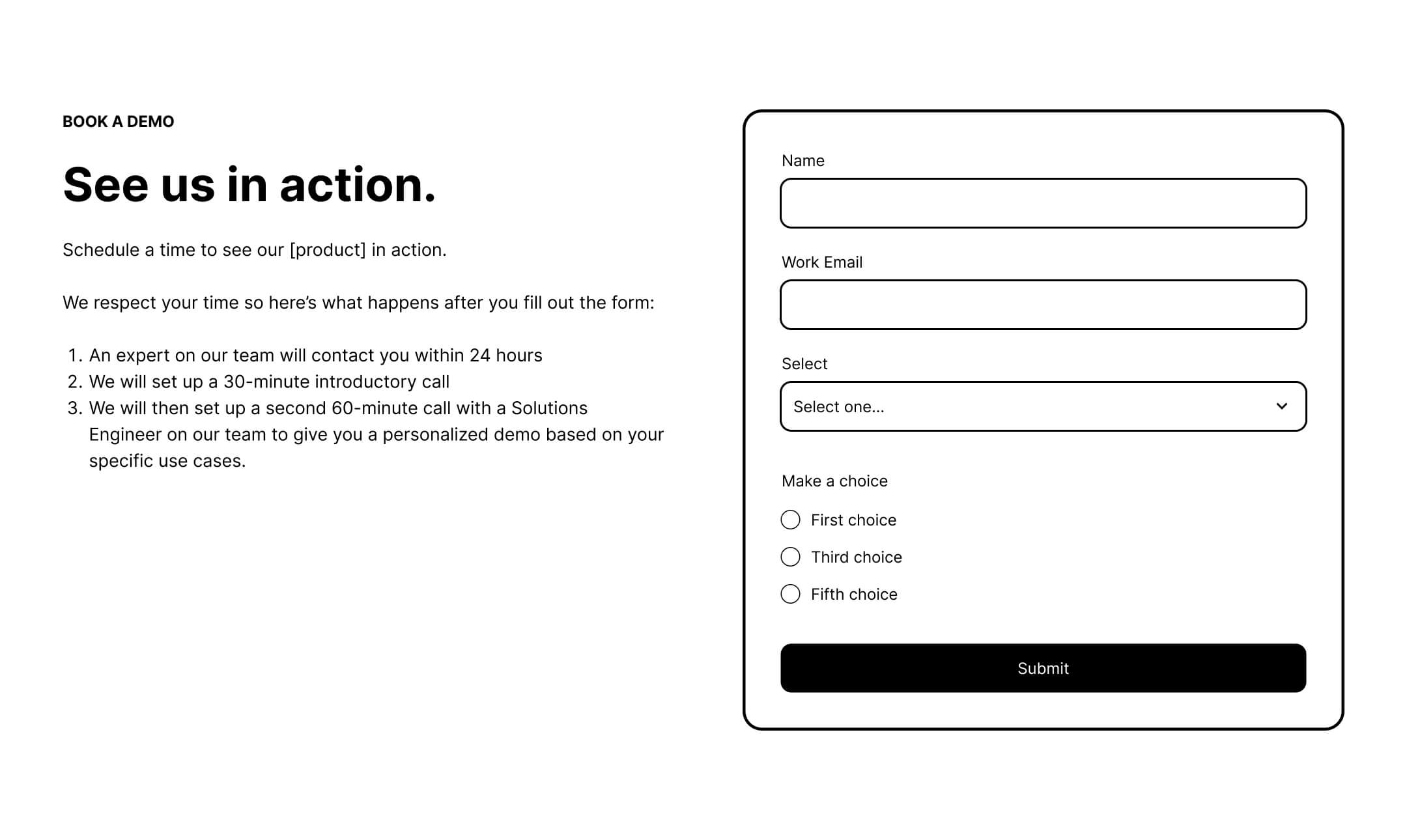
Marketing teams are encouraged to find a balance between the sales team’s desire for data and the user’s desire for speed. Utilizing "positive friction"—a single, high-value qualifying question such as "Company Size" or "Primary Use Case"—can help prioritize leads without significantly damaging the overall conversion rate.
The Rise of Interactive Demos and "Soft" CTAs
A notable shift in the 2025-2026 B2B landscape is the movement away from "Request a Demo" as the exclusive bottom-of-the-funnel offer. Some organizations have found success by rebranding the experience as "Take a Tour" and incorporating interactive, self-guided product walkthroughs.
In one cited case study, the company FORM changed its primary CTA from "Request a Demo" to "Take a Tour" while adding an interactive element to the page. This adjustment resulted in a 33% increase in PPC conversions and a nearly 50% reduction in Cost Per Lead (CPL) for Account-Based Marketing (ABM) campaigns. This suggests that buyers are increasingly looking for "low-stakes" ways to see the product before committing to a 1:1 conversation.
Impact and Future Implications for SaaS Organizations
The evolution of the SaaS demo landing page reflects a broader trend toward buyer-centricity. As B2B buyers become more sophisticated and resistant to traditional sales tactics, the burden of proof shifts further toward the marketing department.
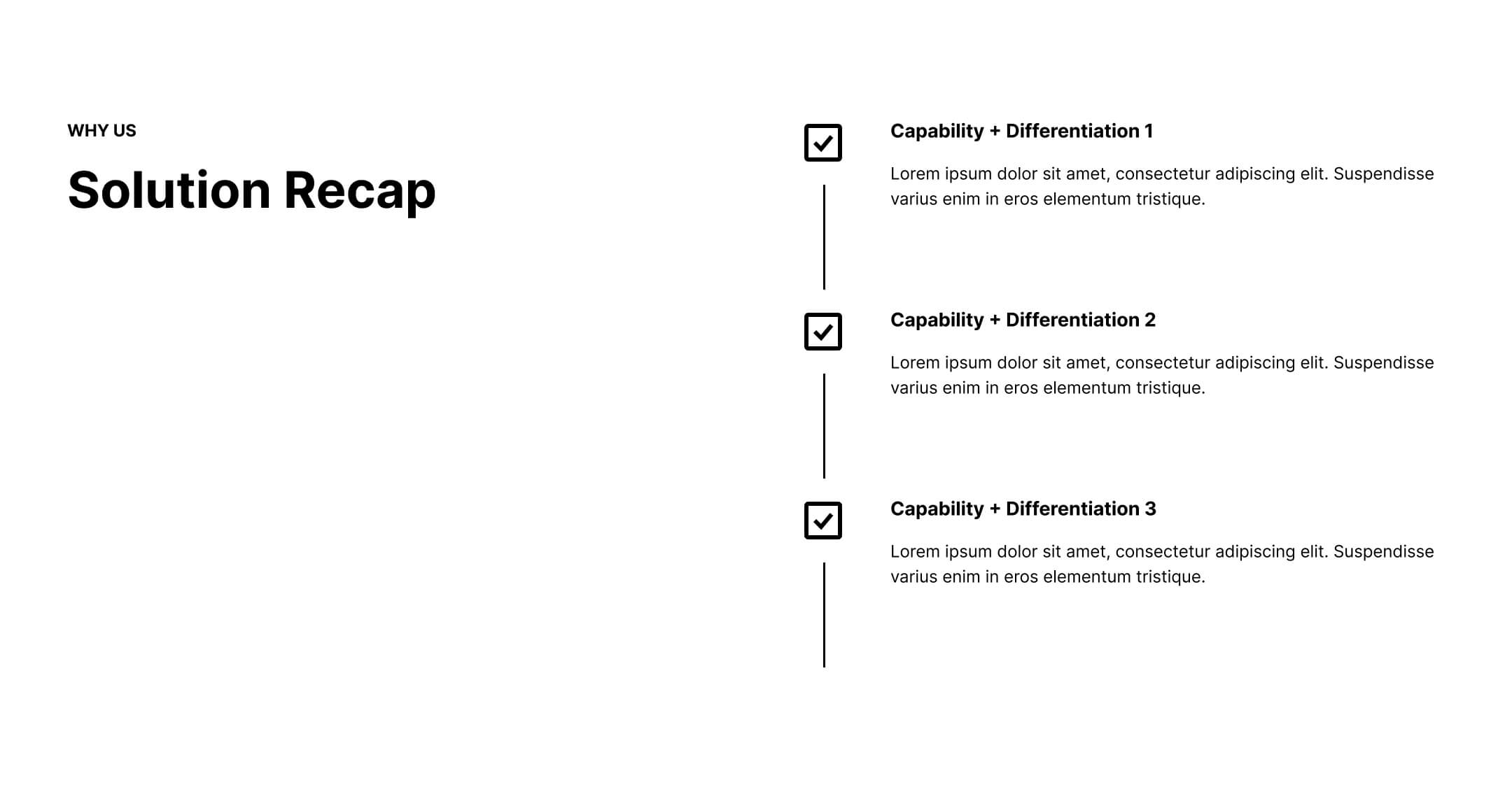
The implications for SaaS companies are clear: high-conversion rates are no longer achieved through aggressive CTAs or "tricks" to keep users on a page. Instead, success is found in providing a clear, transparent, and educational path that respects the buyer’s time and autonomy. Organizations that prioritize traffic quality over quantity and replace ambiguity with clear process descriptions ("what to expect") will likely see not only higher conversion rates but also a more harmonious relationship between their marketing and sales functions.
In the coming years, the integration of scheduling tools like Calendly directly into the landing page, the use of AI-driven qualification bots, and the continued growth of "product-led" elements within "sales-led" motions will further redefine the demo experience. For now, the roadmap remains focused on building trust, providing proof, and ensuring that by the time a buyer clicks "submit," they are already convinced that the solution is the right fit for their needs.

 Dwi Wanna