

The field of Conversion Rate Optimization (CRO) and digital experimentation is currently undergoing a significant shift as generative artificial intelligence moves from simple text generation to complex, deterministic technical workflows. Iqbal Ali, a prominent experimentation consultant and coach, has unveiled a new automated system designed to streamline the creation of client-side A/B tests. By utilizing Small Language Models (SLMs) and low-code automation tools, the workflow promises to generate, test, and "self-heal" JavaScript code for experiments at a fraction of the cost of traditional development. This development addresses a long-standing bottleneck in the experimentation industry: the time and technical resources required to move from a hypothesis to a live functional test.
The Technical Architecture of Automated Experimentation
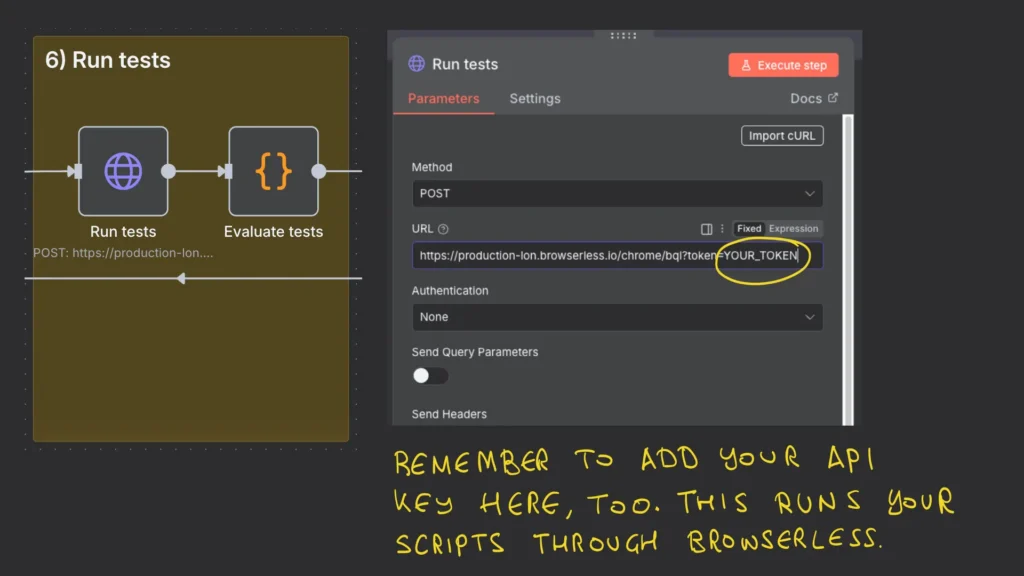
The proposed system leverages a combination of specialized software tools to create a closed-loop development environment. At the core of the workflow is n8n, an extensible low-code automation platform that serves as the "orchestrator" for various tasks. The process integrates with Browserless, a headless browser service that allows the system to interact with live websites, fetch HTML structures, and render modified code in a controlled environment.
Unlike many current AI solutions that rely on "token-heavy" and expensive Large Language Models (LLMs) like GPT-4 or Claude 3.5 Sonnet, this workflow is optimized for SLMs. These smaller models, which can include Llama 3 or Phi-3, are significantly more efficient and can be run locally via tools like Ollama or through low-cost API providers such as OpenRouter. This focus on smaller architecture is not merely a cost-saving measure; it is a strategic approach to sustainability and speed in the development pipeline.

The Chronology of the Self-Healing Code Workflow
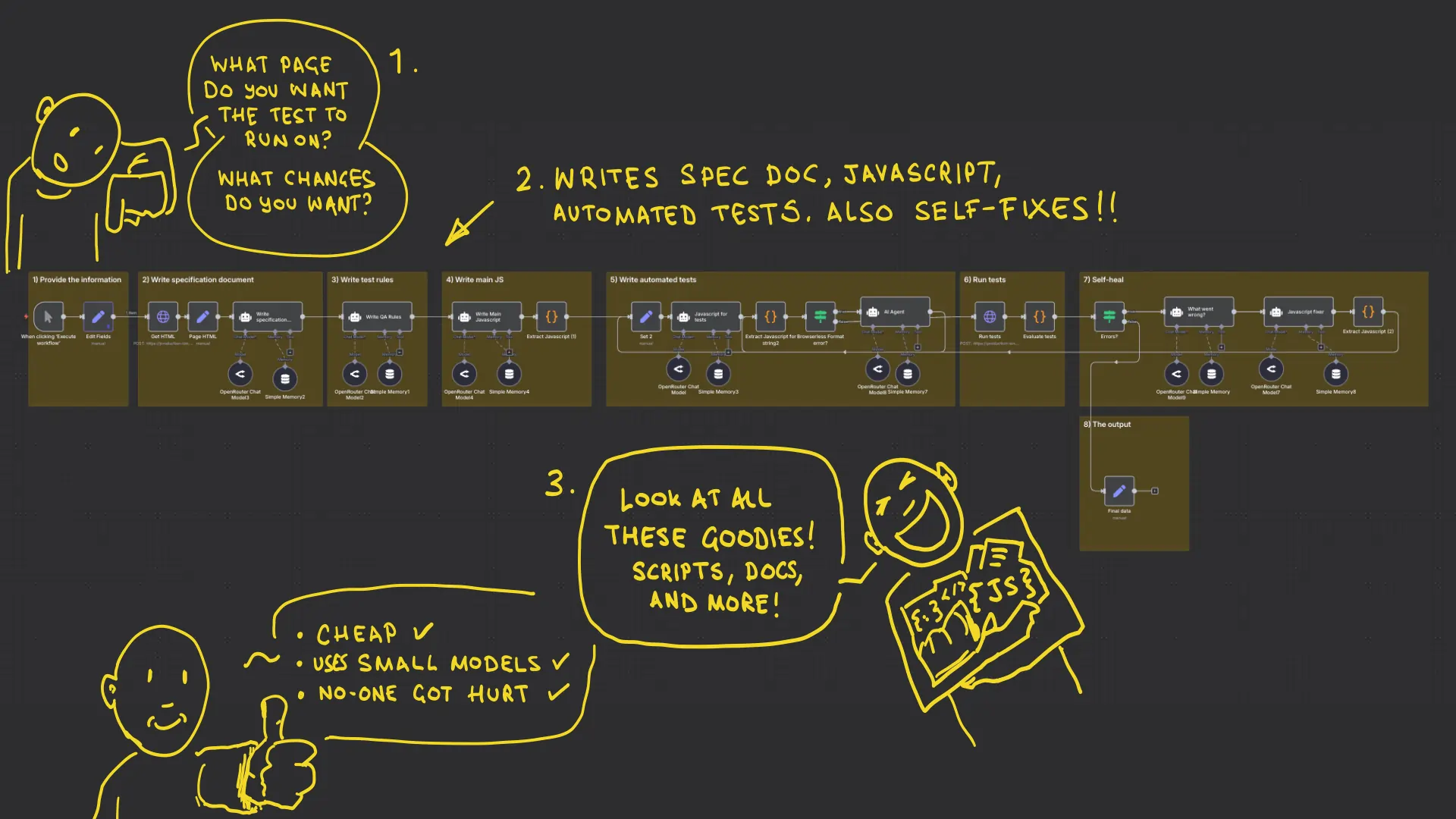
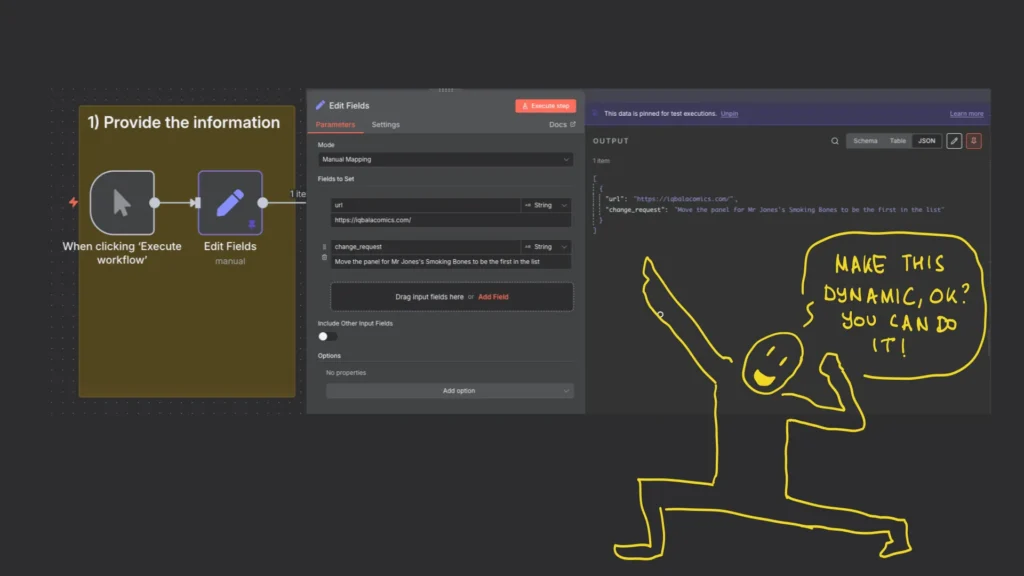
The automation follows a rigid, serialised sequence designed to mimic the professional standards of a senior software engineer overseeing a junior developer. The process begins with two primary inputs: the URL of the target webpage and a plain-language description of the desired change, such as reordering page elements or modifying a call-to-action.
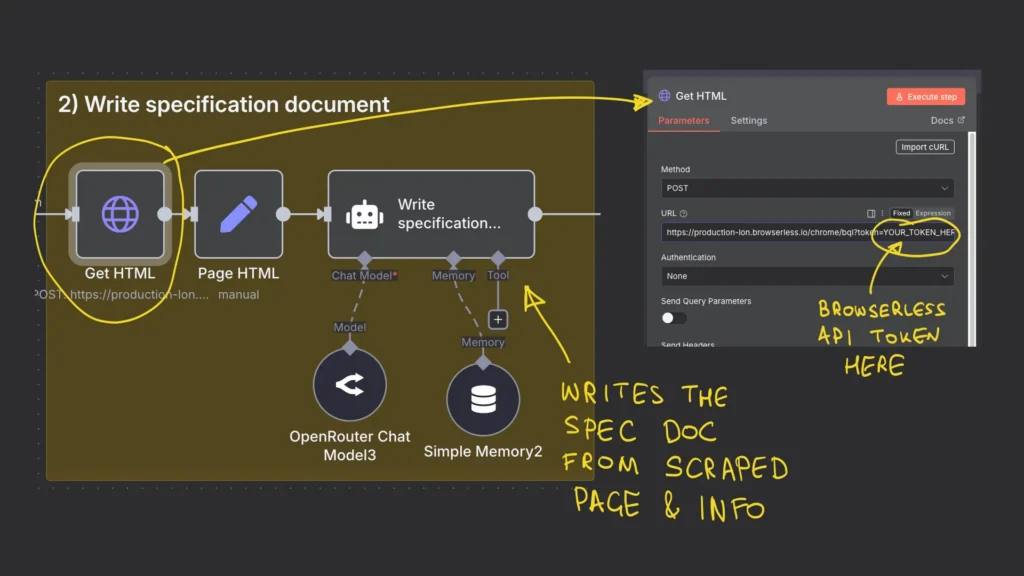
Once the inputs are received, the system initiates a multi-stage execution path. First, the Browserless API fetches the current HTML of the page to provide the AI with the necessary structural context. Following this, the SLM generates a comprehensive technical specification document. This document acts as the "blueprint" for the experiment, outlining how the code should be structured and identifying the specific Document Object Model (DOM) elements that will be manipulated.
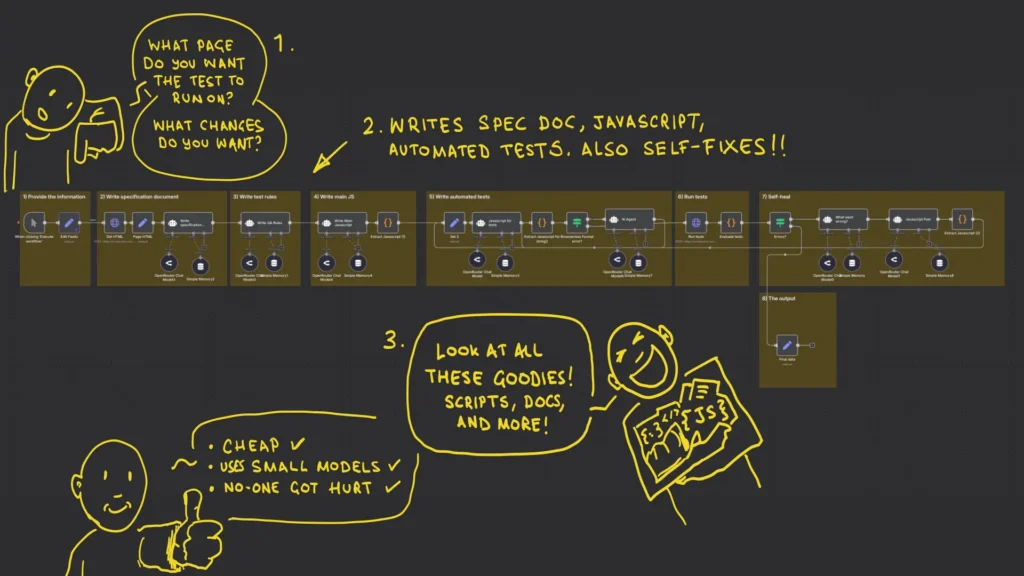
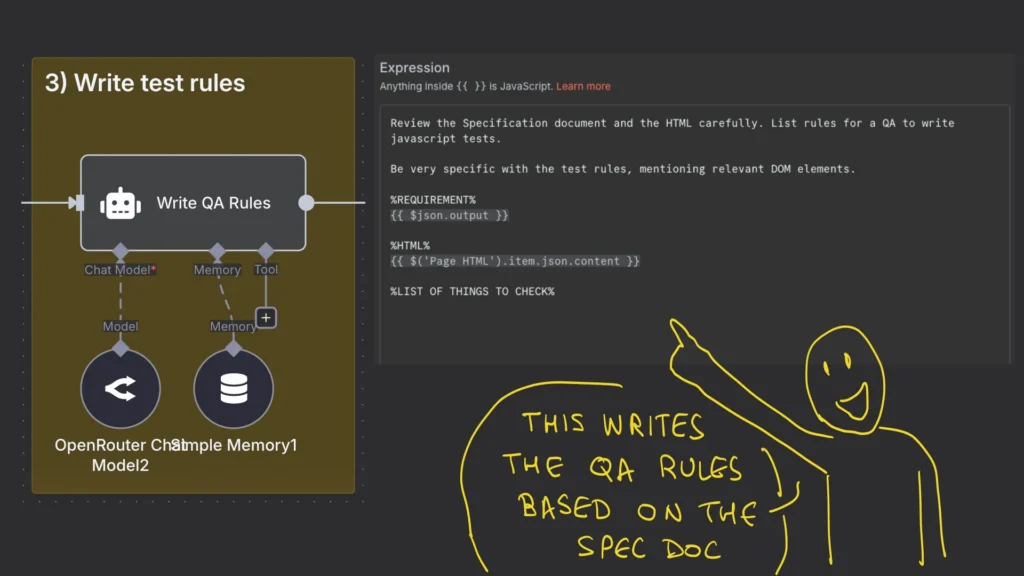
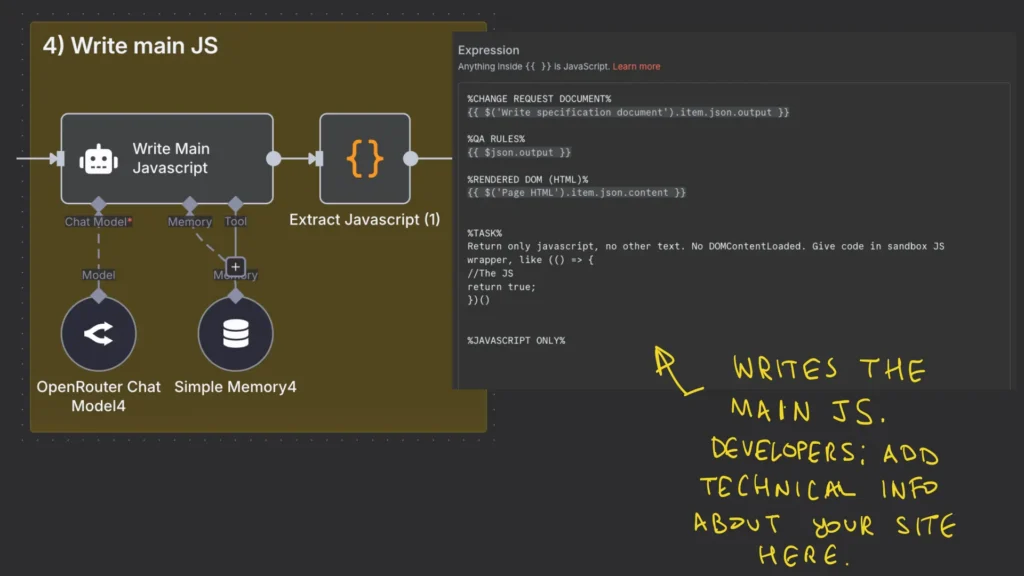
The third stage involves the generation of Quality Assurance (QA) rules. Instead of jumping straight to coding, the system identifies what constitutes a "success" for the implementation and what potential errors to avoid. This leads to the fourth stage: the actual generation of the JavaScript code. Because the model is working from a pre-defined technical spec rather than a vague prompt, the resulting code is significantly cleaner and more reliable.
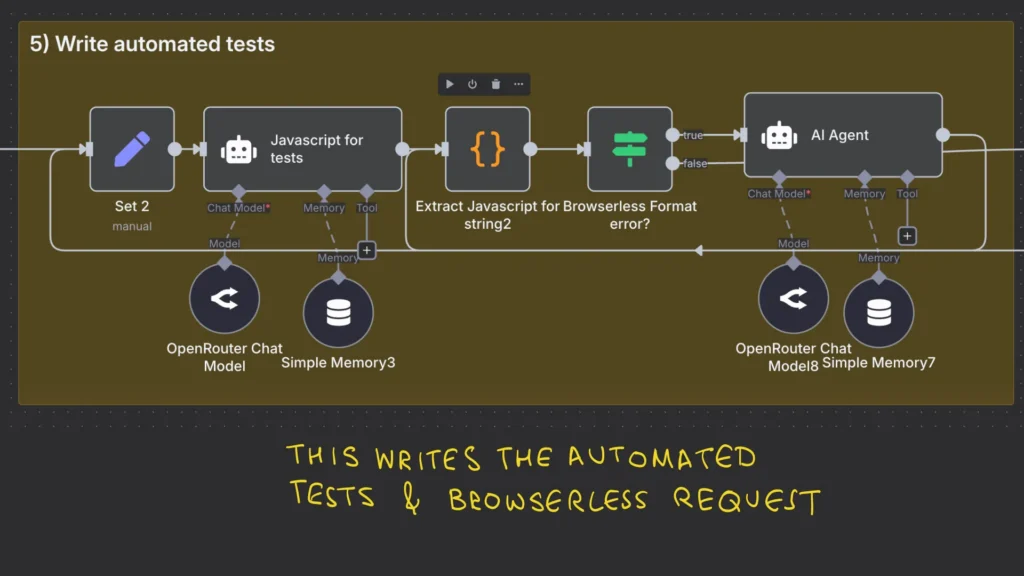
To ensure the code functions as intended, the workflow then generates a series of automated test scripts. These scripts are sent back to Browserless, which executes the new JavaScript on the target page. If the headless browser encounters an error or if the QA tests fail, the system enters a "self-healing" loop. The error logs are fed back into the SLM, which attempts to debug and rewrite the code. This loop is limited to three attempts to maintain efficiency and prevent "token-maxing"—the practice of excessively consuming AI resources without achieving a result.
Economic Impact and Efficiency Data
The primary value proposition of this automated workflow is the dramatic reduction in both time and financial expenditure. In traditional agency or in-house settings, a simple client-side A/B test change—such as moving a promotional banner—can take several hours of developer time and additional time for QA. When factoring in hourly wages, even a minor experiment can cost a company hundreds of dollars in labor.
Data from the implementation of this SLM-driven workflow suggests that the cost per experiment can be reduced to less than $0.06 when using cloud-based small models. For organizations capable of hosting their own local LLM servers via Ollama, the marginal cost of code generation drops to near zero, excluding infrastructure electricity and maintenance. This shift allows experimentation teams to increase their testing velocity, moving from one or two tests per month to dozens, thereby accelerating the "learning loop" essential for digital growth.
Furthermore, the use of SLMs addresses the "deterministic vs. non-deterministic" dilemma in AI. While generative AI is inherently unpredictable, by forcing the AI to write deterministic JavaScript tests, the workflow creates a reliable verification layer. This ensures that the final output is not just a guess by the AI, but a validated piece of software.
Industry Reactions and Professional Perspectives
The introduction of self-healing code workflows has sparked a broader conversation within the tech community regarding the evolving role of the developer. Industry experts suggest that such tools are not intended to replace human engineers but rather to "augment" them. By automating the repetitive, low-level tasks associated with client-side DOM manipulation, developers are freed to focus on more complex architectural challenges and server-side experimentation.
"Efficiency is the key here," noted the workflow’s creator, Iqbal Ali. "We’re not using AI Agents to take over the whole process; we’re using a controlled, serialised workflow to reduce friction." This sentiment is echoed by many in the CRO field who view the "QA bottleneck" as the single greatest threat to experimentation program maturity. By providing a "human-in-the-loop" option after the technical specification stage, the workflow allows for oversight without requiring the human to write every line of code from scratch.
However, some critics warn that over-reliance on AI-generated code could lead to "technical debt" if the models are not properly tuned to a company’s specific coding standards. To mitigate this, the workflow allows for the injection of domain-specific context, such as a company’s unique JavaScript libraries or CSS frameworks, ensuring the output remains consistent with existing site architecture.
Analysis of Broader Implications for Digital Transformation
The transition toward SLMs and automated self-healing workflows represents a significant milestone in the democratisation of technical optimization. Historically, high-velocity testing was a luxury reserved for tech giants like Google, Amazon, and Netflix, who possessed the capital to employ massive teams of dedicated experimentation engineers.
With the advent of low-cost, high-performance automation:
- Mid-Market Competitiveness: Smaller enterprises can now compete with larger players by running a higher volume of tests at a negligible cost.
- Sustainability in AI: By moving away from massive, energy-hungry LLMs for simple coding tasks, the industry moves toward a more sustainable "right-sized" AI model.
- Reduced Barrier to Entry: Marketing and product teams with limited coding knowledge can use these workflows to generate high-quality prototypes, reducing the reliance on overstretched IT departments.
The "self-healing" aspect of the workflow is particularly noteworthy as it mirrors the "test-driven development" (TDD) philosophy prevalent in modern software engineering. By making the AI responsible for both the code and the validation of that code, the system creates a level of accountability that was previously missing from simple "chat-to-code" interfaces.
Future Outlook: The Autonomous Optimization Pipeline
As these workflows become more sophisticated, the next logical step is the integration of these tools directly into experimentation platforms. This would create a truly autonomous pipeline where a system could analyze user behavior data, identify a friction point, propose a hypothesis, generate the code, QA the change, and deploy the experiment—all with minimal human intervention.
For now, the focus remains on "reducing friction." The release of the n8n workflow as a downloadable resource allows the global experimentation community to test, fork, and improve the logic. As more practitioners adopt these SLM-driven processes, the collective data on error rates and self-healing success will likely lead to even more robust models.
In conclusion, the integration of Small Language Models into a deterministic, self-healing workflow marks a turning point for digital experimentation. By prioritizing cost-efficiency, technical validation, and human-AI collaboration, the system offers a blueprint for how businesses can navigate the complexities of modern web development in the age of generative intelligence. The move from $100+ per test implementation to $0.06 is not just a marginal improvement; it is a fundamental restructuring of the economics of digital growth.







