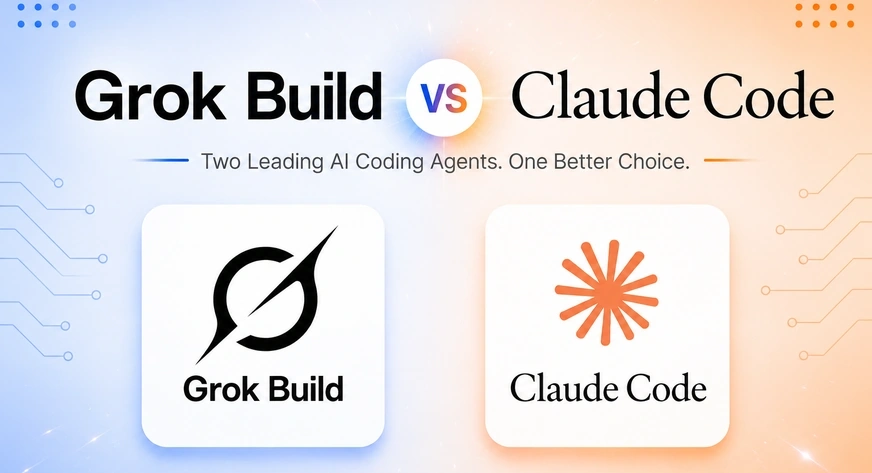
The landscape of software engineering has undergone a fundamental transformation in 2026 as the industry shifts from simple code completion tools toward autonomous terminal-native coding agents. For much of the previous year, Anthropic’s Claude Code remained the primary choice for developers seeking a high-context, deep-reasoning agent capable of managing complex codebases directly from the command line. However, the release of xAI’s Grok Build in beta on May 14, 2026, has introduced a significant alternative, sparking a rigorous debate within the developer community regarding the efficacy of single-agent reasoning versus parallelized multi-agent architectures.
This shift represents a maturation of the "agentic" workflow, where AI does not merely suggest lines of code but actively plans, executes, and iterates on software features. As developers weigh the benefits of these two platforms, the comparison hinges on distinct philosophies: Anthropic’s emphasis on massive context and deliberate planning versus xAI’s focus on speed, competitive outputs, and parallel task distribution.
The Evolution of Terminal-Native Agents
To understand the current competition between Claude Code and Grok Build, one must look at the trajectory of AI-assisted development over the last 24 months. In early 2025, Anthropic launched Claude Code as a production-ready tool built on its high-performing Claude 3.5 and subsequent 4.0 series models. Its primary value proposition was its integration with the Model Context Protocol (MCP) and a context window capable of processing up to one million tokens. This allowed the agent to "understand" entire repositories, making it particularly effective for large-scale refactoring and debugging where global context is critical.
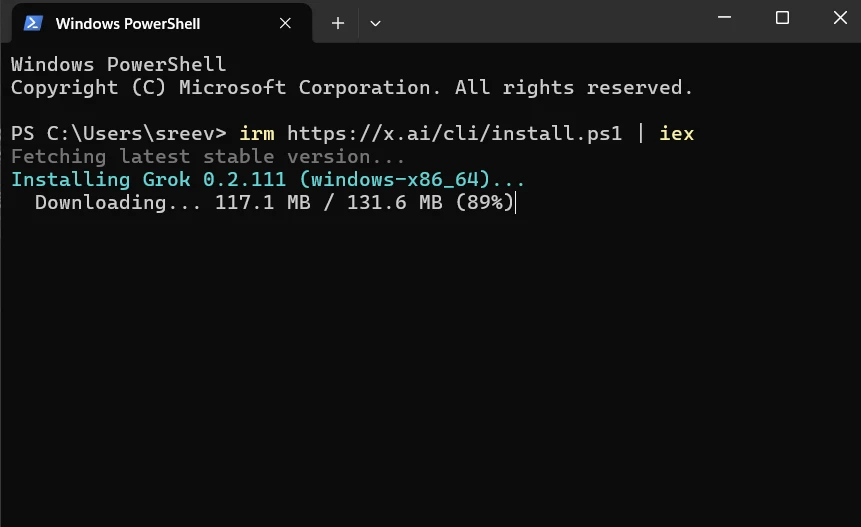
In contrast, xAI’s entry into the market with the Grok Build CLI on May 14, 2026, signaled a pivot toward a more aggressive, hardware-efficient approach. Initially utilizing the grok-code-fast-1 model, xAI quickly iterated, replacing it with the specialized grok-build-0.1 model by May 20, 2026. This rapid deployment cycle underscores the competitive pressure in the AI sector, as companies race to capture the high-end professional developer market.
Architectural Philosophies: Depth vs. Breadth
The most striking difference between the two agents lies in their underlying architecture. Claude Code operates as a single, deep-reasoning agent. When presented with a prompt, it performs a comprehensive analysis of the codebase, generates a sequential plan, and waits for explicit user approval before executing file modifications. This "measure twice, cut once" philosophy is designed to minimize errors in production environments. By leveraging its 1-million-token context window, Claude Code can track dependencies across hundreds of files, ensuring that a change in a utility function does not inadvertently break a distant module.
Grok Build, conversely, is built on the principle of parallelism. Rather than relying on one agent to solve a problem sequentially, Grok Build can instantiate up to eight sub-agents simultaneously. This multi-agent system is overseen by a coordinator agent that decomposes a complex task—such as building a full-stack feature—into discrete, manageable units. For example, if a developer requests the implementation of a new authentication system, Grok Build might assign one sub-agent to the database schema, another to the API routes, and a third to the front-end integration. This approach can significantly reduce the "time-to-solution" for multifaceted features.
Arena Mode and Competitive Implementation
A standout feature of the Grok Build CLI is "Arena Mode," a functionality that introduces a competitive element to AI code generation. In this mode, multiple agents are tasked with solving the same problem independently. The developer is then presented with several distinct implementations and can choose the one that best aligns with their project’s specific constraints, such as performance, readability, or adherence to a particular design pattern.
Industry analysts suggest that Arena Mode addresses one of the primary frustrations with generative AI: the "hallucination" or suboptimal logic that can occur when a single model is forced to make a definitive choice. By providing options, xAI shifts the role of the developer from a prompt engineer to an architectural judge. However, critics point out that this adds an "evaluation tax" on the developer, who must now spend time reviewing multiple diffs rather than trusting a single, well-reasoned output.
Benchmarking Performance: SWE-bench and Real-World Utility
Performance metrics remain a contentious point of comparison. As of mid-2026, Claude Code maintains a lead in standardized testing. On the SWE-bench Verified metric—a rigorous benchmark that requires agents to resolve real-world GitHub issues—Claude Code (running on the Opus 4.7 variant) achieved a success rate of 87.6%. This high score is attributed to the model’s superior reasoning capabilities and its ability to maintain focus over long-duration tasks.
Grok Build’s initial benchmarks were reported at 70.8% using the now-deprecated grok-code-fast-1 model. While xAI has not yet released verified SWE-bench scores for the newer grok-build-0.1 model, internal testing and early user reports suggest a narrowing gap. The 256K context window of Grok Build, while smaller than Claude’s 1M, is often sufficient for mid-sized projects, though it can struggle with "context exhaustion" in massive enterprise monorepos.
Integrated Skills and Workflow Customization
The two platforms also differ in how they handle repetitive tasks and extensibility. Claude Code relies heavily on the Model Context Protocol (MCP), an open standard that allows the agent to connect to external tools, databases, and APIs. This makes it highly extensible for teams that have already invested in the MCP ecosystem.
Grok Build introduces a concept known as "Skills." These are named, versioned instruction sets that can be invoked via slash commands (e.g., /generate-docs or /optimize-db). Unlike standard prompts, Skills are behavioral specifications that travel with the repository. When a Skill is updated, it is reflected across the entire team’s workflow, ensuring consistency in how the AI handles specific operations like PDF generation or data normalization. In May 2026, xAI released a suite of built-in Skills focusing on document processing and data workflows, positioning Grok Build as a tool for more than just pure logic—extending its utility into technical documentation and business logic automation.
Economic Considerations and Accessibility
The cost of entry for these tools reflects their positioning as professional-grade utilities. Claude Code offers a tiered approach, including a free usage tier with daily limits, making it accessible to individual contributors and hobbyists. Professional access is bundled with Anthropic’s standard Pro plans.
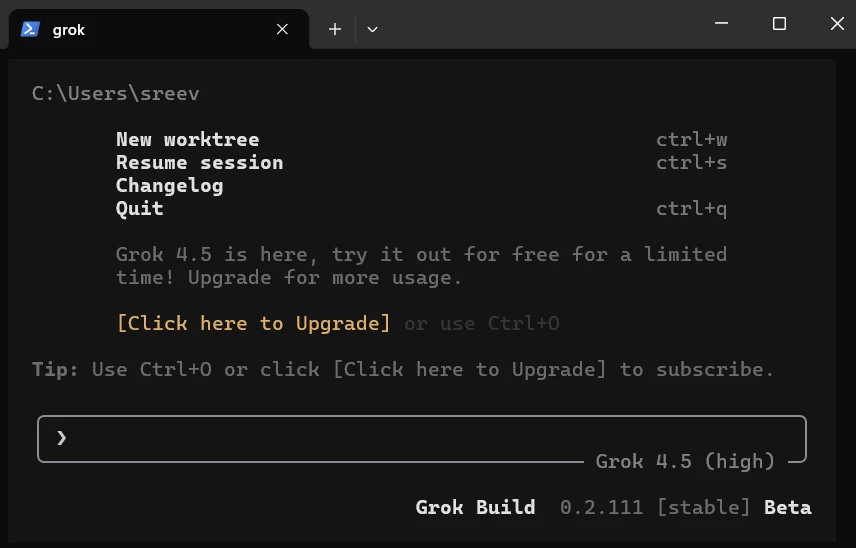
Grok Build, however, is positioned as a premium enterprise-level tool. Access requires either an X Premium Plus subscription or the "SuperGrok" tier, priced at $299 per month. This high price point has led to a perception of Grok Build as a tool for high-output engineering teams where the cost is offset by the time saved through parallel execution. Furthermore, Grok Build’s API pricing ($1.00 per million input tokens and $2.00 per million output tokens) is competitive but can scale rapidly when using Arena Mode, as the user effectively pays for multiple agents to perform the same task.
Implementation and User Experience
In practical application, the user experience of both tools is optimized for the terminal. Both index the local project directory upon launch, creating a local vector store or knowledge graph to facilitate rapid retrieval of code context.
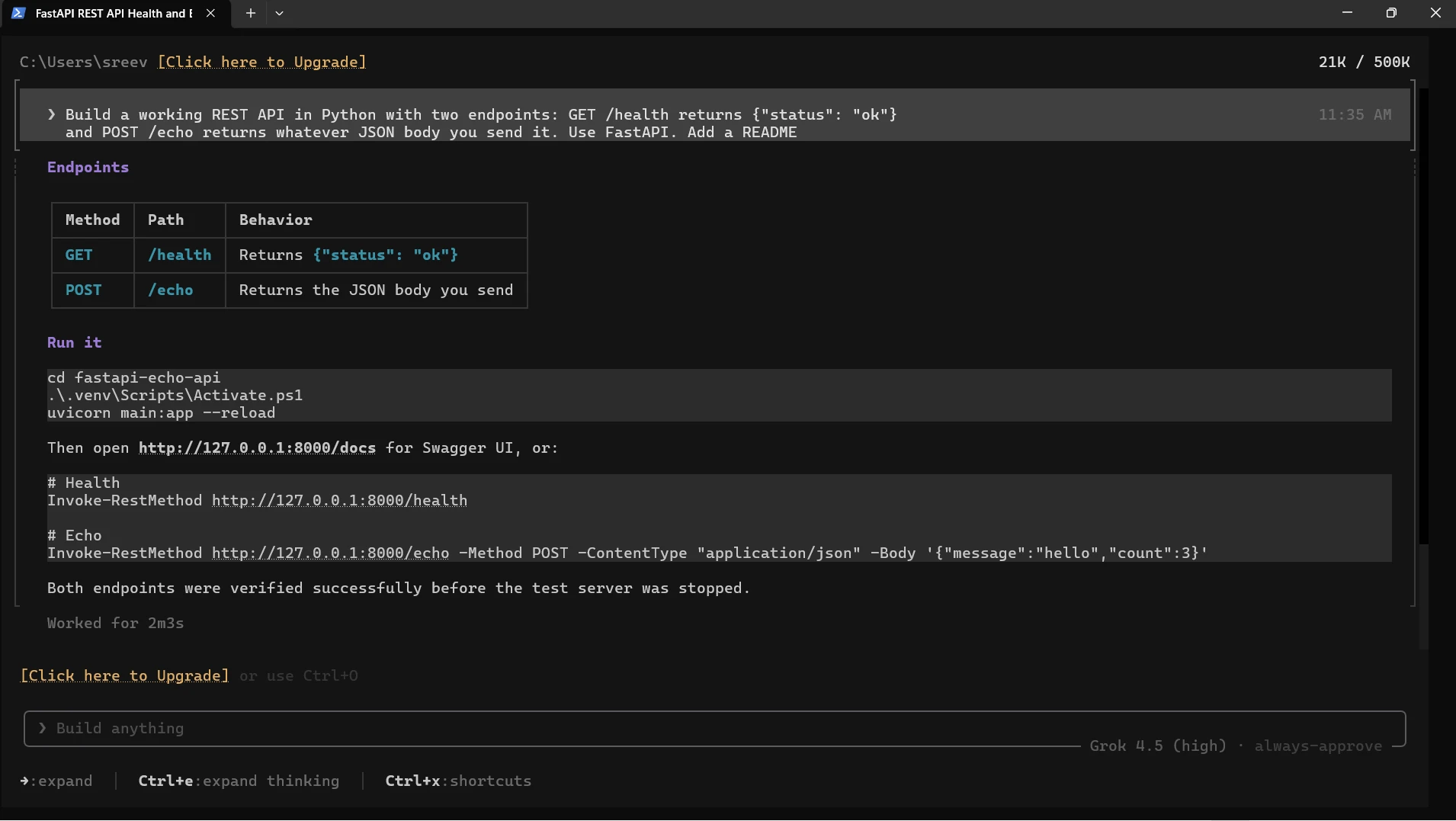
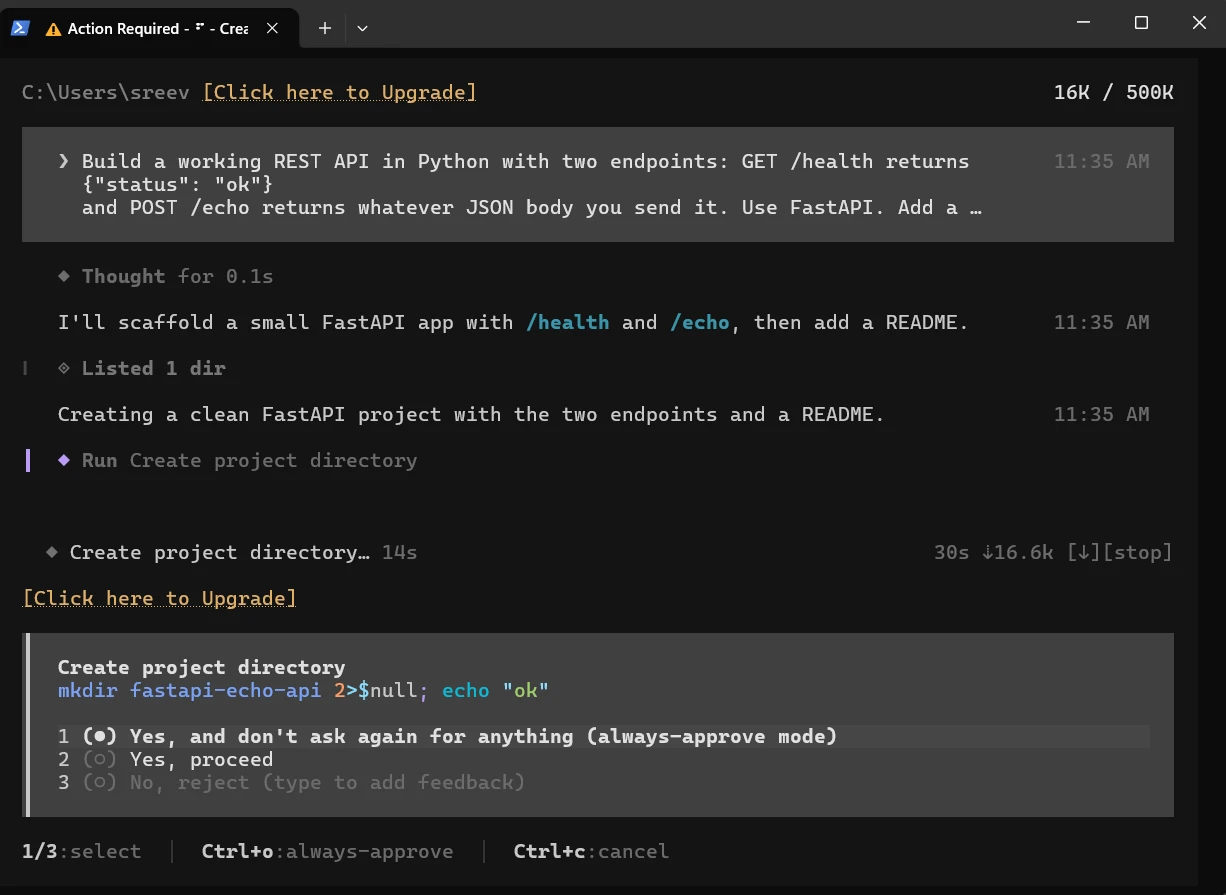
When testing a standard task—such as building a Python-based REST API—the difference in "personality" becomes clear. Claude Code typically presents a detailed, numbered plan and waits for a "Y/n" confirmation. It acts as a cautious pair programmer. Grok Build, particularly in Arena Mode, is more "exploratory," often providing three different ways to structure the API (e.g., one using standard FastAPI patterns, one optimized for asynchronous performance, and one with verbose logging).
For debugging tasks, Claude Code’s deep reasoning often proves superior. It is more likely to identify intermittent race conditions or subtle memory leaks by tracing logic through the 1M token window. Grok Build’s strength lies in "greenfield" development—starting a new feature from scratch where the ability to generate boilerplate and core logic in parallel provides an immediate productivity boost.
Broader Impact on the Software Engineering Profession
The emergence of these agents has sparked a broader discussion about the future of the junior developer role. As agents like Claude Code and Grok Build become capable of handling routine tasks—refactoring, unit testing, and API scaffolding—the industry is seeing a shift toward "Agent Orchestration." Senior developers are increasingly spending their time reviewing AI-generated diffs and defining the high-level architecture that these agents then execute.
There is also the matter of security and data privacy. Both Anthropic and xAI have emphasized that their terminal agents operate on local files and respect .gitignore rules. However, the requirement for an active internet connection to process prompts through their respective LLMs remains a point of concern for some high-security sectors. Claude Code’s maturity in the production environment has allowed it to develop more robust enterprise security features, whereas Grok Build is still navigating these requirements during its beta phase.
Conclusion: A Dual-Tool Future
As of mid-2026, the verdict from the developer community is not one of total displacement but of specialization. Claude Code remains the gold standard for high-complexity, high-stakes reasoning in large-scale codebases, benefiting from its massive context window and proven SWE-bench performance. Grok Build has carved out a significant niche for developers who value speed, parallel execution, and the ability to choose between competing implementations via Arena Mode.
The competition between Anthropic and xAI is expected to accelerate the development of even more autonomous features, such as agents that can not only write code but also manage deployment pipelines and monitor production logs in real-time. For now, most high-end engineering teams are finding value in maintaining access to both tools—using Claude for the deep, structural work and Grok for the rapid expansion of new features. The "agent wars" of 2026 are just beginning, and the ultimate winner will be the developer whose productivity is no longer limited by the speed at which they can type, but by the clarity of their architectural vision.