Lina Hope
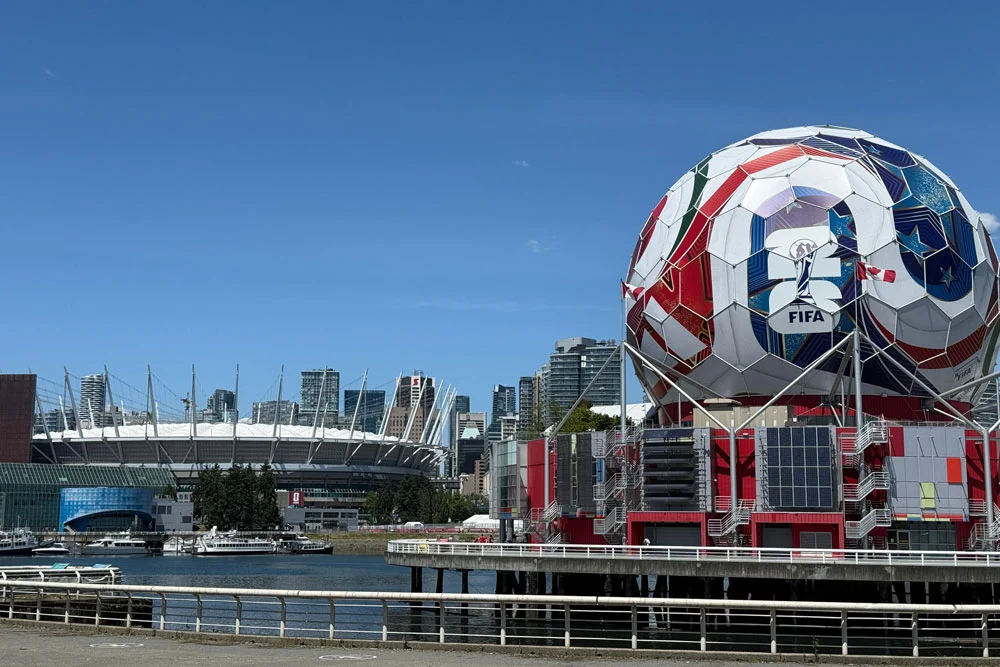
The FIFA World Cup 2026, hosted across the United States, Mexico, and Canada, has emerged as more than a premier sporting event; it has become a masterclass in strategic resilience, team dynamics, and the volatility of established hierarchies. As the tournament progresses through its knockout stages, the global sporting community has witnessed a series of shifts that mirror the complexities of the digital economy, specifically within the affiliate marketing sector. The intersection of high-stakes athletic competition and performance-based marketing reveals that the principles of success—diversification, vigilance, and continuous adaptation—are universal across both the pitch and the boardroom.
The 2026 Tournament Landscape: A New Era of Competition
The 2026 iteration of the FIFA World Cup is the first to feature an expanded 48-team format, a structural change that has fundamentally altered the competitive landscape. With more matches across 16 host cities, the tournament has provided a broader stage for nations previously considered peripheral to the footballing elite. This expansion mirrors the growth of the global affiliate marketing industry, which is projected to surpass $15 billion in valuation by the end of 2026. Just as the World Cup has opened its doors to more nations, the digital marketplace has lowered barriers to entry, allowing niche players to compete with established multinational brands.
The tournament began with high expectations for traditional powerhouses, yet the group stages quickly dismantled the notion of "safe" bets. From the arrival of the Tartan Army—the dedicated supporters of the Scotland national team—to the unexpected tactical dominance of mid-tier squads, the event has highlighted a shift toward decentralized power. In the affiliate marketing world, this is reflected in the transition from a few dominant "super-affiliates" to a more fragmented, diverse ecosystem of content creators, influencers, and specialized review platforms.
The Imperative of Teamwork and Asset Diversification
A primary takeaway from the 2026 tournament is the diminishing returns of individual stardom in the absence of a cohesive collective. While individual talent remains a critical component of success, the failures of teams led by singular icons have been stark. Croatia’s inability to advance past Portugal despite the presence of Luka Modrić, and Portugal’s subsequent exit at the hands of Spain despite Cristiano Ronaldo’s leadership, underscore a vital truth: reliance on a single point of failure is a high-risk strategy.
In the context of affiliate marketing, this translates directly to the composition of an affiliate program. Industry veterans, such as those at AM Navigator, have long argued that an agency or a brand is only as resilient as its broadest base of contributors. A program that derives 80% of its revenue from a single affiliate is inherently unstable. To mitigate risk and ensure sustainable growth, modern affiliate managers are now prioritizing "teamwork" across various marketing channels.
Strategic Diversification Channels
- Content Commerce: Leveraging high-authority editorial sites to build brand trust.
- Niche Influencers: Utilizing micro-influencers who command high engagement within specific demographics.
- Technological Affiliates: Integrating tools like browser extensions and AI-driven price comparison engines.
- Loyalty and Reward Portals: Ensuring a steady stream of repeat customers through cashback and incentive models.
By diversifying an affiliate base, brands can withstand the loss of a single high-performing partner, much like a well-rounded soccer team can survive the injury or underperformance of a star player.
The Rise of the Underdog: A Chronology of Disruption
The 2026 World Cup has been defined by the "underdog" narrative, proving that historical prestige is no longer a guarantee of future performance. The tournament’s chronology is marked by several landmark upsets that serve as a warning to market leaders in any industry.
Group Stage: The Curaçao-Ecuador Stalemate
In a match that shocked analysts, debutant Curaçao held Ecuador to a 0-0 draw. Ecuador, a seasoned veteran of South American qualifying, was unable to penetrate the disciplined defensive structure of a team making its first appearance on the world stage. This match demonstrated that tactical discipline and preparation can neutralize superior technical talent.
Round of 16: Egypt’s Near-Upset of Argentina
Perhaps the most dramatic display of underdog potential occurred when Egypt faced Argentina, the defending champions. For the majority of the match, Egypt held a 2-0 lead, exposing vulnerabilities in the Argentine defense through rapid counter-attacks. While Argentina eventually clawed back, the match sent a clear signal: the gap between the "elite" and the "emerging" is closing.
Affiliate Marketing Parallel: The Nectar Sleep Case Study
This phenomenon is not exclusive to sports. In early 2017, the mattress-in-a-box market was dominated by established entities like Casper and Purple. When Nectar Sleep launched its affiliate program, it was viewed as an underdog in a saturated market. However, through aggressive affiliate recruitment, superior commission structures, and meticulous management, Nectar Sleep’s program ascended to the number one position on major affiliate networks within a year. By zooming past giants like Wayfair and Reebok, Nectar Sleep proved that a well-executed strategy could allow an underdog to seize market leadership from entrenched incumbents.
The Danger of Stagnation: Why Past Success Does Not Guarantee Future Results
The 2026 World Cup has seen the fall of several "titans" of the sport, providing a sobering lesson in the dangers of resting on one’s laurels. The most notable absence was Italy, a four-time champion that failed to qualify for the tournament entirely. Furthermore, the Netherlands was eliminated by Morocco in the Round of 32, and Brazil—the most successful nation in World Cup history—was knocked out by Norway in the Round of 16.
Norway’s ascent is particularly instructive. Having not qualified for a World Cup in nearly three decades, the Norwegian team utilized a long-term development strategy focused on youth integration and data-driven tactics. Their advancement to the Quarterfinals represents the reward for continuous improvement and a refusal to be defined by past failures.
The Dynamic Nature of Online Markets
The affiliate marketing industry is similarly characterized by a "dynamic" nature. The strategies that generated significant ROI in 2020 are often obsolete by 2026. The evolution of search engine algorithms, the introduction of stricter data privacy laws (such as the continued evolution of GDPR and CCPA), and the rise of generative AI have transformed how consumers interact with affiliate links.
Market participants who fail to invest in ongoing education and adaptation risk the same fate as the eliminated footballing giants. Industry conferences, such as the Affiliate Summit in New York, have become essential venues for professionals to recalibrate their strategies. The shift from a "set-it-and-forget-it" mentality to one of constant optimization is what separates enduring brands from those that fade into irrelevance.
Implications for Future Strategic Planning
The parallels between the FIFA World Cup 2026 and affiliate marketing suggest several key implications for stakeholders in the digital economy. As the tournament enters its final stages, the data collected provides a roadmap for organizational resilience.
1. Data-Driven Decision Making
Both soccer coaches and affiliate managers are increasingly relying on granular data. In soccer, player tracking and heat maps dictate substitutions; in marketing, attribution modeling and conversion path analysis dictate budget allocations. The 2026 tournament has shown that teams that ignore the data in favor of "gut feelings" or traditional prestige are often the first to be sent home.
2. Agility Over Size
The success of smaller nations like Norway and Morocco highlights that agility and the ability to pivot tactics mid-game are often more valuable than a deep roster of expensive talent. In affiliate marketing, smaller, more agile agencies can often outperform larger, more bureaucratic firms by responding faster to market trends and technological shifts.
3. The Globalized Talent Pool
The 2026 World Cup has proven that talent can emerge from any corner of the globe. Similarly, the affiliate marketing space is seeing a surge in high-quality traffic from emerging markets in Southeast Asia, Africa, and Latin America. Brands that adopt a global mindset and localize their affiliate efforts will be the ones to capture the next wave of consumer growth.
Conclusion: A Call for Constant Vigilance
As the world watches the final matches of the FIFA World Cup 2026, the lessons for the affiliate marketing industry are clear. Success is not a permanent state; it is a temporary condition that must be defended through teamwork, vigilance against emerging competitors, and a relentless commitment to evolution.
The tournament has demonstrated that even the most storied programs can fall, and the most unlikely underdogs can rise to the top. Whether on the grass of a stadium in Mexico City or within the dashboard of a global affiliate network, the fundamental rules of competition remain the same. To win, one must look beyond individual talent, respect the potential of the underdog, and never assume that today’s victory ensures tomorrow’s survival. The "dynamic" nature of these fields ensures that only those who are willing to learn, adapt, and collaborate will remain in the game.


 Jia Lissa

 Nana