The United States is currently grappling with one of the most devastating public health crises in its history, a multi-decade opioid epidemic that has claimed hundreds of thousands of lives and reshaped the landscape of American healthcare and law enforcement. What began as a surge in prescription drug dependency has evolved into a complex, lethal cycle involving heroin and synthetic opioids like fentanyl. Recent data-driven investigations, sparked by seminal reports such as the Pulitzer Prize-winning "Seven Days of Heroin" by the Cincinnati Enquirer, have highlighted the sheer scale of the emergency, prompting analysts to look beyond the headlines to the raw data provided by the Centers for Disease Control and Prevention (CDC), the United Nations Office on Drugs and Crime (UNODC), and demographic research groups.
The Genesis and Evolution of the Crisis
The American opioid crisis is generally categorized by public health officials into three distinct waves. The first wave began in the late 1990s, characterized by a significant increase in the prescription of opioids for pain management. Pharmaceutical marketing played a pivotal role during this era, with assurances to the medical community that the risk of addiction was minimal. This led to a massive influx of legal opioids into American households, laying the groundwork for widespread dependency.
The second wave emerged around 2010, marked by a sharp rise in heroin-related overdose deaths. as the medical community began to tighten restrictions on prescription opioids, individuals who had become dependent on pills turned to heroin as a cheaper and more accessible alternative. The third wave, which began roughly in 2013, is defined by the explosion of synthetic opioids, particularly illicitly manufactured fentanyl. Fentanyl’s high potency—up to 50 times stronger than heroin—has dramatically increased the lethality of the drug supply, leading to the current peak in overdose fatalities.
Comparative Global Perspectives
When placed on a global stage, the United States stands as a stark outlier in terms of overdose mortality. According to data from the UNODC, the U.S. leads the world in overdose deaths both in absolute numbers and when adjusted per million residents. While other nations face drug-related challenges, the intensity of the American crisis is unparalleled.
Comparative data shows that while countries like Sweden, Australia, and El Salvador report high rates of overdose deaths relative to their populations, their figures remain significantly lower than those of the United States. In many European nations, drug policy focuses heavily on harm reduction and socialized healthcare interventions, which some analysts suggest has mitigated the mortality rates seen in North America. Iceland serves as a unique statistical outlier; due to its very small population, a relatively low number of deaths can result in a high "per million" rate, yet even with this mathematical skew, the raw volume of the American crisis dwarfs global counterparts.
Usage Patterns vs. Lethality: A Data Paradox
One of the most striking revelations in recent drug use data is the discrepancy between the number of users and the number of fatalities. Analysis of datasets from FiveThirtyEight, which tracks drug use by age, indicates that heroin has a relatively small user base compared to substances like marijuana or even cocaine. However, the lethality of heroin and its synthetic derivatives is disproportionately high.
Data shows that heroin use is most concentrated among the 20-34 age demographic. Unlike cocaine or crack, which show a more distributed adoption across older age groups, heroin’s presence in older demographics is significantly lower. Experts suggest two possible reasons for this: the high mortality rate of heroin users prevents a "survivor" population from aging into older brackets, or the drug’s devastating social and physical impact leads to earlier cessation or institutionalization. In contrast, substances like cocaine, while dangerous, do not currently possess the same immediate "one-time-use" lethality that fentanyl-laced heroin does in the current market.
Geographical Hotspots and State-Level Trends
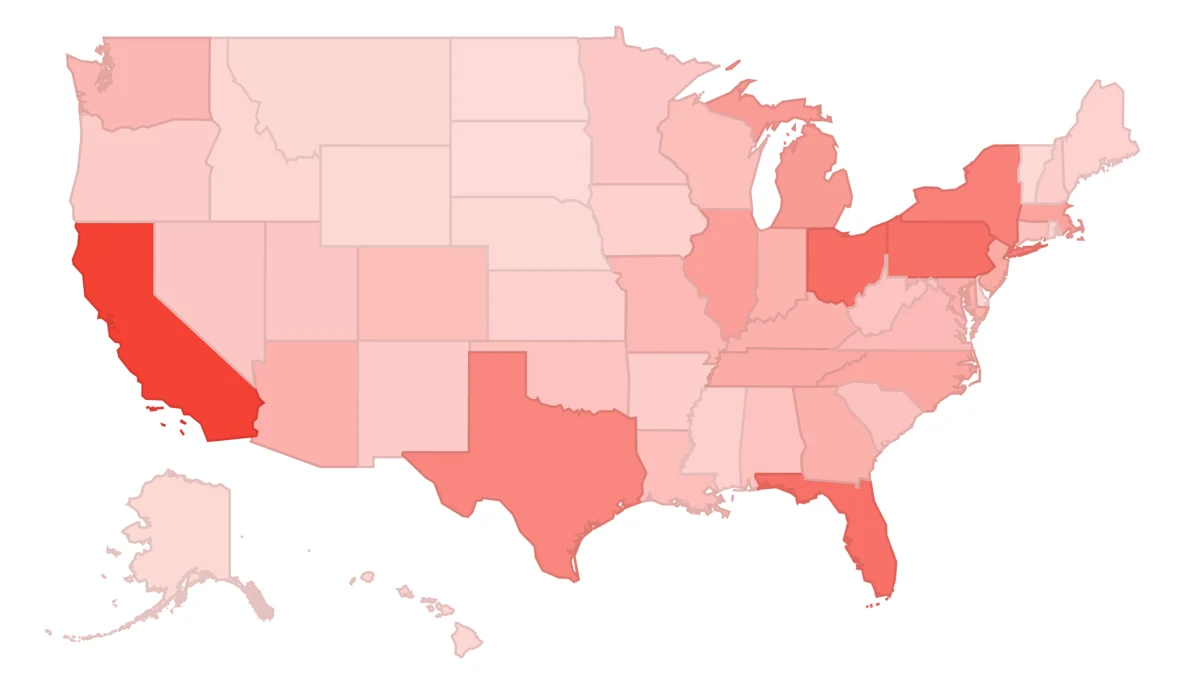
Within the United States, the epidemic does not manifest uniformly. Data from the CDC reveals specific geographic clusters where the crisis is most acute. The Appalachian region, including states like West Virginia, Ohio, and Kentucky, has historically been the epicenter of the first and second waves. These areas were often targeted by pharmaceutical distributors and suffered from economic downturns that left populations vulnerable to "deaths of despair."
However, recent trends indicate the crisis is shifting. While some states have seen a plateau in prescription-related deaths due to stricter monitoring programs, others are seeing a vertical climb in synthetic opioid fatalities. The data identifies "development trends" that allow public health officials to categorize states into those with stabilizing rates and those experiencing a rapid worsening of the epidemic. New England and the Mid-Atlantic states have recently seen some of the sharpest increases in fentanyl-related deaths, attributed to the efficiency of drug trafficking routes in densely populated corridors.
The Role of Data in Public Health Response
For analysts and policymakers, data is the primary tool for moving from reactive to proactive strategies. The integration of real-time overdose tracking allows for the deployment of life-saving resources like Naloxone (Narcan) to specific neighborhoods experiencing a "spike" in activity.
Public health experts emphasize that without granular data—broken down by age, substance type, and geography—it is impossible to allocate funding effectively. The "Seven Days of Heroin" report was a landmark because it humanized the data, but the subsequent analytical deep dives into CDC and UNODC datasets have provided the structural framework for legislative action. This includes the massive multi-state litigations against pharmaceutical manufacturers and distributors, where data served as the primary evidence of "oversupply" in vulnerable counties.
Official Reactions and Policy Shifts
The federal government has responded to these data trends with a series of legislative measures. The Comprehensive Addiction and Recovery Act (CARA) and the 21st Century Cures Act have funneled billions of dollars into state-level prevention and treatment programs. Officials from the Department of Health and Human Services (HHS) have stated that the focus must remain on a "dual-track" approach: reducing the supply of illicit synthetics through law enforcement while simultaneously expanding access to Medication-Assisted Treatment (MAT) for those already suffering from Opioid Use Disorder (OUD).
Internationally, the UNODC has called for greater global cooperation to track the precursors used in fentanyl production. The global nature of the supply chain means that a chemist in Asia and a distributor in Mexico can directly impact mortality rates in a small town in rural America. This realization has shifted the opioid crisis from a domestic "war on drugs" to a complex international regulatory and diplomatic challenge.
Broader Implications and Future Outlook
The economic impact of the opioid epidemic is staggering. Estimates from the Council of Economic Advisers suggest the crisis costs the U.S. economy over $500 billion annually in lost productivity, healthcare costs, and criminal justice expenses. Beyond the fiscal toll, the social fabric of affected communities is being torn, with a generation of "opioid orphans" entering the foster care system as their parents fall victim to overdose or incarceration.
Looking forward, the path to stabilization remains uncertain. While prescription monitoring has successfully reduced the volume of legal opioids in circulation, the illicit market has proven remarkably resilient and increasingly deadly. The data suggests that the next phase of the battle will not be fought in doctor’s offices, but in the realm of harm reduction, mental health support, and international precursor control.
The consensus among data analysts and public health officials is that the opioid epidemic is not a problem that can be "arrested" away. It requires a sustained, data-driven commitment to understanding the patterns of addiction and the changing chemistry of the illegal drug market. By leveraging global datasets and local trends, society can begin to implement the targeted interventions necessary to stem the tide of what remains the most significant drug-related threat of the 21st century. As analysts continue to dissect the numbers, the goal remains clear: to use data not just to count the losses, but to prevent them.