

As the digital advertising market reaches a point of saturation and the cost of customer acquisition continues to climb, global enterprises and small businesses alike are shifting their focus from raw traffic volume to the precision of conversion marketing. In a comprehensive industry update published in mid-2025, marketing experts, including Josh Gallant of Backstage SEO, have identified a fundamental shift in how digital success is measured. The consensus among industry leaders is that the era of “traffic at any cost” has ended, replaced by a rigorous focus on Conversion Rate Optimization (CRO) and the strategic alignment of user intent with digital experiences. Conversion marketing, defined as the practice of turning website visitors into leads or customers through specific, data-driven actions, has moved from a secondary tactic to the primary driver of digital return on investment (ROI).
The Economic Context of the Conversion Shift
The pivot toward conversion marketing is rooted in the current economic realities of the digital landscape. Over the past decade, the cost per click (CPC) across major platforms like Google Search and Meta has seen a steady annual increase, often outpacing inflation. This trend has been exacerbated by the tightening of privacy regulations and the deprecation of third-party cookies, which have made traditional targeting more difficult and expensive. Consequently, companies that previously relied on high-volume, low-efficiency traffic are finding their profit margins squeezed.
Data indicates that the math of conversion is far more favorable than the math of acquisition. For a website receiving 10,000 monthly visitors with a 2% conversion rate, the result is 200 conversions. To double that result through traffic alone, a company must double its ad spend or SEO efforts to reach 20,000 visitors. However, by utilizing conversion marketing to increase that rate from 2% to 4%, the company achieves the same 400 conversions without spending an additional cent on traffic. This efficiency is the primary reason why marketing budgets are being reallocated toward landing page optimization, A/B testing, and user experience (UX) design.
A Chronology of Digital Marketing Priorities
The evolution of digital marketing can be viewed through three distinct eras. The first, spanning the early 2000s to approximately 2012, was the “Visibility Era,” where the primary goal was simply to be found via search engines. The second phase, roughly 2013 to 2021, was the “Engagement Era,” defined by the rise of social media and the pursuit of likes, shares, and brand awareness.
Starting in 2022 and accelerating into 2025, the industry has entered the “Conversion Era.” In this current phase, the quality of engagement is prioritized over quantity. Marketing teams are no longer satisfied with high “top-of-funnel” numbers; instead, they are held accountable for “bottom-of-funnel” results. This transition has necessitated the rise of specialized roles, such as Conversion Rate Optimizers and Behavioral Analysts, who study the psychological triggers that move a user from curiosity to commitment.

The Psychology of Conversion: Why Users Take Action
At its core, conversion marketing is the application of behavioral psychology to digital interfaces. Experts identify four primary pillars that influence a user’s decision to convert: the value proposition, site usability, trust signals, and urgency.
The value proposition is the most critical element. It must answer the visitor’s internal question—”What is in it for me?”—within seconds of the page loading. Research shows that clear, solution-oriented headlines perform significantly better than “clever” or vague marketing copy. In the current market, users prioritize immediate clarity over brand personality.
Usability and site design follow closely behind. In 2025, mobile-first indexing is no longer a suggestion but a requirement for survival. Site speed remains a dominant factor; data suggests that even a one-second delay in page load time can result in a 7% reduction in conversions. Furthermore, the “friction” of a website—the difficulty a user faces when trying to complete a task—is a major deterrent. For instance, reducing the number of fields in a sign-up form has been shown to increase completion rates significantly, with nearly 27% of users citing form length as a primary reason for abandonment.
Trust signals serve as the digital equivalent of word-of-mouth. In an era of rampant misinformation and digital scams, social proof has become the “secret sauce” of high-converting sites. This includes detailed customer reviews, case studies with specific metrics (e.g., “This tool saved us 15 hours a week”), and third-party security badges. Generic praise is increasingly ignored by savvy consumers; specificity and authenticity are the new benchmarks for trust.
Technical Implementation and High-Impact Tactics
To execute a successful conversion marketing strategy, firms are increasingly turning to a specific set of high-impact tactics. Leading the charge is the use of dedicated landing pages. Unlike a general homepage, which offers multiple paths and distractions, a landing page is laser-focused on a single conversion goal.
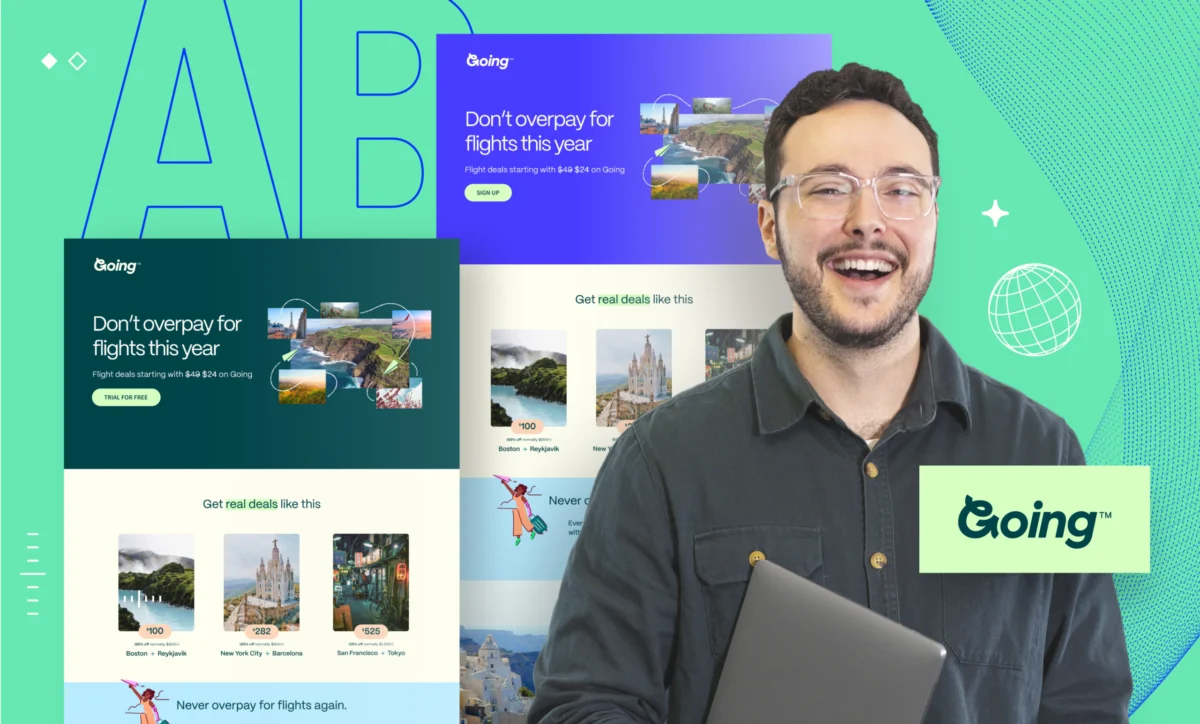
A/B testing, or split testing, remains the gold standard for experimentation. By showing two different versions of a page to similar audiences, marketers can make decisions based on empirical evidence rather than intuition. Common elements for testing include:

- Headlines: Testing benefit-driven vs. fear-of-missing-out (FOMO) messaging.
- Calls to Action (CTA): Experimenting with button colors, placement, and copy (e.g., “Buy Now” vs. “Start My Free Trial”).
- Visuals: Assessing the impact of hero images vs. explainer videos.
- Incentives: Comparing free shipping offers against percentage-based discounts.
The integration of video has also proven to be a game-changer. Statistical analysis reveals that including a concise, 60-to-90-second explainer video on a landing page can boost conversion rates by as much as 80%. Similarly, interactive content, such as calculators, quizzes, and assessments, generates twice as much engagement as static content, providing users with personalized value that encourages them to enter the sales funnel.
Data-Driven Decision Making and Feedback Loops
Modern conversion marketing relies on a sophisticated tech stack to turn insights into action. Tools like Google Analytics provide the “what”—showing where visitors are coming from and where they are leaving. However, heatmapping tools like Hotjar or Microsoft Clarity provide the “why,” showing exactly where users click, how far they scroll, and where they encounter “rage clicks” (repeatedly clicking an unresponsive element).
Beyond automated tools, high-performing marketing teams are mining qualitative data from their support and sales departments. These frontline teams interact with customers daily and can identify the specific objections or points of confusion that prevent conversions. By creating a feedback loop where sales insights inform marketing copy, companies can proactively address customer hesitations on their websites.
Broader Impact and Future Implications
The implications of the conversion-first approach extend beyond individual marketing campaigns; they are reshaping the entire business ecosystem. For SaaS companies, the focus on micro-conversions (such as sign-ups for a newsletter or a webinar) helps build a long-term relationship before the macro-conversion (a paid subscription) occurs. In the ecommerce sector, the rise of loyalty programs is a direct result of conversion marketing, with data showing that repeat customers can increase lifetime value by 30%.
Looking ahead, the role of Artificial Intelligence (AI) in conversion marketing is expected to grow. AI-enabled tools like “Smart Traffic” are already beginning to automate the A/B testing process by using machine learning to route visitors to the specific page variant they are most likely to convert on based on their browsing history and demographic data. This level of hyper-personalization represents the next frontier of the industry.
In conclusion, conversion marketing is no longer an optional optimization task; it is the cornerstone of sustainable digital growth. By prioritizing the user experience, leveraging psychological triggers, and maintaining a rigorous commitment to data-driven experimentation, businesses can insulate themselves from the rising costs of traffic and ensure that every visitor represents a genuine opportunity for growth. As the digital marketplace becomes increasingly crowded, the winners will not be those who shout the loudest to get attention, but those who are most effective at turning that attention into a lasting business relationship.







