

The global recruitment landscape is currently undergoing a seismic shift as talent acquisition professionals move away from traditional, multi-layered career portals toward streamlined, high-performance recruitment landing pages. This transition is driven by a stark economic reality: while digital advertising costs continue to climb, with some industries paying upwards of $5.00 per click to drive traffic to job postings, the conversion rates on generic corporate career sites remain dismal. When a candidate clicks an advertisement only to be met with a complex navigation menu, dozens of unrelated job listings, and a lack of a clear application path, the result is almost invariably a "bounce," representing a direct loss of marketing budget and a missed opportunity to secure top-tier talent.
The Evolution of Digital Recruitment Strategy
The history of online recruitment has moved through several distinct phases. In the early 2000s, the "Job Board Era" dominated, where companies simply posted text-heavy descriptions on third-party sites like Monster or CareerBuilder. By the 2010s, the focus shifted to "Employer Branding," leading to the creation of massive corporate career hubs designed to showcase company culture. However, in the current "Conversion Era," the focus has narrowed significantly. Modern recruiters have realized that the job of an advertisement is to get the click, but the job of the landing page is to secure the application.
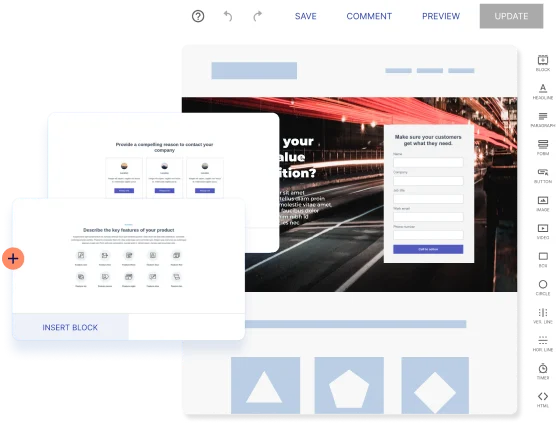
A recruitment landing page is a standalone web page created specifically for a marketing or advertising campaign. Unlike a standard career site, it is designed with a single conversion goal: to turn a visitor into an applicant. By removing the "noise" of traditional websites—such as "About Us" sections, news feeds, and global navigation bars—companies can guide a candidate through a focused narrative that culminates in a completed application form.
The Core Pillars of Recruitment Landing Page Success
To understand why some recruitment pages outperform others, one must analyze the technical and psychological principles of conversion rate optimization (CRO). Industry data suggests that a well-optimized landing page can increase application rates by over 25% compared to a standard job description page.
1. Message Match and Headline Consistency
The first few seconds after a click are critical for establishing trust. "Message match" refers to the practice of ensuring the landing page headline mirrors the language used in the advertisement that brought the candidate there. If a search engine ad promises a "Remote Software Engineer Role with Flexible Hours," and the landing page headline reads "General Engineering Opportunities," the cognitive dissonance often leads the candidate to leave. Maintaining consistency in role title, compensation range, and key benefits is the primary method for reducing immediate bounce rates.
2. The "Above the Fold" Mandate
In web design, "above the fold" refers to the content visible on a screen before the user has to scroll. Journalistic and marketing data consistently show that users spend 80% of their time looking at information above the fold. For a recruitment page to be effective, it must present the job title, the primary value proposition (e.g., "Earn up to $30/hour"), and a prominent "Apply Now" call-to-action (CTA) immediately upon loading.
3. Minimizing Form Friction
Application abandonment is one of the most significant hurdles in modern talent acquisition. Research indicates that every additional field added to a lead generation form can decrease the conversion rate by 5% to 10%. High-performing recruitment pages typically limit their initial forms to three to five essential fields: name, email address, phone number, and a resume upload option. Some organizations have moved toward "two-step" forms, where the candidate provides basic contact information first, ensuring the recruiter has a "lead" even if the candidate does not complete the full technical application in one sitting.
4. The Integration of Social Proof
Candidates are increasingly skeptical of corporate marketing. To counter this, successful landing pages incorporate social proof in the form of employee testimonials, glassdoor ratings, or industry awards. Including a photo and a quote from a current employee in a similar role provides a "trust signal" that validates the company’s claims regarding culture and work-life balance.
Comparative Analysis: Gig Economy Leaders
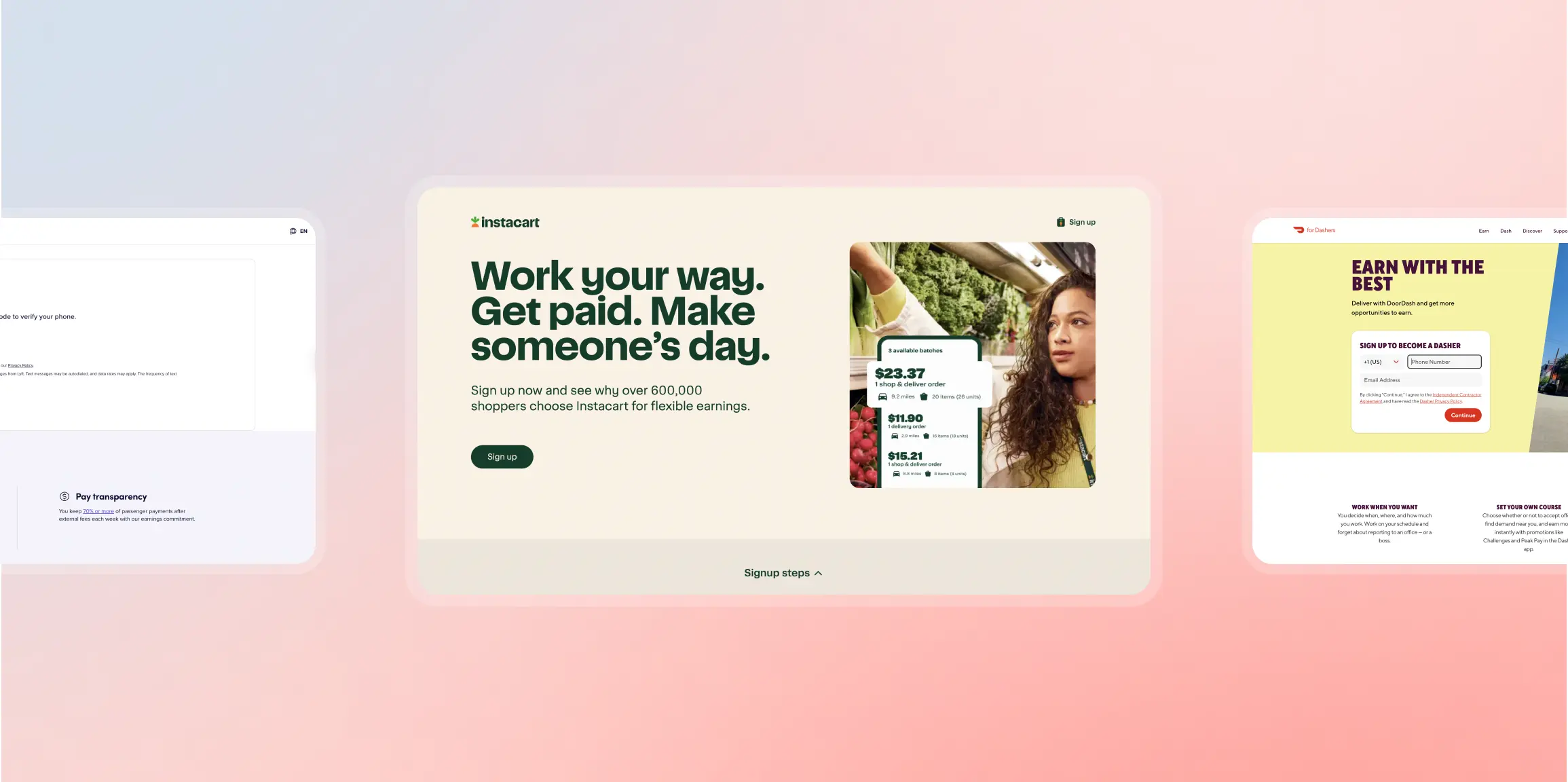
The gig economy—represented by giants such as Uber, Lyft, DoorDash, and Instacart—has perfected the recruitment landing page due to the sheer volume of drivers and delivery partners they must onboard to maintain operations.
Uber and Lyft: The Battle for Drivers
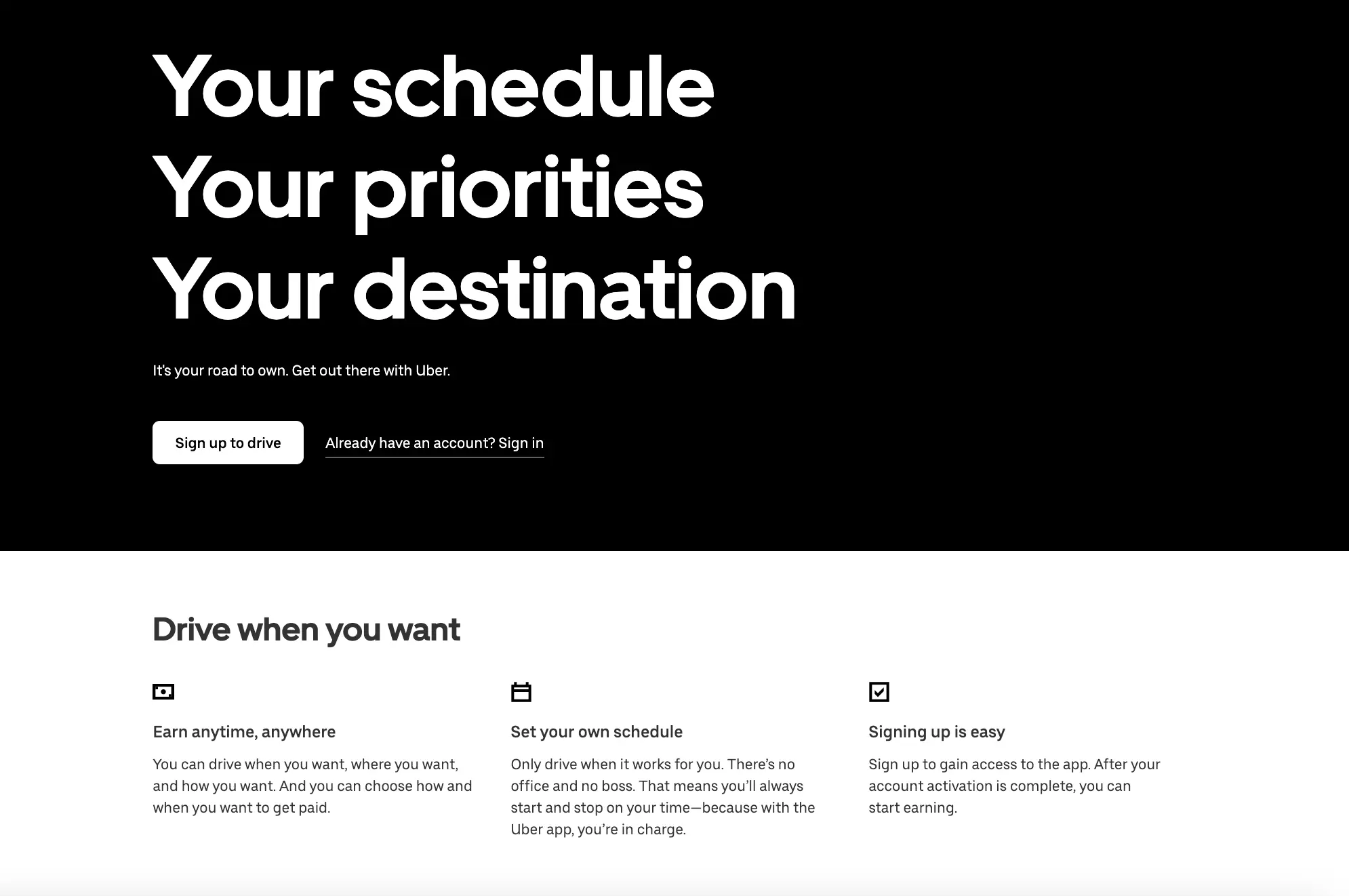
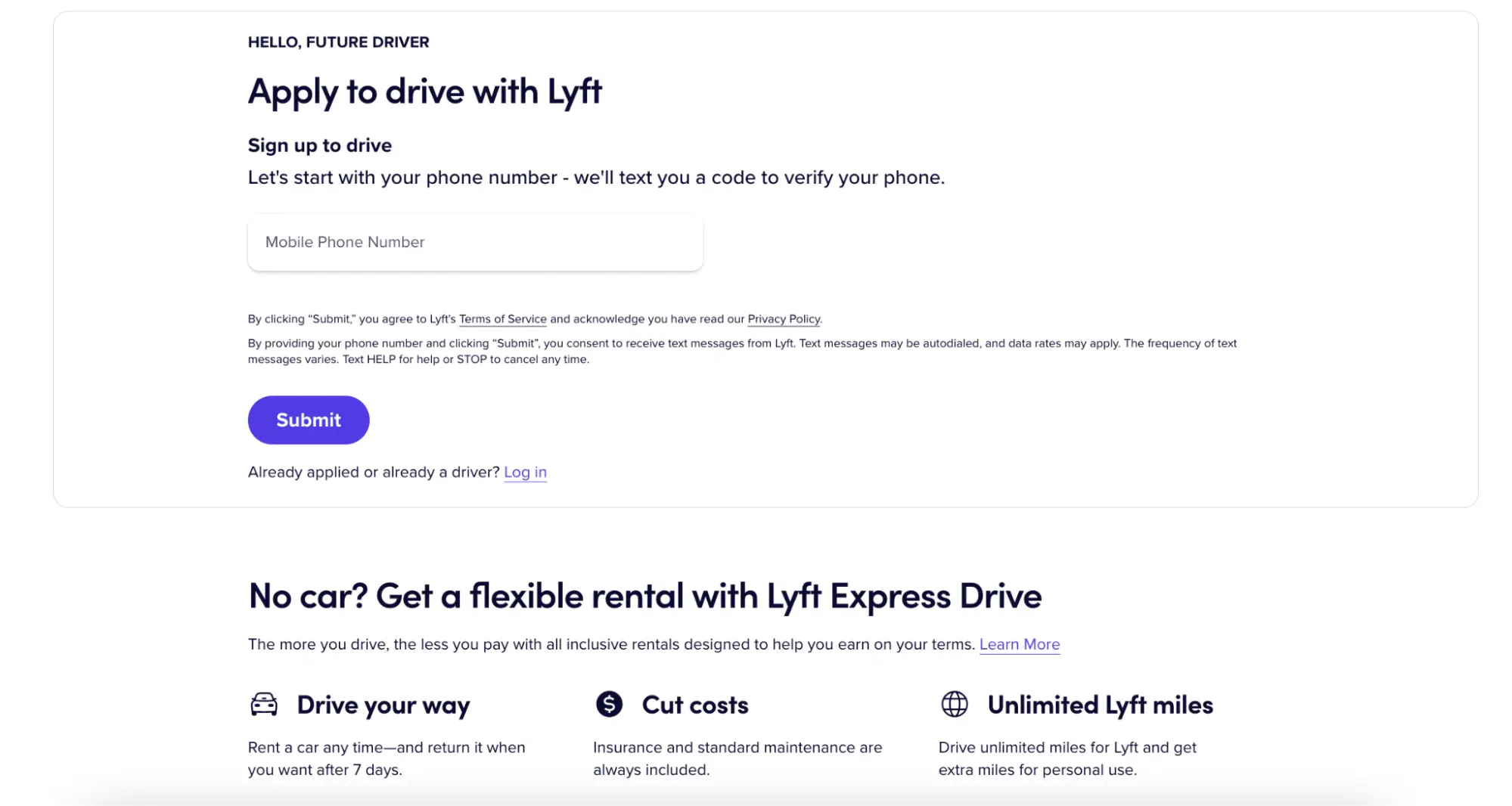
Uber’s recruitment pages are often cited as the industry gold standard for simplicity. Their strategy focuses on a "one-click" feel, with a short form positioned prominently at the top of the page. Lyft, conversely, often leans into the "earnings calculator" feature, allowing potential drivers to estimate their weekly income based on hours worked. Both companies share a common trait: the total removal of exit links. On these pages, there are no links to the company’s "Investor Relations" or "Press" pages, ensuring the user stays focused on the signup process.
DoorDash and Instacart: Speed and Accessibility
For DoorDash and Instacart, the recruitment focus is on the "low barrier to entry." Their landing pages emphasize that candidates can "start earning today." This sense of urgency is supported by mobile-first design. With over 70% of job seekers now using mobile devices to search for work, these companies ensure their pages load in under three seconds and that buttons are large enough for "thumb-friendly" navigation.
The Role of A/B Testing in Talent Acquisition
The most sophisticated recruitment teams do not guess which page design will work; they use A/B testing (or split testing) to let data drive their decisions. This process involves showing two different versions of a landing page to similar visitors and measuring which version results in more completed applications.
Key Elements to Test in Recruitment:
- Headlines: Testing "Work from Home" vs. "Flexible Schedule."
- Imagery: Testing a photo of the office environment vs. a photo of a remote worker.
- CTA Button Colors: Testing high-contrast colors like orange or green against branded colors.
- Form Placement: Testing a form that is visible immediately vs. a form that appears after clicking a button.
Recent advancements in Artificial Intelligence (AI) have automated much of this process. Platforms like Instapage now offer AI-driven experimentation that automatically directs more traffic to the "winning" version of a page in real-time, significantly reducing the cost per applicant (CPA) without requiring constant manual oversight from the HR team.
Technical Performance and Mobile Optimization
The technical infrastructure of a recruitment page is just as important as its copy. Google’s "Core Web Vitals" have set a high bar for page speed and stability. A one-second delay in mobile load times can impact conversion rates by up to 20%. To mitigate this, high-performance pages utilize Content Delivery Networks (CDNs) to serve images and scripts from servers closest to the user’s physical location. Furthermore, they employ "lazy loading" for images and compress all visual assets to ensure that the candidate’s data plan or slow connection does not prevent them from applying.

Broader Implications for the Labor Market
The shift toward specialized recruitment landing pages reflects a broader trend in the labor market: the commoditization of the application process. As the "Great Resignation" and subsequent labor shifts have shown, the power dynamic has moved toward the candidate. In this environment, the "candidate experience" begins the moment they click an ad.
Companies that continue to rely on antiquated, difficult-to-navigate Applicant Tracking Systems (ATS) as their primary landing pages are finding themselves at a competitive disadvantage. Organizations that treat recruitment with the same rigor as customer acquisition—utilizing dedicated landing pages, tracking pixels, and conversion funnels—are seeing a marked decrease in their time-to-hire and an increase in the quality of their applicant pool.
Conclusion: The Future of Recruitment Marketing
As we look toward the future, the integration of recruitment landing pages with broader HR technology will only deepen. We are seeing the rise of "personalized" landing pages, where the content of the page changes dynamically based on the candidate’s location, previous search history, or professional background.
For the modern recruiter, the message is clear: driving traffic is only half the battle. To succeed in a hyper-competitive hiring environment, companies must provide a seamless, focused, and frictionless path from the initial "click" to the final "submit." The recruitment landing page is no longer a luxury for tech giants; it is a fundamental tool for any organization looking to scale its workforce efficiently in the digital age. By adhering to best practices—matching ad messaging, optimizing for mobile, and relentlessly testing variables—businesses can finally stop wasting their advertising budgets and start building the talent pipelines necessary for long-term growth.







