Tuesday, August 18th, 2026 – 10:56 am
Doug Lauretano, a seasoned veteran of the digital advertising landscape, has launched Tuple, a new Demand-Side Platform (DSP), aiming to address a burgeoning "trust gap" between publishers and programmatic buyers. Lauretano’s extensive career, spanning early roles at prestigious media outlets like Fortune, The Wall Street Journal, and CNN Money, followed by a decade at supply-side programmatic giants OpenX and Media.net, has provided him with a unique vantage point on the industry’s inner workings. It was during his tenure at CivicScience, where he was instrumental in developing a deal ID and curation product, that Lauretano gained a firsthand, and reportedly "ugly," understanding of the complex mechanics governing DSP operations. This direct exposure to perceived inefficiencies and opacity within existing DSP frameworks has fueled his conviction that a fundamental shift is necessary. Tuple, which officially went live in March 2026, currently serves a select group of eight clients, including a prominent enterprise mobile brand that, speaking anonymously to AdExchanger, cited a desire for greater transparency and control as key drivers for choosing a nascent DSP over established incumbents.
The Escalating Animosity in Ad Tech
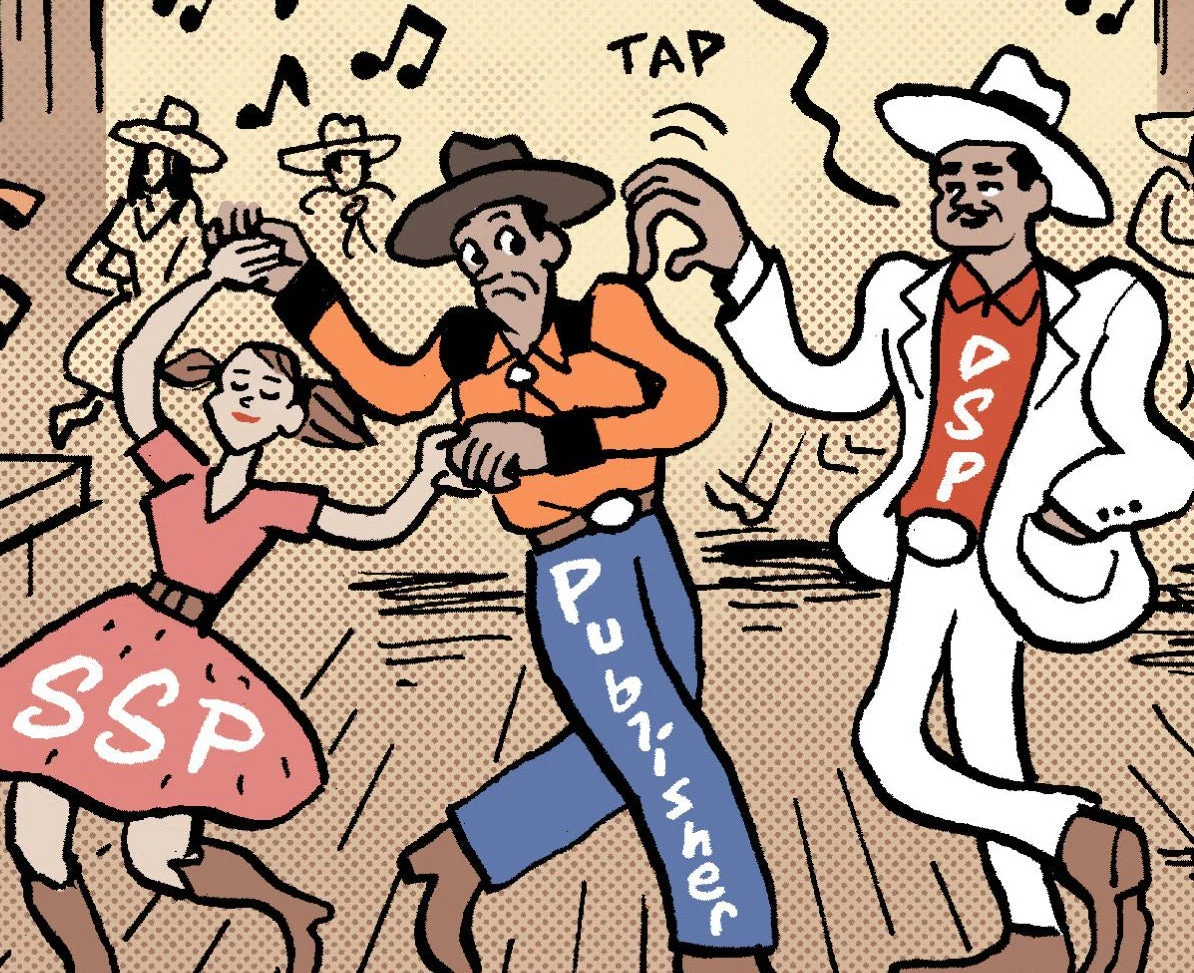
The launch of Tuple occurs at a critical juncture for third-party ad tech, a sector increasingly characterized by friction and mutual suspicion between the buy-side (advertisers and their DSPs) and the sell-side (publishers and their Supply-Side Platforms or SSPs). Lauretano articulates this tension as "so much animosity," a sentiment echoed across various industry discussions and analyses. This animosity manifests in several ways, notably in the evolving terminology and strategic maneuvers employed by major players. For instance, The Trade Desk’s deliberate shift in nomenclature, referring to SSPs as "resellers," signals a strategic positioning that potentially devalues the role of publishers in the ad ecosystem. Conversely, SSPs have been accused of employing tactics such as illicitly inflating bid requests and circumventing frequency capping rules through sophisticated ID bridging techniques, further eroding the foundation of a transparent marketplace.
"It’s almost like one is constantly trying to trick the other," Lauretano remarked, highlighting the adversarial nature that has come to define many buy-side and sell-side interactions. This environment of distrust is further exacerbated by the rapid technological evolution within the ad tech space, specifically the disruptive influence of Artificial Intelligence (AI) and the adoption of cloud-based infrastructure, often referred to as "containerization." This technological shift allows for increasingly sophisticated algorithmic integrations. Increasingly, DSPs, independent algorithm providers, and even media buyers themselves are embedding their proprietary algorithms directly within SSPs, bypassing the traditional DSP account seat for bidding.
The Root of the Problem: Throttling, Curation, and Lack of Visibility
According to Lauretano, these trends are intrinsically linked and contribute significantly to the prevailing distrust. The buy side often finds itself at the mercy of opaque "throttling" and "curation" mechanisms employed by SSPs. An SSP might possess a vast pool of impressions that a specific advertiser would be keen to bid on, yet the DSP might only gain visibility into a fraction of this inventory. This rationing of impressions, while a necessary cost-management feature for SSPs operating at global internet scale, creates a significant blind spot for buyers.
Containerized bidding models, however, offer a potential solution by enabling buyers to observe every impression as it surfaces within an SSP, circumventing the traditional query-per-second (QPS) throttling that governs interactions between DSPs and SSPs. Lauretano emphasizes that establishing trust between buyers and SSPs is "almost as important" as the technical advancements themselves, suggesting that a foundation of mutual confidence is paramount for the effective functioning of the programmatic ecosystem.
Tuple’s Differentiated Approach to DSP Operations
Tuple aims to carve out a distinct niche in this complex landscape by offering a fundamentally different operational model compared to legacy DSPs. The prevailing industry standard has seen DSPs and SSPs integrate in a often haphazard and broad manner. Advertisers utilizing platforms like The Trade Desk, Beeswax, or Viant typically have the ability to bid on ads across hundreds of different SSPs.
In contrast, Tuple’s strategy is one of deliberate, curated integration. Currently, Tuple is integrated with a single SSP: Media.net. This choice is rooted in Lauretano’s prior professional relationships and a high degree of confidence in Media.net’s deal ID setups and operational integrity. While Lauretano anticipates potentially expanding to work with up to five SSPs in the short term, the long-term vision for Tuple is to maintain a curated ecosystem of just three SSPs. This limited integration, he argues, will provide Tuple with unparalleled visibility into virtually every programmatically available impression, eliminating the redundancy and opacity often associated with broader integrations.
The assertion that a limited number of SSPs can adequately cover the universe of programmatic inventory is met with Lauretano’s conviction that "there are so few with exclusive supply." This implies that the perceived vastness of the programmatic marketplace is, in part, an illusion created by duplicated inventory across numerous SSPs. Tuple’s focus on seeing each impression only once, rather than bidding on duplicated inventory across multiple seats, aims to optimize efficiency and reduce wasted ad spend.
Rethinking AI and Transparency in Campaign Optimization
Beyond inventory access, Lauretano also critically examines the prevalent "walled-garden-esque" AI features offered by many DSPs. He characterizes these as largely "black-box" products, where advertisers define desired outcomes and acceptable costs per conversion, leaving the optimization entirely to the platform’s algorithms. This approach, he contends, forfeits a key advantage of true walled gardens: the ability for advertisers to understand and leverage the complexities of the ad ecosystem without requiring sophisticated internal systems to parse through potentially dozens of duplicate impressions and understand how the intricate network of SSPs is responding to their bids.
"A platform with as little noise as possible has the best chance of being the best performer," Lauretano stated. He further argues that the AI-based optimization products offered by many DSPs often sacrifice transparency. This lack of transparency, he notes, is not confined to the proprietary systems of large tech giants like Google’s Performance Max but extends to third-party programmatic DSPs as well.
He illustrates this point with a hypothetical scenario: an advertiser using an AI model within a traditional DSP might be unaware that their campaign’s conversions are predominantly originating from California, while their strategic objective is to expand into other geographical markets. The DSP’s AI, prioritizing raw performance metrics, might also gravitate towards cheaper display ads, even if the advertiser expects higher-quality inventory. "AI products will follow what they view as performance," Lauretano explained, "even when the buyer can’t see that the system is disregarding their preferences."
When a DSP abstracts this level of access and visibility away from its buyers, Lauretano believes it commits "the original sin" of legacy technology, thereby creating the very need for innovative startups like Tuple. The company’s mission, therefore, is not just to provide a bidding platform but to foster an environment of transparency and control, empowering advertisers to make informed decisions and achieve their strategic objectives without being blinded by algorithmic opacity. The implications of this approach could extend to a more efficient allocation of advertising budgets, a reduction in ad fraud stemming from duplicated inventory, and ultimately, a more accountable and trustworthy programmatic advertising ecosystem.